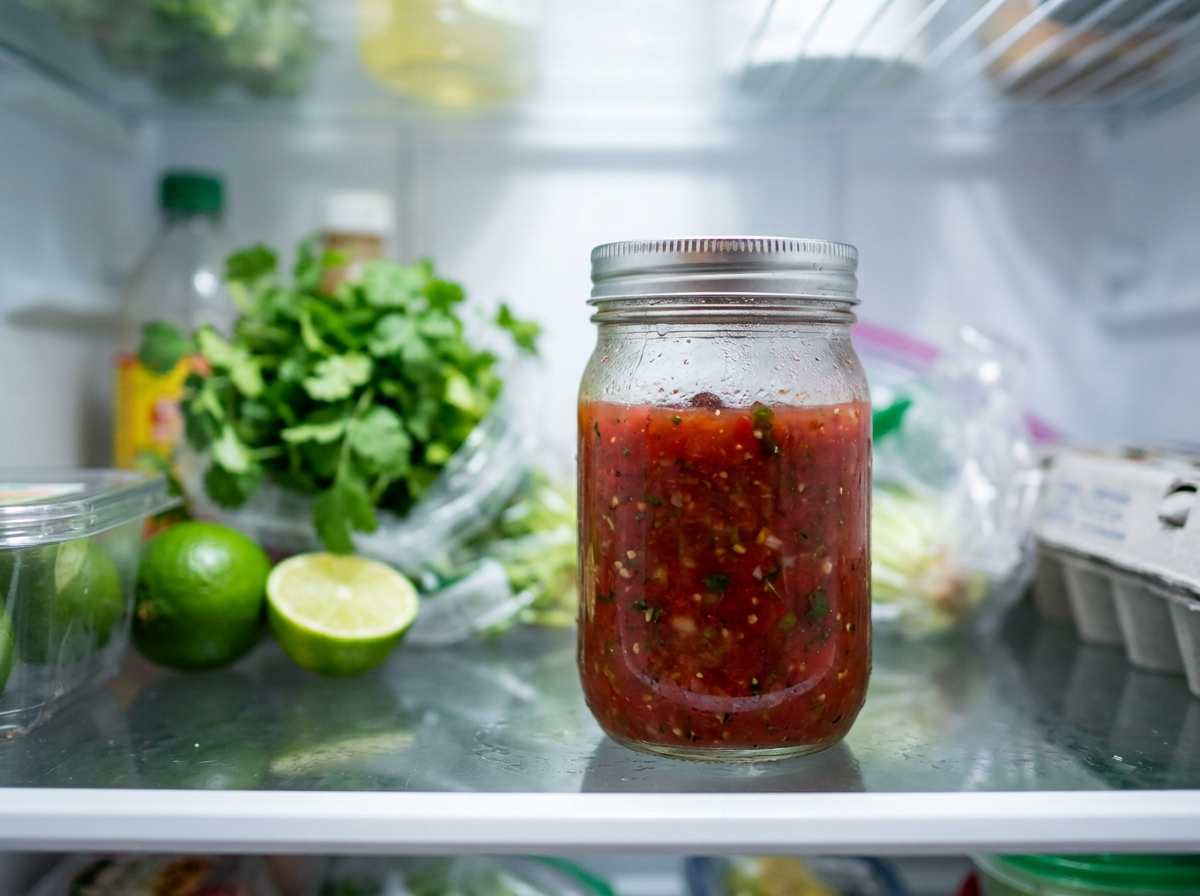
You’re reaching into the back of the fridge for that half-used jar of salsa. You twist off the lid, take a quick sniff, and freeze. It looks okay. It smells okay. But you opened it… when? Tuesday? Last Tuesday? That little moment of doubt is something almost everyone who keeps salsa around has dealt with, and the honest answer to how long does salsa stay good in the fridge is more nuanced than what most jar labels tell you.
The short version? Opened store-bought salsa stays good in the fridge for about one to two weeks. But that number shifts depending on the type of salsa, how you’ve stored it, and whether you made it yourself. Let’s break down the real timelines so you can stop guessing and start knowing.
How Long Does Salsa Last in the Fridge? The Real Timelines
Salsa shelf life isn’t one-size-fits-all. A jar of chunky garden salsa from the grocery store shelf behaves very differently from a container of fresh pico de gallo you picked up at a taco stand. The main factors at play are how the salsa was processed, whether it contains preservatives, and how acidic the recipe is.
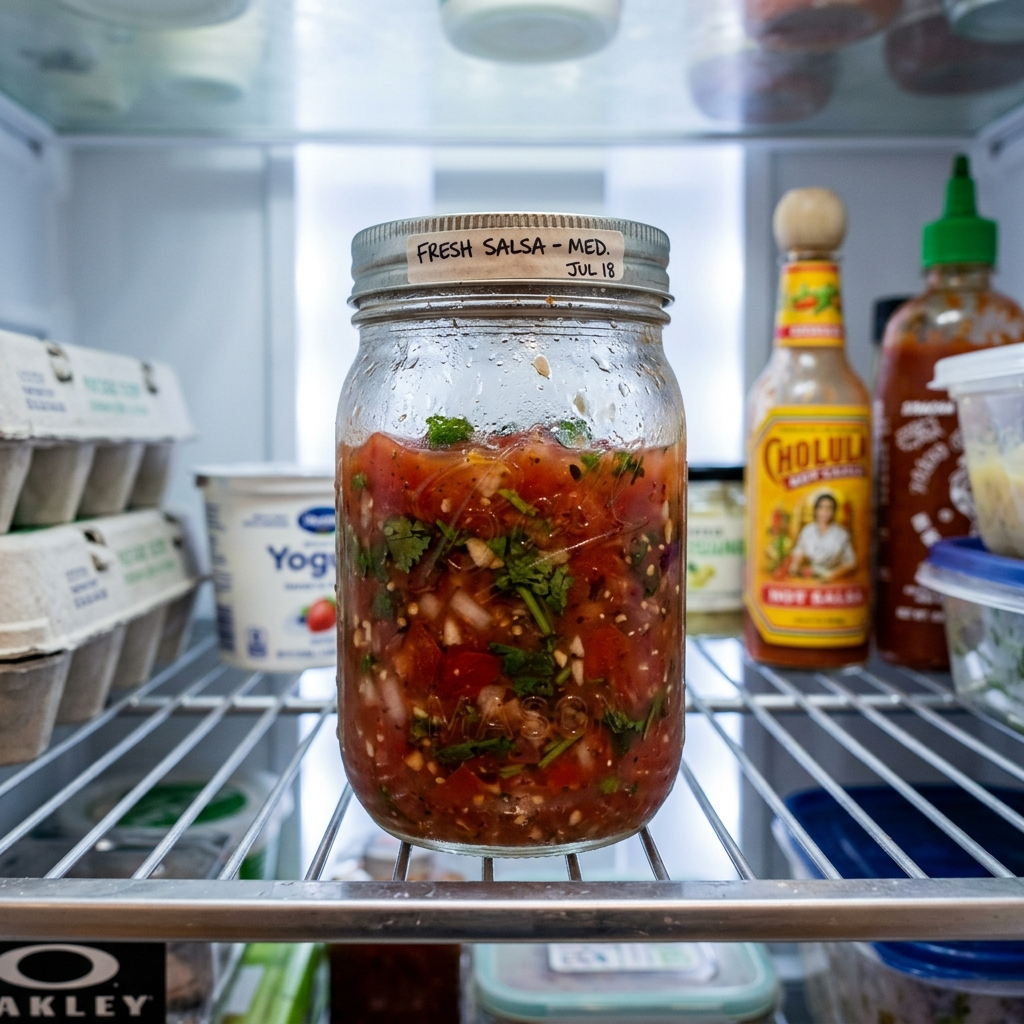
Unopened Store-Bought Salsa
If the jar is still sealed and sitting in your pantry, you’re in good shape. Unopened store-bought salsa that’s sold on a non-refrigerated shelf typically lasts well past the printed “best by” date — often by several months. That date is about peak quality, not safety. The salsa was processed at high heat and sealed in an airtight environment, which keeps bacteria out almost entirely.
Once you move that unopened jar to the fridge, it’ll last even longer, though there’s no real need to refrigerate it before opening. The pantry is perfectly fine until you break the seal.
Opened Store-Bought Salsa
Here’s where most people get confused. The moment you twist that lid off, the clock starts ticking. Opened store-bought salsa is generally safe to eat for one to two weeks when kept in the fridge at or below 40°F. Some brands with higher acidity and added preservatives like sodium benzoate may stretch closer to the two-week mark, while more natural brands with fewer additives lean toward one week.
A practical detail most articles skip: the “two weeks” guideline assumes you’ve been using clean utensils every single time. If you’ve been dipping chips directly into the jar at a party — and let’s be honest, we’ve all been there — you’ve introduced bacteria from your mouth into the salsa. That cuts the safe window down considerably. Cross-contamination is one of the most common food safety mistakes people make without realizing it, and salsa is a prime victim because it’s such a communal food.
Homemade Salsa Fridge Life
Homemade salsa is a different story entirely. Whether you’re blending up a roasted tomato salsa or chopping a quick pico de gallo, your kitchen doesn’t have the industrial pasteurization equipment that commercial brands use. That means homemade salsa has a much shorter fridge life — typically five to seven days for cooked varieties and three to five days for fresh, raw salsas like pico de gallo.
The reason is straightforward. Fresh tomatoes, onions, cilantro, and lime juice haven’t been heat-treated to kill off naturally occurring bacteria. The acidity from the lime or vinegar helps slow things down, but it doesn’t stop spoilage the way commercial processing does. If your homemade salsa recipe is heavy on fresh herbs and light on acid, it’ll turn faster than a vinegar-forward cooked salsa.
Restaurant or Fresh-Made Salsa
That little cup of salsa your favorite Mexican restaurant sends home with your order? Treat it like homemade. Restaurant salsa is typically made fresh in-house without the preservatives you’d find in a jarred brand. Plan to eat it within three to five days and keep it refrigerated the entire time. If the restaurant gave it to you in a flimsy plastic container with a loose lid, transferring it to an airtight container at home will buy you a little extra time.
| Salsa Type | Fridge Life (Opened/Made) | Key Factor |
|---|---|---|
| Store-bought (opened) | 1–2 weeks | Preservatives and acidity |
| Homemade cooked | 5–7 days | No commercial pasteurization |
| Homemade fresh (pico de gallo) | 3–5 days | Raw ingredients, low processing |
| Restaurant salsa | 3–5 days | Fresh-made, no preservatives |
| Unopened store-bought | Months past “best by” | Sealed, heat-processed |
Why Does Salsa Last Longer Than You’d Expect?
You might wonder why salsa doesn’t spoil in a couple of days like, say, a bowl of cut fruit. The answer comes down to acidity.
Most salsas have a pH somewhere between 3.5 and 4.5, thanks to ingredients like tomatoes, lime juice, and vinegar. Bacteria that cause foodborne illness — the dangerous ones like Salmonella and E. coli — struggle to multiply in highly acidic environments. The FDA’s food safety guidelines confirm that acidic foods below a pH of 4.6 are significantly more resistant to the growth of harmful pathogens. That’s the same principle behind pickling, and it’s a big part of why your salsa doesn’t turn the moment you open the jar.
Commercial brands take this a step further. Many add citric acid or sodium benzoate to push the pH even lower and extend shelf life. They also pasteurize the salsa during production, which kills off most of the microorganisms present before sealing. That’s why a jar of Pace or Tostitos can sit on a grocery shelf for months without refrigeration.
Homemade salsa gets some of this natural protection from the lime juice and tomatoes, but without the pasteurization step and the added preservatives, the protection is weaker. That’s the core reason your homemade batch won’t last as long as the store-bought version, even if the ingredients look identical.
How to Tell If Salsa Has Gone Bad
Timelines are helpful guidelines, but your senses are your best tool. Salsa doesn’t always spoil on a predictable schedule. A jar you opened eight days ago might be perfectly fine, while one you opened five days ago might already be turning. Here’s what actually happens when salsa starts to go bad, and what to look for.
Smell is your first clue. Fresh salsa smells bright, tangy, and a little sweet from the tomatoes. Spoiled salsa develops a sour, fermented odor that’s distinctly different from the normal tang of lime or vinegar. If you open the jar and get a funky, almost yeasty smell, that’s your sign to toss it. I once found a jar of salsa I’d forgotten about behind a row of hot sauces — it looked completely normal on top, but the second I cracked the lid, the sour, off smell hit me immediately. Trust your nose on this one.
Look for visual changes. Mold is the obvious red flag, and it can show up as fuzzy white, green, or black spots on the surface. But there are more subtle signs too. If the salsa has darkened significantly in color, developed an unusual layer of liquid on top that doesn’t mix back in, or looks bubbly and fizzy (a sign of fermentation), it’s time to let it go. A little bit of natural separation is normal — just stir it and check. But if the texture has gone slimy or mushy in a way that wasn’t there before, that’s a problem.
Taste is a last resort. If the salsa passes the smell and sight test but you’re still unsure, you can dab a tiny amount on your tongue. Spoiled salsa will taste noticeably sour or “off” in a way that’s different from its normal flavor profile. But honestly, if you’ve gotten to the point where you’re taste-testing questionable salsa, it’s probably safer to just open a new jar.
⚠️ Food Safety Note: This article provides general guidance based on USDA and FDA recommendations. Food safety can vary based on your specific storage conditions, refrigerator temperature, and individual health factors. If you have a compromised immune system, are pregnant, or are serving vulnerable individuals, err on the side of caution and discard salsa earlier rather than later. This information is not a substitute for professional food safety advice.
Tips to Make Your Salsa Last Longer
Getting the most out of your salsa isn’t complicated, but a few small habits make a real difference.
Keep your fridge cold enough. Your refrigerator should be at or below 40°F (4°C). If it’s creeping up to 45°F or higher, everything in it — including your salsa — will spoil faster. Keeping your fridge in the safe temperature zone is one of the easiest things you can do to extend the life of all your perishables.
Stop double-dipping. I know, I know. It’s a party, the chips are right there, and it feels ridiculous to use a spoon. But every chip that goes from someone’s mouth into the salsa jar deposits bacteria that will accelerate spoilage. Pour the salsa into a serving bowl instead. The jar stays clean, and your salsa lasts its full two weeks.
Use clean utensils every time. Even at home, grab a clean spoon when you’re scooping salsa for your taco night toppings. It takes two seconds and prevents you from introducing contaminants that speed up the clock.
Seal the lid tightly. This sounds obvious, but a loosely screwed lid lets air in, and air introduces new microorganisms while also drying out the salsa. After every use, wipe the rim of the jar and screw the lid on snugly.
Store it in the main body of the fridge, not the door. The door is the warmest part of your refrigerator because it’s exposed to room-temperature air every time you open it. Salsa stored in the door will experience more temperature fluctuation than salsa tucked on a middle shelf. That small difference adds up over a week or two.
Can You Freeze Salsa?
Yes, you can freeze salsa, and it’s a great option if you’ve made a big batch of homemade salsa that you won’t finish in time. Frozen salsa will keep for about two to three months in an airtight container or freezer bag.
The catch is texture. Freezing changes the structure of the tomatoes and other vegetables in salsa, so when you thaw it, the consistency will be softer and more watery than the original. This doesn’t matter much if you’re using the thawed salsa in cooked dishes — stirred into chili, mixed into a soup, or spooned over enchiladas before baking. But if you were hoping to use it as a fresh dip for chips, you’ll probably be disappointed.
If you do freeze salsa, leave about an inch of headspace in the container because the liquid will expand as it freezes. Thaw it in the fridge overnight, give it a good stir, and drain off any excess liquid before using.
Frequently Asked Questions
How long is salsa good for after the expiration date?
The “best by” or “use by” date on a jar of salsa refers to quality, not safety. An unopened jar stored in a cool, dark pantry is typically safe to eat for one to three months past the printed date, as long as the seal is intact and the jar shows no signs of damage, bulging, or leaking. Once opened, though, the printed date no longer matters — you’re working with the one-to-two-week fridge window regardless of what the label says.
Can you get sick from eating old salsa?
Yes. Eating spoiled salsa can cause foodborne illness, with symptoms like nausea, vomiting, stomach cramps, and diarrhea. The risk increases significantly if the salsa has visible mold, an off smell, or has been left at room temperature for more than two hours. The USDA recommends discarding any perishable food that has been in the “danger zone” (between 40°F and 140°F) for longer than two hours. If you’re unsure how long the salsa has been sitting out, the safest move is to throw it away.
Does homemade salsa last longer if you add more lime juice?
Adding extra lime juice or vinegar can slightly extend the shelf life of homemade salsa because the additional acid lowers the pH and creates a less hospitable environment for bacteria. That said, it won’t turn a five-day salsa into a two-week salsa. The bigger factors are still cleanliness during preparation, refrigeration temperature, and whether you’re using clean utensils to serve it. Think of extra acid as a small bonus, not a preservation method on its own.
Is it okay to eat salsa that’s been left out overnight?
No. Salsa left at room temperature for more than two hours should be discarded, according to standard food safety guidelines. Bacteria multiply rapidly in the temperature range between 40°F and 140°F, and an overnight stretch on the counter gives them plenty of time to reach unsafe levels. Even if the salsa looks and smells fine the next morning, the bacterial load could be high enough to cause illness.
The next time you find yourself staring at an open jar of salsa and wondering if it’s still good, you won’t have to guess. Check the timeline based on the type of salsa you have, give it a good sniff, look for any visual red flags, and when in doubt, toss it. A new jar costs a few dollars. A bout of food poisoning costs a lot more.
If you’re the type who loves making big batches of fresh salsa at home, consider freezing half of it right away so you always have some on hand. And if you’re looking for more ways to level up your taco game, check out our guide to the best taco sauces to pair with your next spread.