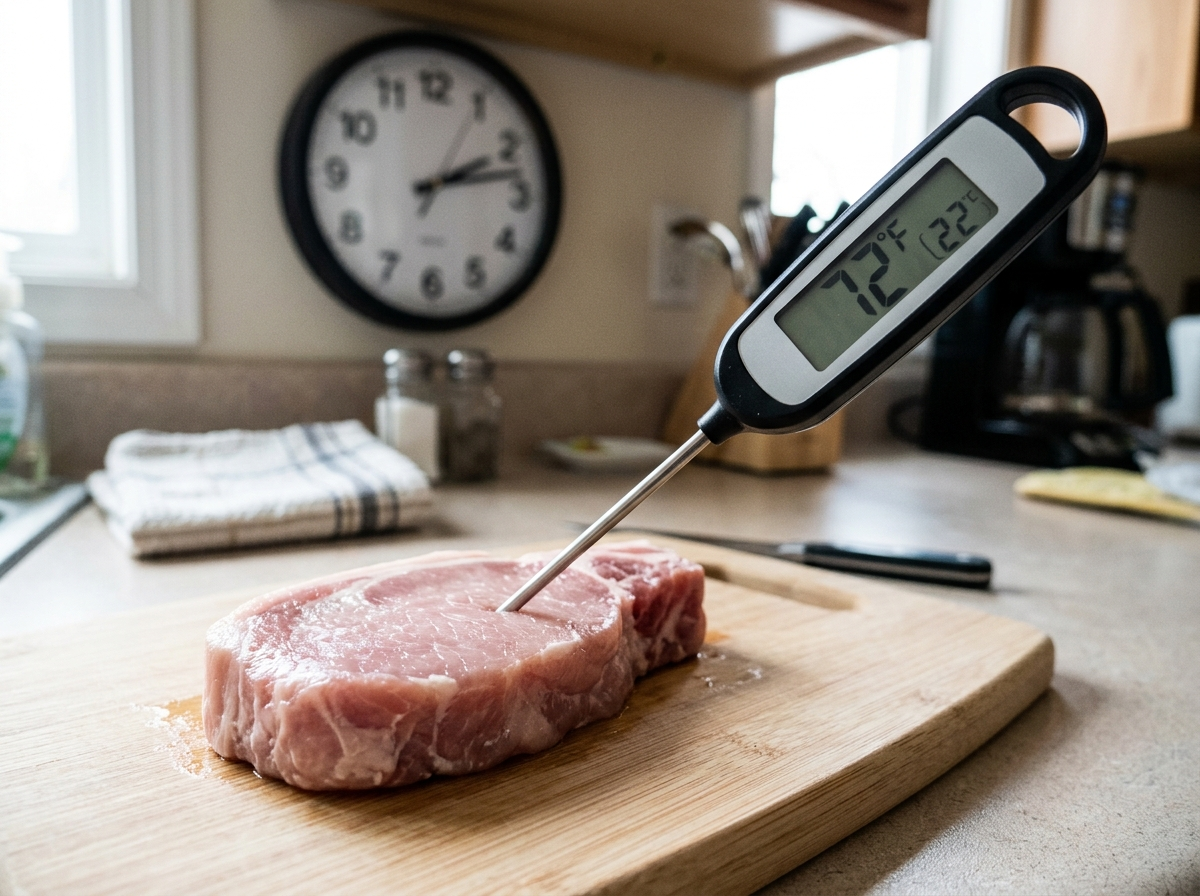
Picture this. You’re hosting a backyard cookout. The burgers just came off the grill, the pulled pork is resting in a foil tray, and everyone’s deep in conversation by the cooler. Two hours slip by before you glance at the food table and wonder — is all of this still safe to eat?
That question comes down to one concept every home cook should understand: the temperature danger zone. It’s the range where harmful bacteria multiply fastest, and spending too much time in it is one of the quickest ways to turn a great meal into a rough night for your guests.
Here’s everything you need to know, explained in plain language.
What Is the Temperature Danger Zone in Food Safety?
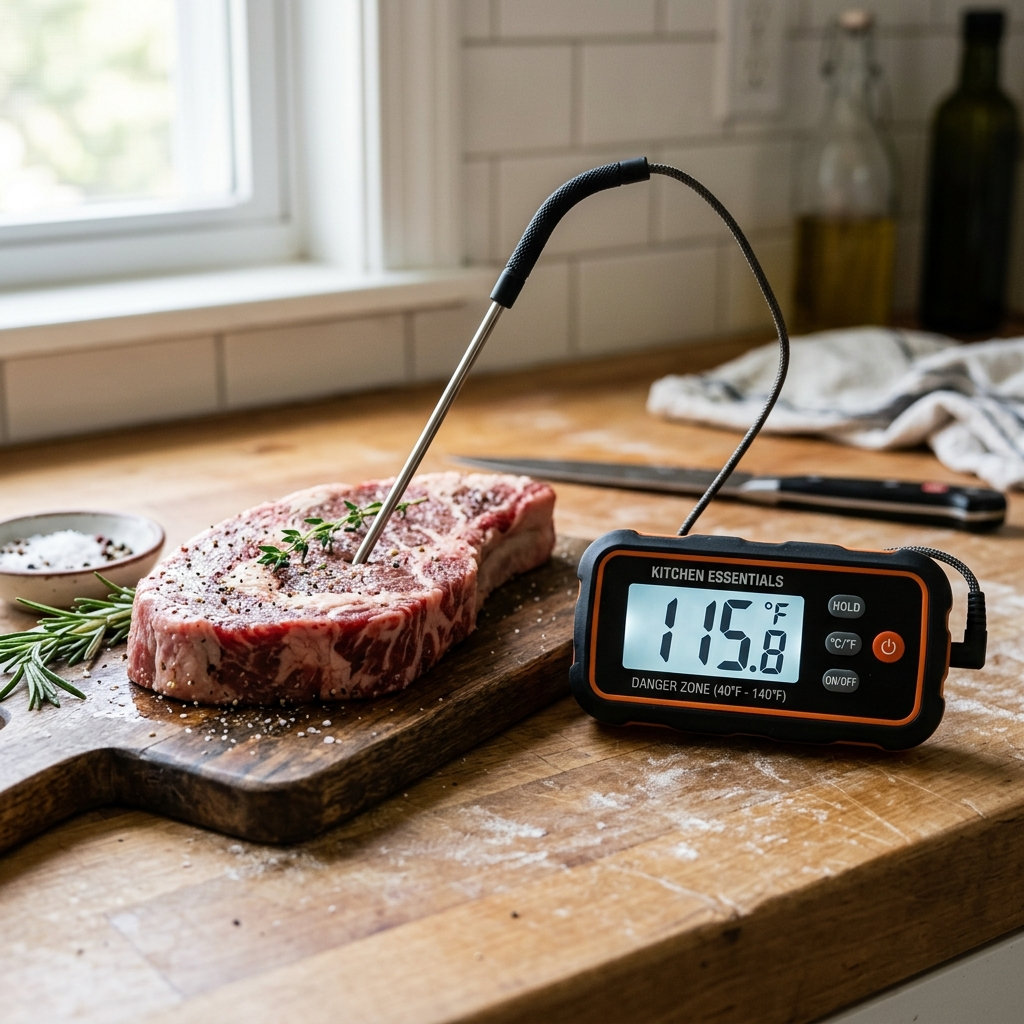
The food safety temperature danger zone is the temperature range between 40°F and 140°F (4°C to 60°C). Any perishable food sitting in this range is in the sweet spot for bacterial growth. Below 40°F, most harmful bacteria slow way down. Above 140°F, they start dying off. But right in the middle? They thrive.
The USDA sets this range for home cooks, and it’s not a random number pulled from thin air. Research consistently shows that common foodborne pathogens — Salmonella, E. coli, Listeria, Staphylococcus aureus — reproduce most aggressively between roughly 70°F and 125°F, which sits squarely inside the danger zone. The 40-to-140 bracket gives you a practical safety buffer on both ends.
Think of it like a highway. The most dangerous stretch isn’t at the very top speed or the very bottom — it’s the wide middle where conditions are “just right” for trouble.
Why the Exact Numbers Matter More Than You Think
You might wonder whether a few degrees really make a difference. They absolutely do. At 41°F, bacterial growth is sluggish. At 39°F, it practically stalls. That tiny two-degree gap is the reason your fridge should be set at or below 40°F — and why a fridge that’s quietly creeping up to 45°F is putting your leftovers at risk without you noticing.
On the hot end, 140°F is the threshold where heat begins destroying bacterial cells faster than they can reproduce. This is why hot holding temperatures recommended by the USDA for buffet lines, catering trays, and chafing dishes need to stay at or above that mark. Dropping to 130°F might not seem like a big deal, but you’ve just slid into the upper danger zone, and bacteria are already waking up.
How Bacteria Grow in the Danger Zone
Here’s the part that should grab your attention. Under ideal conditions — a warm temperature, moisture, and a nutrient-rich food source like meat, dairy, cooked rice, or cut melon — bacteria can double in number every 20 minutes.
Let that sink in for a second. A small colony of a few hundred cells can become millions in just a few hours. You won’t see it happening. You won’t smell it. The food will look and taste perfectly fine right up until the point it makes someone sick. That’s what makes the danger zone so insidious — your senses can’t detect the problem.
The CDC estimates that roughly 48 million Americans get sick from foodborne illness each year. A significant chunk of those cases trace back to improper temperature control after cooking, not undercooking on the grill. People obsess over getting the right internal temperature on their chicken thighs but forget about what happens during the two hours that chicken sits on the serving platter.
The 2-Hour Rule and the 1-Hour Rule
The standard guideline from the USDA is straightforward: perishable food should not sit in the danger zone for more than two hours total. If the ambient temperature is above 90°F — think summer cookouts, a hot garage, or a stuffy kitchen in July — that window shrinks to one hour.
And here’s a detail that catches a lot of people off guard. The clock doesn’t reset when you move food around. It’s cumulative. If your potato salad sat on the counter for 45 minutes while you were prepping other dishes, then spent another 50 minutes on the picnic table, you’ve already burned through most of your safe window. That food has been in the danger zone for 95 minutes, even though it never sat in one spot for very long.
⚠️ Food Safety Disclaimer: This article provides general food safety information based on current USDA and CDC guidelines. It is not a substitute for professional food safety training or ServSafe certification, especially if you operate a food truck, catering business, or any commercial food service. When in doubt, follow your local health department regulations.
Safe Food Temperature Ranges for Hot and Cold Foods
Keeping food safe is really about keeping it out of the middle. You want cold foods genuinely cold and hot foods genuinely hot, with as little time drifting through the danger zone as possible.
For cold foods — deli meats, dairy-based dips, cut fruit, egg salad, coleslaw — you need to hold them at 40°F or below. Nesting serving bowls in a larger pan of ice is the simplest trick for outdoor events, and it works surprisingly well. For hot foods like soups, stews, chili, and cooked meats, the target is 140°F or above, which usually means a chafing dish with a fuel canister, a slow cooker on the warm setting, or an electric warming tray.
| Food Type | Safe Holding Temperature | Common Method |
|---|---|---|
| Cold foods (salads, dairy, deli) | 40°F or below | Ice baths, refrigeration |
| Hot foods (soups, meats, casseroles) | 140°F or above | Chafing dishes, slow cookers |
| Reheated leftovers | 165°F internal | Stovetop, oven, microwave |
Notice that reheated leftovers have a higher target than freshly cooked hot foods. The USDA recommends bringing previously cooked food back up to 165°F to ensure any bacteria that may have grown during cooling and storage are destroyed. If you’re reheating leftover pulled pork for a second-day sandwich, you’ll want to make sure it hits that mark all the way through, not just on the surface. Our guide on reheating pulled pork without drying it out walks through techniques that get you to a safe internal temp while keeping the meat tender and juicy.
Real-World Scenarios: Where the Danger Zone Catches People Off Guard
Textbook rules are easy to memorize. Real life is messier. Let’s talk about the specific situations where the danger zone sneaks up on home cooks.
Tailgates, Potlucks, and Buffet Lines
You set up a spread for game day. There’s a big bowl of queso, fresh salsa, a tray of chicken wings, and some guacamole. Everyone’s eating casually over the course of three or four hours. By the second quarter, most of that food has been sitting at room temperature well past the two-hour mark, and nobody’s thinking about it because the game is close.
This is the single most common danger zone scenario for home cooks. The fix isn’t complicated, but it does require a little planning. Serve food in smaller batches and rotate fresh trays in from the fridge or cooler as the first batch runs low. Keep a queso warmer running for the party instead of letting the bowl cool down on the table. For cold items like salsa and guacamole, keep track of how long they’ve been out — salsa doesn’t stay safe at room temperature for long, and the clock starts the moment it leaves the fridge, not the moment guests start eating.
Leftovers and Meal Prep
Another sneaky scenario: you cook a big batch of rice or shredded chicken on Sunday for the week ahead. The food sits on the counter while you clean up, portion it into containers, and finally get everything into the fridge — maybe 90 minutes later. On paper, that’s within the two-hour window, so you’re fine, right?
Not necessarily. If the food was cooling slowly in a deep pot, the center of that pot might have lingered in the danger zone far longer than the surface. A big pot of chili can take hours to cool through the middle, even when the edges feel lukewarm to the touch. This is closely related to carryover cooking, where a large cut of meat or a deep pot of soup continues to hold intense internal heat long after it leaves the heat source. The center stays in the danger zone longer than you’d expect.
The fix is to cool food quickly. Spread it into shallow containers, no more than two inches deep. Don’t stack warm containers in the fridge — that insulates them and slows cooling dramatically. Stir large batches of soup or stew occasionally as they cool to release trapped heat.
Does Reheating Fix Food Left in the Danger Zone?
This is the single most common misconception I hear, and the honest answer is more nuanced than most people want it to be.
Reheating food to 165°F will kill most live bacteria. That part is true, and it’s why we reheat leftovers in the first place. But some bacteria — Staphylococcus aureus and Bacillus cereus being the two big offenders — produce heat-stable toxins as they multiply in the danger zone. Those toxins survive boiling temperatures. So even if you blast that leftover rice in the microwave until it’s steaming hot, the toxin that’s already in the food won’t break down.
This is why the “just reheat it and it’ll be fine” logic doesn’t hold up for food that’s been out too long. Reheating reduces the live bacterial count, which is helpful, but it doesn’t neutralize the chemical hazards already present in the food. The safest move is the boring one: if perishable food has been in the danger zone beyond the time limit, toss it.
I know that stings when it’s a big tray of expensive smoked brisket or a pot of homemade soup. But a bout of food poisoning stings a lot more, and it can be genuinely dangerous for young kids, older adults, and anyone with a compromised immune system.
Practical Tips to Keep Food Out of the Danger Zone
You don’t need a commercial kitchen setup to manage food temperatures well. A few simple habits make a massive difference, and most of them cost nothing.
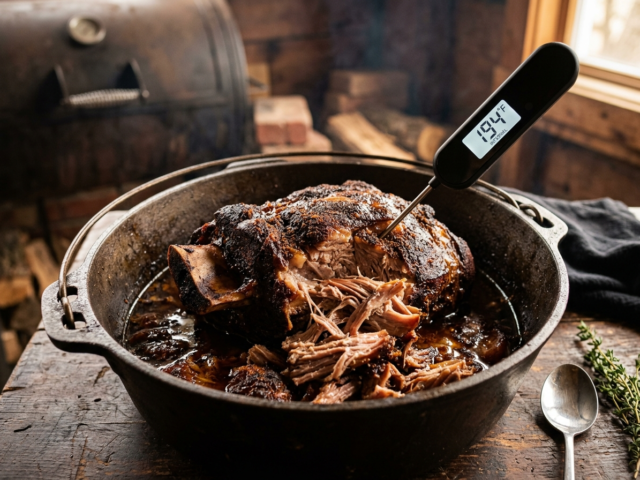
Invest in a reliable food thermometer. This is the single most useful tool for food safety, full stop. You can’t eyeball temperature, and pop-up timers are notoriously unreliable — they often pop too early or too late. A good instant-read thermometer costs less than $20 and takes the guesswork out of both cooking and holding temps. Use it to check your fridge, your cooler, and your buffet trays, not just the meat on the grill.
Pre-chill serving dishes for cold foods. If you spoon cold potato salad into a warm ceramic bowl that’s been sitting in the sun, you’ve already pushed that food closer to the danger zone before anyone takes a single scoop. Keep serving bowls in the fridge or cooler until the last possible minute.
Use the two-cooler system for outdoor events. Pack one cooler for drinks (which gets opened constantly) and a separate cooler for food (which stays closed as much as possible). Every time you crack the lid, warm air rushes in and the internal temperature climbs faster than you’d think.
Set a timer on your phone. When you put food out on the table, set an alarm for two hours — or one hour if it’s above 90°F outside. When the alarm goes off, either get the food back into cold storage or discard it. This removes the “has it really been that long?” guesswork that leads to most common food safety mistakes at home.
Don’t thaw meat on the counter. This one deserves a callout because so many people still do it. A frozen chicken breast thawing at room temperature spends its outer layers in the danger zone for hours while the center is still icy. Thaw in the fridge, in cold water (changed every 30 minutes), or in the microwave on the defrost setting.
Frequently Asked Questions
What is the temperature danger zone for food?
The temperature danger zone is the range between 40°F and 140°F (4°C to 60°C). Within this range, harmful bacteria grow rapidly on perishable foods like meat, dairy, eggs, cooked rice, and cut produce. The USDA recommends keeping cold foods at or below 40°F and hot foods at or above 140°F to stay safely outside this zone.
How long can food sit in the danger zone before it becomes unsafe?
Perishable food should not remain in the danger zone for more than two hours total. If the surrounding temperature is above 90°F, that limit drops to one hour. This time is cumulative, meaning it includes all the time the food spends between safe temperatures during prep, serving, transport, and cleanup — not just the time it sits on the table.
Does reheating food kill all the bacteria from the danger zone?
Reheating to 165°F kills most live bacteria, but it does not destroy heat-stable toxins already produced by certain bacteria like Staphylococcus aureus and Bacillus cereus. If food has been in the danger zone beyond the safe time limit, reheating will not make it safe to eat, regardless of how hot you get it.
What is the safe food temperature range for my refrigerator and freezer?
Your refrigerator should be set at or below 40°F, with 37°F being the ideal target. Use a standalone fridge thermometer to verify the actual temperature, since built-in dials are often inaccurate by several degrees. Your freezer should be at 0°F or below to keep food safely preserved.
The temperature danger zone isn’t a complicated concept, but it’s remarkably easy to ignore when you’re focused on getting the flavor right and keeping your guests happy. The biggest favor you can do for yourself and the people you cook for is to treat temperature control as a core part of the cooking process, not an afterthought you deal with during cleanup.
Start with one step this week: grab a decent instant-read thermometer and start checking your holding temps, not just your cooking temps. Once you build the habit, it becomes second nature — and your cookouts, potlucks, and Sunday meal preps get a whole lot safer without losing any of the fun.

16 Comments