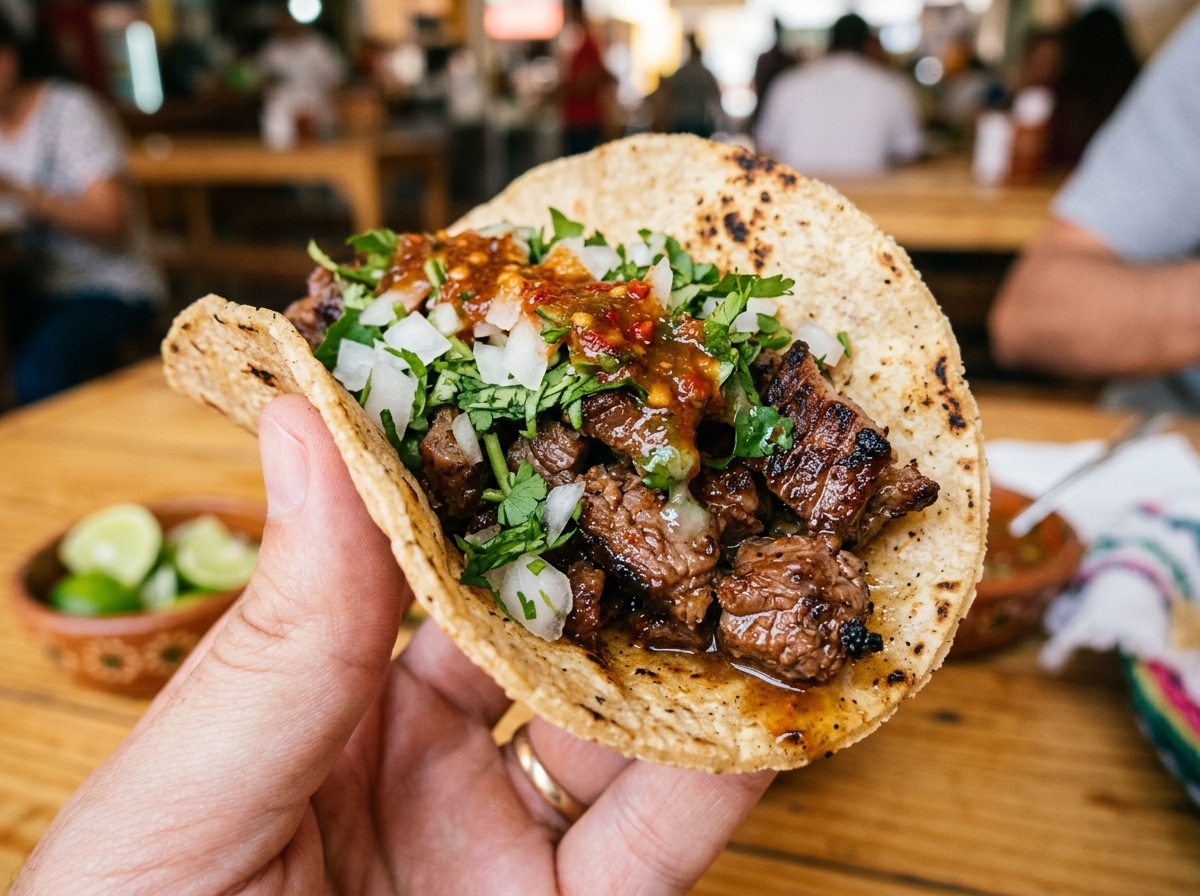
A single taco stand in Mexico City can serve eight different meats on any given night — each one seasoned differently, cooked on a different heat source, and paired with a different salsa. That’s not a restaurant gimmick. That’s just how seriously Mexico takes its taco meat.
If you’ve only ever had ground beef crumbled into a skillet with a packet of seasoning, you’ve been eating tacos, sure — but you’ve barely scratched the surface. The meat inside an authentic Mexican taco tells a story about geography, tradition, and centuries of cooking knowledge passed down through families and street vendors.
This guide breaks down every major meat you’ll find in Mexican tacos — what cut it comes from, how it’s prepared, why it tastes the way it does, and how you can recreate it at home. Whether you’re planning a backyard taco bar or just want to order smarter at your local taqueria, you’ll walk away knowing exactly what’s on that tortilla and why it belongs there.
Why Meat Is the Heart of a Mexican Taco
You can argue that salsa matters. You can make a case for the tortilla — and yes, choosing between a corn or flour tortilla absolutely changes the experience. But in Mexican taco culture, the meat is the main event. Everything else plays a supporting role.
That’s different from how many American-style tacos work, where cheese, sour cream, and lettuce often compete for attention. In Mexico, the protein stands front and center. A great taquero (taco maker) earns their reputation based on how they handle their meat — the marinade, the cook time, the char, the slice.
And here’s what makes it interesting: there’s no single “taco meat.” Mexico is a massive country with wildly different regional cuisines. A taco in Sonora looks and tastes nothing like one from Oaxaca or Yucatán. The meat changes, the preparation changes, and even the tortilla size and thickness shift depending on where you are.
Understanding these differences doesn’t just make you a better cook. It makes every taco you eat from this point forward a richer experience.
Beef: The Most Popular Taco Meat
Beef dominates the Mexican taco scene, but not in the way you might think. Forget the seasoned ground beef you find in fast food chains. Mexican beef tacos rely on specific cuts, careful preparation, and techniques that bring out deep, smoky, beefy flavor.
Carne Asada
If Mexican taco meats had a king, carne asada would wear the crown. The name literally translates to “grilled meat,” and it’s exactly that — beef, grilled over high heat until it develops a beautiful char on the outside while staying juicy inside.
The most common cuts used for carne asada are flank steak, skirt steak, and sometimes flap meat (called diesmillo in some regions). Skirt steak is the traditional favorite because its loose grain soaks up marinades like a sponge. A typical marinade includes lime juice, garlic, cilantro, jalapeño, and a touch of oil. Some families add a splash of beer or orange juice for sweetness.
Pro Tip: Let your carne asada rest for at least 5 minutes after grilling, then slice it against the grain into thin strips. Cutting with the grain gives you chewy, stringy pieces. Against the grain gives you tender bites that practically melt.
Carne asada tacos are huge in northern Mexico — Sonora, Chihuahua, and Nuevo León especially. Cross the border into Southern California, and you’ll find them everywhere too, which is part of what defines California-style tacos.
Bistec
Bistec (derived from “beefsteak”) refers to thinly sliced beef that’s quickly pan-fried or grilled on a flat top. It’s simpler than carne asada — usually just seasoned with salt, pepper, and maybe some onion.
You’ll find bistec tacos at almost every taqueria in Mexico. They’re the everyday, no-fuss option. The cuts used are typically sirloin or round steak, pounded thin so they cook in minutes. Don’t confuse bistec with carne asada — bistec is thinner, cooked faster, and usually doesn’t get the heavy marinade treatment.
Barbacoa
Barbacoa is slow-cooked beef that falls apart at the touch of a fork. Traditionally, it comes from the head of a cow (specifically the cheeks, called cachete), though many modern versions use beef chuck or brisket.
The traditional preparation is almost ritualistic. In central Mexico — particularly Hidalgo and the State of Mexico — the meat gets wrapped in maguey leaves and buried in an underground pit lined with hot coals. It cooks overnight, sometimes for 10 to 12 hours. The result is impossibly tender, almost silky beef with a mild, earthy flavor.
Did you know? The word “barbecue” actually comes from “barbacoa.” Spanish colonizers adapted the term from the Caribbean Taíno people, and it eventually evolved into the backyard grilling tradition we know today. But real barbacoa and American BBQ are very different things.
Weekend mornings in Mexico often mean barbacoa. Families line up at their favorite vendor, grab a kilo of meat, and make tacos at home with fresh tortillas, cilantro, onion, and a squeeze of lime. It’s a weekend ritual that’s been going on for generations.
Lengua (Beef Tongue)
This one makes some people hesitate, and that’s fair — the idea of eating tongue sounds unusual if you didn’t grow up with it. But lengua tacos are a taqueria staple, and for good reason.
Beef tongue is braised low and slow until tender, then diced and often finished on a hot griddle to get some crispy edges. The texture is unlike any other cut — incredibly smooth and rich, almost buttery. The flavor is mild and beefy, not gamey at all.
If you’ve never tried it, here’s your sign to order lengua next time you’re at a taqueria. It’s consistently one of the most popular options among people who actually eat at Mexican taco stands regularly. There’s a reason it’s on almost every Mexican taco meat menu.
Suadero
Suadero is a cut you almost never see outside of Mexico, and that’s a shame. It comes from the area between the belly and the leg of the cow — a thin layer of meat that’s part fat, part lean, and completely delicious.
The preparation is unique: suadero is typically slow-fried in its own fat (confit-style) until the outside crisps up while the inside stays tender. The texture sits somewhere between crispy carnitas and tender brisket. In Mexico City, suadero tacos are everywhere, especially at late-night street stands.
Pork: Mexico’s Versatile Taco Meat
Pork might actually be more versatile than beef in Mexican tacos. It takes on marinades beautifully, works with both slow and fast cooking methods, and shows up in some of Mexico’s most iconic taco styles.
Al Pastor
If you’ve seen a giant vertical spit of red-marinated meat spinning next to a flame with a pineapple perched on top, you’ve seen al pastor in action. It’s arguably the most famous taco filling in the world, and its backstory is fascinating.
Tacos al pastor trace their roots to Lebanese immigrants who arrived in Mexico — particularly Puebla — in the early 20th century. They brought shawarma with them. Mexican cooks took the vertical spit concept and completely reinvented it, swapping lamb for pork, adding dried chiles (guajillo, ancho, sometimes chipotle), achiote paste, pineapple, and spices like cumin and clove.
The pork is sliced impossibly thin, stacked on the spit called a trompo, and cooked as it slowly rotates. The taquero shaves off the outer layer as it crisps, catching it on a small tortilla. A slice of caramelized pineapple from the top of the spit lands on each taco.
The flavor profile is hard to describe if you haven’t tasted it — smoky, sweet, tangy, slightly spicy, and deeply savory all at once. Getting the perfect al pastor taco right at home is tricky because most people don’t have a trompo, but you can get close using a grill or even a regular oven with the right marinade.
Carnitas
Carnitas translates to “little meats,” and the name is almost too humble for how good they are. This is pork braised in its own lard until it’s fall-apart tender, then portions are crisped up so you get pieces that are both incredibly juicy and slightly crunchy.
The traditional home of carnitas is Michoacán, a state in western Mexico. There, carnitas vendors use massive copper pots called cazos, filling them with lard and various cuts of pork — shoulder, ribs, skin, and sometimes even organs. Everything cooks together for hours, and the result is a range of textures from silky soft to golden crispy.
The beauty of carnitas is in the contrast. Every bite should have some pull-apart tender meat and some crispy, caramelized edges. If your carnitas are uniformly soft with no crunch, they haven’t been finished properly.
Quick Fact: Authentic carnitas use very few seasonings — just salt, maybe some orange peel, and occasionally a splash of evaporated milk or Coca-Cola (yes, really). The flavor comes from the slow rendering of fat and the natural sweetness of the pork. It’s a “less is more” situation.
Chorizo
Mexican chorizo is nothing like Spanish chorizo. Spanish chorizo is a cured, dry sausage. Mexican chorizo is raw, fresh ground pork mixed with vinegar, dried chiles (usually guajillo and ancho), paprika, cumin, garlic, and sometimes cloves or cinnamon.
You cook it by squeezing it out of its casing into a hot skillet and crumbling it as it fries. It renders a gorgeous red-orange fat and develops an almost crumbly texture. Chorizo tacos often come topped with diced white onion, cilantro, and a squeeze of lime — nothing more.
Some regions make green chorizo (chorizo verde), which uses herbs like parsley, cilantro, poblano peppers, and sometimes tomatillos instead of dried red chiles. It’s milder and herbaceous, and it’s worth seeking out if you spot it.
Cochinita Pibil
Travel to the Yucatán Peninsula and you’ll find cochinita pibil, one of Mexico’s most distinctive pork dishes. It’s a whole pig (or more commonly now, a pork shoulder or butt) marinated in achiote paste and sour orange juice (naranja agria), wrapped in banana leaves, and slow-roasted in an underground pit called a pib.
The achiote gives the meat a vivid reddish-orange color, and the sour orange adds a citrusy tartness that balances the richness of the pork. The banana leaves impart a subtle, earthy aroma you can’t replicate with any other wrapping.
Cochinita pibil tacos are traditionally served with pickled red onions (cebollas encurtidas) made with habanero peppers. The combination of tangy, sweet, spicy, and fatty is absolutely addictive. It’s a regional treasure that’s gained fans worldwide, and rightfully so — the evolution of taco fillings owes a lot to this Yucatecan classic.
Chicken: The Lighter Option That Still Packs Flavor
Chicken tacos don’t get the street cred that beef and pork tacos do, but they hold their own — especially when prepared right. The key with chicken in Mexican tacos is that it’s almost never just plain grilled chicken breast thrown into a tortilla. It’s braised, shredded, marinated, or cooked in salsa.
Pollo Asado
Pollo asado means grilled chicken, and it’s the most straightforward chicken taco option. Bone-in chicken thighs are the preferred cut — they stay juicier than breasts and develop better flavor on the grill. The marinade usually involves citrus, garlic, oregano, cumin, and sometimes achiote.
The chicken gets grilled until the skin is charred and crispy, then it’s chopped or shredded and served in warm tortillas. If you’re planning a taco spread and want something that appeals to almost everyone, chicken tacos are a crowd-pleaser that still feels authentic when you use the right seasoning.
Tinga de Pollo
Tinga is shredded chicken braised in a smoky tomato-chipotle sauce. It originated in Puebla and has become one of Mexico’s most beloved home-cooked taco fillings.
The base sauce is simple: tomatoes, onion, garlic, and canned chipotles in adobo. You cook the chicken first (boiling or roasting), shred it, then simmer it in the sauce until it absorbs all that smoky, tangy flavor. The chipotles give tinga its signature heat — noticeable but not overwhelming.
Tinga works beautifully in tacos, on tostadas, or stuffed into a torta. It’s also one of the easiest Mexican taco fillings to make at home, which makes it a great starting point if you’re new to cooking Mexican food.
Other Meats and Proteins Worth Knowing
Beyond the big three — beef, pork, and chicken — Mexican tacos feature some proteins that might surprise you.
Cabrito (Baby Goat)
In northern Mexico, particularly Monterrey and the surrounding state of Nuevo León, cabrito is practically the regional dish. Young goat is roasted whole over mesquite coals, and the meat — tender and slightly gamy — gets tucked into flour tortillas.
Cabrito has a distinctive flavor that sits somewhere between lamb and venison. It’s lean, slightly sweet, and pairs perfectly with a simple salsa and fresh tortillas. If you ever visit Monterrey, don’t leave without trying it.
Cecina
Cecina is thinly sliced, salted, and partially dried beef or pork. In Oaxaca, cecina typically means pork that’s been lightly cured and grilled. In other regions, it refers to air-dried beef similar to tasajo.
The slight saltiness and concentrated beefy flavor make cecina tacos incredibly satisfying. They’re popular in markets throughout southern Mexico and deserve more attention outside the country.
Fish and Seafood
Baja California gave the world fish tacos, and they remain one of Mexico’s greatest contributions to street food. Beer-battered white fish (usually cod or mahi-mahi), fried until golden, and served in a corn tortilla with shredded cabbage, crema, and salsa — it’s simple perfection.
Shrimp tacos (tacos de camarón) are popular along both coasts, especially in Sinaloa and Nayarit. Grilled, fried, or sautéed in garlic butter — shrimp works in a taco no matter how you cook it.
How to Pick the Right Meat for Your Taco Night
Choosing your taco meat depends on a few things: your crowd, your cooking setup, and how much time you have.
If you’re cooking for a group and want variety, a smart combination is one slow-cooked option and one grilled option. Carnitas can go in the oven for hours while you prep carne asada for the grill. That way you’ve got two very different textures and flavors on the table.
For a taco cart catering setup, meats that hold well over time are your best bet. Carnitas, barbacoa, and tinga all stay great in warming trays. Carne asada and al pastor are best served fresh off the heat.
Pro Tip: Always offer at least one non-beef option. Pork carnitas or chicken tinga keeps things inclusive for guests who don’t eat beef. And don’t underestimate fish tacos — they’re often the surprise hit at taco bars.
Pay attention to your tortilla choice too. Heavier meats like barbacoa and carnitas do best on doubled-up corn tortillas because the juices can soak through a single tortilla. Lighter fillings like grilled chicken work fine with one tortilla.
Seasoning and Preparation: What Makes Mexican Taco Meat Different
Here’s something that separates Mexican taco meat from most American interpretations: restraint. That sounds counterintuitive, but Mexican cooks often use fewer spices than you’d expect. The emphasis is on quality ingredients — good dried chiles, fresh citrus, real garlic — rather than dumping in every spice in the cabinet.
Dried chiles are the backbone of Mexican taco seasoning. Guajillo chiles add a mild, fruity heat. Ancho chiles bring sweetness and depth. Chipotle adds smokiness. Most taco marinades combine two or three of these rather than using chili powder (which is a blended, generic American product).
Citrus plays a huge role too. Lime juice tenderizes and brightens beef. Sour orange juice (naranja agria) is essential in Yucatecan cooking. Even regular orange juice shows up in carnitas for a subtle sweetness.
And then there’s the cooking fat. Lard (manteca de cerdo) is the traditional cooking fat for many taco preparations. It adds richness and helps develop the crispy edges that make tacos like carnitas and suadero so special. If you’re using vegetable oil, you’ll get a different — and honestly, less flavorful — result.
The right taco sauces and toppings matter too. A simple salsa verde, some diced onion, cilantro, and a wedge of lime can elevate even basic taco meat into something memorable. Don’t bury good meat under mountains of cheese and sour cream — let the protein speak.
A Quick Note on Ground Beef
Let’s address the elephant in the room. Ground beef with taco seasoning is probably the most common taco filling in American households. And there’s nothing wrong with it as a quick weeknight dinner. It’s easy, fast, and kids tend to love it.
But it’s not really a Mexican thing. In Mexico, you almost never find ground beef in tacos. The texture and flavor profile just don’t match what Mexican taco culture values — which is identifiable cuts of meat, prepared with specific techniques that go back generations.
If you love your ground beef tacos, keep making them. But if you want to explore what different types of Mexican tacos actually taste like, try branching out to the meats listed above. Start with carne asada or carnitas — they’re approachable, forgiving to cook, and the flavor difference will speak for itself.
FAQ
What is the most popular meat for Mexican tacos?
Carne asada (grilled beef) and al pastor (marinated pork) are the two most popular taco meats across Mexico. Carne asada dominates in northern Mexico, while al pastor is king in Mexico City and central Mexico. Both are widely available at taquerias throughout the country.
Is Mexican taco meat spicy?
Not necessarily. Most Mexican taco meats have moderate seasoning with dried chiles that add flavor more than heat. The real spiciness usually comes from the salsas served alongside the taco, which you can add to your own taste. You control the heat level by choosing your salsa.
What cut of beef is best for tacos?
Skirt steak and flank steak are the best cuts for carne asada tacos because they absorb marinades well and cook quickly over high heat. For slow-cooked styles like barbacoa, beef cheeks or chuck roast work best because they become tender after hours of braising.
Can I make authentic Mexican taco meat at home?
Absolutely. Carne asada, carnitas, tinga, and barbacoa are all very doable at home with basic kitchen equipment. The key is using the right cuts of meat, real dried chiles instead of pre-made seasoning packets, and fresh citrus. A good recipe and some patience with cooking times will get you very close to taqueria quality.
What’s the difference between carne asada and bistec in tacos?
Carne asada uses thicker cuts (skirt or flank steak) that are marinated and grilled over open flame, then sliced. Bistec uses thinner slices of beef (usually sirloin or round) that are quickly pan-fried or griddled with minimal seasoning. Both are beef, but the flavor, texture, and preparation are quite different.
Your Next Taco Is Waiting
Mexican tacos have survived centuries of evolution, absorbed influences from Lebanese immigrants and indigenous cooking traditions, and still managed to stay true to one core idea: let the meat shine. Every region, every street vendor, every family has their own version — and that’s exactly what makes this food so endlessly interesting.
You don’t need a trompo or an underground pit to make great taco meat. Start with one style that excites you. Buy the right cut. Use real chiles and fresh lime. Give it the time it needs. And build your taco simply — good tortilla, great meat, a little salsa, onion, cilantro, and lime.
That’s all it takes. And once you taste the difference, you’ll understand why millions of people eat tacos every single day — and never get tired of them.