You pulled a burrito out of the fridge, and now you’re staring at it like it owes you money. It was amazing last night — warm, loaded, the tortilla perfectly soft. Now it’s a cold, dense cylinder of disappointment. You know if you just throw it in the microwave for two minutes, the tortilla will turn into a rubbery mess and the middle will still be ice cold. So what do you do?
Reheating a burrito sounds simple, but getting it right takes a little more thought than hitting “start” on the microwave. The good news? With the right method, your leftover burrito can taste almost as good as it did fresh off the grill. I’ll walk you through the best way to reheat a burrito depending on how much time you have, plus a few tricks that make a bigger difference than you’d think.
Before You Reheat: Small Steps That Make a Big Difference
Most people skip straight to picking a heating method, but the real secret to a great reheated burrito happens before any heat touches it.
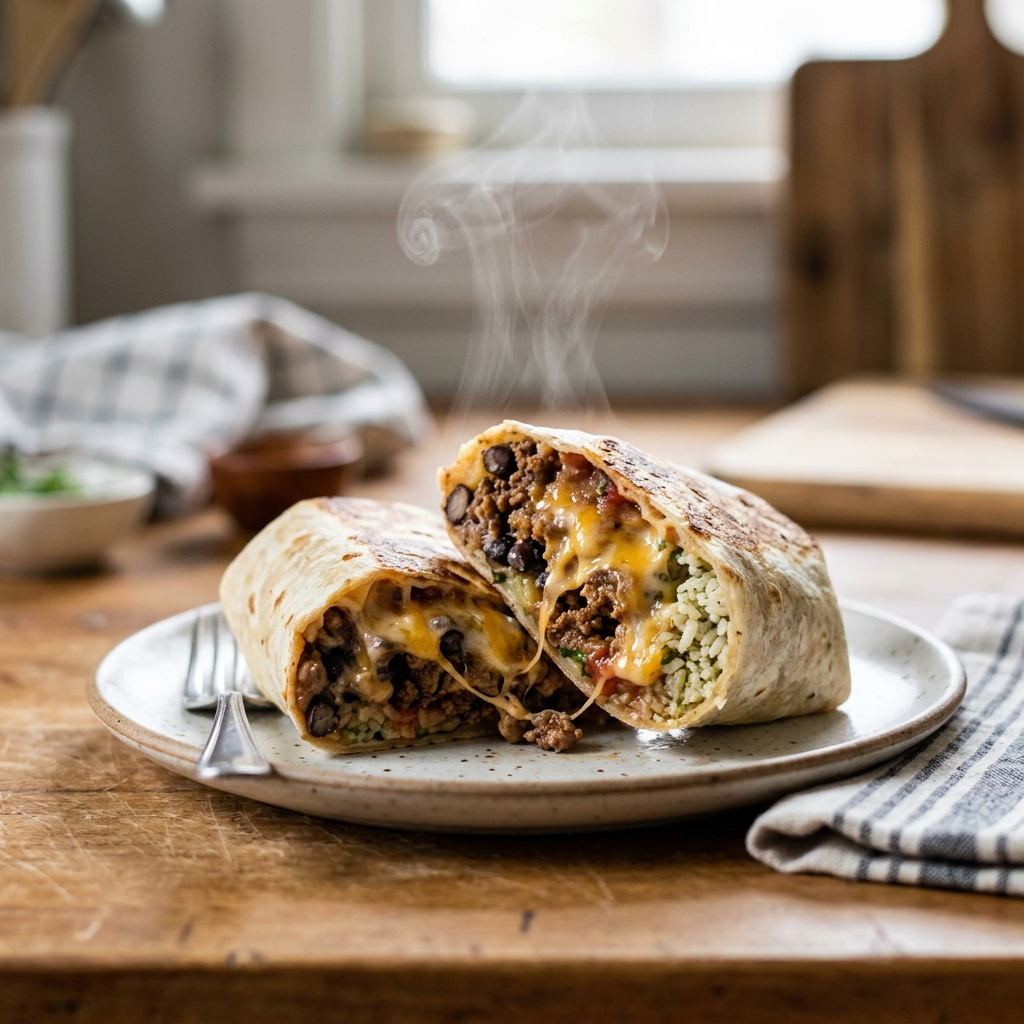
First, think about what’s inside your burrito. If it’s loaded with sour cream, guacamole, fresh salsa, or shredded lettuce, you’ve got a problem. Those cold toppings don’t reheat well. Sour cream separates into a greasy puddle, guacamole turns brown and bitter, and lettuce wilts into something sad and slimy. Here’s what actually works: carefully unwrap one end of the burrito and scoop out the cold toppings before you reheat it. Set them aside in a small bowl, warm everything else up, and then fold the cold stuff back in right before you eat. It takes an extra sixty seconds and the difference is huge.
Next, consider whether your burrito is coming from the fridge or the freezer. A refrigerated burrito usually needs about 15 to 25 minutes of reheating depending on the method. A frozen burrito is a different story entirely — it can take 30 to 45 minutes in the oven, and you’ll want to keep it wrapped in foil for most of that time so the outside doesn’t burn before the inside thaws. If you have the patience, letting a frozen burrito thaw in the fridge overnight gives you much more even results.
One more thing. The type of tortilla matters more than most people realize. A thick flour tortilla holds up beautifully to oven heat and gets wonderfully crisp. A thinner corn tortilla can dry out and crack if you’re not careful, so you’ll want to wrap it tightly in foil or add a light sprinkle of water before heating.
How to Reheat a Burrito in the Oven (The Best Way)
If you want the best possible texture — a warm, evenly heated filling wrapped in a slightly crispy tortilla — the oven is your best friend. This is the method I reach for when I have 20 minutes and actually want to enjoy my lunch instead of just fueling up.
Start by preheating your oven to 350°F. While it heats up, wrap your burrito snugly in aluminum foil. The foil does two things: it traps just enough steam to keep the filling moist, and it protects the tortilla from drying out and cracking before the center gets warm. This is especially important for bigger burritos packed with rice and beans, because those dense fillings take longer to heat through than you’d expect.
Place the foil-wrapped burrito directly on the oven rack or on a baking sheet. Let it heat for about 15 to 20 minutes if it came from the fridge, or 30 to 40 minutes if it was frozen. About halfway through, you can carefully flip it over to encourage even heating.
Now here’s the trick that takes it from good to great. For the last three to five minutes, open up the foil and expose the tortilla to the direct heat of the oven. This dries out the surface moisture and gives you that lightly crisped exterior that a fresh burrito has. Without this step, the tortilla stays soft and a little steamy — still perfectly edible, but not quite as satisfying.
The reason this method works so well comes down to how dry heat interacts with the food. The oven’s steady, surrounding warmth penetrates the burrito gradually, which means the rice, beans, and meat all reach a similar temperature at roughly the same time. Compare that to a microwave, which excites water molecules unevenly and creates those frustrating hot-and-cold pockets. If you’ve ever reheated pulled pork and noticed how gentle, indirect heat keeps it juicy, the same principle applies here.
Pro Tip: If your burrito is rice-heavy, sprinkle a teaspoon of water over the filling before wrapping it in foil. Rice dries out faster than meat or beans in the oven, and that tiny bit of moisture keeps the grains from turning hard and crunchy.
How to Reheat a Burrito in the Microwave (The Fast Way)
Look, I get it. Sometimes you have three minutes and a meeting in five. The microwave is the fastest way to reheat a burrito, and while it won’t give you the crispiest tortilla, you can still avoid the dreaded soggy-rubbery disaster with a few adjustments.
The biggest mistake people make is microwaving the burrito at full power for two minutes straight. What happens is the outer layer of the tortilla overheats and turns chewy while the dense center stays cold. Instead, use medium power — about 50 to 60 percent — and heat in 45-second intervals, flipping the burrito over between each one. This slower approach gives the heat time to travel inward without destroying the tortilla’s texture.
Wrapping the burrito in a damp paper towel helps too. The damp towel creates a gentle steam environment that keeps the tortilla pliable instead of tough. Just make sure the towel is damp, not soaking wet. Too much water and you’ll end up with a soggy mess, which is exactly what you’re trying to avoid.
If your burrito is particularly thick, consider cutting it in half before microwaving. I know that feels wrong — a burrito is supposed to be a handheld cylinder of joy — but exposing the cross-section lets the microwaves reach the center much faster. You’ll get a more evenly heated result in less time.
One honest caveat: no matter what tricks you use, a microwaved burrito will never have the crisp tortilla that the oven delivers. The microwave heats by exciting water molecules, and that moisture gets trapped against the tortilla. If texture matters to you, save the microwave for days when speed is the only priority.
How to Reheat a Burrito in an Air Fryer
The air fryer is a relatively new player in the reheating game, and it’s surprisingly good for burritos. Think of it as a compact convection oven — it circulates hot air around the food, which means you get that crispy exterior much faster than a regular oven.
Preheat your air fryer to 350°F. Place the burrito in the basket seam-side down so it doesn’t unroll during cooking. If the burrito came from the fridge, heat it for about 5 to 8 minutes, flipping halfway through. For a frozen burrito, you’ll need closer to 12 to 15 minutes at a slightly lower temperature, around 325°F, so the outside doesn’t burn before the inside thaws.
The air fryer’s strength is the tortilla. You’ll get a genuinely crispy, almost fried texture on the outside that the oven takes much longer to achieve. The trade-off is that air fryers have smaller baskets, so a massive, overstuffed burrito might not fit. And because the hot air is so aggressive, you need to keep an eye on it — the line between perfectly crisp and burnt is thinner than you’d think.
If you notice the tortilla browning too quickly but the inside still feels cold, wrap the burrito loosely in foil for the first few minutes and then remove the foil for the final two minutes to crisp up the exterior.
How to Reheat a Burrito on the Stovetop
This method takes a little more hands-on attention, but it gives you excellent control over the final result. It works especially well for burritos that are on the smaller side or ones you’ve already cut in half.
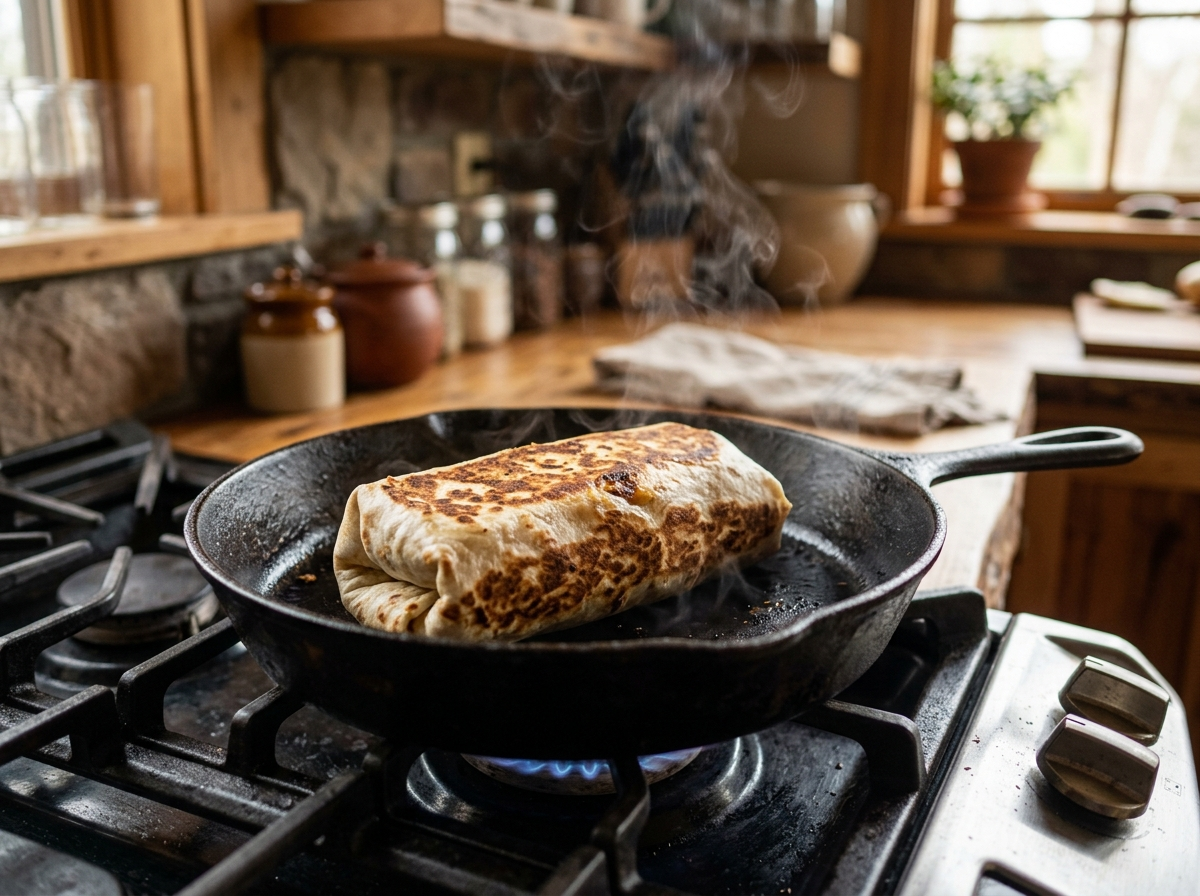
Heat a non-stick skillet or cast iron pan over medium heat. You don’t need oil — the tortilla has enough natural fat to prevent sticking, and adding oil can make the exterior greasy rather than crisp. Place the burrito seam-side down in the dry pan and let it heat for about 3 to 4 minutes per side, pressing down gently with a spatula to ensure good contact with the pan.
The stovetop method gives you a beautifully toasted tortilla with distinct golden-brown spots, almost like a quesadilla. The downside is that the heat only comes from the bottom of the pan, so the very center of a thick burrito might not get as hot as you’d like. To solve this, you can cover the pan with a lid for the first few minutes to trap some steam and help the filling warm up, then remove the lid to crisp the tortilla for the final minute or two.
Understanding how heat moves through dense fillings helps here. Heat affects muscle fibers in any meat filling by squeezing out moisture as temperatures climb, which is why gentle, gradual reheating keeps everything juicier than blasting it with high heat. The stovetop gives you the control to manage that process closely.
Reheating a Burrito: Method Comparison at a Glance
| Method | Time (Fridge) | Time (Frozen) | Tortilla Texture | Evenness of Heating |
|---|---|---|---|---|
| Oven | 15–20 min | 30–40 min | Lightly crisp | Excellent |
| Microwave | 2–3 min | 5–7 min | Soft, can be rubbery | Uneven |
| Air Fryer | 5–8 min | 12–15 min | Very crisp | Good |
| Stovetop | 8–10 min | Not ideal | Toasted, golden spots | Moderate |
Pick the method that fits your schedule. If you have 20 minutes, the oven is hard to beat. If you have three minutes, the microwave will do the job. The air fryer hits a nice middle ground for speed and texture.
Food Safety Tips for Reheating Burritos
This part isn’t as fun as talking about crispy tortillas, but it matters. A burrito is a dense package of meat, dairy, rice, and beans — all of which are prime territory for bacterial growth if handled carelessly.
The USDA recommends reheating all leftovers to an internal temperature of 165°F. If you have a kitchen thermometer, stick it into the center of the burrito to check. This is especially important for burritos containing chicken, ground beef, or pork, since those proteins carry a higher risk of foodborne illness when underheated.
Food Safety Note: The information in this section is general guidance based on USDA recommendations and is not a substitute for professional food safety advice. When in doubt, follow the specific guidelines from the USDA Food Safety and Inspection Service for reheating leftovers.
How long your burrito has been sitting in the fridge matters too. The general rule is that cooked leftovers are safe for three to four days in the refrigerator at 40°F or below. After that, the risk of bacterial growth increases significantly, even if the burrito looks and smells fine. If you know you won’t eat it within that window, freeze it right away. And never leave a burrito sitting out at room temperature for more than two hours — that’s the temperature danger zone where bacteria multiply fastest.
One of the most common food safety mistakes people make is assuming that if food looks and smells okay, it’s safe to eat. Bacteria that cause foodborne illness don’t always produce noticeable changes in appearance or odor, so when in doubt, throw it out.
FAQ: Your Burrito Reheating Questions Answered
What is the best way to reheat a burrito?
The best way to reheat a burrito is in the oven at 350°F, wrapped in foil for 15 to 20 minutes, with the foil opened for the last few minutes to crisp the tortilla. This method heats the filling evenly and gives you the closest texture to a fresh burrito. If you’re short on time, the air fryer is a strong second choice.
How do you reheat a burrito without it getting soggy?
Sogginess happens when moisture gets trapped against the tortilla, which is exactly what the microwave does. To avoid it, use a dry-heat method like the oven, air fryer, or stovetop. If you must use the microwave, wrap the burrito in a damp (not wet) paper towel and heat at medium power in short intervals. Also, remove any cold, wet toppings like salsa and sour cream before reheating and add them back afterward.
Can you reheat a Chipotle burrito?
Absolutely. Chipotle burritos reheat just like any other burrito, though their large size and heavy fillings (especially the rice and beans) mean they take a bit longer to heat through. The oven method works best for a Chipotle burrito because the dense filling needs that slow, even heat. Just remember to scoop out the sour cream and guacamole first — Chipotle loads those on generously, and they don’t reheat well.
How long does a reheated burrito last?
Once you’ve reheated a burrito, you should eat it right away. Reheating leftovers more than once increases the risk of bacterial growth because the food passes through the danger zone multiple times. If you have a large burrito and know you won’t finish it, cut off the portion you want to eat and reheat only that piece.
Your leftover burrito doesn’t have to be a sad, soggy disappointment. Whether you’ve got 20 minutes for the oven or just three minutes for the microwave, a little intention goes a long way. Scoop out the cold toppings, choose the right method for your schedule, and give that tortilla a chance to crisp up.
Next time you’re wrapping up last night’s dinner, try the oven method with the foil-open trick at the end. You might find yourself deliberately making extra burritos just so you have an excuse to reheat them the next day. And if you’re curious about how carryover cooking affects your freshly made burritos before they even hit the fridge, that’s worth a read too — it changes how you think about resting your meat fillings.
Now go warm up that burrito. You’ve earned it.