You’ve followed the recipe. You used fresh ingredients. But your food still tastes flat. Something’s missing, and it’s probably not more salt. The real gap is almost always one of three things: the right spice, the right oil, or a splash of acid. These are the building blocks of cooking — spices, vinegars, and oils — and once you understand how they work together, everything you make will taste noticeably better.
Why Spices, Vinegars, and Oils Are the Real Foundation of Flavor
Most people think flavor comes from the main ingredient — the chicken, the beef, the vegetables. Good ingredients matter, absolutely. But the depth, the brightness, the warmth you taste in a great restaurant dish? That usually comes from how the cook layered their cooking spices, vinegars, and oils.
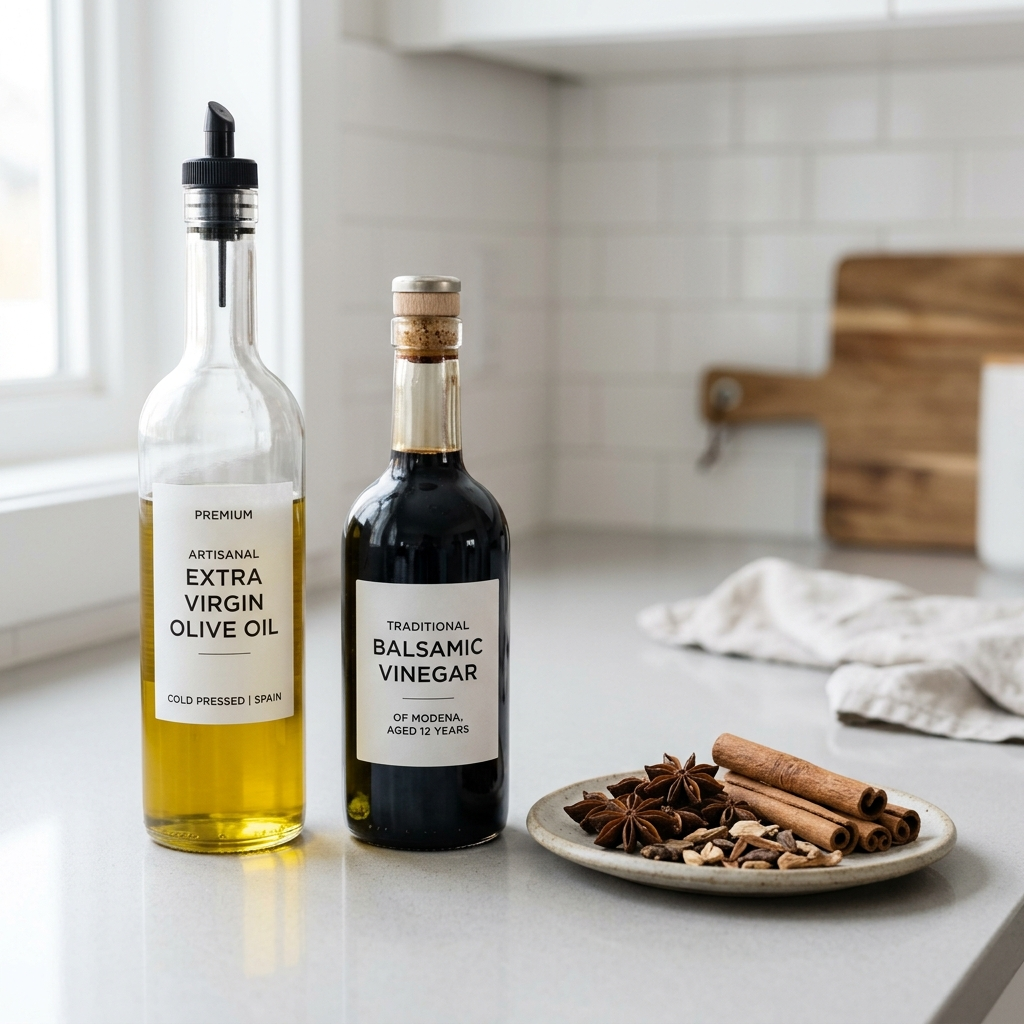
Think of it this way. Your main ingredient is the melody. Spices are the harmony. Oil is the instrument carrying the sound. And vinegar? That’s the moment the song shifts key and suddenly grabs your attention.
Here’s what actually happens in your pan. Many of the flavor compounds in spices are fat-soluble, meaning they dissolve in oil, not water. That’s why a curry bloomed in hot oil tastes completely different from one where you just dumped the spices into a watery sauce. The hot oil pulls out flavors that water simply can’t reach. Harold McGee explains this principle in detail in his book On Food and Cooking, and it’s one of those “aha” moments that permanently changes how you approach a recipe. [Flag: Insert external link to a verified Harold McGee reference or publisher page.]
Then there’s acid. A squeeze of lime or a splash of vinegar at the end of cooking doesn’t add a “sour” taste so much as it brightens everything else. It cuts through richness, balances sweetness, and makes the spices pop. If you’ve ever wondered why your homemade salsa tastes dull compared to the good stuff, acid balance is usually the culprit. I covered this tug-of-war in more detail in acid and fat: the yin and yang of cooking.
These aren’t just random pantry items. They’re a system. And when you treat them that way, your cooking shifts from “fine” to “how did you make this?”
Spices — The Personality of Your Food
Spices are what make Mexican food taste Mexican and Indian food taste Indian. They carry the cultural identity of a dish. But if you’re standing in the spice aisle feeling overwhelmed, here’s the honest truth: you don’t need 40 jars. You need about eight to ten, and you need to know how to use them.
The Starter Spices You Actually Need
Forget the pre-made “everything” blends for a minute. The essential cooking ingredients in the spice world break down into a few simple categories.
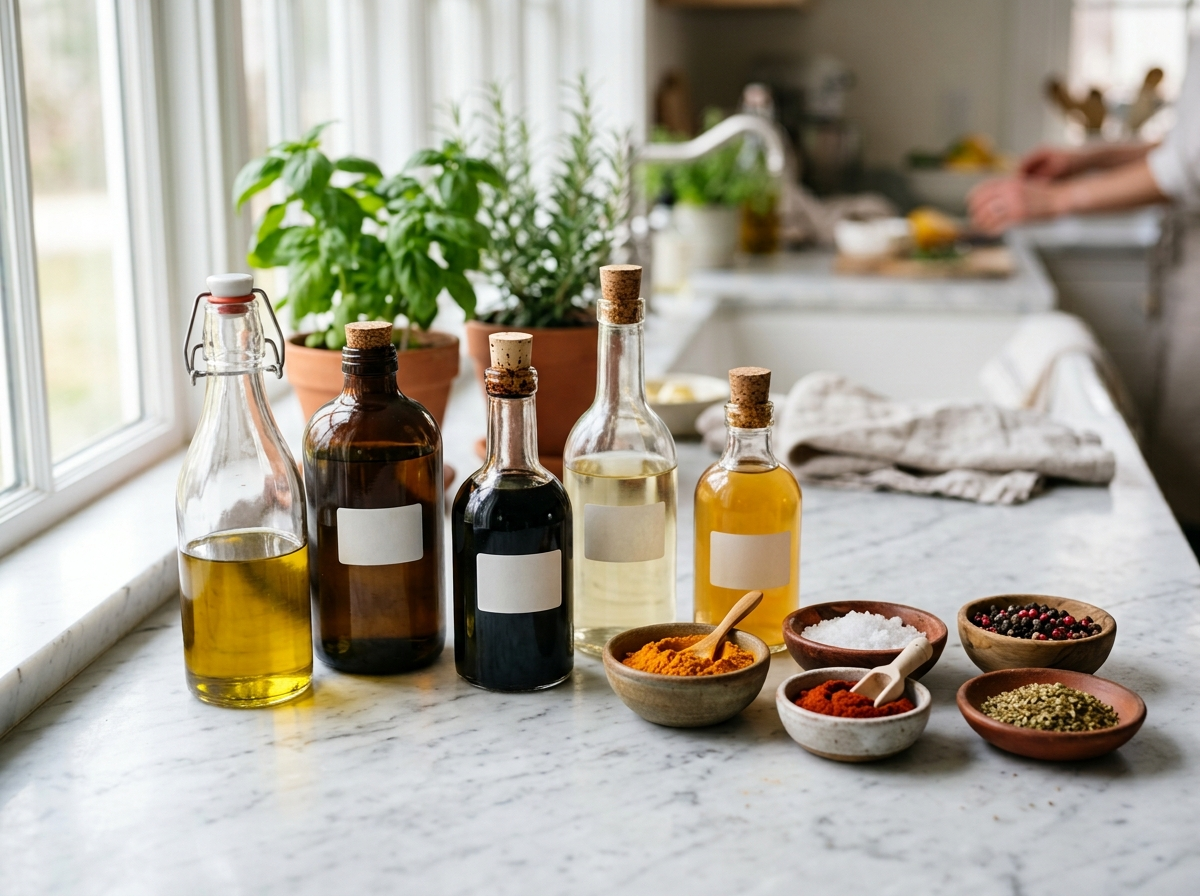
You want warmth: cumin, smoked paprika, and cinnamon. You want heat: cayenne or crushed red pepper. You want earthiness: coriander and turmeric. And you want aromatics: garlic powder and onion powder. Yes, fresh garlic and onion are better when you have the time. But the powdered versions are legitimate flavor building blocks in cooking for quick weeknight meals, and there’s no shame in keeping them on hand.
If you want to go a step further and start mixing your own combinations, DIY spice blends is a great place to start. You’ll save money and skip the anti-caking agents in most store-bought mixes.
How to Bloom Spices in Oil (and Why It Matters)
Here’s the single biggest upgrade most home cooks can make. Instead of adding your spices to a liquid, add them to hot oil first. This is called blooming, and it takes about 30 to 60 seconds.
Heat a couple tablespoons of oil in your pan. Add your ground spices. Stir constantly until they smell fragrant — you’ll know it because your whole kitchen will suddenly smell incredible. Then add your onions, your liquids, whatever comes next in the recipe.
Why does this work? Those flavor compounds are fat-soluble. The hot oil draws them out of the spice and distributes them evenly through the dish. America’s Test Kitchen has tested this extensively, and the difference in blind taste tests is significant. Blooming your spices in oil versus stirring them into a simmering sauce is like hearing a song through good headphones versus a tinny phone speaker. Same song, totally different experience. [Flag: Insert external link to a verified America’s Test Kitchen article or resource on blooming spices.]
One warning, though. Ground spices burn fast. If your oil is smoking, it’s too hot. Pull the pan off the heat for a few seconds, let it cool slightly, then add your spices. Burnt spices taste bitter, and no amount of vinegar will fix that.
Oils — The Canvas Everything Paints On
Oils get way more attention than they deserve in some areas and way less in others. The truth is, you probably only need two or three oils in your kitchen, and you need to know what each one does.
Understanding Smoke Points Without Overthinking It
Every oil has a smoke point — the temperature where it starts to break down, smoke, and taste bitter. You don’t need to memorize exact numbers, but you do need the general idea.
For high-heat cooking like searing a steak or stir-frying, you want a neutral oil with a high smoke point. Avocado oil and refined peanut oil both handle temperatures above 450°F without breaking a sweat. For medium-heat work like sautéing vegetables, regular olive oil is perfectly fine. And yes, you can cook with extra-virgin olive oil. The idea that it becomes toxic at moderate heat is one of those kitchen myths that won’t die. Its smoke point sits around 375°F, which covers most stovetop cooking you’ll do on a Tuesday night.
For finishing — drizzling over a finished dish, tossing a salad, or dipping bread — use your good stuff. A fruity extra-virgin olive oil, a nutty sesame oil, or a grassy avocado oil. These are flavor oils, and heat destroys the delicate compounds that make them special. Save them for the end.
If you want a deeper look at how fat carries flavor through a dish, the pantry as a flavor library covers how to think about your ingredients as a toolkit rather than a grocery list.
Flavor Oils vs. Workhorse Oils
Here’s the simple framework. Your workhorse oil is the one you reach for every day. It’s neutral, it’s affordable, and it handles heat. For most people, that’s canola, vegetable, or avocado oil. You use it for frying, sautéing, and roasting.
Your flavor oil is the one you use in small amounts to add character. Toasted sesame oil in a stir-fry. A drizzle of chili oil over noodles. A splash of walnut oil on a fall salad. These oils are expensive, and you use them by the teaspoon, not the cup.
The mistake I see most often? People cooking with their expensive extra-virgin olive oil at high heat and then wondering why the dish tastes flat. You’re literally burning off the flavor you paid extra for. Use the cheap stuff for the pan and the good stuff for the plate.
Vinegars — The Secret Weapon Most Home Cooks Ignore
If spices are the personality and oils are the canvas, vinegar is the editor. It tightens everything up. It takes a dish that’s “almost there” and pushes it over the edge. And yet, most home kitchens have exactly one bottle of white vinegar sitting in the back of a cabinet, probably expired.
A Quick Tour of the Vinegar Shelf
You don’t need a huge collection, but having three or four types of vinegar will change your cooking more than almost any other upgrade.
Apple cider vinegar is your all-rounder. It’s slightly sweet, slightly fruity, and works in everything from barbecue sauces to salad dressings to braised greens. If you only buy one vinegar, make it this one.
Red wine vinegar brings a sharper, more assertive tang. It’s perfect for vinaigrettes, marinades, and anything Mediterranean. When you deglaze a pan after searing meat, a splash of red wine vinegar picks up all those browned bits and turns them into a quick pan sauce.
Rice vinegar is milder and slightly sweet. It’s essential for Asian-inspired dishes, quick pickling, and anywhere you want acid without aggression. Unseasoned rice vinegar is more versatile than the seasoned kind, which already has sugar and salt added.
Balsamic vinegar is the one people love to drizzle on everything, and that’s fine — but the cheap stuff is basically flavored syrup. Real aged balsamic is thick, complex, and expensive. Use the affordable kind for cooking and dressings, and save the good stuff for finishing strawberries or vanilla ice cream.
For a more detailed look at how fresh herbs and spices pair with these acids, the beginner’s guide to fresh herbs and spices walks through the combinations that work best.
When to Add Vinegar (Timing Changes Everything)
This is where most people go wrong. They add vinegar at the beginning of cooking and wonder why they can’t taste it. Acid is volatile. It cooks off. If you add a splash of vinegar at the start of a long braise, most of the bright tang will evaporate, leaving behind a mellow sweetness.
That’s not always bad — sometimes you want that mellow depth. But if you want the vinegar to actually taste like vinegar, add it at the end. A tablespoon of apple cider vinegar stirred into a pot of collard greens right before serving will wake the whole dish up in a way that adding it an hour earlier simply won’t.
Think of it like seasoning with salt. You taste, you adjust, you add a little more at the end. Vinegar works the same way. If you want a deeper understanding of how salt and acid interact, the right salt for the right job is worth a read — because getting your salt right makes your acid adjustments much easier.
Putting It All Together: How Spices, Oils, and Vinegars Work as a Team
Here’s where the magic happens. Let’s walk through a real example so you can see how these cooking building blocks stack on top of each other in a single dish.
Imagine you’re making a simple weeknight chicken. You start by heating a neutral oil in your skillet — that’s your workhorse oil, doing its job of transferring heat evenly. You bloom some cumin and smoked paprika in that hot oil for 30 seconds, and suddenly your kitchen smells like a taqueria. You sear the chicken in that spiced oil, building a crust full of flavor.
After the chicken comes out, you deglaze the pan with a splash of apple cider vinegar, scraping up all those browned, spice-infused bits. You let it reduce for a minute, then finish with a drizzle of good olive oil and a squeeze of lime. That’s all three building blocks working in sequence: oil carried the heat and dissolved the spice compounds, the spices gave the dish its personality, and the vinegar and lime brightened everything at the end.
The result tastes layered and complex, but you used maybe five ingredients and 20 minutes. That’s the power of understanding your flavor building blocks in cooking.
If you want to dig deeper into how umami fits into this picture — because it absolutely does — what is umami flavor in cooking is a great next read.
Storing Your Building Blocks So They Actually Last
All of this only matters if your ingredients are still good when you reach for them. And here’s the part most people skip.
Ground spices lose their potency fast. Most will start tasting dull after six months, and after a year they’re basically flavored dust. Buy in small quantities, and smell your spices before using them. If you can’t smell anything when you open the jar, the jar belongs in the trash.
Whole spices last much longer — up to two or three years — because their volatile oils stay sealed inside the seed or bark until you grind them. A cheap coffee grinder dedicated to spices is one of the best investments you can make for your cooking.
Oils go rancid when exposed to heat, light, and air. Store them in a cool, dark cabinet, not next to the stove. If your oil smells like crayons or old paint, it’s rancid. Throw it out. Rancid oil won’t make you sick, but it will make your food taste terrible, and no amount of spice will cover it up.
Vinegar is the most forgiving of the three. Because of its high acidity, it essentially lasts forever. It might get cloudy or develop sediment over time, but it’s still safe to use. The exception is flavored vinegars with fresh herbs or fruit in them — those should go in the fridge and get used within a few months.
Frequently Asked Questions
What are the most essential cooking spices for beginners?
Start with cumin, smoked paprika, garlic powder, onion powder, cayenne, cinnamon, and black pepper. These seven will cover most cuisines you’ll cook at home. Add oregano and coriander as you get more comfortable. The key is to buy small jars and replace them when they lose their aroma, rather than stocking up on bulk quantities you’ll never finish.
Which cooking oil should I use for high heat?
Avocado oil and refined peanut oil are your best bets for searing, stir-frying, and deep-frying. Both handle temperatures above 450°F without smoking or breaking down. For everyday sautéing at medium heat, regular olive oil works perfectly well. Save your expensive extra-virgin olive oil for dressings and finishing drizzles where its flavor can actually shine.
How do I know when to add vinegar to a dish?
Add vinegar early if you want a mellow, rounded depth — the acid will cook off and leave behind sweetness. Add it at the very end if you want a bright, tangy punch that cuts through richness. When in doubt, start with a small splash at the end, taste, and add more. You can always add acid, but you can’t take it out.
Can I substitute one vinegar for another?
Most of the time, yes, with some adjustments. Apple cider vinegar and white wine vinegar swap easily in most recipes. Rice vinegar is milder, so you might need a little more. Balsamic is sweeter and thicker, so it works best as a substitute in dressings and glazes rather than in delicate sauces. The flavor will shift, but the dish won’t fall apart.
You don’t need to overhaul your entire pantry this weekend. Pick one thing. Maybe you finally buy a bottle of apple cider vinegar and start finishing your soups and stews with a splash. Maybe you try blooming your cumin in oil next time you make tacos instead of dumping it into the liquid. Maybe you stop cooking with your good olive oil and save it for drizzling.
Small shifts, big difference. Your food has more potential than you think — it just needs the right building blocks to bring it out.