
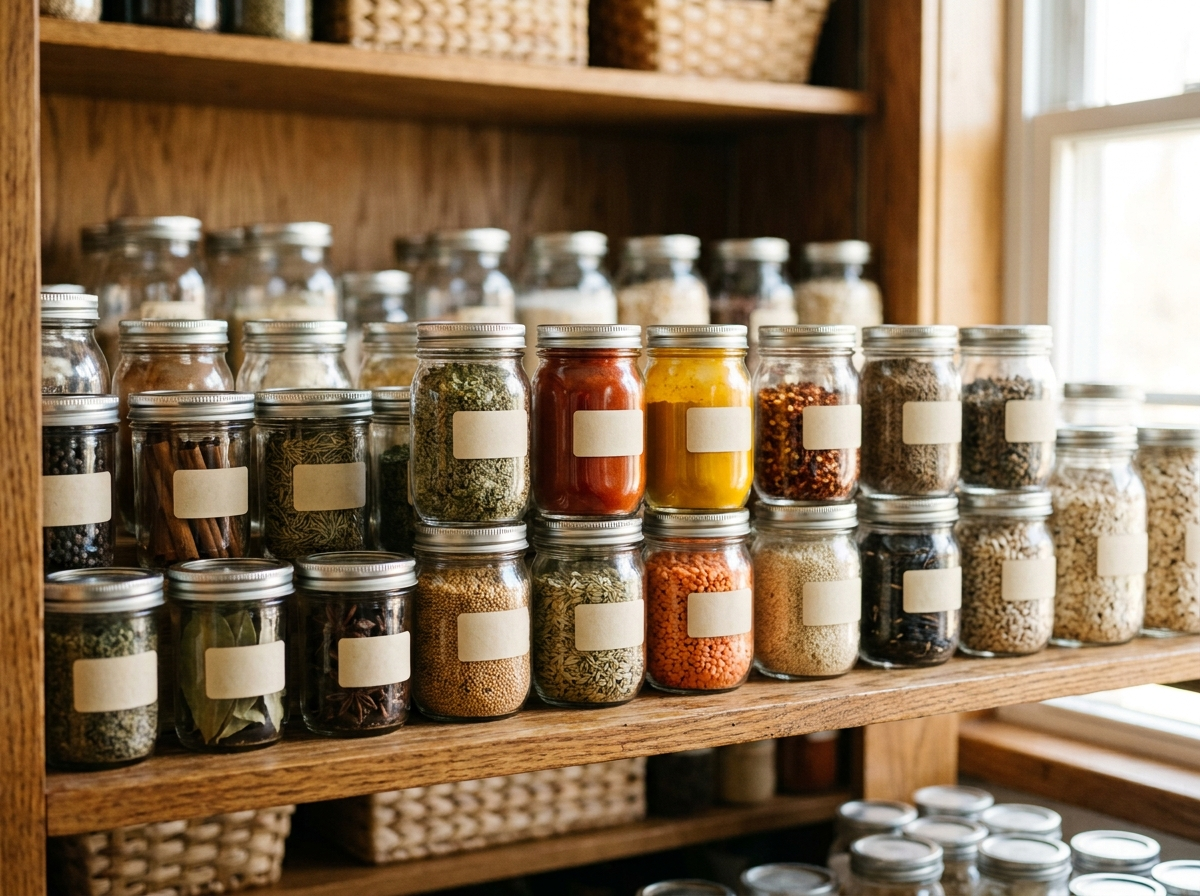
You open the pantry door on a Wednesday night. There’s pasta, a can of beans, some rice, and a sad jar of garlic powder that’s been there since 2021. You can make dinner, sure. But it’s going to taste like dinner, not like dinner. The difference between a meal that gets polite nods and one that gets “wait, you made this?” reactions almost always comes down to what’s sitting on those shelves.
Think of your pantry as a flavor library. Just like a real library gives you access to thousands of stories, a well-stocked pantry gives you access to thousands of flavor combinations. You don’t need every book ever written. You need the right genres, the right classics, and a few surprises you reach for when inspiration hits.
A flavor pantry is a collection of shelf-stable ingredients chosen specifically for their ability to build, layer, and transform taste — not just fill a plate.
What Does “Pantry as a Flavor Library” Actually Mean?
Most people stock their pantry for convenience. Canned soup, boxed mac and cheese, bags of chips. Nothing wrong with that on a busy night. But a flavor pantry works differently. Every item earns its shelf space because it makes other food taste better.
Here’s the practical difference. A convenience pantry asks, “What can I eat right now without cooking?” A flavor pantry asks, “What can I add to what I’m already cooking to make it sing?”
I learned this the hard way years ago. I had a kitchen full of ingredients but kept reaching for the same three things: salt, pepper, and whatever hot sauce was closest. My food was fine. Then I bought a bottle of fish sauce on a whim, added a teaspoon to a pot of chili, and suddenly the whole dish had a depth I couldn’t explain. That tiny bottle unlocked something. I started thinking of my pantry less like a storage closet and more like a toolkit.
The best part? You don’t need to overhaul everything at once. A flavor library grows over time, one smart purchase at a time.
The Five Flavor Categories Your Pantry Needs
You don’t need 87 jars of spices to cook great food. You need coverage across five flavor categories. Think of these as the genres in your library. If you only stock one genre, your meals will start to sound the same.
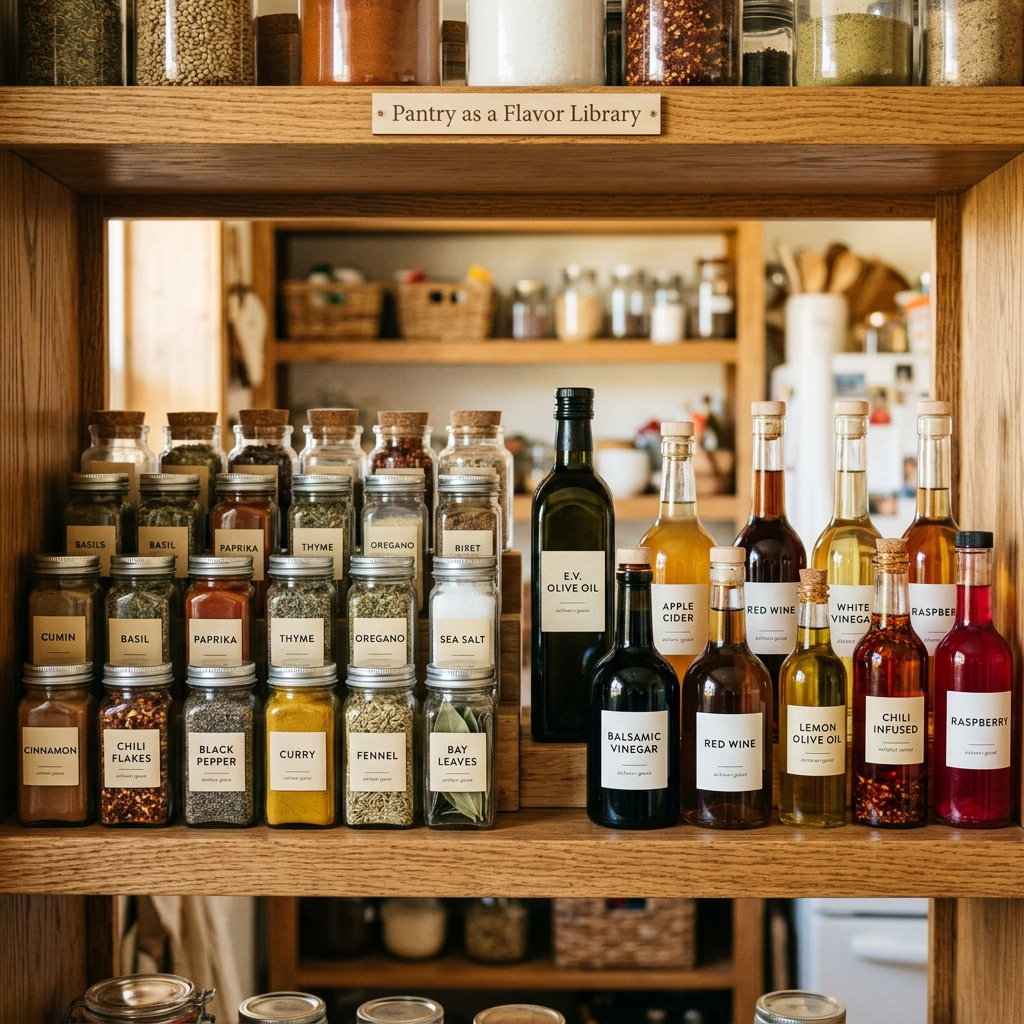
Salt and Seasoning Foundations
Salt is the single most important ingredient in your kitchen. Full stop. It doesn’t just make things salty — it amplifies every other flavor present in a dish. A tomato tastes more like a tomato when it’s salted. Chocolate tastes richer. Even watermelon perks up.
But not all salt does the same job. Fine table salt dissolves quickly and works well in baking and boiling water. Kosher salt has larger crystals that are easier to pinch and control, which makes it the go-to for seasoning meat and vegetables. Flaky finishing salt, like Maldon, adds a crunchy burst at the end. If you want a deeper breakdown of which salt to grab for which task, this guide on choosing the right salt for the right job walks through the differences clearly.
Beyond salt, your seasoning foundation should include black pepper (whole peppercorns in a grinder, not the pre-ground dust that lost its soul two years ago), garlic powder, onion powder, and smoked paprika. These four cover an enormous amount of ground. Garlic and onion powder give you savory backbone even when you don’t have fresh alliums on hand. Smoked paprika adds warmth and a subtle char note that works in everything from scrambled eggs to roasted chicken.
Pro tip: If you’re just starting out and feeling overwhelmed by the spice aisle, learn how to make your own DIY spice blends from a handful of basics. A simple mix of salt, pepper, garlic powder, and paprika will carry you through more meals than you’d expect.
Acids That Wake Everything Up
If your food tastes flat — like something is missing but you can’t figure out what — the answer is almost always acid. Acid brightens, balances, and cuts through richness. It’s the reason a squeeze of lemon makes fried fish taste better, or why a splash of vinegar transforms a heavy stew.
Your flavor pantry should have at least two to three acids on hand at all times. Good options include apple cider vinegar, red wine vinegar, rice vinegar, fresh lemons or limes (technically not shelf-stable, but they belong in the conversation), and a bottle of hot sauce with a vinegar base.
The relationship between acid and fat is one of the most important dynamics in cooking. Fat carries flavor and creates richness. Acid cuts through that richness and keeps things from tasting heavy. When you understand how these two work together, your cooking shifts. This piece on acid and fat as the yin and yang of cooking explains the balance in a way that actually makes sense for home cooks.
One thing I wish someone had told me earlier: taste your food right before serving and ask yourself, “Is this bright enough?” If the answer is no, add a small splash of vinegar or a squeeze of citrus. You’ll be surprised how often that one move fixes a dish.
Fats That Carry Flavor
Fat gets a bad reputation in diet culture, but in the kitchen, it’s a flavor delivery system. Many of the compounds that make food taste good are fat-soluble, meaning they literally dissolve into fat and spread across your palate. Cook garlic in water and you get a muted, slightly bitter taste. Cook it in olive oil and you get that golden, aromatic magic.
For your pantry, keep at least two fats with different flavor profiles. Extra virgin olive oil brings fruitiness and pepper notes that work beautifully in dressings, finishing drizzles, and low-heat cooking. A neutral oil like avocado or vegetable oil handles high-heat searing and frying without adding its own personality. If you want to explore something richer, beef tallow adds an incredible savory depth to roasted potatoes and fried foods — and it’s shelf-stable for months.
Store your oils in a cool, dark place. Light and heat are the enemies of flavor. That pretty bottle of olive oil sitting next to your stove looks nice, but it’s slowly going rancid. Keep it in a cupboard and pour what you need.
Umami Bombs for Depth
Umami is the fifth taste — that deep, savory, mouth-filling quality you get from things like aged cheese, mushrooms, and slow-cooked meat. It’s the reason a bowl of ramen tastes so satisfying, and it’s the secret weapon most home cooks overlook.
Building umami into your pantry is one of the fastest ways to make your food taste more complex without adding more steps. The heavy hitters include soy sauce, fish sauce, tomato paste, Worcestershire sauce, dried mushrooms (porcini or shiitake), and miso paste. Each of these brings a slightly different shade of savory depth.
Fish sauce deserves special attention because it intimidates people. It smells strong straight from the bottle, and that keeps a lot of cooks from using it. But here’s what actually happens when you cook with it: the funky smell disappears, and what’s left is a rich, rounded savoriness that makes people ask what your secret ingredient is. Start with a teaspoon in soups, stews, marinades, or even Bolognese sauce. If you want to understand the science behind why umami works the way it does, this explainer on what umami flavor actually is in cooking is a great starting point.
Tomato paste is another umami powerhouse that most people underuse. Instead of just stirring it into sauce, try browning a tablespoon of it in oil before adding your liquids. That caramelization deepens the flavor dramatically. It takes about two minutes and makes a noticeable difference.
Heat and Aromatics
The last category rounds out your library with warmth, spice, and fragrance. This is where your pantry starts to develop personality.
For heat, keep a few options at different intensity levels. Crushed red pepper flakes give you a gentle, building warmth. Cayenne powder delivers sharp, direct heat. A bottle of gochujang (Korean chili paste) adds sweetness and fermentation alongside its kick. And a good hot sauce — whether it’s a vinegar-forward Tabasco or a smoky chipotle blend — lets you adjust heat at the table.
For aromatics, dried herbs are your friends. Dried oregano, thyme, and bay leaves hold up well in long-cooked dishes like braises and soups. Ground cumin and coriander add earthy warmth that’s essential for tacos, curries, and roasted vegetables. Cinnamon, often pigeonholed as a baking spice, adds incredible complexity to savory dishes — a pinch in a chili or a Moroccan-style stew does wonders.
If you’re curious about how to think about fresh versus dried herbs and spices more broadly, this beginner’s guide to fresh herbs and spices covers the basics without overcomplicating things.
Building Your Flavor Pantry on a Budget
Let’s be real. Walking into a grocery store and buying 20 new bottles and jars in one trip is expensive and overwhelming. You don’t need to do that. Building a flavor pantry is a gradual process, and you can do it smartly on any budget.
Start with what I call the “big five”: kosher salt, black peppercorns, garlic powder, a good vinegar, and soy sauce. Those five items cost maybe $15 total and will immediately improve almost everything you cook. Once those are in place, add one or two new items each month based on what you actually cook. If you make a lot of Mexican food, grab cumin and dried oregano. If you lean toward Asian dishes, pick up fish sauce and rice vinegar. Let your eating habits guide your shopping, not some aspirational Pinterest board.
Buy spices in small quantities. That giant container of ground cumin from the bulk aisle seems like a deal, but ground spices lose their potency within six to twelve months. You’re better off buying a small jar and replacing it when it starts to smell like dust instead of cumin. Whole spices last much longer — whole cumin seeds will stay fragrant for two years or more — so consider picking up a cheap spice grinder if you want to stretch your budget further.
Store brands are perfectly fine for most pantry staples. The difference between a name-brand soy sauce and a store-brand one is minimal for everyday cooking. Save your splurges for ingredients where quality really shows, like extra virgin olive oil or flaky finishing salt.
Storage Secrets That Keep Flavor Alive
You can buy the best ingredients in the world, but if you store them wrong, you’re wasting your money. Flavor degrades over time, and heat, light, air, and moisture speed up the process.
Spices and dried herbs should live in a cool, dark cupboard — not above the stove, no matter how convenient that little rack looks. The heat from cooking accelerates the breakdown of essential oils, which is what gives spices their flavor and aroma. If your paprika has turned from vibrant red to dull brown, it’s not just ugly. It’s lost most of its flavor.
Oils need similar treatment. Keep them away from direct sunlight and heat sources. Once you open a bottle of nut oil or toasted sesame oil, store it in the fridge. These oils go rancid faster than neutral oils, and rancid oil will ruin a dish faster than almost anything else.
Vinegars, soy sauce, and fish sauce are more forgiving. They’re acidic or salty enough to resist spoilage, so a dark cupboard is fine. But do keep the lids tight. Exposure to air slowly dulls their punch.
Here’s a simple test for any spice you’re unsure about: open the jar, hold it under your nose, and take a sniff. If the aroma hits you immediately, it’s still good. If you have to dig your nose into the jar and still barely smell anything, it’s time to replace it. The USDA recommends replacing ground spices every two to four years for best quality, though in practice, most home cooks should aim closer to one year for peak flavor.
How to Layer Pantry Staples in Real Cooking
Having a stocked pantry is only half the equation. The real magic happens when you learn to layer these ingredients during cooking. Let me walk you through what this looks like in practice.
Imagine you’re making a simple weeknight chicken thigh dinner. You season the chicken with kosher salt, black pepper, garlic powder, and smoked paprika. That’s your foundation — salt amplifying the meat’s natural flavor, garlic and paprika adding savory warmth. You sear the chicken in olive oil, which carries those spice flavors into the crust. After the chicken comes out of the pan, you deglaze with a splash of apple cider vinegar, scraping up all those browned bits. The acid lifts the richness of the rendered chicken fat. Finally, you stir a teaspoon of soy sauce into the pan sauce for umami depth. Five pantry items, one pan, and the result tastes like something you’d order at a restaurant.
That’s the flavor library in action. You didn’t follow a complicated recipe. You reached for the right genres at the right moments: salt, aromatics, fat, acid, umami.
The more you cook this way, the more intuitive it becomes. You’ll start tasting a soup and thinking, “This needs brightness,” and reaching for vinegar without even thinking about it. You’ll finish a pasta and realize it needs one more layer of savoriness, so you grate in a little Parmesan or add a splash of fish sauce. Your pantry stops being a storage space and starts being a creative tool.
If you want to dig deeper into the foundational ingredients that make this kind of layering possible, this overview of the building blocks of cooking — spices, vinegars, and oils is a solid companion read. And if seasoning in general feels like a guessing game, this guide on feeling salty and learning to season with confidence will help you trust your instincts.
Frequently Asked Questions
What are the most essential pantry staples for flavor?
The most impactful essentials are kosher salt, whole black peppercorns, garlic powder, a good vinegar (apple cider or red wine), soy sauce, olive oil, and smoked paprika. These seven items cover salt, acid, fat, umami, and aromatics — the five categories that build flavor in almost any dish. Everything else is an expansion pack.
How long do pantry spices actually last?
Ground spices typically hold their best flavor for six months to one year. Whole spices last two to three years. Dried herbs fall somewhere in between, around one to two years. The best indicator is smell — if you open the jar and barely detect any aroma, the spice has lost most of its flavor and should be replaced. Storage conditions matter enormously; spices kept in a cool, dark cupboard will outlast those stored above a hot stove.
Can I build a flavor pantry if I’m on a tight budget?
Absolutely. Start with five items — salt, pepper, garlic powder, vinegar, and soy sauce — which should cost under $15 total. Add one or two new items each month based on the cuisines you cook most often. Buy small quantities of ground spices to avoid waste, and don’t feel pressured to buy everything at once. A flavor library grows over time, and even a small collection makes a big difference in your cooking.
Your Next Trip to the Grocery Store
The next time you walk down the spice aisle or pass the vinegar section, don’t just grab what’s on your list. Look at your pantry as the flavor library it could be. Pick up one new ingredient you’ve never tried — a bottle of fish sauce, a jar of miso, a tin of smoked paprika — and experiment with it during the week. Add a teaspoon here, a splash there. Taste the difference.
You don’t need a kitchen that looks like a professional chef’s setup. You need a handful of smart, well-chosen ingredients and the confidence to use them. Start small, taste often, and let your pantry grow into the most useful shelf in your house.



1 Comment