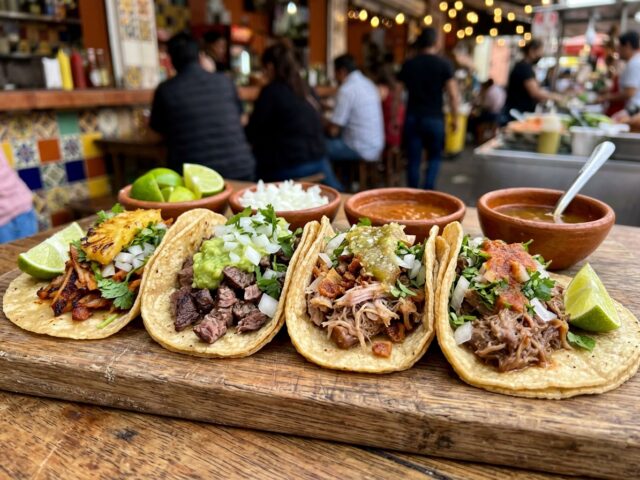
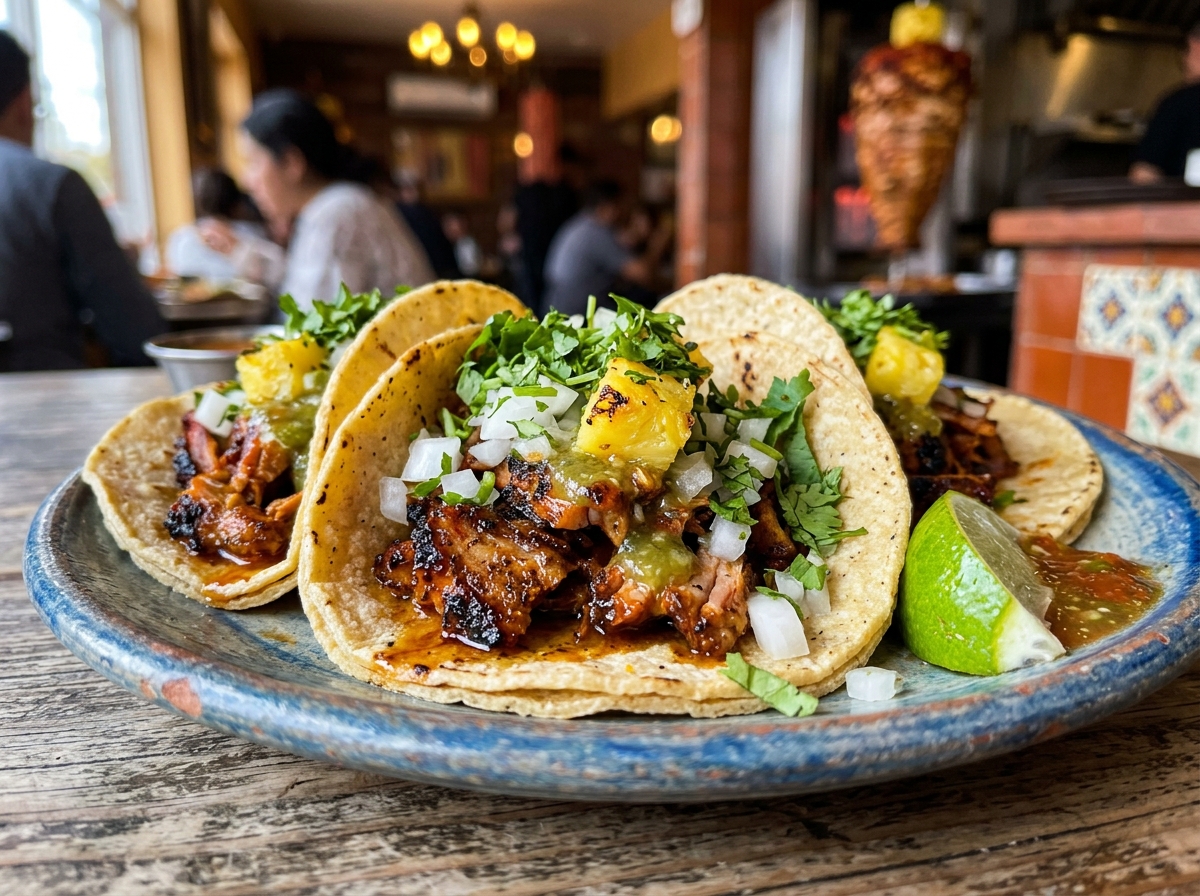
A single bite of a well-made al pastor taco hits you with at least five different flavors — all at the same time. Sweet pineapple, smoky chilies, tangy lime, savory pork, and a gentle warmth that lingers on your tongue. That’s not an accident. That’s balance, and it’s the reason al pastor has become one of the most beloved taco styles on the planet.
But here’s the thing most people don’t realize: getting that balance right is harder than it looks. Too much pineapple, and your taco tastes like a dessert. Too many dried chilies, and the sweetness disappears entirely. The pork dries out. The toppings overpower the meat. Suddenly, what should’ve been a perfect taco turns into something forgettable.
So what exactly creates that magical equilibrium? Whether you’re cooking al pastor at home, ordering it from a taqueria, or just curious about why this particular taco style has captured hearts from Mexico City to Los Angeles, understanding the balance behind it changes the way you eat — and appreciate — every bite.
Where Al Pastor Comes From — And Why Balance Is Built Into Its DNA
You can’t talk about balance in al pastor tacos without understanding their origin, because the concept of flavor harmony is literally baked into the recipe’s history.
Al pastor didn’t start in Mexico. It was born from a cross-cultural collision. Lebanese immigrants arrived in Mexico during the early 20th century, bringing shawarma with them — spit-roasted lamb seasoned with Middle Eastern spices. Mexican cooks looked at that vertical spit, loved the technique, and then did what they do best: they made it their own.
Lamb became pork. Middle Eastern spice blends were swapped for dried Mexican chilies like guajillo, ancho, and pasilla. And then came the stroke of genius that defines al pastor — pineapple. A thick slice placed right on top of the rotating trompo, its juices dripping down over the meat as it slowly roasted.
That single addition changed everything. The pineapple’s acidity tenderized the pork. Its natural sugars caramelized against the heat and created a smoky-sweet glaze. And its bright, tropical flavor gave the rich, spice-rubbed meat a counterpoint that made each bite feel complete rather than heavy.
If you’re curious about how tacos have evolved over the centuries, al pastor is one of the best examples of that ongoing story — a dish that borrowed from one culture and was perfected by another.
The point? Balance wasn’t an afterthought with al pastor. It was the founding principle.
The Five Flavor Pillars of a Perfect Al Pastor Taco
Every great al pastor taco stands on five flavor pillars. When all five are present and properly proportioned, you get that “close your eyes and just enjoy” kind of bite. Let’s break them down.
Sweet — The Pineapple Factor
Pineapple is the soul of al pastor. Not just as a topping, but as an active cooking ingredient. On a traditional trompo, the pineapple sits on top and slowly caramelizes as the meat spins. Its juice glazes the pork, and small chunks are often shaved off along with the meat.
The sweetness does something critical: it makes the dried chili flavors feel approachable. Without it, the adobo marinade can taste flat or one-dimensionally spicy. The sugar content in pineapple also drives the Maillard reaction on the meat’s surface, creating those slightly charred, crispy edges that al pastor is famous for.
Pro Tip: If you’re cooking al pastor at home, don’t use canned pineapple. The syrup makes it way too sweet, and the texture turns mushy. Fresh pineapple gives you that perfect tartness alongside the sugar. Grill it before adding it to your taco for a deeper, more caramelized flavor.
Savory — The Pork Itself
The meat is the foundation. Traditional al pastor uses pork shoulder (also called pork butt), which has enough fat marbling to stay juicy during the long, slow roasting process on the trompo. That fat renders down, bastes the meat naturally, and creates a rich, porky depth that anchors the entire taco.
The cut matters more than most people think. Lean pork loin will dry out and taste bland. Pork shoulder, sliced thin and layered on the spit, gives you tender meat with a slight chew and those gorgeous crispy bits on the outer edges.
If you want to understand how different taco meats create different experiences, al pastor pork is a perfect case study in choosing the right cut for the right cooking method.
Spicy — The Dried Chili Marinade
The adobo marinade is where al pastor gets its soul — that deep, brick-red color and complex warmth. Most traditional recipes use a combination of dried chilies, and each one brings something different to the party.
Guajillo chilies provide the backbone — mild heat, slightly fruity, with a tannic quality that gives the marinade depth. Ancho chilies add sweetness and a hint of raisin-like richness. Pasilla or chipotle contribute smokiness and a lingering warmth.
The balance between these chilies is crucial. Too much chipotle and the smoke takes over. All guajillo and you get color but not enough flavor complexity. A good al pastor marinade is really a chili blend, not a single-chili recipe.
Most adobo pastes also include cumin, Mexican oregano, cloves, black pepper, and achiote paste. That last ingredient — achiote — is often underestimated. It doesn’t add much heat, but it contributes an earthy, slightly peppery flavor and that iconic reddish-orange color.
Tangy — The Acid That Ties It Together
Lime juice, vinegar (often white or apple cider), and the pineapple’s own acidity work together as the marinade’s acid component. Acid does three things for al pastor: it tenderizes the meat, brightens all the other flavors, and cuts through the richness of the pork fat.
Think of acid like the volume knob on your favorite song. Without it, everything sounds muted. A squeeze of fresh lime over a finished al pastor taco isn’t just tradition — it’s the final adjustment that brings every other flavor into sharper focus.
Smoky — The Cooking Method and Char
Real al pastor gets its smokiness from two sources. The dried chilies themselves carry smoky notes (especially if chipotles are in the mix), and the trompo cooking method creates natural char on the meat’s surface.
As the vertical spit rotates near the heat source — traditionally a gas flame, sometimes charcoal — the outer layer of pork crisps and caramelizes. The taquero shaves off those crispy bits along with the tender inner meat, and that combination of textures is a huge part of what makes al pastor special.
Did You Know? A properly loaded trompo in Mexico can weigh up to 150 pounds of marinated pork, stacked in thin layers. It can take 3–4 hours to fully cook, with the taquero shaving off portions throughout the day.
The Tortilla — Your Taco’s Foundation Isn’t Neutral
A lot of people treat the tortilla as just a vessel. Something to hold the filling. But the tortilla is actually a flavor and texture component that affects the taco’s balance.
For al pastor, corn tortillas are the traditional and — honestly — the better choice. Their earthy, slightly nutty flavor complements the sweet-savory-spicy profile of the meat. Flour tortillas, while delicious in other contexts, can feel too doughy and mild for al pastor. They absorb the juices without adding much flavor back.
Size matters too. Street-style al pastor tacos use small corn tortillas, usually around 4–5 inches. Why? Because smaller tortillas force better proportions. You can’t overload them without everything falling apart, so you naturally end up with the right meat-to-tortilla ratio.
And yes, there’s a reason most al pastor tacos come with two tortillas stacked together. The double layer prevents breakage from the meat’s juices, and it adds a slight chewiness that balances the crispy-edged pork.
If you’re debating corn versus flour tortillas for your own tacos, al pastor is one style where corn wins almost every time.
Toppings and Salsas — Where Most People Break the Balance
Here’s where things go sideways for a lot of home cooks and even some taquerias. The toppings.
An authentic al pastor taco keeps it simple: diced white onion, fresh cilantro, a squeeze of lime, and maybe a drizzle of salsa. That’s it. No sour cream. No shredded cheese. No lettuce. Those additions aren’t wrong in all taco contexts, but they dilute the specific flavor balance that makes al pastor work.
White Onion — The Unsung Hero
Raw white onion adds a sharp, slightly sulfurous bite that cuts through the meat’s richness. It’s a palate cleanser within the bite itself. Yellow onion is too sweet. Red onion works in a pinch but has a stronger flavor that can compete with the chili marinade. White onion is the traditional choice for good reason.
Cilantro — Freshness in Every Bite
Cilantro contributes a bright, herbaceous note that balances the heavy, roasted flavors of the pork. It’s also slightly peppery, which plays well against the sweetness of the pineapple. A small handful of fresh cilantro — chopped, not whole leaves — makes a noticeable difference.
The Right Salsa
This is where personal preference plays the biggest role, but there’s still a logic to it. A green salsa verde (tomatillo-based) adds tartness and a different kind of heat. A red salsa with morita or arbol chilies adds another layer of smoky spice. A creamy avocado salsa mellows everything out.
The key is restraint. A drizzle, not a flood. You want the salsa to accent the meat, not drown it. If you’re building out your taco sauce collection, think about how each one will interact with al pastor’s existing flavors before pouring it on.
And if you love avocado on your tacos — and who doesn’t — a few thin slices or a small dollop of guacamole works beautifully with al pastor. The creamy, mild flavor of avocado tempers the chili heat without masking anything else.
Making Al Pastor at Home — How to Keep the Balance Without a Trompo
Let’s be real. Most of us don’t have a vertical spit in our backyards. So how do you recreate that perfect al pastor balance at home?
The Marinade Is Everything
Your marinade needs to be thick, paste-like, and deeply flavored. Thin, watery marinades won’t cling to the meat and will create steaming instead of roasting.
Start by toasting your dried chilies — about 4 guajillos and 2 anchos — in a dry skillet until they puff slightly and smell fragrant. Don’t burn them, or you’ll get bitter flavors. Soak them in hot water for 20 minutes, then blend them with garlic (3–4 cloves), half a cup of fresh pineapple, a tablespoon of achiote paste, a teaspoon of cumin, half a teaspoon of cloves, Mexican oregano, salt, pepper, and a splash of vinegar.
The result should be a smooth, thick paste with a color somewhere between brick red and burnt orange. Taste it. You should get heat, sweetness, earthiness, and tang — all in one spoonful. If something’s missing, adjust. Too spicy? Add more pineapple. Too sweet? More chili or a touch more vinegar.
The Cooking Method Workaround
Since you probably don’t own a trompo, here are your best options ranked by how close they get to the real thing:
Oven + Broiler Method: Stack thin-sliced, marinated pork on a vertical roasting stand (or even a beer can chicken holder) on a baking sheet. Roast at 350°F for about an hour, then blast the broiler for the last 5 minutes to char the edges. Shave off the outer layer.
Grill Method: Thread marinated pork slices onto skewers and grill over medium-high heat, turning frequently. The direct flame gives you excellent char. Chop the grilled meat into small pieces.
Cast Iron Skillet: The fastest method. Cook thin-sliced marinated pork in a screaming hot cast iron pan. Don’t overcrowd — you want browning, not steaming. Cook in batches if needed.
Pro Tip: Whatever method you use, grill or sear a pineapple ring alongside the meat. Chop it up and mix it into the meat right before assembling your tacos. This mimics the trompo’s pineapple-drip effect and ensures every bite has that sweet contrast.
What Makes Taqueria Al Pastor Different From Homemade
You might follow a great recipe and still feel like your al pastor doesn’t taste quite like the one from your favorite taqueria. There are a few reasons for that, and they’re all related to balance.
Time on the trompo: A real trompo cooks the meat slowly over hours. The outer layers get repeatedly exposed to dry heat, creating layers of char and caramelization that you simply can’t replicate in 20 minutes on a stovetop. That depth of roasted flavor is what gives taqueria al pastor its complexity.
The fat drip: On a trompo, the fat from upper layers bastes the lower layers as it renders. This self-basting effect keeps the meat juicy while building flavor. At home, you’re working with thinner layers and shorter cook times, so the fat doesn’t get the same chance to do its job.
Volume matters: Trompos work because of mass. A 50-pound stack of meat retains heat differently than half a pound in your skillet. More mass means more gradual cooking, more rendered fat, and a more forgiving process.
None of this means you can’t make excellent al pastor at home — you absolutely can. But understanding why the taqueria version tastes different helps you make smarter adjustments. Longer marinating times (12–24 hours), higher finishing heat for char, and grilled pineapple mixed directly into the meat all help close the gap.
If you want to experience what authentic al pastor really tastes like before attempting it at home, it’s worth seeking out a taqueria that cooks on a real trompo. That flavor memory will guide your home cooking.
Al Pastor in the Bigger Taco Universe
Al pastor is one style among many, but it holds a unique place because of its built-in flavor complexity. Most types of Mexican tacos rely on the toppings and salsas to add dimension to a relatively simply seasoned meat. Carne asada, for example, is usually just grilled beef with salt — the magic comes from the char and what you put on top.
Al pastor is different. The meat itself arrives at the taco already carrying sweetness, heat, smokiness, and tang. The toppings aren’t adding missing flavors — they’re fine-tuning flavors that already exist. That’s why you can eat an al pastor taco with nothing but onion and cilantro on it and still feel like you’re eating something complete.
This built-in complexity is also why al pastor has traveled so well. From its origins on the streets of Puebla and Mexico City, it’s now a staple in taquerias across the United States. Some of the best tacos in Los Angeles are al pastor, served from carts and trucks where the trompo spins slowly beside the order window.
Common Mistakes That Throw Off the Balance
Even experienced cooks make these errors with al pastor. Each one shifts the balance in a way that makes the final taco feel “off” — even if you can’t immediately pinpoint why.
Marinating too short. An hour isn’t enough. The chili paste needs time to penetrate the meat. Twelve hours minimum, twenty-four is better. The flavor should go deep, not just sit on the surface.
Skipping the pineapple entirely. Some home recipes leave it out, and the result is just spiced pork. Good, but not al pastor. The pineapple is what makes al pastor al pastor.
Using pre-ground chili powder instead of whole dried chilies. The flavor difference is enormous. Whole dried chilies that you toast and rehydrate yourself have a depth and freshness that bottled chili powder simply can’t match. The powder also tends to be dusty-tasting and can make your marinade gritty.
Cutting the meat too thick. Al pastor pork should be sliced thin — about 1/4 inch or less. Thick chunks don’t caramelize properly, and you lose those crispy edges that are so important to the texture balance.
Overloading toppings. If your taco has more topping than meat, the balance flips. The toppings should support the pork, not bury it. Two or three additions maximum.
FAQ
What does “al pastor” actually mean?
“Al pastor” translates to “shepherd style” in Spanish. The name references the Lebanese shepherds who brought the vertical spit-roasting technique to Mexico in the early 1900s. Despite the name, al pastor tacos are always made with pork, not lamb. The style evolved from shawarma, but the Mexican adaptation — with dried chilies, achiote, and pineapple — turned it into something entirely new.
Can you make al pastor with chicken or beef instead of pork?
You can use the marinade on chicken or beef, and it’ll taste good — but it won’t technically be al pastor. Pork shoulder’s fat content and texture are specifically suited for the long roasting process that defines this style. Chicken thighs are your closest alternative; they have enough fat to stay moist and absorb the marinade well. Beef tends to fight with the pineapple’s sweetness rather than complement it.
Why does al pastor from a trompo taste better than oven-baked?
The trompo creates conditions you can’t easily replicate at home. The slow rotation constantly exposes new surfaces to high heat, building up layers of char. The rendered fat from upper layers continuously bastes the meat below. And the pineapple on top drips its juices over the pork as it cooks, glazing it gradually. At home, you can approximate this with the broiler-finish method and grilled pineapple, but the trompo’s effect on flavor and texture is hard to fully match.
What’s the best salsa for al pastor tacos?
A green tomatillo salsa works beautifully — its tartness enhances the pineapple’s sweetness and brightens the chili flavors. A smoky red salsa made with morita or arbol chilies is another excellent choice if you want to double down on the heat. Creamy avocado salsa is great if you prefer something cooling. The “best” really depends on whether you want to amplify the existing heat or balance it with something milder.
How spicy are al pastor tacos?
Traditional al pastor is warm, not fiery. The dried guajillo and ancho chilies used in most recipes are mild to medium on the heat scale. The pineapple and pork fat both mellow the spice considerably. On a 1–10 scale, most al pastor lands around a 3–4. You control the final heat level with your salsa choice.
Your Next Al Pastor Taco Should Be Intentional
Now that you understand what makes al pastor tick — the interplay of sweet pineapple, smoky dried chilies, tangy acid, rich pork fat, and charred edges — you’ll never look at this taco the same way again. Every element exists for a reason, and every flavor has a counterbalance.
Next time you’re at a taqueria, pay attention to how each bite hits your palate. Notice the sweetness first, then the warmth, then the savory richness, and finally that bright pop of lime and cilantro at the end. That’s not random. That’s decades of culinary evolution compressed into a four-inch tortilla.
And if you’re making them at home? Start with the marinade. Taste it before it touches the meat. If you can identify sweetness, heat, smoke, and tang all in one spoonful, you’re on the right track. Get that paste right, and everything else follows.
Great al pastor isn’t about any one ingredient being the star. It’s about every ingredient knowing its role — and playing it perfectly.