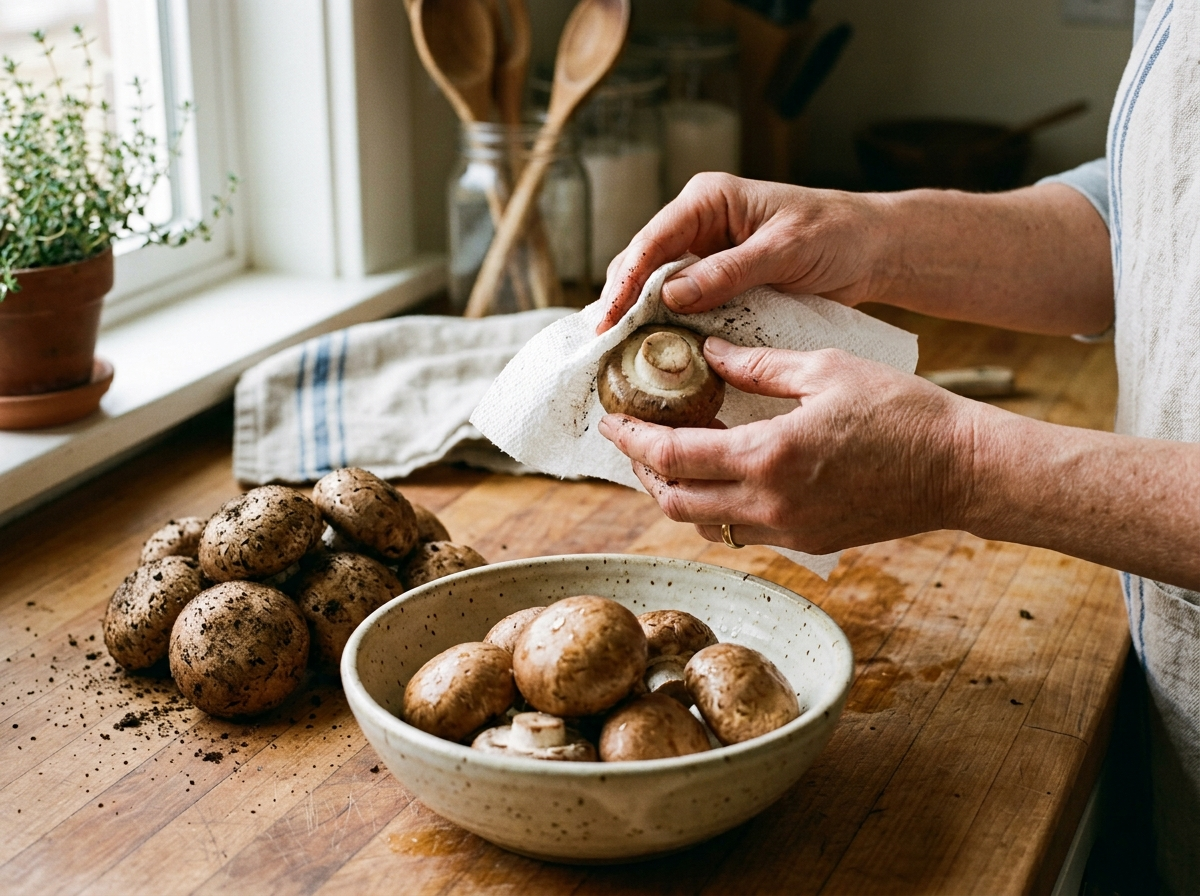
You pull a carton of button mushrooms from the fridge, and they’re speckled with dark bits of growing medium. Your instinct says rinse them. But then you remember someone telling you mushrooms are like sponges and water will ruin them. So you stand there with a damp paper towel, wiping each one individually, wondering if there’s a faster way. Figuring out how to clean mushrooms properly shouldn’t be this complicated. And it isn’t — once you know what actually works.
The Great Mushroom Debate: Should You Wash or Wipe?
This is one of those kitchen arguments that never seems to die. On one side, you have the “never let water touch a mushroom” crowd. On the other, you have cooks who rinse their mushrooms without a second thought. Who’s right?
The short answer: you can wash mushrooms with water, and a quick rinse will not turn them into soggy messes. The long answer involves a bit of food science that actually makes sense once you hear it.
The “mushrooms are sponges” idea comes from the fact that mushrooms are already about 80 to 90 percent water. They’re mostly water to begin with. Food scientist Harold McGee tested this in his landmark book On Food and Cooking and found that mushrooms soaked in water for five minutes only absorbed about 1/60th of their weight in additional moisture. That works out to roughly a teaspoon of water per half-pound of mushrooms. When you toss those mushrooms into a hot pan, that tiny amount of extra water evaporates in seconds.
America’s Test Kitchen ran their own version of this test and reached the same conclusion. A quick rinse or even a brief soak made virtually no difference in the final cooked texture. The mushrooms browned just as well as the unwashed batch.
So where did the myth come from? It likely started with older cooking advice about cultivated mushrooms grown in manure-based compost. The concern was more about what you were washing off than what you were washing in. Over time, the warning morphed into “don’t use water at all,” which is a serious overcorrection.
There is a real difference between a quick rinse and leaving your mushrooms to soak in a bowl of water for twenty minutes while you prep everything else. Prolonged soaking can affect texture, especially with delicate varieties. The key is speed. Rinse, shake, cook.
How to Clean Mushrooms the Right Way
The best way to clean mushrooms depends on two things: the type of mushroom and how dirty it is. Store-bought button mushrooms from a sealed container are a very different situation than wild morels you foraged after a spring rain. Let’s walk through the methods that actually work in a real kitchen.
The Quick Rinse Method (Best for Most Mushrooms)
For standard grocery store mushrooms — white button, cremini, baby bella — a quick rinse under cold running water is the fastest and most effective approach.
Place your mushrooms in a colander and run cold water over them for about 15 to 20 seconds. Use your fingers to gently rub away any visible dirt or bits of growing medium. That’s the whole process. Don’t let them sit in standing water. Don’t soak them. Just rinse, shake off the excess, and move on to cooking.
If you’re not cooking them immediately, spread the rinsed mushrooms on a clean kitchen towel or paper towels to air dry for a few minutes. Excess surface moisture is what causes steaming instead of browning when they hit the pan, and that’s a problem you can solve with a quick pat-down.
Here’s a detail most articles skip: the dirt on store-bought mushrooms isn’t actually dirt. It’s peat moss or a sterilized growing medium. It’s not harmful, but it has a gritty texture that nobody wants in their teeth. Rinsing takes care of it instantly.
The Damp Cloth Method (For Delicate or Pre-Sliced Mushrooms)
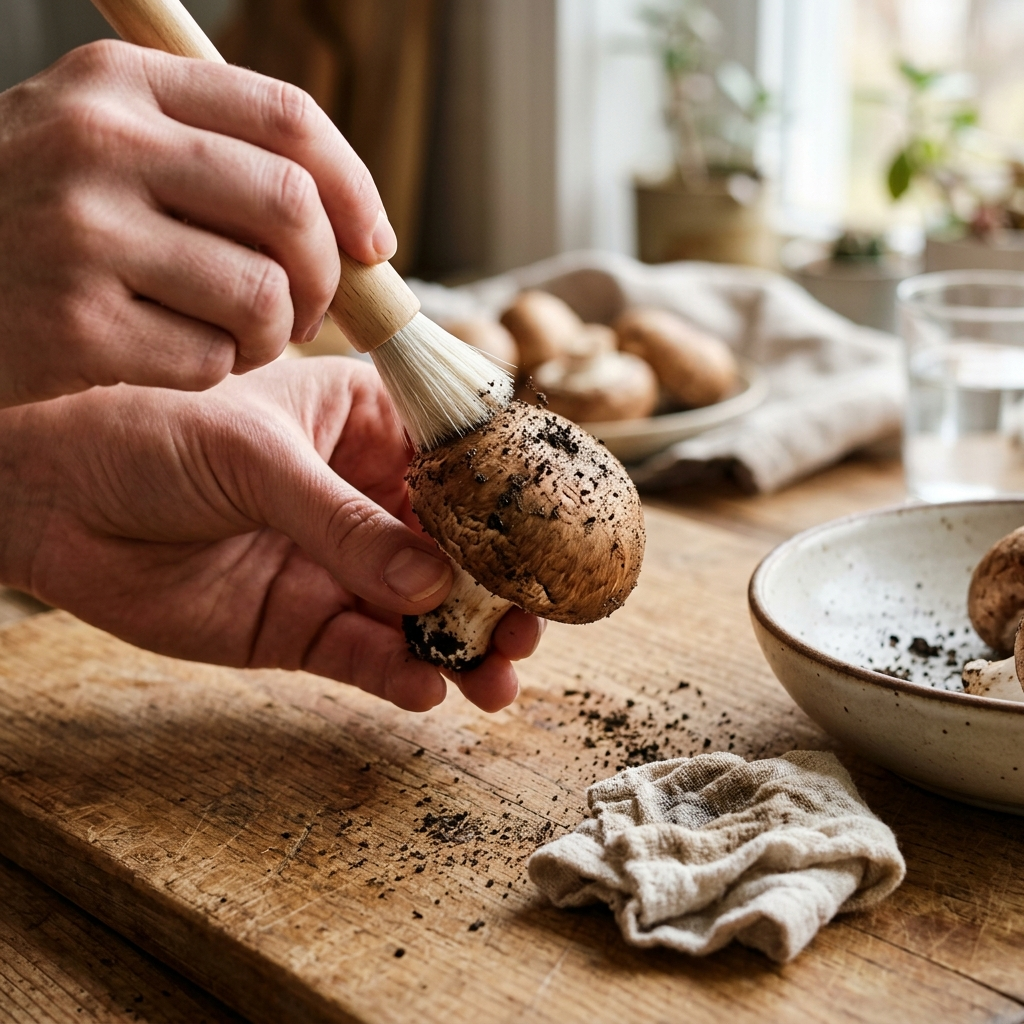
If you’re working with very delicate mushrooms or pre-sliced ones that have more exposed surface area, a damp cloth or paper towel works well. Gently wipe each mushroom to remove debris. This takes more time, but it gives you more control over how much moisture the mushrooms pick up.
I reach for this method when I’m prepping mushrooms for a dish where appearance really matters, like stuffed portobellos or a mushroom duxelles for a dinner party. When you need the mushrooms to look pristine on the plate, the careful wipe-down is worth the extra minute or two.
Cleaning Wild Mushrooms
Wild mushrooms are a completely different story. Morels, chanterelles, hen of the woods, and other foraged varieties tend to harbor real dirt, tiny insects, pine needles, and sometimes small bits of bark in their crevices. A quick rinse won’t cut it here.
For morels specifically, their honeycomb caps trap debris in ways that smooth-capped mushrooms never do. The standard approach is to slice them in half lengthwise — which also lets you check for insects inside the hollow stem — then swish them in a bowl of cold water. Let the grit settle to the bottom, lift the mushrooms out, and repeat if needed. Two or three changes of water usually does the trick.
For chanterelles, which have ridged gills that collect sand, a soft-bristled brush works wonders. A clean pastry brush or even a soft toothbrush lets you sweep debris out of the gill ridges under running water without tearing the delicate flesh.
Wild mushrooms genuinely benefit from a more thorough cleaning because the debris is actual soil and organic matter, not sterilized peat moss. Just make sure you dry them well afterward, especially if you plan to sauté them. A salad spinner lined with paper towels works surprisingly well for drying wild mushrooms in bulk.
How to Clean Different Types of Mushrooms
Not all mushrooms are built the same, and their physical structure affects how you should handle them. Here’s a breakdown by the varieties you’re most likely to cook with.
Button and Cremini Mushrooms
These are the workhorses of the mushroom world, and they’re the easiest to clean. A quick rinse in a colander handles most situations. If they came in a sealed plastic container and look relatively clean, you might not even need to wash them at all — a visual inspection and a light wipe will do.
One thing to watch for: the small brown patches on white button mushrooms are usually just cosmetic and don’t indicate spoilage. Don’t scrub them raw trying to get every speck off. You’ll bruise the flesh and waste your time.
Portobello Mushrooms
Portobellos are just overgrown cremini mushrooms, and their large size means they need a slightly different approach. The gills on the underside of a portobello cap are dark and can hold moisture and debris. Many cooks scrape the gills out with a spoon before cooking, especially if they’re stuffing or grilling the caps. This is partly for texture and partly because the dark gills can turn your dish an unappealing gray-brown color.
To clean the cap, hold it gill-side down under running water and gently rub the smooth top with your fingers. If you’ve removed the gills, give the underside a quick rinse too, but don’t let water pool in the cap.
If you’re planning to grill portobellos as a main dish, cleaning them properly beforehand makes a big difference in how they absorb your marinade and how well they char on the grates.
Shiitake and Oyster Mushrooms
Shiitakes have a tough, woody stem that you’ll want to remove before cooking. The caps are relatively smooth and easy to clean with a quick rinse or a damp wipe. The stems aren’t dirty — they’re just too fibrous to chew — but you can save them in a freezer bag for making stock later.
Oyster mushrooms grow in clusters and have delicate, fan-shaped caps that tear easily. Handle them gently. A light rinse under cold water is usually enough. If there’s growing medium stuck to the base of the cluster, trim it off with a knife rather than trying to wash it away.
Enoki and Maitake (Hen of the Woods)
Enoki mushrooms come in tight clusters with long, thin stems. Trim the root end — usually the bottom inch or so, which is often discolored and matted — then give the cluster a gentle rinse. Don’t pull them apart before washing because they’re fragile and will break.
Maitake grows in large, frilly clusters that can trap debris between the feathery fronds. Break the cluster into smaller pieces, then rinse under running water while gently separating the fronds with your fingers. A soft brush helps if you spot stubborn bits of dirt tucked into the folds.
Common Mistakes That Ruin Your Mushrooms
Even with the right technique, a few habits can sabotage your mushrooms before they ever reach the pan.
Washing too early. If you rinse your mushrooms and then leave them sitting in the fridge for two days, they’ll deteriorate much faster than unwashed ones. Moisture on the surface accelerates spoilage. Clean your mushrooms right before you plan to cook them, not when you get home from the grocery store.
Soaking instead of rinsing. A brief rinse is fine. A long soak is not. The longer mushrooms sit in water, the more their texture suffers. Think of it like a quick shower versus a long bath — one refreshes, the other waterlogs.
Crowding the pan after cleaning. This isn’t strictly a cleaning mistake, but it’s closely related. If your mushrooms still have surface moisture when they go into the pan, and you pile them on top of each other, they’ll steam instead of brown. Give them space. Cook in batches if you need to. The goal is that deep golden sear that brings out the umami flavor mushrooms are famous for, and you won’t get it in a crowded, steamy pan.
Peeling mushrooms. Some older recipes call for peeling the thin skin off button mushrooms. This is unnecessary and wasteful. The skin is tender, edible, and packed with flavor. The only time you might peel a mushroom is if the skin is visibly damaged or slimy, which is a sign the mushroom is past its prime anyway.
Storing Clean Mushrooms So They Last
Since you should ideally clean mushrooms right before cooking, storage is really about keeping them fresh until you’re ready to clean and cook them. But if you’ve already washed them and have leftovers, here’s how to handle it.
Store unwashed mushrooms in a paper bag in the refrigerator. The paper absorbs excess moisture and allows the mushrooms to breathe, which prevents the slimy deterioration you get with plastic wrap or sealed containers. If your mushrooms came in a plastic container, you can leave them in it but crack the lid or poke a few holes to allow airflow.
If you’ve already washed your mushrooms and need to store them, spread them out on paper towels to dry as thoroughly as possible, then transfer them to a paper bag or a container lined with dry paper towels. Use them within a day or two.
A quick note on food safety: mushrooms are a low-acid food, which means they can support bacterial growth if left at room temperature for too long. Always refrigerate them promptly and follow standard food safety practices for fresh produce. If your mushrooms develop a slimy texture, a sour smell, or dark mushy spots, they’ve gone bad and should be tossed — no amount of washing will fix that. Keep your fridge at or below 40°F to stay out of the temperature danger zone where bacteria multiply fastest.
Does Cleaning Affect Mushroom Flavor?
This is a question that comes up often, and the answer is reassuring. A quick rinse does not wash away flavor. The compounds that give mushrooms their deep, savory taste — primarily glutamates and nucleotides — are locked inside the cell structure of the mushroom, not sitting on the surface where water can rinse them off.
What can affect flavor is how you cook the mushrooms after cleaning. If they go into a pan wet and crowded, they steam and turn rubbery. If they go into a hot pan with enough space and a bit of fat, they brown beautifully and develop that rich, meaty depth that makes mushrooms such a powerful ingredient. The cleaning method matters far less than the cooking method.
If you want to get the most out of your mushrooms, learn the basics of sautéing at high heat. A properly seared mushroom is a revelation, and it starts with clean, dry-enough mushrooms hitting a hot surface.
Frequently Asked Questions
Should you wash mushrooms before cooking?
Yes. You should clean mushrooms before cooking to remove dirt, growing medium, and any debris. A quick rinse under cold running water is the fastest and most effective method for most store-bought mushrooms. The old advice to never let water touch mushrooms has been debunked by food science testing, including experiments by Harold McGee and America’s Test Kitchen.
What happens if you don’t wash mushrooms?
Eating unwashed mushrooms isn’t likely to make you sick, especially if they’re commercially grown. The growing medium on store-bought mushrooms is sterilized peat moss, not harmful bacteria. The grit is unpleasant to eat, though, and wild mushrooms can carry real soil, insects, and environmental contaminants that you definitely want to remove before cooking.
Can you eat the dirt on mushrooms?
Technically, the “dirt” on grocery store mushrooms is sterilized peat moss or coconut coir, which is safe to consume in tiny amounts. That said, it tastes like dirt and has a gritty texture that will ruin your dish. It takes about 15 seconds to rinse it off, so there’s no good reason to skip this step.
Do you need to clean pre-sliced mushrooms?
Pre-sliced mushrooms from a sealed package are usually quite clean, but it’s still a good idea to give them a quick visual check. If you see any debris, a very light rinse or a wipe with a damp paper towel will do. Because they have more exposed surface area, avoid soaking pre-sliced mushrooms — just a brief rinse and a gentle shake in the colander.
Should you remove mushroom gills?
For most mushrooms, the gills are perfectly fine to eat and don’t need to be removed. The exception is large portobello mushrooms, where the dark gills can make your dish look muddy and hold excess moisture. Scrape them out with a spoon if you’re stuffing or grilling the caps. For everything else, leave the gills alone.
Next time you grab a carton of mushrooms, skip the tedious one-by-one paper towel wipe-down. Rinse them quickly, shake off the water, and get them into a hot pan. You’ll save time, your mushrooms will taste just as good, and you can finally stop arguing about it at dinner parties. Now go make something delicious.