
You pull a piece of chicken out of the oven. It looks golden. It smells incredible. You take a bite and… nothing. It tastes like sadness wrapped in protein. Sound familiar?
Most home cooks don’t have a skill problem. They have a seasoning problem. You probably own salt, pepper, and maybe some garlic powder sitting in the back of a cabinet. But knowing when to add them, how much to use, and why any of it matters can turn a forgettable Tuesday dinner into something people actually ask you about.
This guide to seasoning food walks you through the basics without drowning you in chemistry jargon. Think of it as the conversation you’d have with a friend who cooks for a living — practical, honest, and useful tonight.
What Seasoning Actually Means (and Why Salt Gets All the Credit)
Here’s a definition worth remembering: seasoning is the process of enhancing the natural flavor of food, not masking it. That distinction matters more than you’d think.
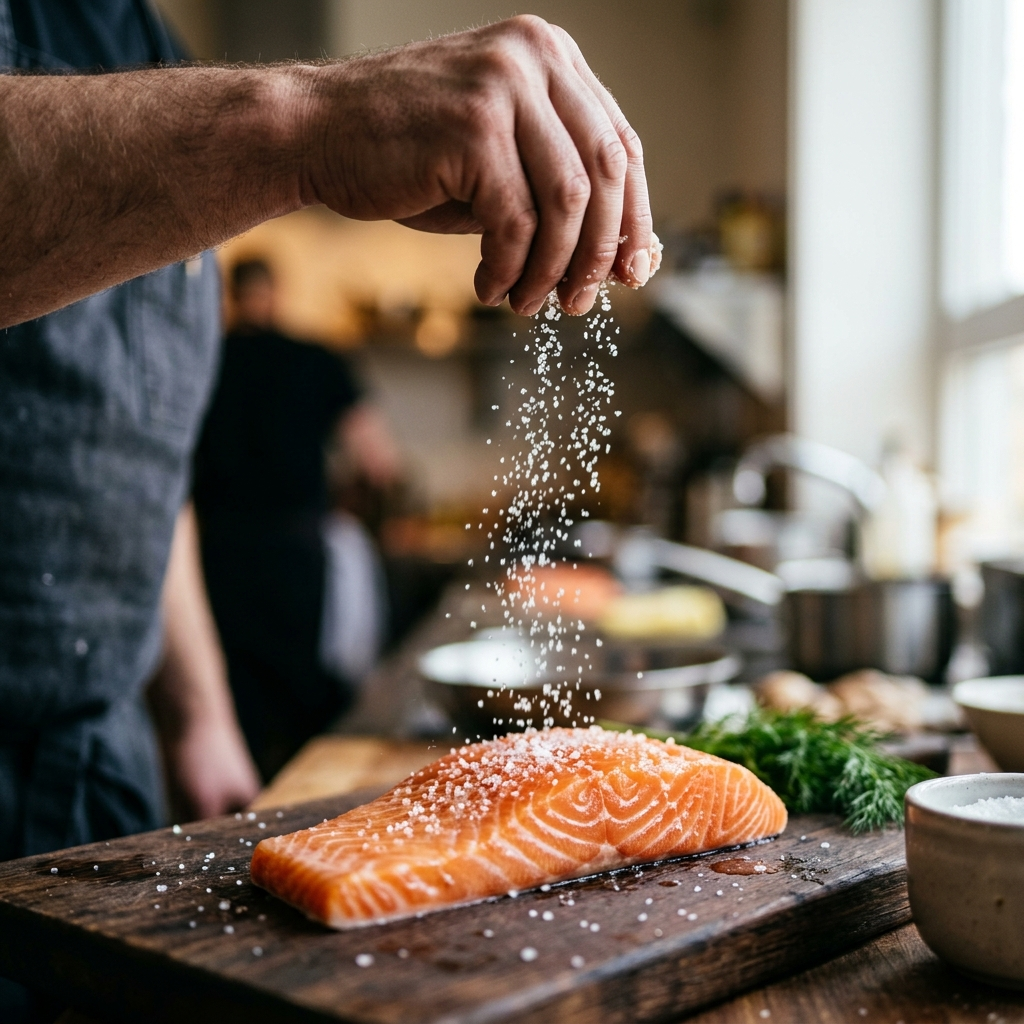
When someone says “this needs more seasoning,” they almost always mean it needs more salt. And they’re usually right. Salt doesn’t just make things taste salty. It actually suppresses bitterness and amplifies sweetness and umami. A tiny pinch of salt in your morning coffee reduces bitterness. A sprinkle on watermelon makes it taste more like watermelon. Salt is a flavor amplifier, not just a flavor on its own.
But seasoning goes well beyond the salt shaker. Black pepper, a squeeze of lemon, the warmth of cumin, the brightness of fresh cilantro — these are all seasoning tools. The goal is balance. You want every bite to hit multiple notes, not just one loud one.
Samin Nosrat built an entire James Beard Award-winning book around this idea. Her framework in Salt, Fat, Acid, Heat argues that mastering these four elements gives you control over almost any dish you’ll ever cook. Salt is the foundation, but it doesn’t do the job alone.
The Salty Truth: Choosing the Right Salt
Walk into any grocery store and you’ll see at least five kinds of salt on the shelf. They’re all sodium chloride at the molecular level. So does it really matter which one you grab?
Yes. And the reason has less to do with flavor and more to do with crystal size.
Table salt has tiny, uniform crystals that pack tightly into a measuring spoon. That means a teaspoon of table salt contains roughly twice as much sodium as a teaspoon of kosher salt. If a recipe calls for kosher salt and you swap in table salt using the same volume, you’ll over-salt your food fast. I learned this the hard way with a pot of chili years ago — one innocent teaspoon swap and the whole batch tasted like the Gulf of Mexico.
Kosher salt is the workhorse of professional kitchens. The flakes are larger and lighter, which makes them easier to pinch and control by hand. Diamond Crystal and Morton are the two big brands, and even they differ from each other. Diamond Crystal is flakier and less dense than Morton, so you’d use more of it by volume to get the same salinity. Most chefs default to kosher salt for everyday cooking because it’s forgiving and easy to handle. If you want a deeper breakdown of the differences, this guide to the right salt for the right job covers each type in detail.
Sea salt comes in fine and coarse varieties. The coarse, flaky stuff is best used as a finishing salt — that final sprinkle on a steak, a chocolate chip cookie, or a slice of avocado toast right before serving. It adds a pleasant crunch and little bursts of salinity that you can actually feel on your tongue. Don’t waste expensive flaky sea salt like Maldon in a pot of boiling pasta water. You won’t taste the difference, and your wallet will definitely notice.
Pro Tip: Pick one salt for everyday cooking and stick with it. Your fingers will learn how much a “pinch” means with that specific brand, and your seasoning will become more consistent over time without you even thinking about it.
How to Season Food Properly: Timing Is Everything
This is where most home cooks go wrong. They season everything at the very end, right before the plate hits the table. That’s like putting on cologne after you’ve already left the house — it sits on the surface instead of becoming part of the whole.
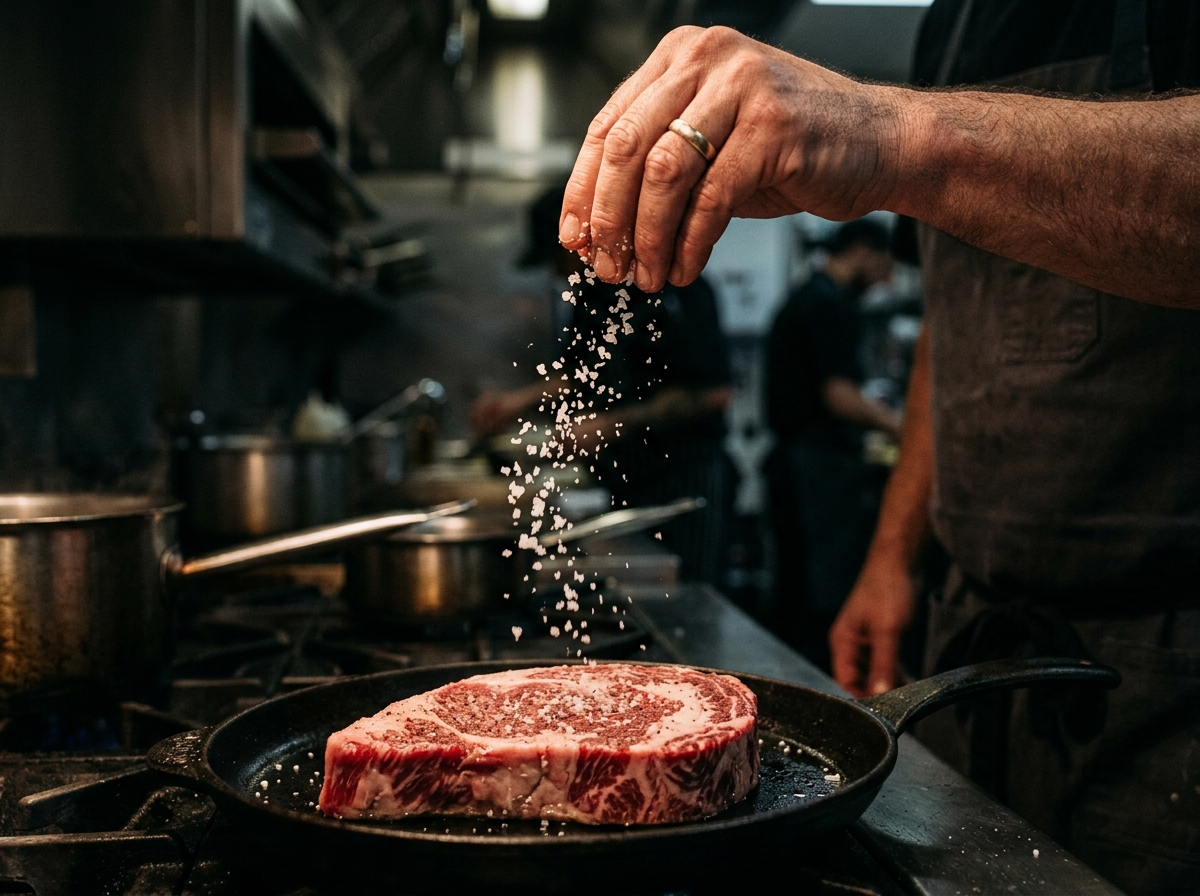
Seasoning before cooking gives salt time to penetrate the food. When you salt a steak 40 minutes before it hits the grill, the salt draws moisture to the surface through osmosis. That moisture then dissolves the salt, and the resulting brine gets reabsorbed back into the meat. The result is seasoning all the way through, not just a salty crust on the outside. Harold McGee explains this process thoroughly in On Food and Cooking, and it’s one of the most practical things you can learn about preparing meat.
For vegetables, salting before roasting helps draw out excess moisture, which means better browning and deeper flavor. Think about how much water mushrooms release in a hot pan. A light salt early on speeds up that process and gets you to golden caramelization faster instead of steaming everything into a soggy mess.
Seasoning during cooking is where the real magic happens. This is the “taste as you go” principle, and it’s non-negotiable if you want consistently good food. Every time you add a new ingredient — a can of crushed tomatoes, a splash of chicken stock, a handful of fresh spinach — taste the pot. Ask yourself three quick questions. Does this need salt? Does it need acid? Does it taste flat?
The reason this matters so much is that flavors concentrate as liquid reduces. A soup that tastes perfectly seasoned when it’s brothy might taste way too salty after 20 more minutes of simmering. You can’t predict this from a recipe. You have to taste.
Seasoning after cooking is your final adjustment. This is where a squeeze of lime, a crack of black pepper, or a sprinkle of flaky sea salt brings everything together. Think of it as the last brushstroke on a painting. The dish is done, but this final touch makes the flavors pop and signals to your brain that the food is complete.
How Much Salt Is Enough? (The Pinch Problem)
Recipes love to say “salt to taste.” Helpful, right? About as helpful as a GPS that says “go somewhere nice.”
Here’s a practical starting point you can actually use. For every pound of meat, use about ¾ to 1 teaspoon of kosher salt. For a quart of soup or sauce, start with ½ teaspoon and add more after tasting. For pasta water, you want it to taste like a well-seasoned broth — roughly 1 to 2 tablespoons of kosher salt per gallon of water. Yes, that sounds like a lot. Most of it stays in the pot and goes down the drain, not onto your pasta.
The biggest mistake beginners make is adding all their salt at once. Instead, add a little, stir, taste, and repeat. You can always add more. You can’t take it out.
Well, actually, you kind of can. If you’ve over-salted a soup or stew, drop in a peeled potato and let it simmer for about 15 minutes. The potato absorbs some of the excess salt. It won’t fix a complete disaster, but it takes the sharp edge off. Another trick is to add more unsalted liquid or a splash of cream to dilute the concentration. Acid — a squeeze of lemon or a dash of vinegar — can also distract your palate from the saltiness by giving your taste buds something else to focus on.
Your fingers are your best measuring tool once you get the hang of them. A three-finger pinch of kosher salt is roughly ¼ teaspoon. Practice this with your chosen salt until it becomes muscle memory. Professional cooks rarely reach for measuring spoons when salting during active cooking. They pinch, they taste, they adjust. You’ll get there faster than you think.
Seasoning Basics: Building Layers of Flavor Beyond Salt
Salt is the foundation, but a house needs more than a foundation to be livable. Once you’ve got your salting habits dialed in, start thinking about the other dimensions of flavor that make food genuinely exciting.
Acid is the most underused tool in home kitchens, and I’d argue it’s the single biggest gap between restaurant food and home cooking. If a dish tastes heavy, dull, or “almost there but not quite,” it probably needs acid, not more salt. A splash of rice vinegar in a stir-fry, a squeeze of lime on your tacos, a drizzle of balsamic on roasted Brussels sprouts — acid brightens everything it touches. The relationship between acid and fat is one of the most important dynamics in cooking, and understanding it will change how you finish almost every dish you make.
Fat carries flavor in ways that water simply can’t. Spices bloom in hot oil, releasing aromatic compounds that stay locked inside the jar when used dry. Butter rounds out sharp edges in a pan sauce. A drizzle of good olive oil on a finished soup adds a richness that stock alone won’t give you. Don’t fear fat — use it intentionally and at the right moment.
Umami is the savory, mouth-filling quality that makes things taste deeply satisfying without you being able to pinpoint exactly why. It’s the reason soy sauce, tomato paste, Parmesan rinds, and dried mushrooms show up in so many recipes across so many cuisines. If your dish tastes thin or one-dimensional, a teaspoon of soy sauce or a spoonful of miso paste can add a backbone of flavor without making the dish taste specifically “Asian.” It just tastes more. If you’re curious about the science behind this, here’s a clear breakdown of what umami flavor actually is in cooking.
Herbs and spices are where personality enters the picture. Fresh herbs like cilantro, basil, and parsley should generally go in at the end of cooking to preserve their bright, delicate flavors. Dried spices like cumin, paprika, and coriander benefit from being toasted in oil early on to unlock their essential oils and deepen their character. If you’re just starting to explore this world, a beginner’s guide to fresh herbs and spices will save you a lot of guesswork and wasted ingredients.
Think of your pantry as a flavor library. Every spice jar, bottle of vinegar, and tin of oil is a word you can use to build a sentence on the plate. The more words you know, the more interesting your sentences get.
Fixing a Seasoning Disaster
Even experienced cooks over-season things. It happens to everyone. Here’s how to recover without throwing dinner in the trash and ordering pizza.
Too salty? Add bulk. More unsalted liquid, more vegetables, more rice or pasta. Dilution is your most reliable friend here. A splash of cream or a pat of butter can also soften the perception of salt on your tongue. Acid helps too — lemon juice or vinegar won’t chemically remove salt, but they shift your palate’s focus enough to make the dish more balanced.
Too bland? Don’t just dump in more salt out of panic. Ask yourself what’s actually missing. Is the flavor flat? Add acid. Is it boring? Add a pinch of heat — cayenne, red pepper flakes, a few dashes of hot sauce. Is it one-note? Add a contrasting element, like something sweet or something crunchy to break up the monotony.
Too spicy? Dairy is the most effective fix. A dollop of sour cream, a pour of coconut milk, or a spoonful of plain yogurt will calm the heat. The casein protein in dairy actually binds to capsaicin — the compound that makes chiles hot — and washes it off your tongue receptors. Sugar helps a little too, but dairy does the real heavy lifting.
Too bitter? Salt and fat are your counterweights. A pinch of salt suppresses bitterness directly at the receptor level. A drizzle of olive oil or a pat of butter coats the tongue and softens the harsh edge. This is why a well-dressed salad with salty cheese and a rich vinaigrette tastes so much better than plain arugula.
Frequently Asked Questions
Should I season meat before or after cooking?
Season meat before cooking, ideally at least 40 minutes ahead for thicker cuts like steaks, chops, and roasts. Salting early gives the salt time to penetrate the muscle fibers, which seasons the meat from the inside out and helps it retain moisture during cooking. If you don’t have 40 minutes, salt it right before it hits the heat. The worst timing is salting roughly 10 to 15 minutes before cooking, because the salt has drawn moisture to the surface but hasn’t had time to reabsorb, leaving you with a wet exterior that won’t brown properly.
What are the four basic types of seasoning?
The four basic categories are salt, pepper, sugar (or other sweeteners), and acid. Salt enhances overall flavor, pepper adds heat and aromatic complexity, sugar balances bitterness and sharpness, and acid brightens and lifts heavy flavors. Most professional kitchens think in these four categories before reaching for specific spice blends or fresh herbs. Getting these four right will solve the majority of your seasoning problems.
How do I know if I’ve added enough salt?
Taste your food at every stage of cooking. The food should taste seasoned but not overtly salty — meaning you taste the actual ingredients more clearly, not the salt itself. If a bite makes you think “this tastes like really good chicken,” you’re in the right zone. If it makes you think “this tastes like salt,” you’ve gone too far. Your palate will sharpen with practice, so trust the process and keep tasting throughout the cook.
Your seasoning instincts aren’t a talent you’re born with. They’re a habit you build, one pinch at a time, one taste at a time. Start by salting your food earlier than you think you should. Taste your pots more often than feels necessary. And the next time something tastes “almost right” but you can’t figure out why, try a squeeze of lemon before you reach for the salt shaker.
Your dinners are about to get a lot more interesting. Go make something delicious — and taste it before you serve it.
External Link Notes for Editor
The following external sources are referenced by name in the article and should be linked to verified URLs:
- Samin Nosrat, Salt, Fat, Acid, Heat — referenced in the “What Seasoning Actually Means” section. Suggested link: the book’s official page or a reputable retailer/review.
- Harold McGee, On Food and Cooking — referenced in the “Timing Is Everything” section. Suggested link: publisher page or authoritative review.
No URLs were fabricated. Please insert verified links before publishing.


2 Comments