You pull a beautiful ribeye off the grill, slice into it, and it chews like a rubber band. You didn’t burn it. You didn’t undercook it. So what went wrong? The answer lives inside the meat itself, in the tiny muscle fibers that tighten, squeeze, and eventually break down as heat moves through them. Understanding how heat affects muscle fibers in meat is the single biggest upgrade you can make to your cooking. Once you know what’s happening at each temperature, you’ll stop guessing and start nailing it.
What Are Muscle Fibers, Really?
Meat is muscle. That sounds obvious, but it matters more than you think. Every cut of beef, pork, chicken, or lamb you buy is made up of bundles of muscle fibers — long, thin protein strands wrapped together like cables in a rope. These fibers are held in place by connective tissue, a web of collagen that acts like the glue keeping everything bundled up.
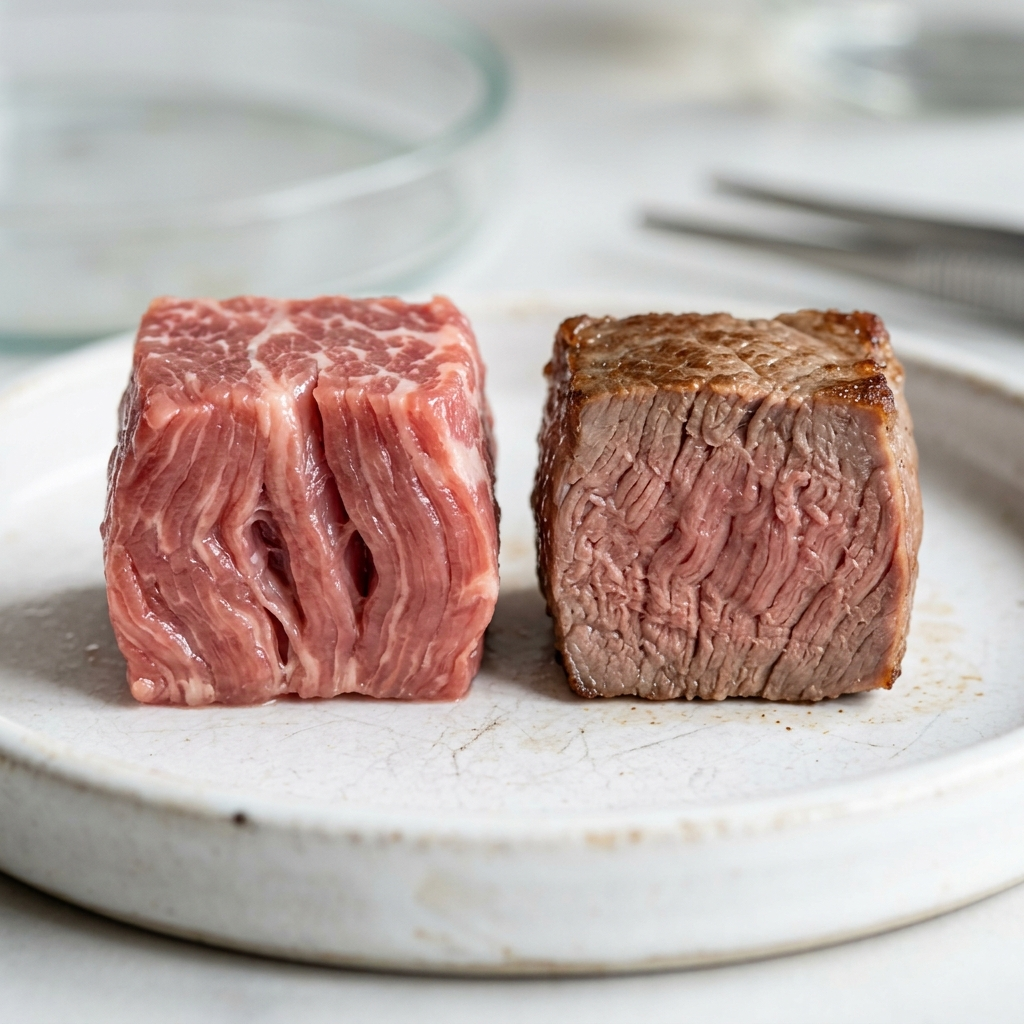
When the animal was alive, these fibers contracted and relaxed to create movement. After processing, they’re still made of the same proteins, primarily myosin and actin. Think of myosin as the thick cable and actin as the thinner wire wrapped around it. Together, they’re responsible for the texture you feel when you bite into a piece of meat.
The amount of connective tissue varies wildly depending on where the muscle sat on the animal. A tenderloin barely moves during the animal’s life, so it has very little collagen. A brisket supports the animal’s front end all day long and is loaded with tough connective tissue. That difference is the entire reason you cook those two cuts in completely opposite ways.
The Two Types of Muscle Fibers in Your Meat
Not all muscle fibers behave the same way under heat. Animals have two main types: slow-twitch and fast-twitch fibers.
Slow-twitch fibers power muscles that work constantly — think legs, shoulders, and chest. These fibers are rich in myoglobin (the protein that gives dark meat its color) and surrounded by lots of collagen. They need long, gentle heat to become tender.
Fast-twitch fibers handle quick bursts of movement. Chicken breast is a great example. These fibers are leaner, lighter in color, and have much less connective tissue. They cook fast and dry out even faster because there’s no collagen to break down into moisture-rich gelatin.
This is why you’d never cook a chicken breast the same way you cook a pork shoulder. The fiber types are fundamentally different, and heat treats them differently.
How Heat Affects Meat Proteins Step by Step
Here’s where things get interesting. When you apply heat to meat, you’re not just warming it up. You’re triggering a series of chemical changes that happen at very specific temperature ranges. Each stage changes the texture, moisture, and flavor of what’s on your cutting board.
The Squeeze: When Myosin Begins to Contract (120–140°F)
The first thing that happens when heat enters the meat is that the myosin proteins start to denature. That’s a fancy word for “unravel.” Imagine a tightly coiled spring suddenly loosening and straightening out. As myosin denatures, the muscle fibers begin to contract and squeeze out moisture.
This starts around 120°F. At this stage, the meat is still quite tender. A rare steak sits right in this zone, and that’s why it’s soft and juicy. The fibers have started to tighten, but they haven’t clamped down hard yet.
If you’re cooking a lean, tender cut like a filet mignon, this is your sweet spot. You want to get the internal temperature to about 125–130°F and then pull it off the heat. The residual warmth will carry it up a few more degrees while it rests. If you want to understand exactly what happens during that resting period, carryover cooking plays a bigger role than most people realize.
The Tightening: Actin Gets Involved (150–160°F)
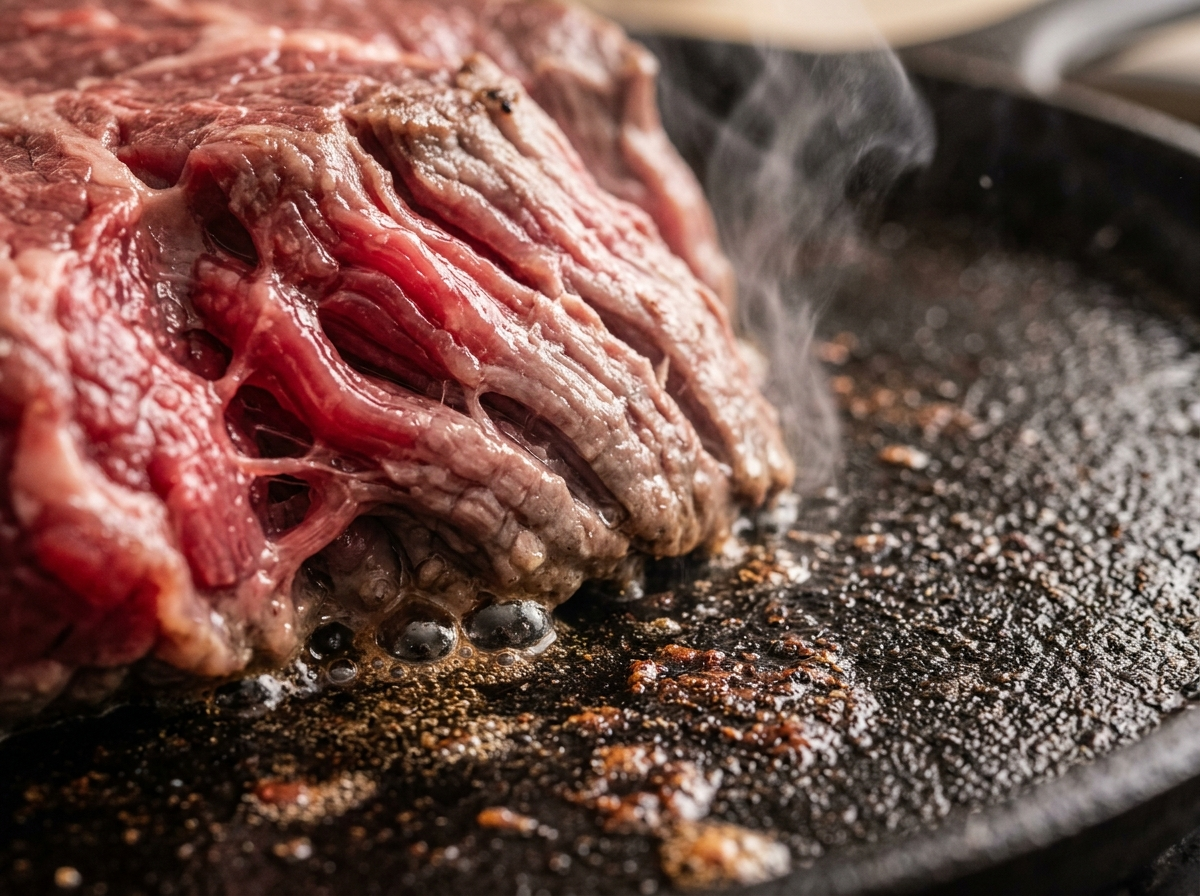
As the temperature climbs past 140°F, the actin proteins start to denature too. This is where things get tricky. Actin denaturation causes the muscle fibers to contract much more aggressively. The fibers squeeze together like a fist closing, and they wring out moisture the way you’d squeeze water from a wet towel.
This is the danger zone for lean cuts. A chicken breast that hits 165°F internally has lost a significant amount of its moisture. The fibers are clamped tight, and there’s very little juice left between them. That’s the dry, chalky texture you’ve probably experienced more times than you’d like to admit.
For tender cuts, you generally want to avoid pushing past 145–150°F. The USDA recommends 145°F for whole cuts of beef, pork, and lamb with a three-minute rest, which gives you a safe and still-juicy result. You can check the USDA’s safe minimum internal temperature chart for specific guidelines by protein type. Note: These are general food safety guidelines for home cooking. If you’re cooking for immunocompromised individuals, pregnant people, or young children, follow the USDA’s higher recommended temperatures strictly and consult a food safety professional if you have questions.
The Breakdown: Collagen Turns to Gelatin (160–205°F)
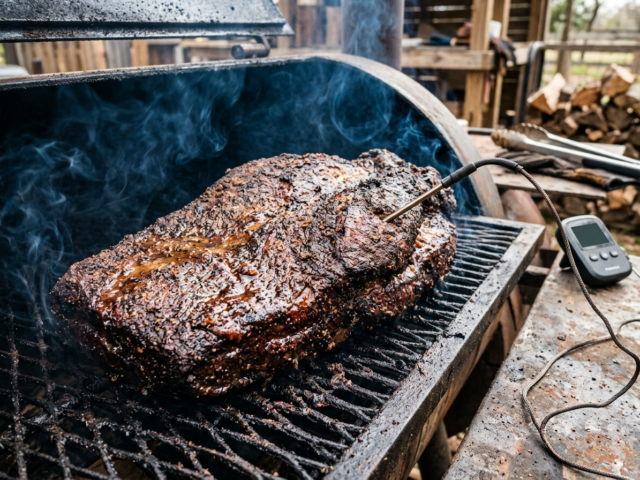
Now here’s the part that separates good cooks from great ones. Remember all that tough connective tissue in cuts like brisket, pork shoulder, and short ribs? At lower temperatures, that collagen is hard and rubbery. It’s the reason a brisket cooked to 140°F is basically inedible — the muscle fibers have tightened, but the collagen hasn’t budged.
Somewhere around 160°F, something remarkable starts to happen. The collagen begins to slowly dissolve and convert into gelatin. Gelatin is soft, silky, and holds moisture beautifully. It’s the same stuff that makes bone broth rich and jiggly when it cools in the fridge.
This transformation takes time. A lot of time. The collagen-to-gelatin conversion accelerates as you push toward 190–205°F, and it can take many hours depending on the size of the cut. This is exactly why low and slow cooking is the only real path to tender brisket or pulled pork. You’re not just cooking the meat — you’re giving the collagen enough time and heat to melt into gelatin.
I’ve pulled briskets off the smoker at 185°F thinking they were done, only to find they still had a tough, chewy bite. The collagen hadn’t fully converted yet. Pushing through to 200–203°F, even when it felt like it was taking forever, made all the difference. The meat went from “needs more time” to “falls apart when you look at it” in that final stretch.
Why Some Cuts Get Tender and Others Get Tough
So now you know the three stages. But here’s the practical takeaway: the same heat that makes a brisket tender will ruin a chicken breast. It all comes down to the starting composition of the cut.
Tender cuts like tenderloin, ribeye, chicken breast, and pork chops have very little collagen. Their texture comes almost entirely from the muscle fibers themselves. When those fibers tighten past 150°F, there’s no gelatin to compensate for the moisture loss. The result is dry, tough meat. Your job with these cuts is to cook them quickly to a moderate internal temperature and stop.
Tough cuts like brisket, chuck roast, pork shoulder, and short ribs are loaded with collagen. Yes, the muscle fibers tighten at the same temperatures, but the gelatin produced by the melting collagen floods the meat with moisture and creates that luscious, pull-apart texture. Your job with these cuts is to push the temperature high and hold it there for hours.
This is also why acid and fat play such different roles in tenderizing. Acid can help break down surface proteins in a marinade, but it won’t dissolve deep connective tissue the way sustained heat will. Fat, meanwhile, bastes the fibers from within as it renders, adding perceived juiciness even when the fibers themselves have tightened.
Practical Heat Guidelines for Common Cuts
Let’s put this science into something you can actually use at the grill or stove. The table below gives you a quick reference for where to aim based on the cut you’re working with.
| Cut | Fiber Type | Collagen Level | Target Internal Temp | Method |
|---|---|---|---|---|
| Ribeye steak | Fast-twitch | Low | 130–135°F | Hot and fast |
| Chicken breast | Fast-twitch | Low | 155–160°F | Moderate heat |
| Pork tenderloin | Mixed | Low | 140–145°F | Hot and fast |
| Brisket | Slow-twitch | High | 195–203°F | Low and slow |
| Pork shoulder | Slow-twitch | High | 195–205°F | Low and slow |
| Short ribs | Slow-twitch | High | 200–205°F | Low and slow |
A few things worth noting. These temperatures are targets for the thickest part of the meat, and the “low and slow” cuts will go through a period where the internal temperature seems to stall around 160–170°F. That’s the evaporative cooling effect, and it’s completely normal. If you want to understand the mechanics behind it, the BBQ stall is one of the most misunderstood phases of cooking. Don’t panic and crank the heat — just be patient.
The Carryover Cooking Trap Most Home Cooks Miss
Here’s a scenario I see all the time. Someone grills a steak to a perfect 130°F, pulls it off, and lets it rest for ten minutes. When they cut into it, it’s medium-well. What happened?
Carryover cooking. The outer layers of the meat are much hotter than the center when you pull it off the heat. During the rest, that heat continues to migrate inward, raising the internal temperature by 5–15°F depending on the size of the cut. A thick roast can climb even higher.
This matters enormously when you think about muscle fiber contraction. If your steak hits 145°F during the rest, those actin proteins are now denaturing and squeezing out moisture you wanted to keep. The fix is simple: pull the meat off the heat 5–10°F below your target temperature. Resting meat properly is non-negotiable for juicy results, but you have to account for the temperature rise that happens during that rest.
For large cuts like brisket or pork shoulder, carryover cooking is less of a concern because you’re targeting such high internal temperatures anyway. The fibers are already fully contracted, and the gelatin is doing the heavy lifting for moisture. But for steaks, chops, and chicken breasts, ignoring carryover is the fastest way to overcook your dinner.
Moisture Loss: The Numbers Behind the Squeeze
To give you a sense of scale, a piece of meat cooked to 120°F loses roughly 5–10% of its weight in moisture. Push it to 160°F, and you’re looking at 15–20% loss. At 180°F and above, moisture loss from the muscle fibers alone can exceed 25%. The meat is literally shrinking on the grill or in the pan as those fibers contract.
This is why a well-done steak weighs noticeably less than a rare one, even if they started from the same cut. The moisture didn’t evaporate into thin air — it pooled in the pan or dripped through the grill grates. That’s flavor and juiciness leaving the building.
Harold McGee, the food science writer behind On Food and Cooking, has documented these moisture loss curves extensively. His work remains one of the best resources for understanding the relationship between temperature, protein denaturation, and texture in cooked meat. If you want to go deeper into the science, his book is worth keeping in the kitchen.
What About the Maillard Reaction?
You might be wondering about the crust on a steak or the bark on a brisket. That’s the Maillard reaction, a chemical process that happens on the surface of the meat when it hits roughly 280–330°F. It creates hundreds of new flavor compounds and that beautiful brown color.
The Maillard reaction doesn’t directly affect the muscle fibers deep inside the meat. It’s a surface phenomenon. But it does create a textural contrast — a crispy exterior against a tender interior — that makes the eating experience so much more satisfying. The key is getting the surface hot enough for browning without overcooking the interior fibers. That’s why techniques like reverse searing or finishing under a broiler work so well for thick steaks.
Frequently Asked Questions
At what temperature do muscle fibers in meat start to break down?
Muscle fibers begin to denature around 120°F, starting with the myosin proteins. However, “break down” can mean different things. The fibers tighten and squeeze out moisture at lower temperatures, while the connective tissue (collagen) surrounding them doesn’t truly break down into gelatin until you reach 160°F and above. For tough cuts, the real magic happens between 190–205°F.
Why does meat get tough when you overcook it?
Overcooked meat is tough because the muscle fibers have contracted to their maximum and squeezed out most of their moisture. The proteins myosin and actin have fully denatured, clamping the fibers together tightly. In lean cuts with little collagen, there’s no gelatin to replace that lost moisture, so the meat ends up dry and chewy.
Does cooking meat longer always make it more tender?
No, and this is a really common misunderstanding. Longer cooking only makes tough, collagen-rich cuts more tender because the extended heat gives the collagen time to convert to gelatin. For lean, tender cuts like chicken breast or pork tenderloin, longer cooking just means more moisture loss and tighter fibers. You’ll end up with drier, tougher meat, not more tender.
How does resting meat affect the muscle fibers?
Resting gives the muscle fibers time to relax slightly after the intense contraction caused by heat. During cooking, the fibers are squeezed tight and the moisture is pushed toward the center. When you rest the meat, the fibers loosen just enough to reabsorb some of that moisture, which is why a rested steak juices less on the cutting board. Just remember that the internal temperature will continue to rise during the rest, so plan accordingly.
The next time you fire up the grill or set a roast in the oven, you’ll know exactly what’s happening inside that piece of meat. The fibers are contracting, the proteins are unraveling, and — if you’ve chosen the right cut and the right method — the collagen is melting into silky gelatin.
Start by matching your cooking method to the cut. Use a reliable instant-read thermometer and learn to check doneness without cutting into the meat, which lets all that precious juice escape. Pull tender cuts early to account for carryover. Give tough cuts the time they need.
Cooking great meat isn’t about following recipes blindly. It’s about understanding the science happening under the surface and making small adjustments that add up to a big difference on the plate. Now go cook something delicious.