You bought a beautiful flank steak, fired up the grill, and followed the timing on the package. Twenty minutes later, you’re chewing on something that feels closer to a leather belt than dinner. Sound familiar? Flank steak is one of those cuts that rewards you massively when you get it right and punishes you hard when you don’t. The good news is that learning how to grill flank steak properly comes down to about four key decisions, and once you understand them, you’ll nail it every single time.
What Makes Flank Steak Different (and Tricky)
Flank steak comes from the abdominal muscles of the cow, right down near the belly. That area does a lot of work, which means the meat is packed with long, thick muscle fibers running in one very obvious direction. Those fibers are what give flank steak its bold, beefy flavor — and they’re also what make it tough if you treat it the wrong way.
Unlike a ribeye or a strip steak, flank has almost no internal fat marbling to keep things moist. It’s a lean cut, which means it has a razor-thin window between “perfectly juicy” and “dry and chewy.” On a screaming hot grill, that window can be as short as 60 to 90 seconds per side. Miss it, and no amount of steak sauce will save you.
The other thing that trips people up is the shape. Flank steak is flat and wide, usually about an inch thick at most. That thin profile means it cooks fast and responds dramatically to heat. Understanding how heat affects muscle fibers in meat helps explain why this cut behaves so differently from a thick-cut tomahawk or a slow-cooked brisket.
Quick Fact: Flank steak is sometimes confused with skirt steak. They’re neighbors on the animal but not the same cut. Skirt steak is thinner, fattier, and even more prone to overcooking. If your butcher hands you something that looks more like a long ribbon than a flat rectangle, double-check what you’re actually holding.
How to Prep Flank Steak for the Grill
To Marinate or Not to Marinate
This is where opinions get loud, so let’s cut through the noise. A marinade won’t make a tough cut magically tender deep into the center — the acids and enzymes in most marinades only penetrate about a quarter inch into the meat, even after 24 hours. What a marinade does do is add flavor to the surface and, thanks to the oil and salt content, help the exterior stay moist during that quick, hot cook.
For flank steak, a marinade is a great idea if you have the time. Aim for at least two hours and no more than 12. Go longer than that and the acid (lime juice, vinegar, whatever you’re using) starts to turn the surface mushy, which gives you a weird, mealy texture right where you want a nice sear. If you want to dig deeper into the differences, this breakdown of marinade vs rub covers when each approach works best.
If you’re short on time, don’t stress. A generous coating of coarse salt and cracked black pepper applied 45 minutes before grilling will give you excellent results. The salt draws out moisture at first, then pulls it back in along with dissolved seasoning. That simple step alone makes a bigger difference than most people realize.
Getting the Steak Ready Right Before Grilling
Pull your flank steak out of the fridge about 30 to 45 minutes before it hits the grill. A cold steak on a hot grate creates a steep temperature gradient — the outside overcooks before the inside has a chance to warm up. Letting it take the chill off gives you a more even cook from edge to center.
Pat the surface dry with paper towels right before grilling. Moisture is the enemy of a good sear. If the steak is wet, the grill’s energy goes into evaporating water instead of browning the meat, and you end up steaming your steak rather than searing it. That’s the difference between gorgeous grill marks and a sad, gray surface.
Flank Steak Grilling Temperature and Timing
Setting Up Your Grill
You want high, direct heat for flank steak. If you’re on a gas grill, crank all the burners to high and let the grates heat up for at least 10 to 15 minutes with the lid closed. You’re looking for a grate temperature around 450°F to 500°F. If you’re using charcoal, pile the coals in a single even layer for full direct heat — no two-zone setup needed for a cut this thin. (If you’re curious about the broader differences between grilling and true barbecue, this comparison clears up a lot of confusion.)
Clean and oil your grates right before the steak goes on. A folded paper towel dipped in a high-smoke-point oil like canola or avocado, held with tongs and wiped across the grates, does the trick. This prevents sticking and helps you get those clean sear marks everyone loves.
The Actual Grilling Process
Here’s where the magic happens — and where most people go wrong.
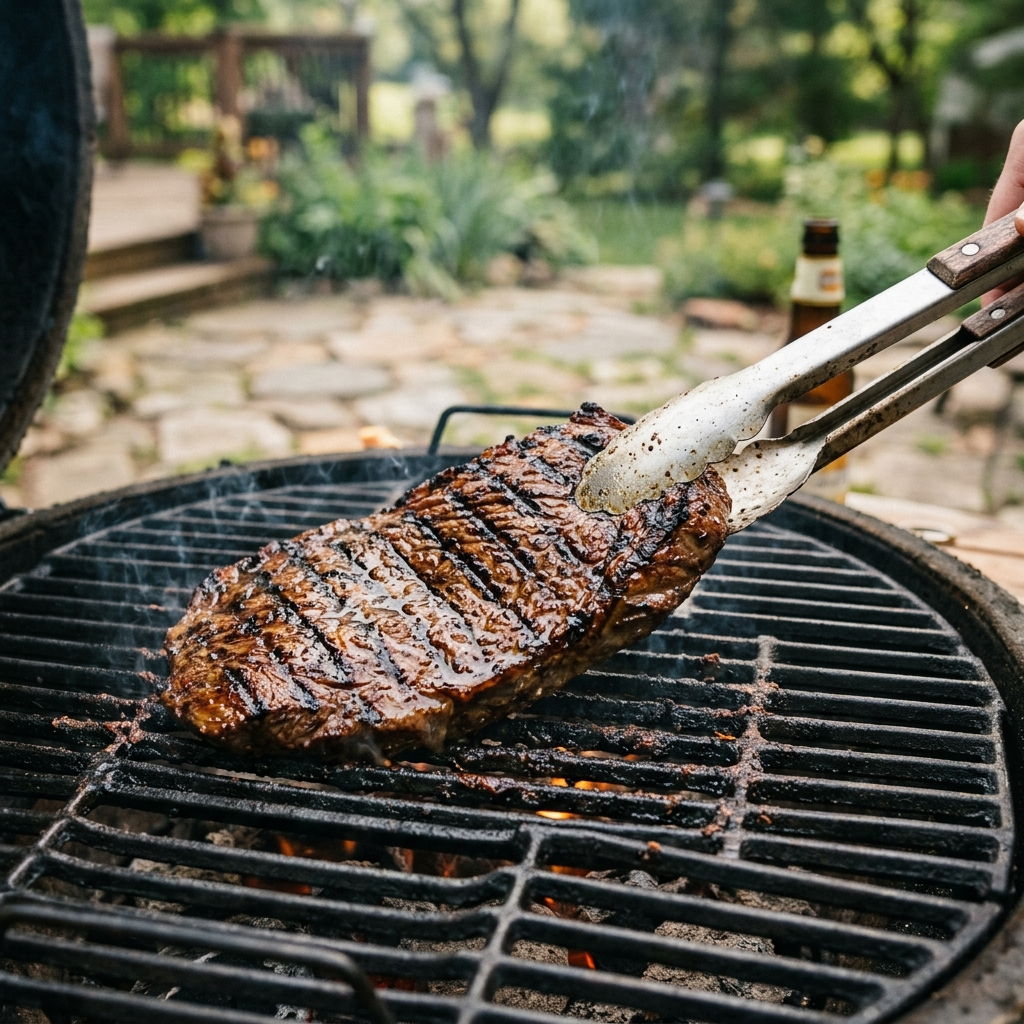
Place the flank steak directly over the hottest part of the grill. Close the lid and let it cook undisturbed for about 4 to 5 minutes. Don’t poke it, don’t press it down, don’t lift it every 30 seconds to check. Every time you open the lid, you lose heat and extend the cook time, which pushes you closer to overcooking.
Flip the steak once. You’ll know it’s ready to flip when it releases easily from the grates. If it’s sticking, it’s not ready — the proteins haven’t finished contracting and releasing yet. Give it another 30 seconds and try again.
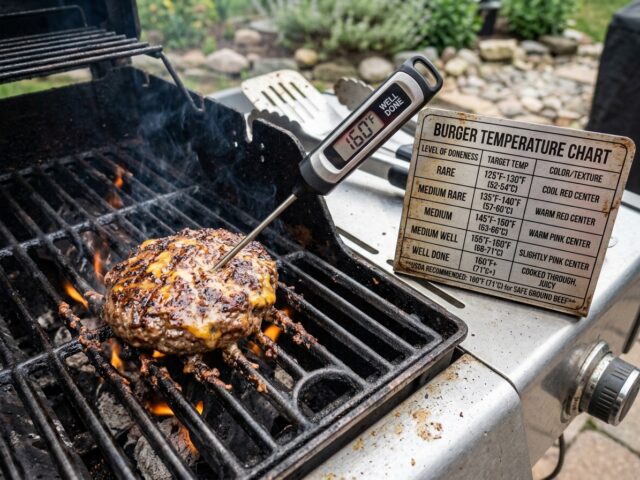
On the second side, cook for another 3 to 5 minutes depending on thickness and your target doneness. The flank steak grilling temperature you’re aiming for depends on how you like your steak, but here’s a reliable guide:
| Doneness | Pull Temperature | Final Temp After Rest |
|---|---|---|
| Rare | 120°F | 125°F |
| Medium Rare | 130°F | 135°F |
| Medium | 135°F | 140°F |
| Medium Well | 145°F | 150°F |
Food Safety Note: The USDA recommends cooking whole cuts of beef to a minimum internal temperature of 145°F followed by a 3-minute rest for food safety. The temperatures below 145°F reflect common culinary preferences for whole-muscle cuts, where the interior is generally considered safe from surface-level bacteria. Use your own judgment and consult the USDA Food Safety guidelines for the most current recommendations.
Use an instant-read meat thermometer and insert it into the thickest part of the steak. And before you worry about ruining the meat with a probe, poking meat with a thermometer does not drain the juices the way people think it does. The tiny puncture loses a negligible amount of moisture compared to the damage caused by overcooking.
The Resting and Slicing Step Most People Skip
This is the part that separates a good flank steak from a great one, and it’s where I see the most home cooks sabotage their own dinner.
Rest the steak. Pull it off the grill and set it on a cutting board or warm plate. Let it sit for a full 8 to 10 minutes. I know you’re hungry. I know it smells incredible. Resist the urge to cut into it. During those minutes, carryover cooking is raising the internal temperature by another 5 to 10 degrees, and the muscle fibers are relaxing enough to reabsorb the juices they squeezed out during the high-heat cook. Cut too early and those juices pool on your cutting board instead of staying in the meat. If you want the full science on why this matters, this deep dive on resting meat explains it better than I can in a single paragraph.
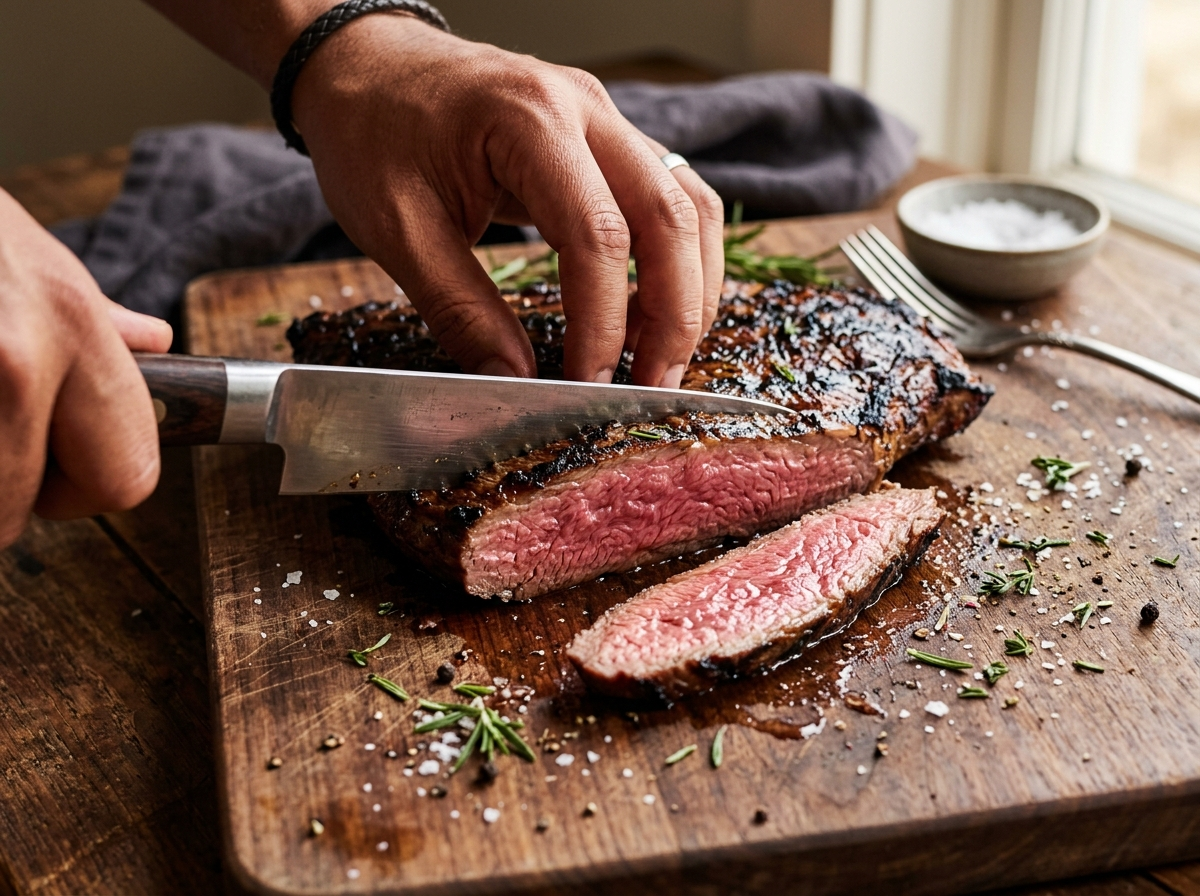
Slice against the grain. This is non-negotiable with flank steak. Remember those long muscle fibers we talked about earlier? If you cut parallel to them, you’re serving your guests long, stringy ropes of muscle that are nearly impossible to chew. Slicing perpendicular to the grain — across those lines, not along them — shortens each fiber to a fraction of its length, turning a potentially tough bite into something tender and easy to chew.
Look at the steak and find the direction the lines run. They’re usually very visible on flank steak, running lengthwise. Position your knife at a 45-degree angle to those lines and cut thin slices, about a quarter inch thick. The bias angle gives you wider, more elegant slices that look great on a plate and feel even more tender in your mouth.
Grilled Flank Steak Tips for Next-Level Flavor
Score the surface before marinating. If you have time, use the tip of a sharp knife to make shallow crosshatch cuts on both sides of the steak, about an eighth of an inch deep. This gives the marinade more surface area to cling to and creates little pockets that hold flavor. Just don’t go too deep or you’ll compromise the structure.
Finish with a squeeze of acid. A hit of fresh lime juice or a drizzle of good vinegar right after slicing brightens the whole dish. Flank steak is rich and beefy, and that sharp contrast wakes everything up. It’s the same reason a squeeze of lemon makes grilled fish taste better — acid cuts through fat and amplifies savory flavors.
Use compound butter for a restaurant-quality finish. A pat of garlic-herb compound butter melting over the hot slices right before serving adds richness that the lean cut desperately wants. It’s a small effort that makes a big impression.
Don’t walk away from the grill. I mean this literally. Flank steak is not a “set it and forget it” situation. The difference between medium rare and well done on a thin cut can be less than two minutes. Keep your thermometer in your hand and your eyes on the clock.
Let the steak be the star. Flank steak has a robust, beefy flavor that doesn’t need a lot of competition. Simple sides like grilled vegetables, a bright salad, or warm tortillas for tacos let the meat shine. It also makes an incredible filling for tacos, fajitas, or steak sandwiches the next day if you happen to have leftovers.
Frequently Asked Questions
How long do you grill flank steak on each side?
For a typical one-inch-thick flank steak over high heat (450°F to 500°F), plan on about 4 to 5 minutes on the first side and 3 to 5 minutes on the second side for medium rare. The exact time depends on the thickness of your specific cut and how hot your grill actually runs, so always rely on an instant-read thermometer rather than the clock alone. Pull the steak at 130°F for medium rare and let carryover cooking bring it up to 135°F during the rest.
Should you close the grill lid when cooking flank steak?
Yes, keep the lid closed as much as possible. Closing the lid turns your grill into an oven, surrounding the steak with heat from all sides and cooking it more evenly. Every time you open the lid, the temperature drops significantly and your cook time increases, which raises the risk of overcooking a lean cut like flank. Open the lid only to flip the steak once and to check the internal temperature near the end.
Why is my grilled flank steak tough and chewy?
The two most common reasons are overcooking and slicing with the grain instead of against it. Flank steak dries out fast past medium (140°F final temperature), so even a minute too long on the grill can make a noticeable difference. The slicing direction matters just as much — cutting parallel to the muscle fibers leaves long, tough strands intact, while slicing thinly against the grain shortens those fibers and makes each bite dramatically more tender. If you’re doing both of those things right and the steak is still tough, your cut may have been unusually thick or uneven, which can cause parts of it to overcook while the center catches up.
Your next cookout is the perfect excuse to put all of this into practice. Grab a flank steak, fire up the grill, and trust the process — high heat, a quick cook, a proper rest, and thin slices against the grain. Once you nail it the first time, you’ll wonder why you ever spent money on expensive ribeyes when a humble flank steak can deliver this much flavor for a fraction of the cost. Now go make something delicious.