That box of cookie mix sitting in your pantry? It’s not a shortcut. It’s a starting point.
Most people rip open a mix, follow the instructions, and end up with cookies that taste exactly like… a box mix. Fine, but forgettable. The thing is, cookie mixes are actually one of the most forgiving bases you can work with in the kitchen — and with just a few small tweaks, you can turn a $3 pouch into something people genuinely ask you for the recipe of.
You don’t need to be a pastry chef. You don’t need fancy equipment. You just need to know where the mix is holding back and how to push it forward.
Why Cookie Mixes Are Better Than You Think
Cookie mixes get a bad reputation, mostly from people who’ve never actually messed around with them. The base formula — flour, sugar, leavening, salt — is already measured and balanced. That’s the hard part done for you.
What mixes lack isn’t quality. It’s personality. They’re designed to be neutral and broadly appealing, which means they’re also a little flat. The ingredients list is minimal on purpose, so the mix travels well, stores long, and works for a wide range of bakers. That neutrality is exactly what makes them so easy to customize.
Think of a cookie mix the way you’d think of a plain white T-shirt. It works as-is. But add the right layering, and it becomes something you actually want to wear.
Swapping the Liquids Changes Everything
The single biggest upgrade you can make to any cookie mix costs you almost nothing extra — swap the water or use the minimum liquid required, and replace it with something that carries flavor.
Brown butter instead of regular melted butter is the most popular swap for a reason. When you heat butter past the melting point until the milk solids turn golden, you get a nutty, almost toffee-like depth that transforms even the most basic chocolate chip mix. It takes about five extra minutes on the stove and makes a noticeable difference in the final cookie.
If a mix calls for water, replace it with milk, heavy cream, or even cold brew coffee. Coffee, in particular, does something interesting — it doesn’t make the cookie taste like coffee, it just deepens the chocolate flavor in a way that’s hard to explain until you’ve tried it.
You can also add a splash of vanilla extract beyond what the recipe suggests, or try almond extract if you want something a little more interesting. Just keep it to a small amount — almond extract is strong, and too much tips into “soap” territory fast.
Pro Tip: A tablespoon of sour cream or Greek yogurt added to your wet ingredients makes cookies noticeably softer and keeps them that way for days after baking.
The Add-Ins That Actually Work
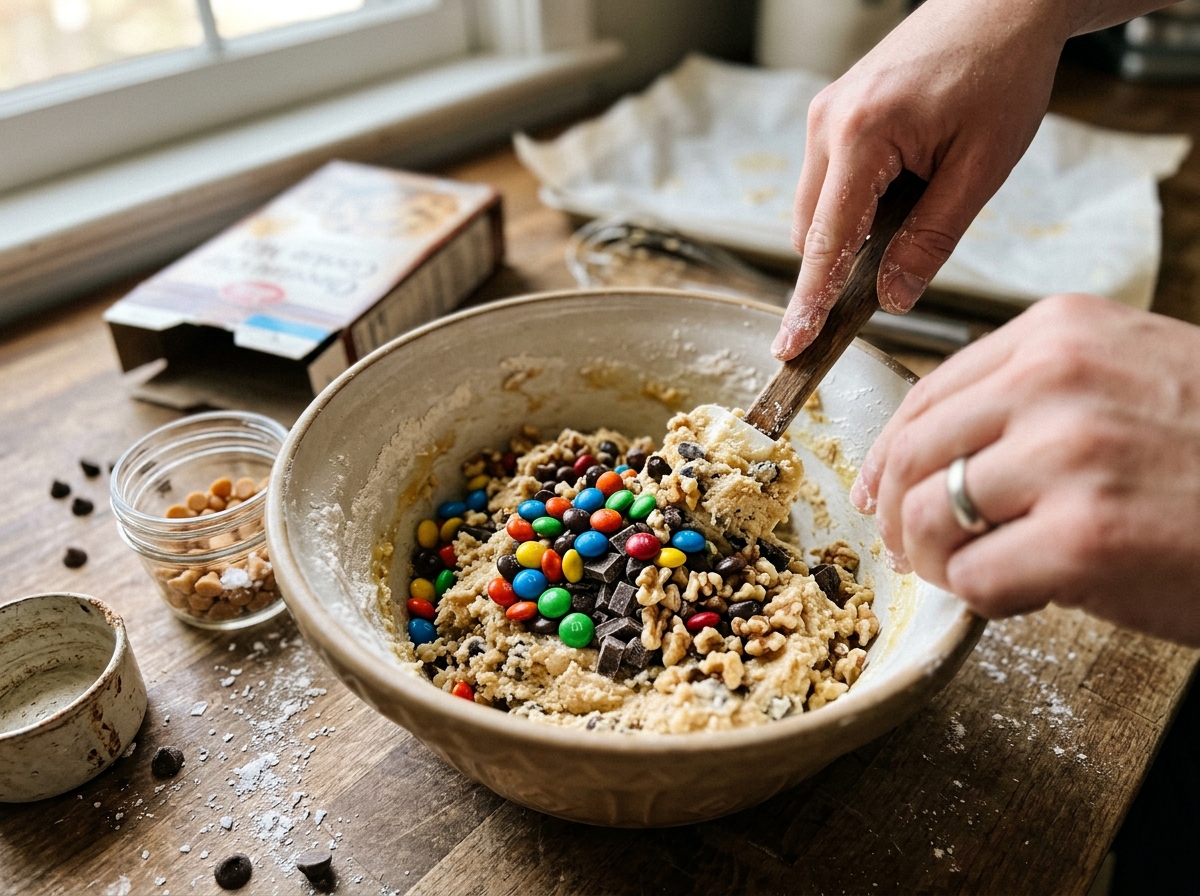
This is where most people go wrong. They dump in everything — chocolate chips, walnuts, sprinkles, M&Ms — and end up with a cookie that tastes like it’s trying too hard.
The better approach is to pick a direction and commit to it.
For richer, fudgier cookies: Stir in extra chocolate chips (dark or semi-sweet), a tablespoon of cocoa powder, or chopped chocolate bars. Bar chocolate melts unevenly, giving you pockets of melted chocolate rather than uniformly distributed chips — which is actually a good thing.
For a salty-sweet thing: Add flaky sea salt on top right before baking. Not mixed in, not table salt — flaky, on top. Maldon is the go-to, but any flaky sea salt works. This one small step makes cookies look and taste bakery-level.
For warmth and spice: A mix of cinnamon, cardamom, and a pinch of black pepper added to a snickerdoodle or sugar cookie mix creates something that feels almost like chai. It works especially well during fall and winter.
For crunch and texture contrast: Toasted nuts, crushed pretzels, or even cornflakes bring a textural element that plain cookie mixes simply don’t have. Toast your nuts before adding them — raw walnuts have a slightly bitter edge that goes away once they’ve had a few minutes in a dry pan over medium heat.
A good rule of thumb: don’t add more than two or three mix-ins at once. Let each one have enough space to actually come through.
How Eggs and Fat Affect the Final Texture
Here’s something most people don’t realize: the ratio of eggs and fat in your cookie mix determines whether your cookie comes out cakey, chewy, or crispy. Most mixes give you a standard result, but you can steer it.
For chewier cookies: Use one whole egg plus one extra yolk instead of two whole eggs. The yolk adds fat without adding extra moisture, which pulls the cookie toward chewy and away from cakey. This is the technique most bakeries use.
For crispier cookies: Replace butter with shortening or coconut oil. Less water content in the fat means the cookie spreads more and crisps up at the edges.
For cakier cookies: Add an extra whole egg. More egg white equals more structure and lift, which gives you that soft, pillowy texture that some people love.
The fat temperature matters too. Room temperature butter incorporated into the dough traps air slightly differently than melted butter, which spreads more during baking. If you want thicker cookies that hold their shape, use softened butter. If you want flat, crispy-edged cookies, go with fully melted.
Resting the Dough: The Step Most People Skip
Chilling your cookie dough for at least 30 minutes — or overnight — does something real to the texture and flavor.
During that rest time, the flour fully hydrates, the fat firms up, and the sugars start to concentrate slightly. The result is a cookie that spreads less, browns more evenly, and has a more complex flavor. A 24-hour rest in the fridge is often cited by professional bakers as a significant quality upgrade.
You can also freeze portioned dough balls and bake them directly from frozen — just add two to three minutes to the baking time. This means you can have fresh, warm cookies any time without mixing from scratch, which is honestly one of the best things about working with a mix in the first place.
Quick Fact: Jacques Torres, the French pastry chef behind the New York Times’ famous chocolate chip cookie recipe, calls for a 36-hour rest in the fridge. Even a fraction of that time makes a difference.
Adjusting for Altitude, Humidity, and Oven Quirks
Cookie mixes are formulated for standard conditions — roughly sea level, moderate humidity, a 350°F oven. If your situation is different, small adjustments make a big difference.
At high altitude (above 3,500 feet), cookies tend to spread too fast and come out flat. Reduce the fat slightly, add a tablespoon of extra flour, and raise your oven temperature by about 25°F. You can also try adding an extra egg to give the structure more support before the leavening kicks in.
In humid climates, your dough might feel stickier than expected. Don’t add more flour right away — chill the dough first. Cold dough is easier to work with, and the humidity usually doesn’t affect the final baked cookie as dramatically as it affects the raw dough.
Every oven runs slightly different too. If your cookies are consistently burning on the bottom, place your baking sheet on a higher rack or double-pan it (stack two baking sheets together). If they’re taking longer than the package says, your oven might be running cold — an oven thermometer is a $10 investment that removes a lot of guesswork.
Turning One Mix Into Multiple Cookie Styles
One of the more practical things you can do with a standard cookie mix is use it as a base for completely different cookie types — not just variations on the same cookie.
A basic sugar cookie mix, for example, can become:
- Sandwich cookies by baking them slightly thinner and pairing two with a filling of buttercream, Nutella, or cream cheese frosting
- Cookie bars by pressing the dough into a lined baking pan and baking at 325°F for a longer, lower time
- Ice cream cookie sandwiches by baking thicker rounds and freezing them around a scoop of your preferred flavor
A chocolate chip mix can become the base for a pan cookie (sometimes called a “pizookie”) by spreading the whole batch into a cast iron skillet and baking at 325°F for about 20–25 minutes. Pull it out when the center still looks slightly underdone — it sets as it cools, and the cast iron holds heat well.
If you’re putting together cookie mix gift ideas or building a baking set for someone, giving them one mix with a short note on three ways to use it makes for a much more personal and useful gift than just handing over a box. Check out these cookie mix gift ideas if you’re looking for inspiration on how to package and present them.
Getting the Bake Right
Even perfectly customized dough can come out wrong if the baking process isn’t handled well.
Don’t overbake. This is the most common mistake. Cookies continue cooking after they leave the oven because the baking sheet retains heat. Pull them out when the edges are set but the center still looks slightly underdone. They’ll firm up in about 10 minutes on the pan.
Parchment paper over cooking spray. Spray can cause the bottom of the cookie to brown faster than the rest. Parchment gives you more even heat distribution and makes cleanup easy.
Consistent sizing. A cookie scoop is worth owning. When dough portions are the same size, they bake in the same amount of time. Uneven scooping is why some cookies in a batch burn while others come out pale.
Let the pan cool between batches. Placing dough on a hot pan causes it to start melting and spreading before it even gets back into the oven. Either cool the pan under running water and dry it, or use a second pan to rotate.
For a deeper look at the fundamentals of baking from a mix without mistakes, the how to bake perfect cookies from mix guide covers the process from start to finish.
FAQ
Can I add mix-ins directly to a cookie mix without changing anything else?
Yes, and most of the time it works fine. The key is to not add too much — anything beyond about ¾ cup of mix-ins per standard batch can throw off the dough’s structure. Chocolate chips, nuts, and dried fruit all work well as direct additions without needing to adjust the liquid or fat ratios.
Does chilling the dough really make a difference, or is that just a baking myth?
It genuinely makes a difference, especially for flavor. The longer the dough rests (up to about 72 hours), the more the sugars break down and the more complex the cookie tastes. Even 30 minutes of chilling improves spread control and texture. It’s not essential, but it’s one of the easiest upgrades you can make.
Why do my cookies from a mix come out flat every time?
Flat cookies are usually caused by one of three things: butter that was too warm (melted instead of softened), too little flour, or a hot baking pan. Try chilling your dough for 30 minutes before baking, make sure your butter is at room temperature rather than liquid, and always start with a cool, room-temperature baking sheet.
Can I make cookie mixes taste less “boxed”?
Absolutely. The fastest fixes are brown butter, a splash of real vanilla extract, a pinch of extra salt, and resting the dough overnight. Any one of these alone makes a noticeable difference. All four together and most people genuinely can’t tell the difference from scratch.
What’s the best mix-in combination for a crowd?
Dark chocolate chips plus flaky sea salt on top is the combination that consistently gets the best reaction. It works with nearly any base mix, looks good, and hits both the sweet and salty craving at once. If you want something a bit more textured, add a handful of toasted pecans to that same combination.
Closing Thoughts
Cookie mixes are tools, not shortcuts. Used as-is, they’ll give you decent cookies. Used well, they’ll give you cookies people remember.
Start with one change at a time — maybe just the brown butter, or just the overnight rest. See what it does. Once you understand how each variable affects the final result, you’ll naturally start combining techniques and developing your own go-to version.
The best part? There’s very little that can go wrong. Even an imperfect cookie is still a cookie.
If you’re curious about where to find mixes worth working with in the first place, where to buy gourmet cookie mixes is a good place to start building your pantry.