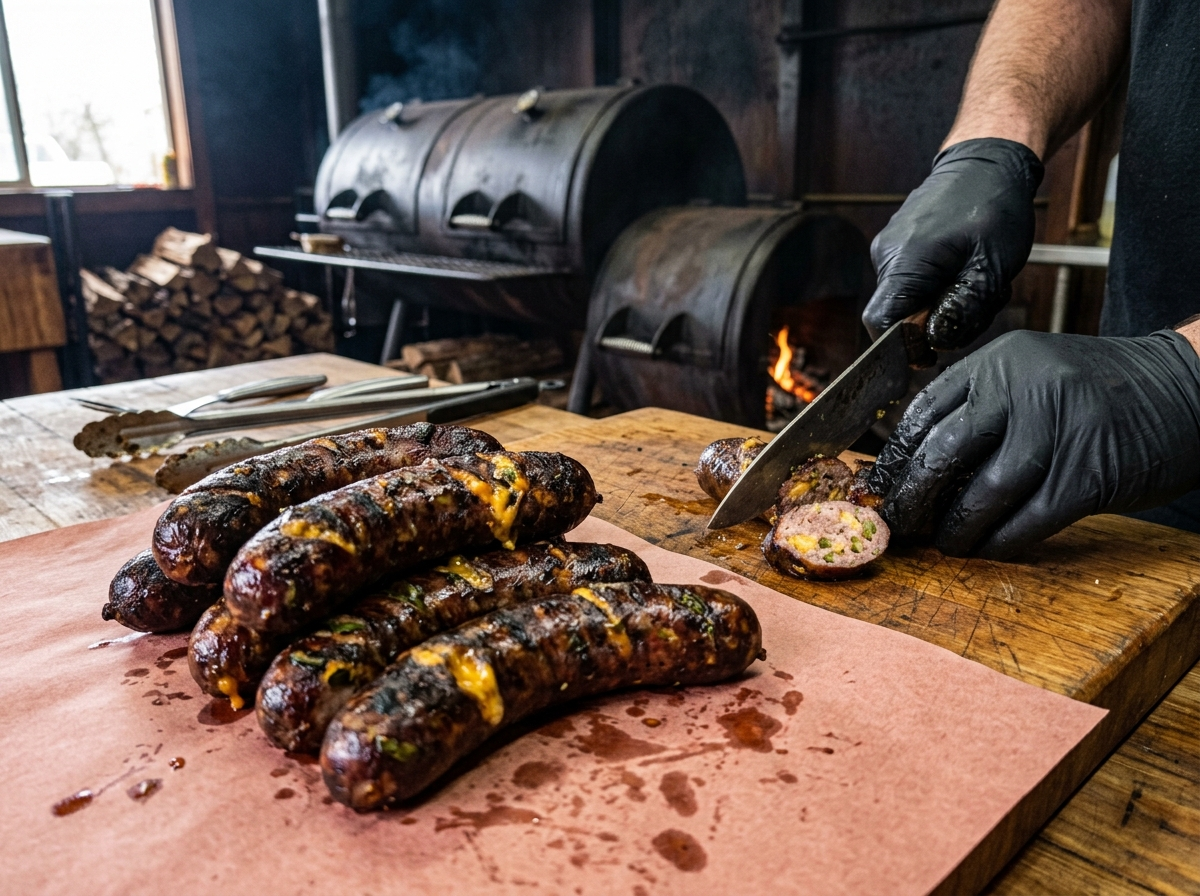
The first time I tried making jalapeno cheddar sausage, half the cheese melted straight through the casing and pooled on my smoker grates. It looked like a crime scene. The sausage itself tasted fine, but the texture was dry and crumbly because all the fat and cheese had escaped. That disaster taught me more about sausage-making than any recipe blog ever did. Here’s what actually works.
What Makes Texas-Style Sausage Different
Texas sausage isn’t just a flavor — it’s a tradition that traces back to German and Czech butchers who settled in Central Texas in the 1800s. Institutions like Southside Market in Elgin and Kreuz Market in Lockhart have been smoking sausage the same basic way for well over a century. The philosophy is dead simple: coarse grind, heavy black pepper, and post oak smoke.
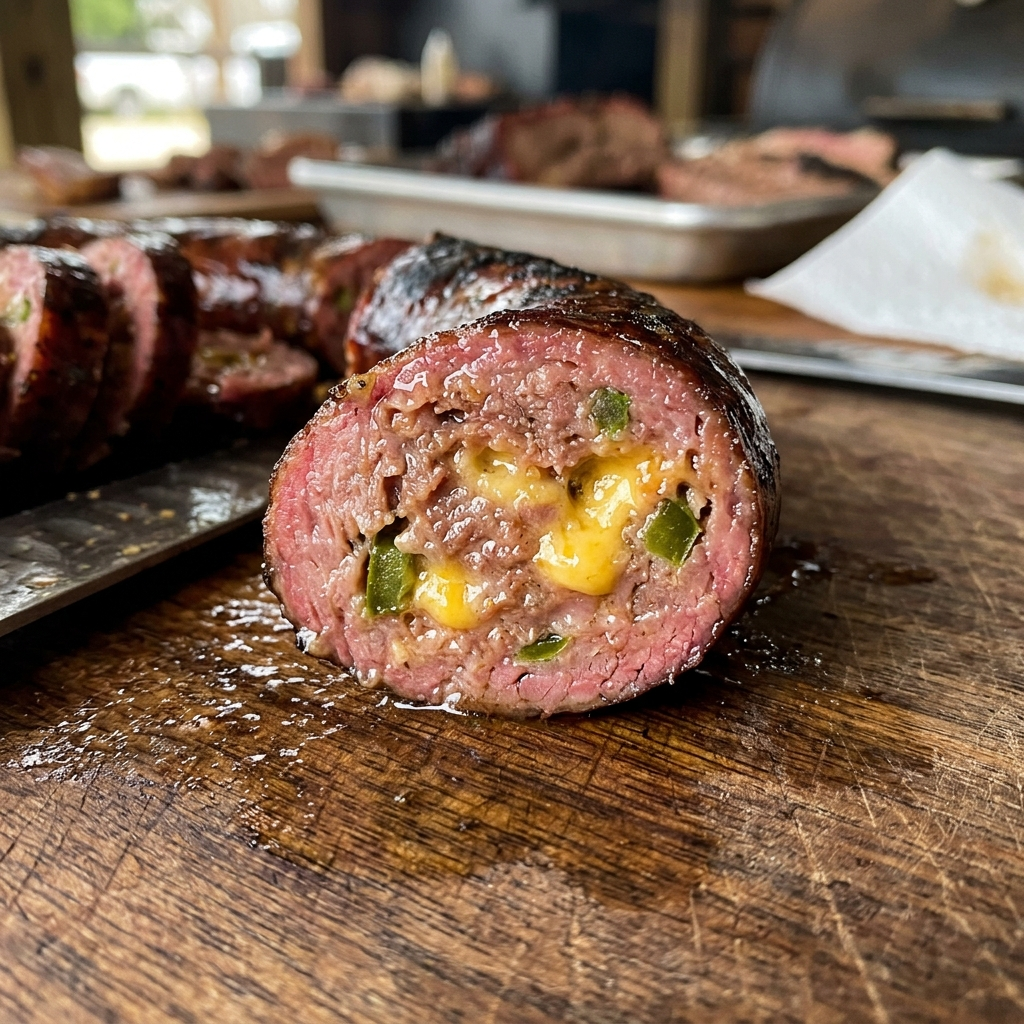
When you order a “hot guts” link at a Texas BBQ joint, you’re getting a coarsely ground beef-and-pork sausage with a snappy natural casing and a bold peppery kick. Jalapeno cheddar sausage is a newer addition to the Texas lineup, but it follows the same principles. You want a coarse texture, not a hot-dog smooth paste. You want the casing to snap when you bite into it. And you want smoke to be a supporting flavor, not a costume.
The biggest mistake home cooks make is treating sausage like a meatloaf you stuff into a tube. Sausage is an emulsion — a careful balance of meat, fat, water, and seasoning that needs to stay cold and bind together properly. If the mixture gets warm during grinding or mixing, the fat smears instead of staying in distinct little pockets, and your finished sausage turns out mealy and dry.
Choosing Your Meat, Cheese, and Casings
The Meat Ratio That Actually Works
For a jalapeno cheddar sausage recipe that stays juicy, you need a fat content of about 25 to 30 percent. That sounds high if you’re used to buying lean ground pork, but fat is what carries flavor and keeps the texture moist after hours in the smoker.
My go-to blend is 5 pounds of pork butt (also called Boston butt) and 2 pounds of beef chuck. Pork butt already sits around 20 to 25 percent fat, and the chuck adds a deeper, beefier flavor that gives you that authentic texas style sausage character. If you want an all-pork version, that works too — just make sure your pork butt is well-marbled and don’t trim it aggressively.
You can also use a straight 70/30 ground beef-and-pork mix from your butcher if you don’t want to grind your own. But grinding at home gives you control over the texture, and that coarse grind is a big part of what makes this sausage taste like it came from a real smokehouse rather than a grocery store package.
Why Regular Cheddar Will Ruin Your Sausage
Here’s the part most recipes gloss over. Regular grocery-store cheddar starts melting at around 150°F. Your sausage needs to reach an internal temperature of 160°F to be safe to eat, per USDA food safety guidelines. That means your cheese will liquefy and leak out before the meat is even done cooking.
High-temp cheddar is the fix. It’s a specially processed cheese designed to hold its shape up to about 200°F. You can find it at specialty butcher shops, sausage-making supply stores, or online retailers like Walton’s or The Sausage Maker. It costs a bit more, but it’s the single biggest difference between a sausage that looks professional and one that looks like it exploded.
You’ll want about 1 pound of high-temp cheddar cut into small cubes — roughly a quarter-inch dice — for a 7-pound batch. The cubes should be ice-cold when you fold them in, which I’ll get to in the recipe section below.
Natural vs Collagen Casings
For that authentic snap, natural hog casings are the way to go. They come packed in salt, and you’ll need to soak and rinse them thoroughly before use. They’re a little finicky to load onto the stuffing tube the first time, but the texture payoff is worth the hassle.
Collagen casings are the easier option. They come ready to use straight from the package and work well for beginners learning how to make sausage at home. The trade-off is a slightly less satisfying snap and a tendency to split more easily if you overstuff them. If this is your first batch, collagen casings are a perfectly fine starting point. You can always upgrade later.
For a 7-pound batch, plan on about 15 to 20 feet of casing, depending on how thick you stuff your links.
The Jalapeno Cheddar Sausage Recipe
Now for the hands-on part. This smoked sausage recipe makes roughly 7 pounds of sausage, which yields about 20 to 25 links depending on size. You can easily halve it if you’re working with a smaller grinder or smoker.
Prep and Seasoning
Start by cutting your pork butt and beef chuck into one-inch cubes. Spread them on a sheet pan in a single layer and put them in the freezer for about 45 minutes. You want the meat firm and slightly crunchy on the edges but not frozen solid. This is the most important step for a clean grind. If the meat is warm, the fat smears through the grinder plate and you lose the coarse texture you’re after.
Pro Tip: Put your grinder head, blade, and plate in the freezer alongside the meat. Cold equipment keeps the fat from smearing on contact.
While the meat chills, prep your other ingredients. Seed and finely dice 6 to 8 fresh jalapenos. If you want more heat, leave some seeds in or swap in a couple of serranos. Measure out your seasoning: 3 tablespoons of coarse kosher salt, 2 tablespoons of freshly cracked black pepper (coarse, not powdery), 1 tablespoon of garlic powder, 1 teaspoon of cayenne, and 1 teaspoon of paprika. If you want to build a more layered flavor profile, understanding the basics of SPG seasoning is a great starting point.
Mix the dry seasonings together in a small bowl so they distribute evenly when you add them to the meat.
Grinding and Mixing
Set up your meat grinder with a coarse plate — the one with holes about 3/8 inch wide. Run the chilled meat through the grinder into a large bowl that’s been sitting in the freezer or nested inside a bigger bowl of ice water. Keeping everything cold is non-negotiable here.
Once the meat is ground, add your seasoning mix, the diced jalapenos, and about 1 cup of ice-cold water. The water helps create the bind — that sticky, tacky texture that holds the sausage together and gives it a good snap when cooked. If you’re curious about the science behind why bind matters in ground meat preparations, this breakdown of what a binder does in BBQ explains the concept clearly.
Mix by hand for about 2 to 3 minutes. You’ll feel the mixture change from loose and crumbly to sticky and cohesive. It should start clinging to your hand when you grab a handful and turn it upside down. That’s your signal the proteins have developed enough to hold the emulsion together.
Fold in the cold high-temp cheddar cubes last, mixing just enough to distribute them evenly. Overworking the cheese will break the cubes down and defeat the whole purpose of buying high-temp in the first place.
Stuffing the Casings
Load your soaked hog casings or collagen casings onto the stuffing tube of your grinder or standalone stuffer. Tie a knot at the end of the casing and start feeding the meat mixture through at a steady, even pace.
The trick here is to fill the casing firmly but not tight. If you overstuff, the casing will burst when you twist it into links or when the fat expands during smoking. Aim for a firm but slightly squishy feel — think of a water balloon that’s about 80 percent full.
Twist the stuffed casing into 6-inch links by pinching and rotating in alternating directions. Prick any air bubbles with a sterilized needle or the tip of a paring knife. Air pockets create weak spots where the casing can split under heat.
Smoking Your Sausage the Texas Way
The Pellicle Stage Most Recipes Skip
Before your sausage ever touches smoke, it needs to dry. Hang the links or lay them on a wire rack in the refrigerator, uncovered, for at least 2 hours and ideally overnight. This drying period forms a pellicle — a thin, tacky skin on the surface of the casing that smoke particles actually adhere to. Without a pellicle, the smoke just floats past and you end up with pale, lightly flavored sausage that tastes like it was cooked in an oven.
This is the step I skipped on my very first attempt, and the color and smoke flavor were noticeably weak compared to later batches where I let the links dry properly. It’s a small time investment that makes a huge difference.
Wood Choice and Temperature
Central Texas pitmasters almost exclusively use post oak for smoking. It burns clean, produces a medium-bodied smoke, and doesn’t overpower the meat. If you can’t find post oak where you live, hickory or pecan are solid substitutes. Avoid mesquite for sausage — it’s too aggressive and can turn bitter during the longer cook time.
Set your smoker to 225°F to 250°F. This is a low and slow cooking situation, and patience is the whole game. Smoking sausage too hot causes the fat to render out rapidly, the casings to split, and the cheese to blow through the sides. You want a gentle, gradual cook that lets the smoke penetrate without wrecking the texture.
Place the links on the smoker grate with at least an inch of space between them so the smoke circulates evenly around each one.
Target Internal Temperature
Smoke the sausage until it reaches an internal temperature of 160°F. This typically takes 2 to 3 hours depending on the thickness of your links and how steady your smoker runs. Use an instant-read thermometer and check the thickest link in the batch, inserting the probe through the end rather than the side to avoid piercing the casing more than necessary.
Food safety note: Ground meat carries a higher risk of bacterial contamination than whole cuts because the grinding process distributes surface bacteria throughout the entire batch. The USDA recommends cooking all ground pork and beef mixtures to a minimum of 160°F. Do not pull the sausage early for a “juicier” result — 160°F is the safe minimum, and with the right fat ratio, your sausage will still be plenty moist at that temperature. This is general food safety information and not a substitute for professional food safety guidance, especially if you plan to produce sausage commercially. For a deeper look at the temperature ranges where bacteria thrive, this guide to the food safety temperature danger zone is worth a read.
Once the sausage hits 160°F, pull it off the smoker and let it rest for 10 to 15 minutes. Resting allows the juices to redistribute through the meat instead of running out the moment you slice into it.
Storing, Reheating, and Serving
Fresh smoked jalapeno cheddar sausage keeps in the refrigerator for about 5 days. For longer storage, vacuum-seal the links and freeze them for up to 3 months. Thaw in the fridge overnight before reheating.
To reheat, the gentlest method is to warm the links in a 275°F oven for about 15 minutes or until heated through. You can also grill them over indirect heat for a few minutes per side. Avoid microwaving — it turns the casing rubbery and can cause the cheese to burst out in molten pockets.
As for serving, these links are fantastic sliced on a charcuterie board, tucked into a warm tortilla with some fresh salsa, or served the classic Texas way: on a sheet of butcher paper with saltine crackers, pickles, and raw onion. If you’re planning a bigger BBQ spread, these pair beautifully alongside armadillo eggs for a double hit of jalapeno and cheese that’ll make your guests very happy.
Frequently Asked Questions
Can I make jalapeno cheddar sausage without a smoker?
Yes. You can cook the links in a 300°F oven on a wire rack set over a baking sheet until they reach 160°F internally, which takes about 45 minutes to an hour. You won’t get the smoke flavor, but the texture and taste will still be excellent. If you want a smoky note without a smoker, add half a teaspoon of liquid smoke to the meat mixture during the mixing stage. It won’t replicate real wood smoke, but it gets you in the neighborhood.
Do I need to use curing salt (Prague Powder #1)?
For this hot-smoked sausage recipe, curing salt is optional. Prague Powder #1 is essential if you plan to cold-smoke the sausage below 140°F because it prevents botulism growth in the temperature danger zone. Since this recipe calls for hot smoking at 225°F to 250°F and you’re bringing the internal temp to 160°F relatively quickly, regular kosher salt is sufficient. If you do want to use cure #1 for the pink color and slightly tangy flavor it adds, use 1 level teaspoon per 5 pounds of meat — no more, as excess nitrite is a genuine health concern.
Why did my sausage turn out dry and crumbly?
The most common causes are not enough fat in the meat blend, letting the meat get too warm during grinding, or smoking at too high a temperature. Make sure your fat content is at least 25 percent, keep everything ice-cold during prep, and don’t let your smoker creep above 250°F. The ice water in the mixing step also matters more than people think — it hydrates the proteins and helps them trap moisture during cooking. If your first batch is a little dry, don’t give up. Adjust the fat ratio and temperature on your next try and you’ll see a dramatic improvement.
Your first batch of homemade jalapeno cheddar sausage probably won’t look like something out of a Texas BBQ magazine, and that’s completely fine. The flavor will be there, and the texture will get better with each attempt. Fire up the smoker, keep your meat cold, use high-temp cheese, and trust the process. Once you pull that first perfect link off the grill and hear the casing snap, you’ll never go back to store-bought sausage again.