You’ve got chicken thighs on the counter and a cookout in a few hours. Do you soak them in a marinade or coat them with a dry rub? The answer changes depending on what you’re cooking, how much time you have, and the flavor you’re chasing.
A marinade is a liquid mixture of acid, oil, and seasonings that you soak meat in before cooking, while a rub is a blend of dry spices and herbs you press directly onto the surface. Both add flavor, but they work in very different ways. Let’s clear up the confusion so you stop guessing and start seasoning with confidence.
What Is a Marinade, and How Does It Actually Work?
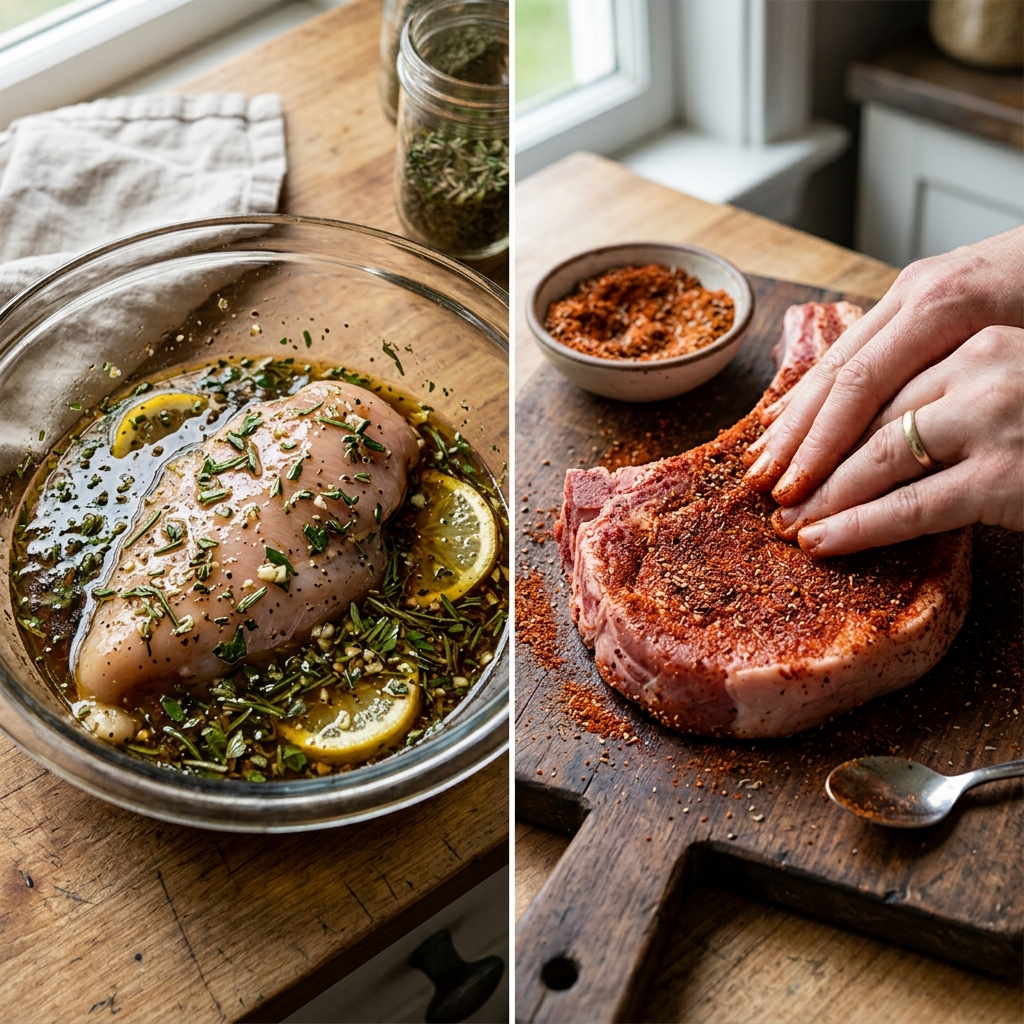
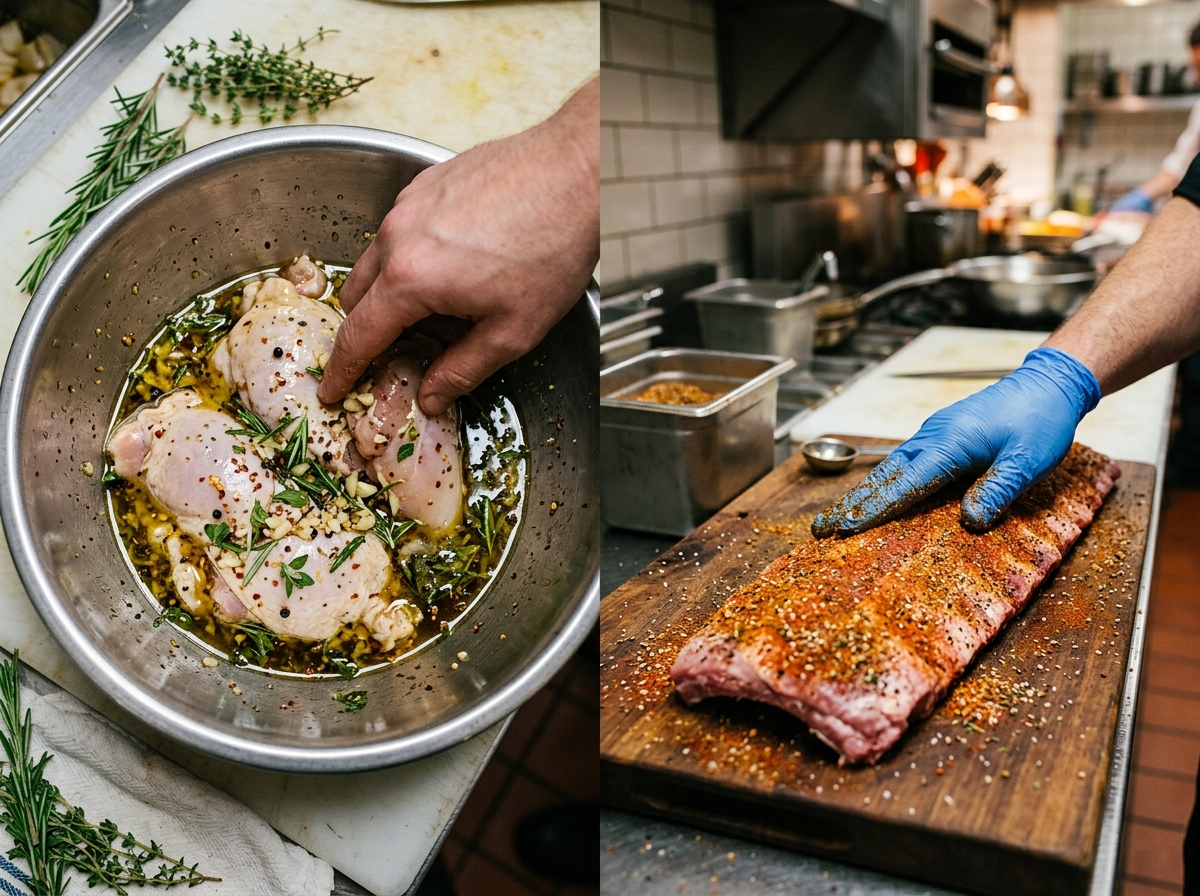
A marinade is a seasoned liquid bath for your meat. You mix together an acid like lime juice, vinegar, or yogurt, some oil, and whatever aromatics or spices you like, then submerge your protein and let it sit in the fridge for a while.
The acid does the heavy lifting. It breaks down some of the protein fibers on the surface of the meat, which helps it hold onto moisture and lets the seasoning cling a bit better. The oil carries fat-soluble flavors — think garlic, herbs, and spices — into those tiny surface cracks the acid opens up. If you want a deeper look at how these two forces interact, this breakdown of acid and fat as the yin and yang of cooking explains the science in plain English.
Here’s something most people get wrong, though. A marinade does not soak deep into a thick piece of meat. Food science writer J. Kenji López-Alt has demonstrated through testing at Serious Eats that most marinades only penetrate about one to two millimeters into the surface, even after hours of soaking. The flavor boost is real, but it lives on the outside. That’s not a failure — it’s just how meat works. The surface is where the heat hits first, so that’s where you want the most flavor anyway.
The Three Parts of Every Good Marinade
Every solid marinade has three jobs to do, and each ingredient handles one of them.
Acid tenderizes the surface and adds brightness. Citrus juice, vinegar, wine, buttermilk, and yogurt all work. Yogurt-based marinades are especially popular in Middle Eastern and South Asian cooking because the lactic acid is gentler than vinegar, so you can marinate longer without turning the meat mushy.
Oil carries flavor and protects the meat from drying out on the grill. Olive oil, vegetable oil, sesame oil — pick one that matches the flavor profile you’re going for.
Aromatics and seasonings are where you get creative. Garlic, ginger, fresh herbs, soy sauce, honey, chili paste — this is the personality of your marinade.
What Is a Rub, and Why Do Pitmasters Swear by It?
A rub is a mixture of dry spices, herbs, salt, and sugar that you massage directly onto the surface of your meat. No liquid bath, no soaking time. You pat the meat dry, press the rub on, and cook.
Where a marinade works by chemically altering the surface, a rub works by building a crust. When that spice-coated surface hits high heat, the sugars caramelize and the proteins brown through the Maillard reaction, creating a deeply flavorful exterior. On a smoker, that rub transforms into what BBQ folks call bark — that dark, sticky, intensely seasoned crust on a brisket or pork shoulder that people fight over at cookouts.
The biggest advantage of a rub is simplicity. You can mix one up in two minutes from things already in your pantry. If you want to start building your own blends from scratch, this guide to DIY spice blends is a great place to start. There’s also no risk of over-tenderizing your meat, which is a real problem with acidic marinades if you leave them on too long.
Dry Rub vs Wet Rub — What’s the Deal?
A dry rub is exactly what it sounds like: all powder, no liquid. Think salt, pepper, garlic powder, paprika, brown sugar, cumin. You press it onto dry meat and let it sit for anywhere from 15 minutes to overnight.
A wet rub starts with the same dry spices but adds a small amount of liquid — mustard, oil, hot sauce, or even Worcestershire — to form a paste. The liquid acts as a binder that helps the spices stick to the meat more evenly. Wet rubs are especially popular in competition BBQ, where pitmasters want a uniform coating that won’t fall off during a long smoke.
The difference between the two is mostly about texture and application. Dry rubs give you a crunchier crust. Wet rubs give you a stickier, lacquer-like finish. Neither is better — they just produce different results.
Marinade vs Rub: The Key Differences at a Glance
Sometimes you just need a quick side-by-side to make a decision. Here’s how these two methods stack up across the things that actually matter when you’re standing in the kitchen.
| Marinade | Rub | |
|---|---|---|
| Form | Liquid | Dry powder or wet paste |
| How it adds flavor | Soaks into the outer 1–2mm of meat | Coats the surface and builds a crust |
| Tenderizing effect | Yes, from acid | Minimal to none |
| Time needed | 30 minutes to 24 hours | 15 minutes to overnight (works immediately too) |
| Best cooking methods | Grilling, pan-searing, broiling | Smoking, grilling, roasting, slow cooking |
| Risk of overdoing it | Yes — acid can turn meat mushy | Low — hard to ruin meat with a rub |
| Crust and bark formation | Weak (surface stays wet) | Strong (surface is dry and spiced) |
When to Use a Marinade vs a Dry Rub (Meat by Meat)
This is the part you probably came here for. The right choice depends on the cut, the cooking method, and how much time you have. Let’s walk through the most common proteins.
Chicken
Chicken is forgiving, so you really can’t go wrong either way. A marinade shines when you’re grilling boneless, skinless chicken breasts or thighs and want to keep them juicy. The acid and oil help protect lean white meat from drying out over high heat. A yogurt-based marinade with garlic, lemon, and cumin is hard to beat for grilled chicken.
A rub is the better call when you want crispy skin. If you’re smoking a whole chicken or roasting thighs with the skin on, a dry rub with paprika, garlic powder, and a little brown sugar will give you a gorgeous, crackly exterior that a wet marinade would steam away.
Steak and Beef
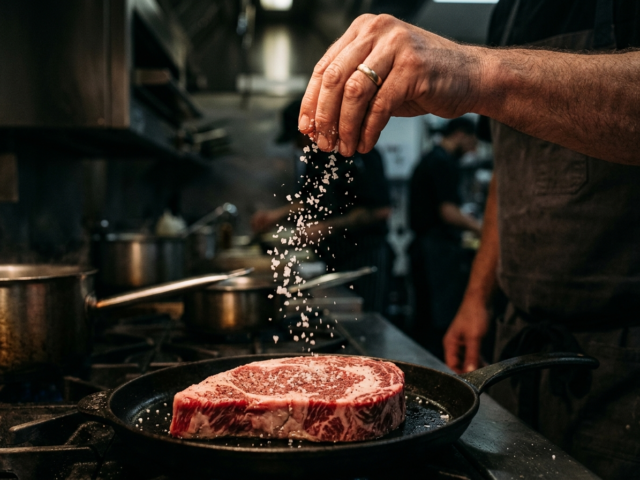
For a good steak — ribeye, strip, filet — skip the marinade and go with a rub. A simple coating of coarse salt and cracked black pepper is all a quality steak needs. The dry surface sears beautifully and builds that restaurant-quality crust you’re after.
Marinades make more sense for tougher, leaner cuts like flank steak or skirt steak. The acid helps soften the chewy muscle fibers, and the bold flavors stand up to the meat’s strong beefy taste. If you’re making carne asada, a lime-and-soy marinade is basically required. Just don’t marinate for more than four to six hours, or the acid will start turning the surface mealy.
Pork and Ribs
Pork shoulder and ribs are where rubs truly shine. If you’re cooking low and slow, a dry rub applied the night before gives the salt time to penetrate and the sugars time to caramelize into a thick, sticky bark during the long cook. A classic blend of salt, pepper, garlic, paprika, and brown sugar is the backbone of most BBQ pork.
Marinades work well for quicker-cooking pork cuts like chops or tenderloin. A simple mix of soy sauce, honey, garlic, and a splash of apple cider vinegar can add a lot of flavor in just 30 minutes.
Fish and Seafood
Be very careful with marinades on fish. The acid in a marinade will start “cooking” the delicate protein almost immediately — that’s the same principle behind ceviche. If you marinate shrimp or a delicate white fish for more than 15 to 20 minutes in anything acidic, you’ll end up with a mushy, chalky texture.
For most seafood, a light dry rub or even just a sprinkle of salt and spices right before cooking is the safer bet. If you do want a marinade, keep it oil-and-herb based with minimal acid, and keep the clock short.
Can You Use Both a Marinade and a Rub?
Yes, and it’s one of the best tricks in a home cook’s playbook. The key is getting the order right.
Marinate first, then pat the meat completely dry with paper towels before applying your rub. This is the step most people skip, and it’s the reason their crust never forms properly. If the surface is still wet from the marinade, the rub will dissolve into a slurry and steam instead of searing. You’ll lose the crust and the bark, and the spices won’t toast the way they should.
I learned this the hard way with a batch of chicken thighs a few years back. I pulled them out of a buttermilk marinade, slapped the rub on while they were still dripping, and threw them on the grill. The result was a gummy, uneven coating that stuck to the grates instead of forming a crust. Pat them dry first, and you get the best of both worlds: the tenderizing and deep flavor from the marinade, plus the caramelized spice crust from the rub.
Mistakes That Will Sabotage Your Seasoning
Even when you pick the right method, a few common slip-ups can undo all your work.
Marinating on the counter instead of in the fridge. This is a food safety issue, not just a flavor one. The USDA is clear that meat should always marinate in the refrigerator, never at room temperature. Bacteria multiply rapidly in the temperature danger zone between 40°F and 140°F, and a bowl of raw chicken sitting on the counter for two hours is a real risk. This is general food safety information and not a substitute for professional food handling guidance — always follow current USDA recommendations for safe marinating practices.
Leaving meat in an acidic marinade too long. More time does not equal more flavor. After about 12 hours in a highly acidic marinade, the surface proteins break down so much that the meat turns soft and chalky. Two to six hours is the sweet spot for most meats in an acid-heavy marinade. Oil-and-herb marinades with very little acid can go longer, up to 24 hours.
Using too much sugar in a rub over direct high heat. Sugar burns fast. If you’ve coated a steak in a rub heavy with brown sugar and you’re searing it over a ripping-hot flame, that sugar will char and turn bitter before the inside of the meat is done. Save the sugary rubs for low-and-slow cooking or indirect heat, and stick to salt, pepper, and savory spices for high-heat grilling.
Not salting your rub enough. Salt is the one seasoning that actually penetrates meat beyond the surface. If your rub is all paprika and garlic powder with barely any salt, the interior of your meat will taste bland no matter how aggressively you coated the outside. Don’t be shy with the salt — it’s doing more work than any other ingredient in your blend.
Frequently Asked Questions
Is a marinade or a rub better for grilling?
It depends on what you’re grilling. For quick-cooking items like chicken breasts, shrimp, or flank steak, a marinade adds moisture and flavor in a short window. For thicker cuts or anything you want a crust on — steaks, pork chops, burgers — a dry rub gives you better browning and a more intense surface flavor. You can also use both: marinate first, pat dry, then rub before it hits the grill.
How long should I let a dry rub sit on meat before cooking?
At minimum, 15 to 30 minutes gives the salt time to start drawing out moisture and dissolving into the surface. For bigger cuts like pork shoulder or brisket, applying the rub the night before and letting it rest uncovered in the fridge produces the best bark. The salt penetrates deeper overnight, and the surface dries out, which is exactly what you want for a good crust.
Can I turn a used marinade into a sauce?
You can, but you need to boil it first. Any marinade that has touched raw meat contains bacteria and is not safe to use as-is. Bring it to a full rolling boil for at least one minute to kill any pathogens, then you can reduce it into a glaze or dipping sauce. If you’d rather skip that step, set aside a portion of the marinade before you add the raw meat and use that as your sauce.
The next time you’re staring at a pack of meat and a clock ticking down to dinner, you won’t have to guess. Marinades add moisture and tenderize the surface — perfect for lean cuts and quick cooks. Rubs build crust and bark — ideal for slow smokes and high-heat sears. And when you’re feeling ambitious, use both in the right order for the best of each world.
Grab whatever protein is in your fridge tonight, pick the method that fits, and trust the process. Your taste buds will figure out the rest.
External source notes for verification:
- USDA marinating safety guidelines: Verify at foodsafety.gov (search “marinating food safety”) for current refrigerator-only recommendations and danger zone temperatures.
- J. Kenji López-Alt marinade penetration testing: Verify at seriouseats.com (search “marinade penetration Kenji”) for his documented 1–2mm penetration findings.