Sound familiar? You’re not alone. Most people assume golden crisp french fries are something only restaurants and fast-food chains can pull off. That McDonald’s and Five Guys have some secret machinery or magic ingredient you can’t replicate at home. But here’s the truth — getting that perfect crunch with a fluffy, steamy interior isn’t about fancy equipment. It’s about understanding a few simple principles that most recipes skip right over.
This is the guide that actually breaks those down for you. No fluff, no filler — just the real stuff that makes the difference between soggy potato sticks and french fries so crispy they shatter when you bite into them.
Why Your Homemade French Fries Turn Out Soggy
Before we fix anything, let’s talk about why things go wrong. Because once you understand the science behind a soggy fry, you’ll never make the same mistakes again.
Potatoes are mostly water — about 80% of their weight, actually. When you drop a wet, starchy potato into hot oil, two things happen at the same time. The water inside starts turning into steam and pushing outward, while the starch on the surface tries to form a crispy shell. If there’s too much surface moisture or too much free starch, that shell never forms properly. You end up with fries that absorb oil instead of repelling it.
Temperature plays a huge role too. If your oil isn’t hot enough, the potato just sits there soaking up grease like a sponge. Too hot, and the outside burns before the inside cooks through. That’s why so many people end up with fries that are brown on the outside but raw in the middle — or cooked through but completely lacking any crunch.
The other big factor? Crowding the pan. When you dump a mountain of fries into oil at once, the temperature crashes. The oil goes from 350°F to something like 250°F in seconds. At that lower temperature, you’re basically boiling the potatoes in oil. Not frying them. And boiled potatoes don’t get crispy — they get sad.
Choosing the Right Potato Makes All the Difference
Not every potato is built for frying. This is where a lot of home cooks go wrong right from the start.
Russet potatoes (also called Idaho potatoes) are the gold standard for golden crisp french fries. They’re high in starch and low in moisture, which is exactly the combination you want. That high starch content creates a beautiful crunchy exterior, while the dry, fluffy interior gives you that classic mealy texture inside.
Yukon Gold potatoes can work too, but they produce a slightly different result. They’ve got more moisture and a creamier texture, so your fries will be crunchier on the outside but denser inside. Some people actually prefer this — it’s a matter of personal taste.
What you want to avoid are waxy potatoes like red potatoes or fingerlings. They hold their shape well (great for potato salads), but they don’t crisp up the way you need for fries. They’ll stay firm and almost gummy inside, and the exterior never gets that satisfying crackle.
Pro Tip: Look for potatoes that feel heavy for their size and don’t have any green spots. Green patches mean the potato has been exposed to too much light and has developed solanine, which tastes bitter and can cause stomach issues in large amounts.
The Secret Weapon: Soaking and Rinsing
Here’s the step most people skip — and it’s probably the single biggest reason restaurant fries taste better than yours.
After you cut your potatoes into fries, you need to soak them in cold water. Not for five minutes. Not for ten. You want at least 30 minutes, and ideally a couple of hours. Overnight in the fridge is even better if you’re planning ahead.
Why does this matter so much? Soaking pulls out excess starch from the surface of the cut potatoes. That free starch is what causes fries to stick together in the oil and prevents the surface from crisping evenly. You’ll actually see the water turn cloudy and milky — that’s all the starch leaching out.
After soaking, drain the fries and rinse them under cold running water until the water runs clear. Then — and this part is critical — dry them completely. Use paper towels or a clean kitchen towel and pat each fry until there’s no visible moisture left. Dropping wet potatoes into hot oil is dangerous (the oil will splatter violently) and counterproductive (that water fights against the crisping process).
If you want to take things one step further, spread the dried fries on a baking sheet and pop them in the freezer for 30 to 45 minutes before frying. This quick freeze does two things. It drives out even more moisture from the surface, and it creates a temperature differential between the frozen outside and the interior — which helps build a thicker, crunchier crust during frying.
Did you know? This freeze-before-frying technique is exactly what most frozen french fry brands use in their factories. It’s one of the reasons frozen fries from the store often turn out crispier than fresh-cut ones — they’ve already been par-fried and frozen, giving them a head start on that crunchy exterior.
Picking the Best Oil for Frying
The oil you use isn’t just about flavor — it directly affects how crispy your fries get, how they taste, and how healthy (or unhealthy) the final result is.
You need an oil with a high smoke point — meaning it can handle high temperatures without breaking down, smoking, or developing off flavors. You also want something with a neutral taste so the potato flavor shines through.
Peanut oil is the top choice for most professional kitchens and serious home cooks. It has a smoke point around 450°F, stays stable at high temperatures, and adds a very subtle nutty flavor that complements the potato beautifully. Five Guys famously uses 100% peanut oil for their fries — and it’s one of the reasons they taste so good. Just keep in mind, this isn’t an option if anyone eating has a peanut allergy.
Vegetable oil and canola oil are solid all-around choices. They’re affordable, have high smoke points (around 400°F to 435°F), and their flavor is completely neutral. Most home cooks will do great with either of these.
Sunflower oil is another excellent pick, especially refined sunflower oil, which can handle temperatures up to 440°F without issues.
If you want to explore the best oil options for homemade fries in more detail — including which ones to avoid completely — that’s worth a read before you fire up the stove.
Oils you should stay away from for deep frying include extra virgin olive oil (smoke point too low, flavor too strong), butter (burns quickly), and unrefined coconut oil (imparts a coconut taste you probably don’t want on your fries).
The Double-Fry Method: The Real Secret to Golden Crisp French Fries
If you take away one thing from this entire article, let it be this: fry your potatoes twice.
The double-fry method is the technique behind every truly great french fry you’ve ever eaten — from Belgian frites to McDonald’s to that little burger joint down the street with the fries that haunt your dreams. It’s not complicated, but it makes a dramatic difference.
The First Fry: Low and Slow
Heat your oil to 300°F to 325°F. This is lower than you might expect, and that’s the point. Drop your fries in and cook them for about 5 to 7 minutes. You’re not trying to brown them here. You’re cooking the interior of the potato all the way through — getting it soft and fluffy — while only barely starting to set the surface.
When they’re done, the fries should look pale and limp. Almost like they’re not even cooked. Don’t panic. That’s exactly what you want.
Pull them out with a slotted spoon or spider strainer and lay them on a wire rack (not paper towels — the rack lets air circulate underneath so they don’t steam). Let them cool for at least 15 to 20 minutes. You can even let them rest for up to two hours at room temperature, or refrigerate them for later.
The Second Fry: Hot and Fast
Now bring your oil up to 375°F to 400°F. This is where the magic happens. Drop the par-cooked fries back in, working in small batches (don’t crowd!), and fry for 2 to 4 minutes until they’re a deep, gorgeous golden brown.
At this higher temperature, the surface moisture flashes off almost instantly. The starch layer that formed during the first fry crisps up into a hard, crunchy shell. The interior is already cooked, so you’re not trying to cook anything through — you’re purely building texture.
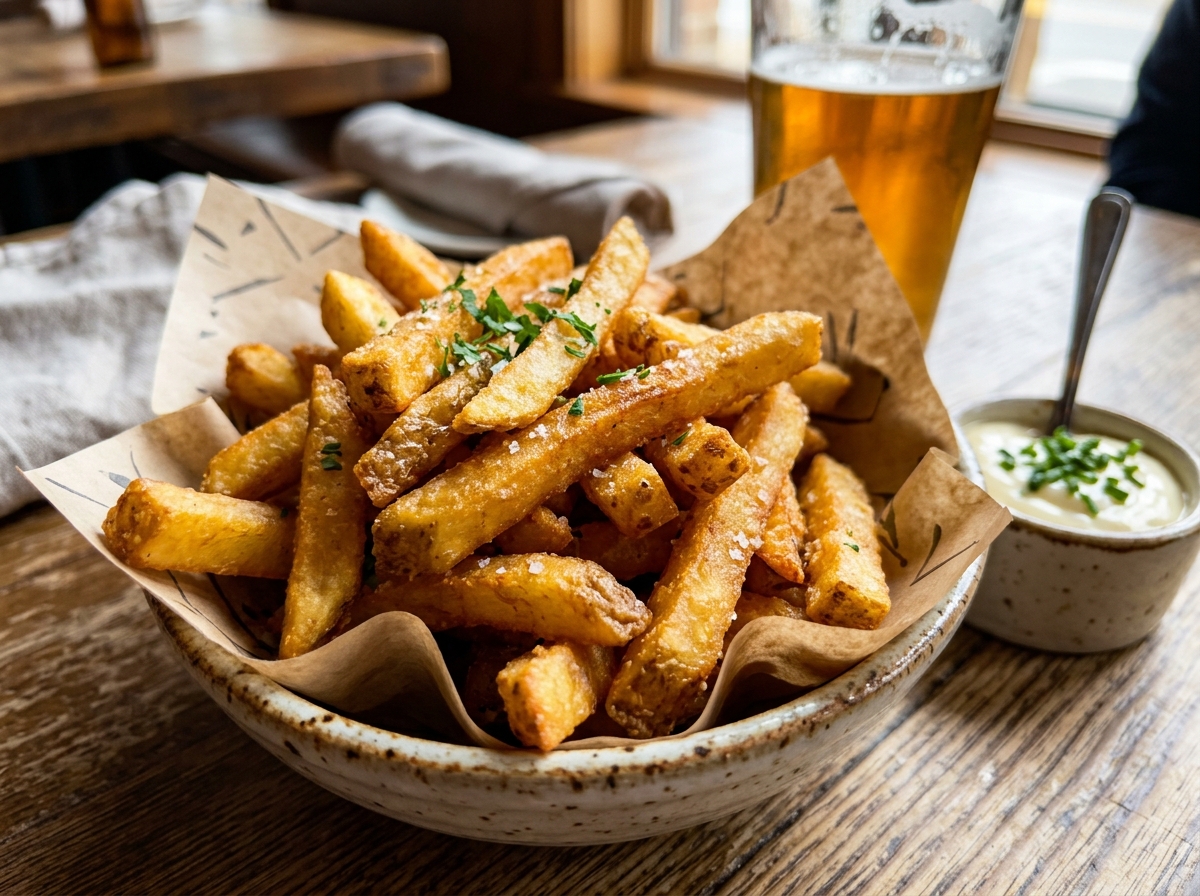
The result? A fry that crunches audibly when you bite it, with a steam cloud of fluffy potato inside. That’s the golden crisp french fry you’ve been chasing.
Why Does This Work So Well?
During the first fry, starch granules on the surface absorb a small amount of oil and swell up, creating a thin coating. When the fries cool, that coating firms up and becomes a rigid shell. The second fry at high heat then dehydrates that shell rapidly, making it incredibly crispy while the already-cooked inside stays soft and tender.
It’s the same principle behind why reheated pizza sometimes has a crispier crust than fresh — that cool-down period allows the starches to set, and reheating crisps them further.
Don’t Have a Deep Fryer? No Problem
Not everyone wants to deal with a pot of hot oil on the stove. Totally fair. The good news is you’ve got options that can still deliver seriously crispy results.
Oven-Baked Crispy Fries
Preheat your oven to 425°F to 450°F. Toss your soaked, dried fries with a thin coating of oil — about 1 to 2 tablespoons per pound of potatoes. Spread them in a single layer on a baking sheet lined with parchment paper. The key here is spacing. Every fry needs its own little patch of real estate on that pan. If they’re touching or overlapping, they’ll steam instead of roast.
Bake for 20 minutes, then flip each fry and bake for another 15 to 20 minutes until golden and crisp. A small sprinkle of cornstarch mixed in with the oil before tossing can help build extra crunch on the surface.
Air Fryer French Fries
Air fryers have become hugely popular, and they do a surprisingly decent job with fries. Set it to 380°F to 400°F, cook for about 15 to 20 minutes, and shake the basket every 5 minutes to rotate the fries. You’ll use barely any oil — a quick spray or light toss is all you need. The result won’t be identical to deep-fried, but it gets close enough that most people can’t tell the difference in a blind test.
If you want more tips on how to fry at home without deep frying, there are some clever techniques that bridge the gap between health-conscious cooking and that satisfying crunch.
Seasoning Your Fries — Timing Matters More Than You Think
Here’s a mistake almost everyone makes: seasoning too early.
If you salt your fries before frying, the salt draws moisture to the surface. That moisture fights against crispiness during cooking, and the salt often falls off in the oil anyway. You lose flavor and texture at the same time.
Season your fries the moment they come out of the oil (or oven, or air fryer), while they’re still glistening and hot. The residual oil on the surface acts like glue that helps the seasoning stick. Toss them in a large bowl so every fry gets coated evenly.
Fine salt works better than coarse salt here — it distributes more evenly and dissolves slightly into the surface for better flavor in every bite. If you only have kosher salt or sea salt, give it a few pulses in a spice grinder to make it finer.
Beyond basic salt, you can get creative. Garlic powder, smoked paprika, a pinch of cayenne, freshly cracked black pepper, or even a dusting of parmesan and dried herbs — all great options. If you’re into bolder flavors, try tossing your fries with a drizzle of truffle oil and finely grated parmesan right after they come out.
And speaking of bold flavors, the dipping sauce matters too. Classic ketchup is always there for you, but have you tried fries with a great taco sauce? The tangy, spicy kick pairs with salty fries better than you’d expect. Chipotle mayo, garlic aioli, and malt vinegar are all worth exploring too.
What About Frozen French Fries?
Let’s be honest — sometimes you don’t want to peel, cut, soak, dry, and double-fry potatoes. Sometimes you just want fries, and you want them fast.
Frozen fries get a bad reputation, but they’re actually engineered pretty well. Most commercial brands par-fry their potatoes before freezing, which means a lot of the hard work is already done. The key to getting good results from frozen fries is not thawing them first. Cook them straight from frozen. Thawing lets ice crystals melt into water on the surface, which causes sogginess and dangerous oil spattering.
For deep frying frozen fries, keep the oil at 350°F to 375°F and cook for 3 to 5 minutes until golden. For oven baking, follow the package directions but bump the temperature up by 25°F for extra crispiness. In an air fryer, 400°F for 12 to 15 minutes with a couple of shakes usually does the trick.
The Cut Matters: Thin vs. Thick vs. Wedge
The way you cut your fries affects more than just how they look. It changes cooking time, crunch factor, and the ratio of crispy outside to fluffy inside.
Shoestring fries (very thin, about 1/8 inch) get extremely crispy and cook fast, but they also cool down quickly and can turn from golden to burned in seconds. You need to watch them like a hawk.
Standard cut fries (about 1/4 to 3/8 inch) are the sweet spot for most people. They give you a satisfying crunch on the outside with enough interior to get that fluffy potato experience. This is your classic McDonald’s or diner-style fry.
Steak fries and wedges (thick-cut, 1/2 inch or more) are the most forgiving to cook. They’re harder to overcook and the thick interior stays creamy and soft. The tradeoff is less crunch per bite, since the ratio of surface area to interior is lower.
Pro Tip: Whatever size you go with, keep your cuts consistent. If you’ve got some thick ones and some thin ones in the same batch, the thin ones will burn before the thick ones are done. A sharp knife and a steady hand go a long way. If you struggle with even cuts, a mandoline slicer with a fry-cutting attachment makes life much easier.
Temperature Control: The Non-Negotiable Rule
If there’s one thing that separates restaurant-quality fries from mediocre homemade ones, it’s temperature control.
You need a thermometer. Period. Guessing the oil temperature by “how it looks” or dropping in a piece of bread to see if it sizzles is wildly inaccurate. A simple clip-on candy/deep-fry thermometer costs about $8 to $12 and lasts for years. Instant-read digital thermometers work great too.
For the double-fry method, your targets are clear — 300°F to 325°F for the first round, 375°F to 400°F for the second. But here’s the part most people don’t realize: the oil temperature drops every time you add food. A batch of cold, wet potatoes can knock the temperature down by 50°F or more.
To manage this, fry in small batches — no more than a single layer of fries at a time. Give the oil a minute or two to recover between batches. And use a heavy-bottomed pot (like a Dutch oven), which retains heat better than a thin saucepan.
Understanding what temperature to cook at makes a difference whether you’re frying potatoes, grilling burgers, or cooking pretty much anything else. Precision in the kitchen isn’t fussy — it’s just smart.
Keeping Fries Crispy After Cooking
You’ve done everything right. Your fries are golden, crispy, and perfect. Now you need to keep them that way for the 5 to 10 minutes between finishing the last batch and sitting down to eat.
Don’t pile them on a plate lined with paper towels. Paper towels trap steam underneath, which makes the bottoms go soft almost immediately. Instead, use a wire cooling rack set over a baking sheet. This lets air circulate around the fries from all sides, keeping them ventilated and crispy.
If you’re cooking multiple batches, keep the finished fries in an oven set to 200°F on that same wire rack setup. They’ll stay warm and crispy for 15 to 20 minutes without any issues.
Also — and this might sound counterintuitive — don’t cover them. No foil tent, no lid. Covering traps moisture, and moisture is the enemy of crunch. Let them breathe.
Pairing Golden Crisp French Fries with the Right Food
Fries are the ultimate side dish. They go with practically everything, but some pairings just hit different.
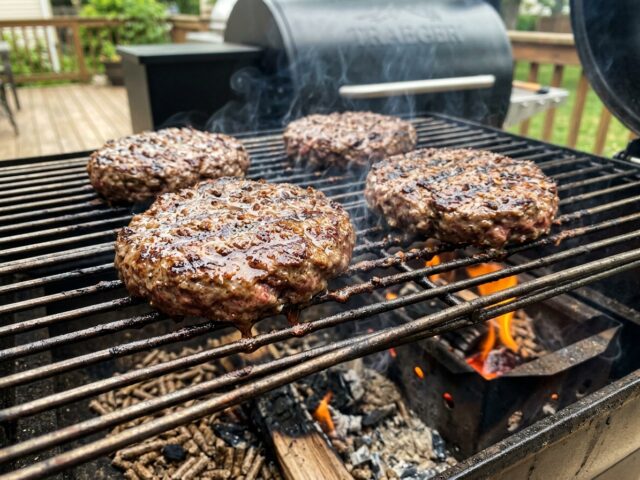
The classic burger-and-fries combo is a no-brainer. If you’re firing up the grill, getting your burger temperature right matters just as much as getting your fries crispy. There’s something deeply satisfying about a perfectly grilled patty alongside a pile of golden fries.
Fries alongside Nashville hot chicken is another pairing that works beautifully. The heat from the chicken and the salty crunch of the fries balance each other out in a way that’s almost addictive.
And don’t sleep on loaded fries — topped with cheese, bacon bits, green onions, and a drizzle of sour cream, they become a meal all by themselves. For parties and game days, a big platter of loaded fries sits right alongside southern comfort foods for a football watch party as crowd-pleasing essentials.
Quick Troubleshooting Guide
Even when you know the theory, things can still go sideways. Here are the most common french fry problems and exactly how to fix them.
Fries are golden outside but raw inside. Your oil was too hot. Lower the temperature for the first fry, and make sure you’re giving them enough time at the lower heat to cook through before crisping.
Fries are limp and oily. Your oil wasn’t hot enough, or you overcrowded the pot. Fry in smaller batches and make sure the oil hits the right temperature before adding potatoes.
Fries stick together in clumps. You didn’t rinse off enough surface starch. Soak longer, rinse more thoroughly, and dry completely before frying.
Fries are crispy for a minute then go soft. Probably a moisture issue. Make sure you dried them fully before frying, and use a wire rack instead of paper towels after cooking. The double-fry method also helps build a more durable crust.
Fries taste stale or “off.” Your oil might be old or has been heated too many times. Frying oil breaks down with repeated use. If it looks dark, smells fishy or rancid, or smokes at lower temperatures than usual, replace it.
FAQ
Can I reuse frying oil after making french fries?
Yes, you can reuse frying oil — usually 3 to 4 times before it degrades. After cooking, let the oil cool completely, then strain it through a fine mesh sieve or cheesecloth to remove food particles. Store it in a sealed container in a cool, dark place. If it starts looking dark brown, smells off, or foams excessively when heated, it’s time to toss it. Old, degraded oil won’t just taste bad — it also produces more harmful compounds at high heat.
Why do restaurant fries taste better than homemade?
Restaurants typically use the double-fry method, maintain precise oil temperatures with commercial-grade equipment, and fry in oils like peanut or beef tallow that add subtle flavor. Many also use a blanching step (boiling the cut potatoes briefly before frying) and freeze their fries before the final cook. These extra steps build a thicker, crunchier crust. You can replicate almost all of these techniques at home — it just takes a bit more patience.
Are air fryer french fries actually crispy?
They can be, but they won’t be identical to deep-fried. Air fryers work by circulating extremely hot air around the food, creating a Maillard reaction (browning) on the surface. The result is a decent crunch with way less oil — we’re talking one tablespoon versus several cups. The texture is a bit lighter and drier than traditional fries, almost like a really well-done oven fry. For health-conscious cooks, it’s a solid trade-off. Tossing the fries with a tiny bit of cornstarch before air frying helps bridge the texture gap.
What’s the best way to reheat leftover french fries?
The microwave is your worst option — it makes fries rubbery and sad. The best method is a quick re-fry in oil at 375°F for about one minute, or spread them on a baking sheet and pop them in an oven or toaster oven at 400°F for 5 to 7 minutes. An air fryer at 375°F for 3 to 4 minutes also works great. The goal is dry, high heat to re-crisp the exterior without overcooking the inside.
How thick should I cut french fries for the best crunch?
For maximum crunch, aim for 1/4 inch thickness — this gives you the best ratio of crispy surface to fluffy interior. Thinner cuts (shoestring style) get crispier but cool down fast and have less potato inside. Thicker cuts (steak fry width) give you more soft interior and less crunch per bite. It’s a personal preference, but 1/4 inch is the sweet spot that most people find the most satisfying.
Your Next Batch Will Be Your Best
Making truly golden crisp french fries at home isn’t about having a professional kitchen or spending hours in preparation. It’s about knowing which details actually matter — the right potato, a good soak, proper drying, the right oil at the right temperature, and that double-fry technique that changes everything.
Start with Russet potatoes, soak them for at least 30 minutes, dry them completely, and commit to frying twice. That’s honestly 90% of the battle. The rest is just fine-tuning to your personal taste.
Once you nail this, you’ll never look at a fast-food drive-through the same way again. Your kitchen fries will be better — crunchier, fresher, and made exactly the way you like them. Go grab some potatoes and give it a shot tonight. The history behind this beloved side dish stretches back centuries, but your best batch? That’s about to happen right now.