You’ve got a killer recipe for birria tacos, your friends won’t stop talking about your smash burgers, and the idea of rolling up to a brewery parking lot on a Friday night sounds like a dream. So you start Googling “how to start a food truck” and suddenly you’re drowning in conflicting advice, five-figure cost estimates, and permit requirements that vary by zip code. Take a breath. This guide walks you through what actually matters when you’re starting a food truck business — the stuff most articles gloss over — so you can make a smart decision instead of an expensive one.
Figure Out If a Food Truck Is Actually Right for You
Before you spend a single dollar on a truck wrap or a commercial fryer, you need to be honest with yourself about what this life looks like on a random Tuesday in February.
A food truck isn’t a restaurant on wheels. It’s a small business that happens to serve food, and the “small business” part is where most first-time owners get blindsided. You’ll be the chef, the cashier, the marketer, the mechanic, the bookkeeper, and the person scrubbing grease traps at midnight. If you’re coming from a restaurant background, you already know the pace. If you’re not, understand that a typical food truck day starts two to three hours before you open and ends two hours after you close.
Here’s a scenario that plays out more often than you’d think. You book a prime spot at a Saturday farmers market, you’ve prepped for 200 covers, and it pours rain all morning. Foot traffic drops to almost nothing. You still paid the vendor fee, you still burned through perishable inventory, and you’re packing up at noon with a cooler full of food you can’t sell tomorrow. That’s the reality of weather dependence, and no amount of planning fully eliminates it.
The upside is real, though. Your overhead is a fraction of a brick-and-mortar restaurant’s. You can test new markets by literally driving to them. And the connection you build with regulars at your weekly spots can be incredibly rewarding. Just make sure you’re signing up for the whole package, not just the highlight reel you see on Instagram.
Nail Down Your Concept and Menu Before Spending a Dime
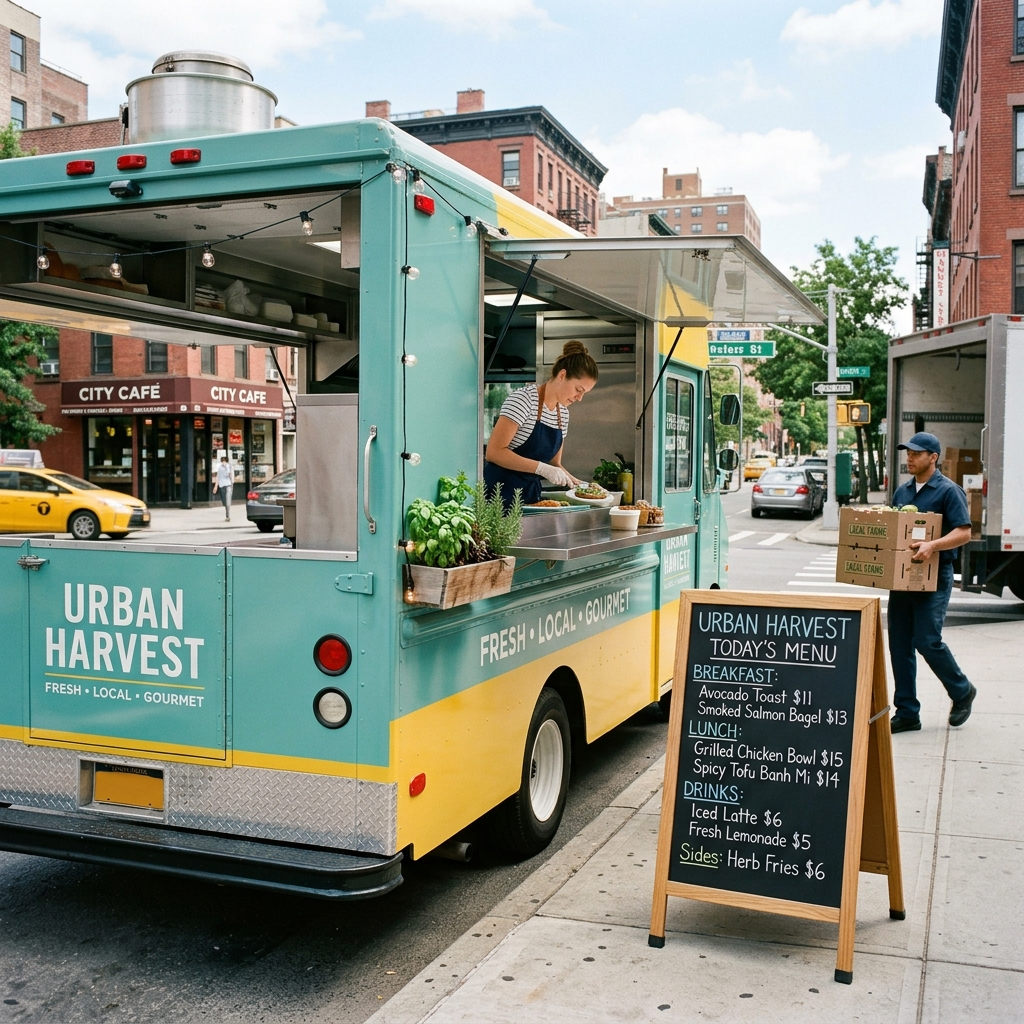
The biggest mistake I see new food truck owners make is building a menu that’s way too big. You might be tempted to offer tacos, burgers, loaded fries, and a dessert option because you want something for everyone. Don’t. A menu that large in a 200-square-foot kitchen is a recipe for slow service, wasted ingredients, and frustrated customers standing in the sun.
Start with three to five core items that you can execute fast and consistently. Speed matters more than variety in the food truck world. Most customers are on a lunch break or waiting between sets at a music festival. If your average ticket takes eight minutes to fill, people will walk to the truck next door that hands out food in three.
Think about your concept through the lens of prep, assembly, and holding. Can you prep 80% of your components in a commissary kitchen before you even arrive on-site? Can your most popular item be assembled in under 90 seconds? Will your signature sauce hold its quality sitting in a steam table for four hours? These are the operational questions that separate a concept that works on paper from one that works on a hot Saturday afternoon.
Your menu also needs to photograph well and travel well. If you’re serving something that looks messy in a container or falls apart by the time a customer walks back to their office, you’re losing repeat business. Learning how to present your food in a way that’s both practical and appealing is a skill worth developing early. And if your concept leans heavily on bold flavors, spend some time thinking about your pantry as a flavor library — the right spice blends and sauces can make a simple menu feel exciting without adding complexity to your prep.
The Real Costs of Starting a Food Truck Business
Let’s talk money, because this is where the dream meets reality. The number you’ll see tossed around most often is $50,000 to $150,000 to get a food truck on the road, and that range is accurate for 2025-2026 if you’re buying a used truck in decent shape and outfitting it yourself. But the total depends heavily on your starting point.
Your biggest expense is the vehicle itself. A brand-new custom-built truck from a reputable fabricator can run $100,000 to $200,000 or more. A used truck that’s already been outfitted might cost $30,000 to $80,000 depending on age, mileage, and equipment condition. A tow-behind trailer is the budget-friendly option at $10,000 to $40,000, though some cities restrict trailers from operating in certain zones, so check your local rules before you commit.
| Option | Typical Cost Range | Best For | Watch Out For |
|---|---|---|---|
| New custom truck | $100,000–$200,000+ | Full control over layout and equipment | Long build times, depreciation |
| Used outfitted truck | $30,000–$80,000 | Faster launch, lower upfront cost | Hidden mechanical issues, outdated equipment |
| Tow-behind trailer | $10,000–$40,000 | Tight budgets, event-only models | Towing vehicle costs, city restrictions |
Beyond the truck, budget for a commercial generator ($3,000 to $8,000), a point-of-sale system ($500 to $1,500), initial inventory ($1,000 to $3,000), truck wrap and branding ($2,000 to $5,000), and at least three months of operating expenses as a safety net. The U.S. Small Business Administration has a solid startup cost worksheet that can help you build a realistic budget instead of guessing.
One cost that catches people off guard is insurance. You’ll need commercial auto insurance, general liability, and product liability coverage at minimum. Expect to pay $2,000 to $5,000 per year depending on your location and revenue. Skipping this to save money is not an option — one foodborne illness claim can shut you down permanently.
Permits, Licenses, and the Paperwork Nobody Warns You About
If you thought the cooking part was hard, wait until you start calling your local health department. The permit requirements for a food truck vary wildly from city to city and even county to county, which is why you can’t rely on a generic checklist you found online. What’s legal in Austin might get you shut down in Chicago.
That said, almost every jurisdiction will require some version of the following: a business license, a mobile food facility permit, a health department inspection and grade, a fire department inspection (especially if you use propane or open flame), a food handler’s card for every employee, and a commissary kitchen agreement proving you have a licensed commercial kitchen for prep and storage.
The commissary requirement trips up a lot of beginners. You can’t legally prep food at home in most places and then sell it from your truck. You need a signed agreement with a licensed commercial kitchen where you store your truck overnight, clean your equipment, and do your prep work. Commissary rental typically runs $500 to $1,500 per month depending on your city and how much space you need.
A quick but serious note on food safety: because you’re serving the public from a mobile environment where temperature control is harder, you need to take this seriously. Understanding the food safety temperature danger zone isn’t just a formality — it’s the difference between a five-star health inspection and a shutdown. Review the common food safety mistakes that mobile food vendors make, and build your workflow around avoiding them. This information is general guidance and not a substitute for your local health department’s specific requirements or a certified food safety manager course. Always follow your jurisdiction’s regulations.
The FDA Food Code is the baseline most local health departments build their rules on, so it’s worth reading the relevant sections even if your city has its own version. The permitting process can take anywhere from a few weeks to several months, so start this step long before your truck is ready to roll.
Finding Your Truck, Your Commissary Kitchen, and Your Spots
Once your paperwork is in motion, the next big puzzle is logistics. Where will you park, and how will you keep food at safe temperatures while you’re out there?
Start with your commissary kitchen before you finalize your truck purchase. The kitchen you choose will dictate how much storage and prep space you actually need on the truck itself. A truck with a massive walk-in cooler sounds great until you realize your commissary already handles cold storage and you’re paying for square footage you don’t use. Visit a few commissaries, talk to the other food truck owners who rent there, and ask about peak-hour scheduling. You don’t want to discover at 5 a.m. on a Saturday that all four prep stations are taken.
For locations, your revenue model will likely be a mix of regular weekly spots, private catering gigs, and special events. The regular spots — think office parks, brewery parking lots, and university campuses — provide your baseline income. Catering and events are where the big paydays live, but they’re inconsistent. A good rule of thumb is to secure at least three to four reliable weekly locations before you launch so you’re not scrambling for parking every Monday morning.
Talk to other truck owners in your area about which spots actually generate traffic and which ones look busy but don’t convert. A location with 500 people walking by sounds great until you realize they’re all commuters rushing to a train and nobody is stopping to eat. You want foot traffic that lingers.
One practical detail that matters more than you’d expect: holding temperatures. If your concept involves cheese dips, sauces, or anything that needs to stay hot for hours, you need a reliable plan for that. Something as simple as knowing how to keep queso warm for a party translates directly to a food truck setting where your steam table is your lifeline between the lunch rush and the afternoon lull.
Food Truck Business Tips for Surviving Year One
The first year is about survival, not profit. The National Restaurant Association reports that roughly 60% of food businesses don’t make it past their first year, and food trucks are no exception. That doesn’t mean you’re doomed — it means you need to be strategic.
Track every single dollar from day one. Your food cost percentage should stay between 28% and 35% of your revenue. If it creeps higher, you’re either over-portioning, over-ordering, or pricing your menu too low. A simple spreadsheet works fine in the beginning. You don’t need expensive software until you’re doing enough volume to justify it.
Build your social media presence before you open. Post your weekly schedule, tease new menu items, and show behind-the-scenes prep content. Your regulars will become your best marketing team if you give them something to share. A food truck that shows up at the same spot every Wednesday at 11 a.m. builds habit. A food truck that changes locations daily without telling anyone builds confusion.
Invest in a reliable POS system that tracks sales data. You need to know which items sell the most, which ones barely move, and what your average ticket looks like at different locations. That data tells you where to cut and where to double down. If your loaded nachos account for 40% of your revenue but your grilled chicken wrap barely sells, drop the wrap and add a second nacho variation.
Finally, take care of yourself. Burnout is the silent killer of food truck businesses. The hours are long, the margins are tight, and the work is physical. Schedule at least one full day off per week, even during your busy season. A tired operator makes mistakes in the kitchen, and mistakes in a food truck cost you money and reputation faster than in a traditional restaurant.
Frequently Asked Questions
How much does it cost to start a food truck business?
Most food truck startups cost between $50,000 and $150,000 when you factor in the vehicle, equipment, permits, branding, and initial operating expenses. A tow-behind trailer can bring that number down to $20,000 to $50,000, but you’ll still need a suitable towing vehicle and the same permits. Your actual number depends on your city, your concept, and whether you buy new or used.
Is a food truck business profitable?
It can be, but most trucks don’t turn a real profit until their second or third year. A well-run food truck in a good market can generate $250,000 to $500,000 in annual revenue, with profit margins of 6% to 9% after all expenses. Catering and private events tend to be the most profitable revenue streams because you know the headcount in advance and waste less food.
Do I need a commercial kitchen to run a food truck?
In most U.S. cities and counties, yes. Health departments typically require food truck operators to have a signed agreement with a licensed commissary kitchen for food prep, storage, and truck cleaning. You generally cannot prep food in a home kitchen and sell it from a mobile unit. Check your local health department’s specific rules before you sign a lease on any space.
Starting a food truck business is one of the most exciting and challenging things you can do in the food world. The freedom is real, the community is incredible, and there’s nothing quite like watching a line form at your window on a warm Friday evening. But the trucks that last are the ones built on solid planning, tight numbers, and a willingness to adapt when things don’t go as expected. Start small, stay lean, and don’t buy the truck until you’ve tested your concept at a pop-up or a borrowed kitchen first. Your future self — and your bank account — will thank you.