You know that moment when you take a bite of something and your brain just says yes? Maybe it’s a spoonful of beef stew that’s been simmering all afternoon. Maybe it’s a slice of pizza with that perfectly aged parmesan. You can taste the salt, sure. You can pick up the sweetness of the tomatoes. But there’s something else going on — something deeper, rounder, almost meaty — that makes you go back for another bite before you’ve even swallowed the first one.
That something is umami.
Umami is the fifth basic taste, described as a deep, savory, mouth-filling flavor caused by the amino acid glutamate. You already know the other four: sweet, sour, salty, and bitter. Umami is the one that slipped past most of us in school, but it’s been shaping the way you eat your entire life. Let’s figure out what it actually is, where it hides in your kitchen, and how you can use it to make your cooking taste like it came from someone else’s hands.
What Is Umami, Exactly?
Back in 1908, a Japanese chemist named Kikunae Ikeda was eating a bowl of dashi — a simple broth made from seaweed and dried fish flakes. He noticed a taste he couldn’t pin down. It wasn’t sweet. It wasn’t sour, salty, or bitter. It was something else entirely, and it made the broth taste deeply satisfying in a way the other four tastes couldn’t explain.
Ikeda spent months isolating the compound responsible and eventually identified it as glutamate, an amino acid that occurs naturally in many foods. He coined the word “umami” from the Japanese words umai (delicious) and mi (taste). Roughly translated, it means “pleasant savory taste.”
For decades, Western food science didn’t take umami seriously. The idea of a fifth taste sounded more like marketing than chemistry. But in 2002, researchers confirmed that human taste buds have specific receptors for glutamate, just like they do for sugar or salt. Umami was officially the real deal.
Here’s the simple version of the science: when proteins break down — through cooking, aging, fermenting, or ripening — they release free glutamate. That free glutamate hits the umami receptors on your tongue, and your brain registers a deep, satisfying, savory sensation. The more free glutamate a food contains, the stronger the umami punch.
What Does Umami Actually Taste Like?
This is where things get a little tricky, because umami is much harder to describe than sweet or salty. You know what sugar tastes like on its own. You know what a lemon does to your mouth. But umami? It’s subtle. It works in the background.
The best way I can describe it is this: umami tastes like depth. It’s brothy, meaty, and round. It coats your mouth and lingers a little longer than the other tastes. It doesn’t shout the way salt or sour does. Instead, it makes everything around it taste more like itself. A tomato with high umami doesn’t just taste salty-sweet — it tastes more tomato-y. A steak with good umami doesn’t just taste beefy — it tastes like the most beefy version of beef you’ve ever had.
Think of it this way. If salt is a spotlight that makes individual flavors pop, umami is the warm stage lighting that makes the whole scene look better. You might not notice it directly, but the moment it’s gone, everything feels flat.
A quick experiment you can try at home: taste a raw white button mushroom, then taste a dried shiitake that’s been rehydrated in warm water. The dried shiitake will taste exponentially more savory, almost meaty, even though it’s the same basic food. That’s umami concentrating as the mushroom dries and its glutamate becomes more available.
Foods High in Umami You Already Have in Your Kitchen
You don’t need to visit a specialty store to find umami. Your kitchen is probably already full of it. The trick is knowing where to look and understanding that umami builds over time — through aging, fermenting, drying, and slow cooking.
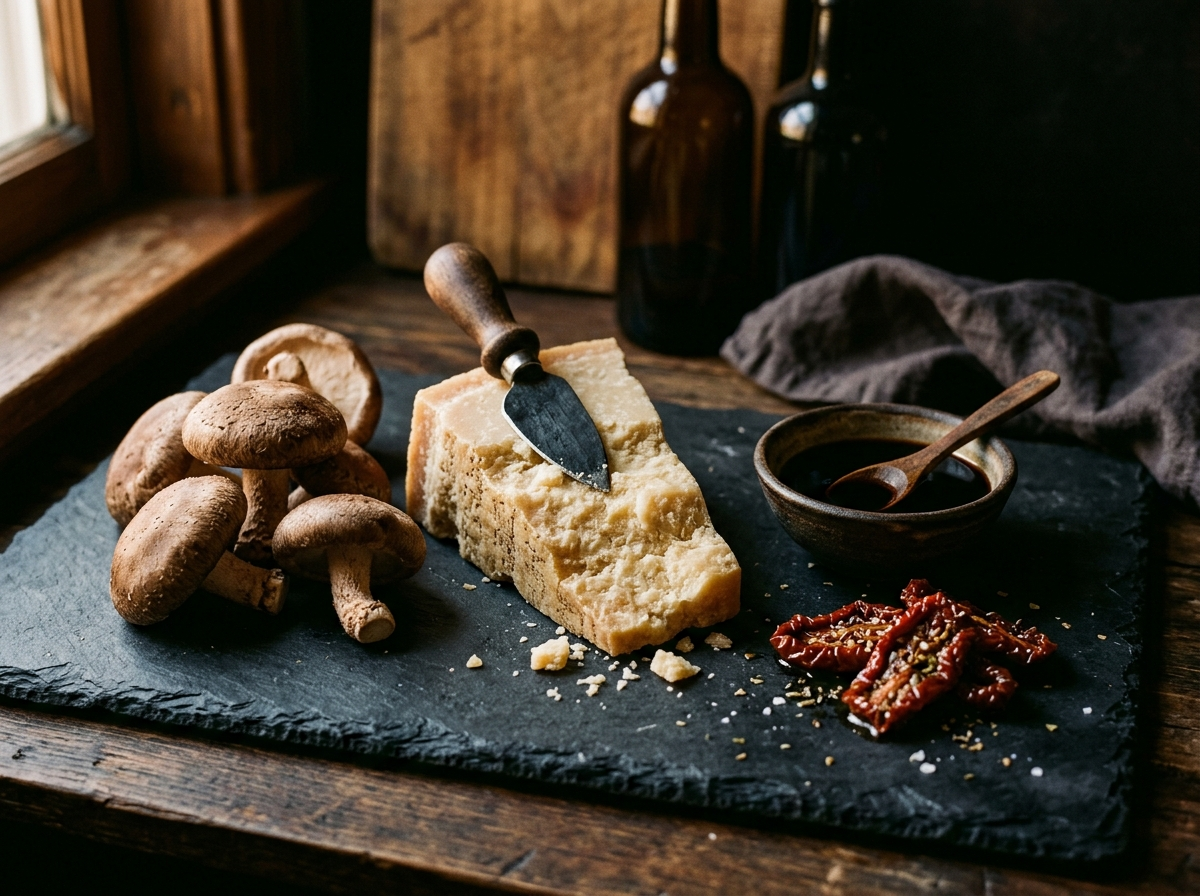
Parmesan cheese is one of the most umami-dense foods on the planet. A single ounce of aged parmesan contains more free glutamate than almost any other common ingredient. That’s why even a small grating over pasta or soup makes such a dramatic difference. Other aged cheeses like pecorino and gruyère follow close behind.
Tomatoes are another major source, and here’s a detail most people miss: the riper the tomato, the more umami it has. Cooking tomatoes concentrates that glutamate even further, which is why a slow-simmered tomato sauce tastes so much richer than a raw salsa. Sun-dried tomatoes and tomato paste are basically umami concentrate in a tube.
Then there’s the fermented and cured category. Soy sauce, fish sauce, Worcestershire sauce, miso paste, and anchovies are all umami powerhouses. Cured meats like prosciutto, bacon, and chorizo get their deep savoriness from the same process — time breaking down proteins into free glutamate.
Mushrooms deserve their own mention. Shiitake, porcini, and maitake mushrooms are loaded with guanylate, a nucleotide that works alongside glutamate to amplify umami. Dried mushrooms are even more potent than fresh ones, which is why keeping a bag of dried shiitakes in your pantry is one of the easiest upgrades you can make to your cooking. If you want to dig deeper into building a flavor-forward pantry, this guide to treating your pantry as a flavor library walks through how to stock ingredients that layer well together.
| Food | Umami Source | Best Used In |
|---|---|---|
| Aged parmesan | Glutamate | Pastas, soups, roasted vegetables |
| Tomato paste | Glutamate | Stews, braises, sauces |
| Soy sauce | Glutamate | Stir-fries, marinades, gravies |
| Dried shiitake | Guanylate + glutamate | Broths, risottos, braises |
| Fish sauce | Glutamate | Curries, dressings, chili |
| Anchovies | Glutamate + inosinate | Pasta sauces, Caesar dressing |
How to Add More Umami to Your Cooking
Knowing which foods are high in umami is only half the battle. The real skill is learning how to layer them into your cooking so the flavor builds naturally rather than tasting like you dumped a bunch of soy sauce into the pot.
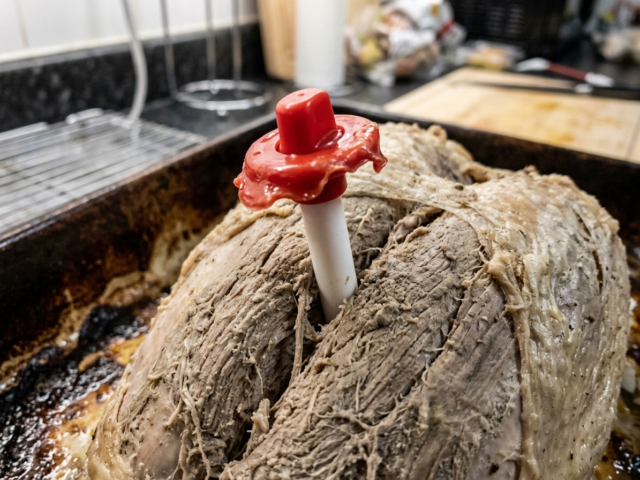
Start with browning. The Maillard reaction — that beautiful chemical process that turns a pale steak into a crusty, deeply flavored piece of meat — creates umami compounds as amino acids and sugars react under high heat. Searing meat, toasting mushrooms in a dry pan, and caramelizing onions until they turn dark amber are all ways of building umami from the ground up. This is one of the reasons low-and-slow cooking methods produce such deeply flavored results: the long cook time breaks down proteins into free glutamate while the initial sear creates Maillard-driven savoriness on the surface.
Use tomato paste strategically. Most people squeeze tomato paste into a sauce and move on. Instead, try cooking the paste in a little oil over medium heat for three to five minutes until it darkens from bright red to a rusty brick color. That browning process concentrates the glutamate and adds a roasted depth you can’t get any other way.
Add a secret splash of something fermented. A tablespoon of fish sauce in a pot of chili, a teaspoon of soy sauce in a beef braise, or a dash of Worcestershire in your meatloaf mix won’t make your food taste “fishy” or “soy-like.” It’ll just make it taste more like itself. The umami fills in the gaps that salt alone can’t reach. And speaking of salt, understanding how umami interacts with seasoning can actually help you use less salt while building more flavor, which is a win for both taste and health.
Don’t throw away your parmesan rinds. Toss them into soups, stews, and bean pots while they simmer. The rind slowly releases glutamate into the liquid, adding a subtle savory backbone that you’ll notice the moment you leave it out.
The Umami Synergy Trick Most Home Cooks Miss
Here’s where things get really interesting, and it’s the single most useful thing you can take away from this article.
Umami compounds come in different forms. Glutamate is the most common, found in tomatoes, cheese, and seaweed. But there are also nucleotides — specifically inosinate (found in meat and fish) and guanylate (found in dried mushrooms). On their own, each of these triggers a mild umami response. But when you combine glutamate with either inosinate or guanylate, the umami sensation doesn’t just add up. It multiplies. Research by Japanese food scientist Shizuko Yamaguchi in the late 1970s showed that the combination can produce an umami taste up to seven or eight times stronger than either compound alone.
This is why beef and mushroom stew tastes so much deeper than beef stew by itself. The beef provides inosinate, the mushrooms provide guanylate, and the slow cooking releases glutamate from both. The three compounds hit your umami receptors together and create a flavor explosion that none of them could achieve on their own.
It’s also the entire reason dashi works. Kombu seaweed is loaded with glutamate. Bonito flakes are loaded with inosinate. Together in hot water, they create one of the most umami-rich liquids on earth in about ten minutes.
So the practical takeaway is this: don’t just add one umami source to your cooking. Pair them. Tomato sauce with parmesan. Beef with mushrooms. Chicken broth with a splash of soy sauce. The combination will always outperform the solo ingredient. If you’re curious about how umami fits into the broader picture of balancing flavors in a dish, this breakdown of acid and fat as the yin and yang of cooking is a great companion read.
Is Umami the Same Thing as MSG?
This is the question that comes up almost every time umami gets mentioned, so let’s address it directly.
MSG — monosodium glutamate — is simply the crystallized, shelf-stable form of the same glutamate that occurs naturally in tomatoes, cheese, and your own body. When MSG dissolves in water or saliva, it breaks apart into sodium and glutamate. Your taste receptors can’t tell the difference between that glutamate and the glutamate from a ripe tomato. Chemically, they’re identical.
The bad reputation MSG carries in the United States traces back to a 1968 letter published in the New England Journal of Medicine, in which a doctor described feeling unwell after eating at Chinese restaurants. The letter was anecdotal, not a controlled study, but it sparked decades of fear and the term “Chinese Restaurant Syndrome.” Since then, numerous double-blind studies have failed to consistently reproduce those symptoms in the general population. Organizations like the FDA classify MSG as “generally recognized as safe.” The International Glutamate Information Service maintains a detailed library of the research if you want to dig into the specifics.
That said, I want to be straightforward with you: some people do report headaches or flushing after consuming large amounts of MSG on an empty stomach. Individual sensitivities are real, even when the broader science says the compound is safe for most people. Listen to your own body. If you feel fine eating parmesan and soy sauce (both naturally high in glutamate), you’ll almost certainly be fine with MSG in moderate amounts. If you notice a pattern of discomfort, it’s perfectly reasonable to limit it.
The bigger point is that umami and MSG aren’t two separate things. MSG is just one way of delivering the umami taste. You’ve been eating umami your whole life, long before you knew the word.
Umami in Mexican and Latin Cooking
Since this site spends a lot of time around Latin and Mexican food, it’s worth pointing out that umami is everywhere in this cuisine — even though nobody traditionally used the word for it.
Think about a pot of slow-braised carnitas. The pork shoulder cooks for hours until the proteins break down into free glutamate, and the final blast of high heat creates a crispy, Maillard-browned crust on the outside. That combination of slow-cooked depth and seared savoriness is pure umami. The same goes for birria, barbacoa, and any dish where tough cuts of meat get the long, slow treatment.
Dried chiles are another hidden umami source. Ancho, guajillo, and pasilla chiles develop concentrated glutamate as they dry on the vine, which is one reason a mole sauce made with toasted dried chiles has such a complex, almost meaty depth even before any meat touches it. When you combine those dried chiles with slow-cooked meat, tomatoes, and a bit of aged cotija cheese on top, you’re stacking multiple layers of umami in a single dish.
Even something as simple as a good salsa benefits from umami. Roasting your tomatoes and tomatillos before blending them concentrates their glutamate and adds a charred depth that raw versions just can’t match. The next time you’re building flavor layers with spices, vinegars, and oils, think about where umami fits into the stack alongside heat, acid, and fat.
Frequently Asked Questions
What does umami taste like?
Umami tastes savory, brothy, and deeply satisfying, with a round, mouth-coating quality that lingers on the tongue. It’s often described as “meaty” or “earthy,” though it shows up in non-meat foods like tomatoes, mushrooms, and aged cheese. The easiest way to experience it is to sip a cup of warm dashi or bite into a piece of well-aged parmesan.
Is umami healthy?
Umami itself is not a nutrient you need to worry about — it’s a taste sensation triggered by glutamate, an amino acid your body already produces. Foods high in umami tend to be nutrient-dense (fermented foods, aged cheeses, mushrooms, slow-cooked meats), so cooking with umami-rich ingredients generally supports a balanced diet. One practical benefit: because umami amplifies the perception of saltiness, adding umami-rich ingredients can help you reduce overall sodium in your cooking without sacrificing flavor.
What is the difference between umami and “savory”?
“Savory” is the everyday English word people use to describe the taste that umami explains scientifically. They point to the same sensation. The difference is that “savory” is a loose, general descriptor, while “umami” refers to a specific taste triggered by glutamate binding to dedicated receptors on your tongue. Think of it like the difference between saying “it’s hot outside” and “it’s 97 degrees” — one is a feeling, the other is a precise measurement of that feeling.
Start Cooking With Umami Tonight
You don’t need a chemistry degree or a pantry full of exotic ingredients to start using umami in your cooking. The foods that create it are probably sitting in your kitchen right now — a block of parmesan, a can of tomato paste, a bottle of soy sauce, a bag of dried mushrooms.
Pick one dish you’re making this week and try layering two umami sources instead of one. Add a splash of fish sauce to your next pot of beans. Throw a parmesan rind into your soup. Brown your tomato paste before adding the liquid. You won’t necessarily taste “umami” as a distinct flavor. What you’ll taste is a dish that feels deeper, richer, and more satisfying than it did before — and you’ll wonder why you didn’t start doing this sooner.