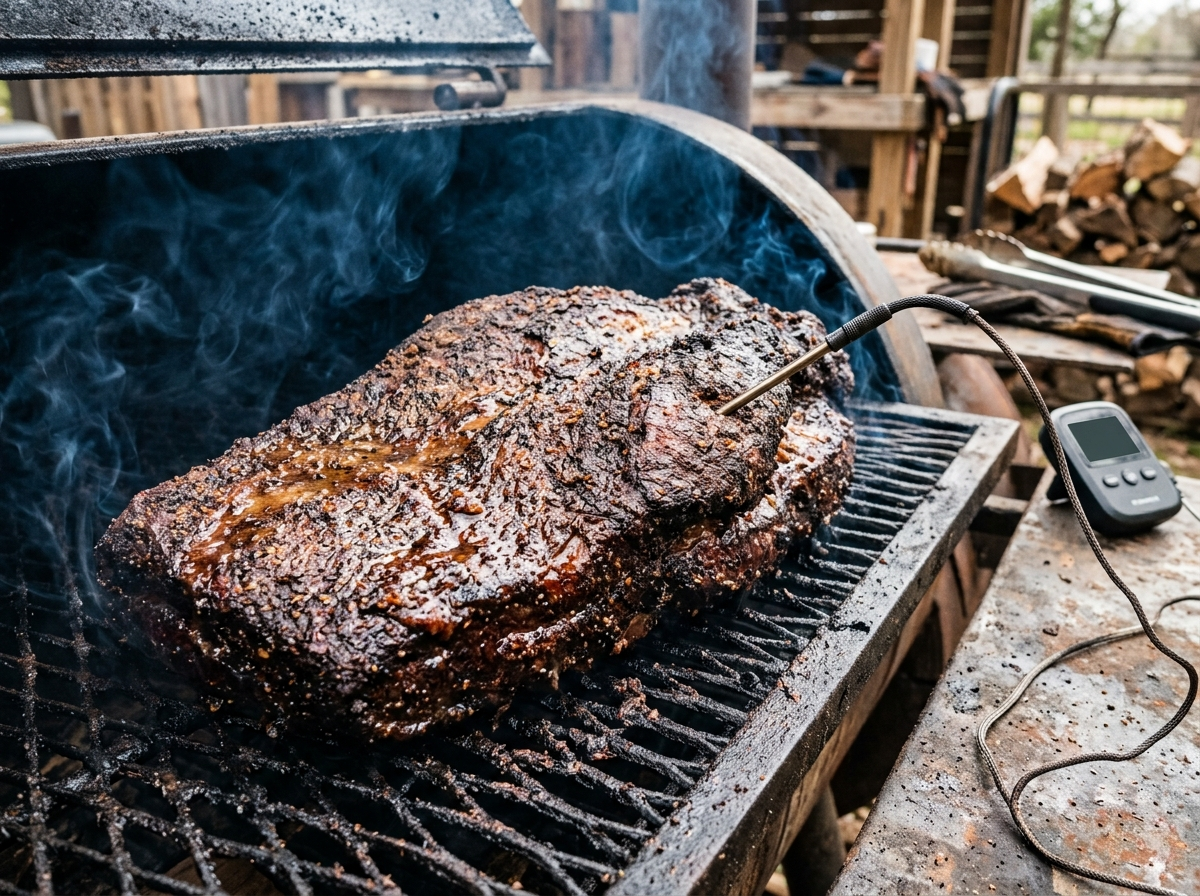
You’ve been tending your smoker since dawn. The brisket looked gorgeous going on, the smoke is rolling, and your thermometer climbed steadily to about 165°F. Then it stopped. An hour passes. Two hours. The number on your probe hasn’t moved a single degree. You start wondering if your thermometer is broken, if you messed up the fire, or if the brisket is somehow ruined.
Take a breath. Nothing is wrong. You’ve hit the BBQ stall, and it happens to almost every large cut of meat you smoke low and slow. Let’s break down exactly what’s going on inside that hunk of meat and what your real options are.
What Is the BBQ Stall?
The BBQ stall is a period during low-and-slow smoking when the internal temperature of your meat stops rising — or rises so slowly it might as well be standing still. It’s also called the meat temperature plateau, and if you’re smoking brisket specifically, you’ll hear people call it the brisket stall.
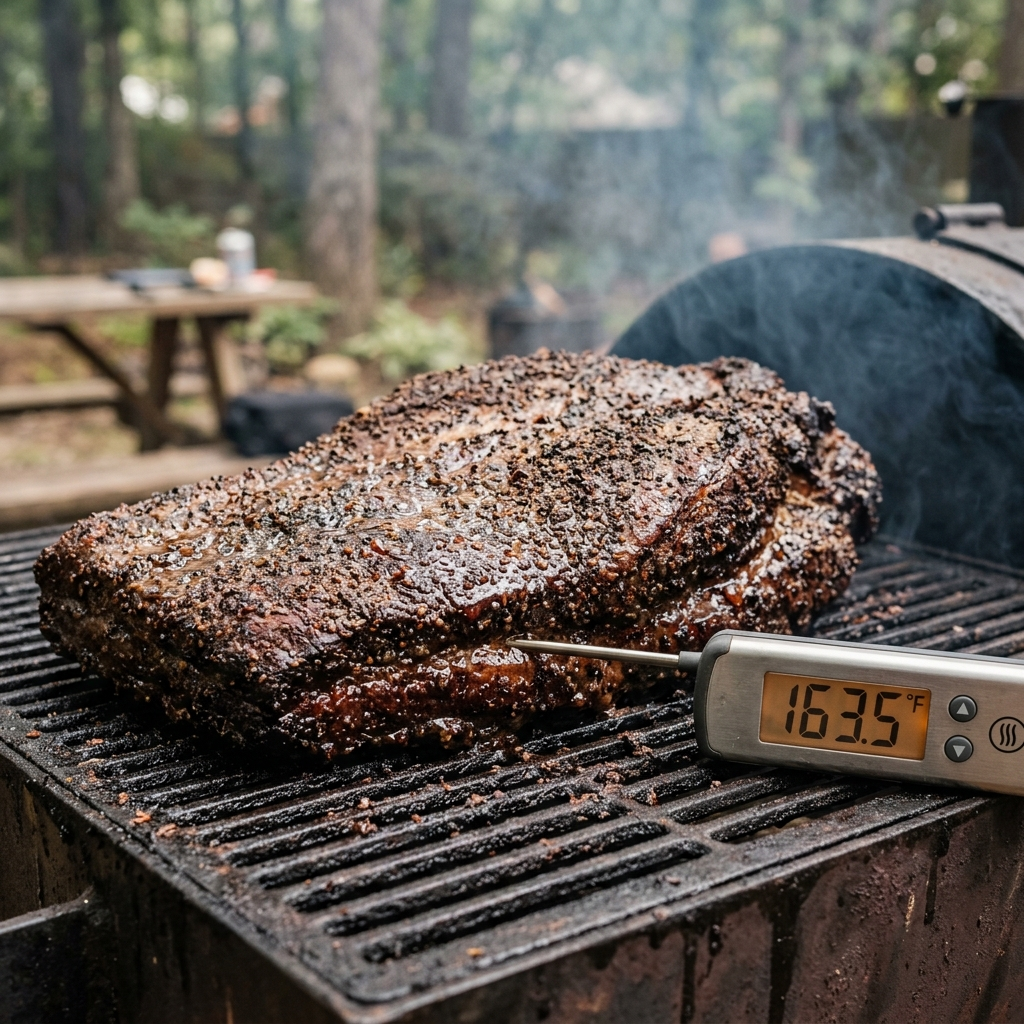
Here’s the one-sentence definition worth bookmarking: the BBQ stall is a temporary flatline in internal temperature caused by moisture evaporating from the meat’s surface, which cools the meat at roughly the same rate your smoker heats it.
Think of it like sweating on a hot day. Your body produces moisture, that moisture evaporates off your skin, and the evaporation cools you down. Your brisket is doing the exact same thing inside the smoker. The heat pushes the temperature up, the evaporation pulls it back down, and for a while those two forces are perfectly matched. The result is a thermometer reading that refuses to budge.
Why Does Brisket Temperature Stall? The Real Science
For years, backyard pitmasters passed around a few different explanations for the stall. The most popular one blamed fat rendering — the idea that the heat was being “used up” melting the fat inside the meat, so the temperature couldn’t climb until all that fat was liquid. It sounded reasonable, and it stuck around for a long time in BBQ forums and cookbooks alike.
Then a professor named Dr. Greg Blonder, who published research through the barbecue science site AmazingRibs.com, decided to actually test it. He ran controlled experiments with beef brisket and other cuts, tracking temperature and moisture loss over many hours. His findings changed how the barbecue world understands the stall.
Evaporative Cooling: The Main Culprit
Blonder’s research showed that the stall is overwhelmingly caused by evaporative cooling. As the meat heats up, moisture inside the muscle fibers migrates to the surface. That moisture then evaporates into the dry, hot air of your smoker. Evaporation is a cooling process — it takes energy to turn liquid water into vapor, and that energy comes from the heat of the meat itself.
During the stall, the rate of evaporative cooling almost exactly matches the rate of heat transfer from your smoker into the meat. It’s a tug-of-war that ends in a tie. The meat’s internal temperature plateaus because every bit of heat flowing in gets canceled out by the cooling effect of moisture leaving the surface.
Once enough moisture has evaporated and the surface dries out (which is also when your bark starts to set), the cooling effect weakens. The heat from the smoker starts winning the tug-of-war again, and the internal temperature finally begins to climb.
If you want to dig deeper into what heat is actually doing to the muscle fibers during this whole process, it helps to understand how heat affects muscle fibers in meat at a structural level. The short version is that the proteins are contracting and squeezing out moisture, which feeds the very evaporation that causes the stall.
Why the Old “Fat Rendering” Theory Doesn’t Hold Up
Blonder tested the fat-rendering theory by comparing a regular brisket to one where he’d trimmed almost all the fat away. Both cuts stalled at roughly the same temperature and for roughly the same duration. If fat rendering were the cause, the lean cut should have blown right through the stall. It didn’t.
That said, fat rendering and collagen breakdown are happening during the stall window. The temperature range where the stall occurs (roughly 150–170°F) overlaps with the range where collagen starts converting to gelatin. So the old theory wasn’t entirely wrong about what’s happening inside the meat — it was just wrong about what’s causing the temperature to flatline. The real cause is the moisture leaving the surface, not the fat melting inside.
When Does the Stall Happen and How Long Does It Last?
Typical Stall Temperatures
The stall usually kicks in somewhere between 150°F and 170°F internal temperature. The exact number depends on the size of the cut, the humidity inside your smoker, your cooking temperature, and even the amount of surface moisture on the meat when it went on. A heavily spritzed brisket might stall a little earlier and a little longer than one you left alone, because you’re adding more surface moisture that needs to evaporate.
Most pitmasters see the stall settle in around 160–165°F, which is why that number shows up so often in forum posts and recipe guides. But don’t treat it as a fixed rule. Your pork butt might stall at 155°F. Your brisket might stall at 170°F. Both are completely normal.
How Long Will You Be Stuck?
This is the question everyone wants answered, and the honest answer is: it depends. The stall can last anywhere from two to six hours, and in extreme cases even longer. A massive 18-pound packer brisket cooked at 225°F in a dry smoker will stall longer than a 7-pound pork shoulder cooked at 275°F in a humid one.
The biggest factors are the size and shape of the cut, your smoker temperature, and the humidity level inside the cooking chamber. Higher smoker temps and higher humidity both tend to shorten the stall. Lower temps and drier air stretch it out.
I know that “two to six hours” is a frustratingly wide range when you’re trying to time dinner. The best advice is to start your cook early enough that a long stall won’t ruin your schedule. If the meat finishes early, you can hold it in a cooler wrapped in towels for a couple of hours without any loss in quality. In fact, that rest period does wonders for the final texture, which is why resting meat matters more than most beginners realize.
How to Beat the BBQ Stall (Your Options)
You don’t have to do anything about the stall. The meat will push through it eventually on its own. But if you’re on a timeline or just tired of staring at a thermometer that won’t move, you have a few real options. Each one comes with trade-offs, so let’s walk through them honestly.
The Texas Crutch (Wrapping)
The most popular way to speed through the stall is to wrap the meat tightly in aluminum foil or butcher paper once it hits the stall zone. This technique is called the Texas crutch, and it works by trapping moisture against the meat’s surface. When the moisture can’t evaporate into the smoker air, evaporative cooling stops, and the internal temperature starts climbing again — often within 30 to 60 minutes.
Foil creates a tighter seal and powers through the stall fastest, but it also steams the bark and can make it soft. Butcher paper is more breathable, so it preserves your bark better while still cutting the stall time significantly. Most competition pitmasters prefer butcher paper for this reason. If you’ve spent hours building a beautiful crust, you want to understand what BBQ bark is and how to build it before you wrap and risk softening all that hard work.
Cranking the Heat
Another option is to raise your smoker temperature from 225°F up to 275°F or even 300°F once the stall hits. The higher heat input overpowers the evaporative cooling, and the meat pushes through the plateau faster. This approach doesn’t soften your bark the way wrapping does, which is a big plus.
The trade-off is that you need to pay closer attention. Higher heat means less margin for error, and the window between “perfectly tender” and “overcooked” gets narrower. If you’re new to smoking, this method takes a bit more confidence and a reliable thermometer setup.
Just Waiting It Out
The simplest approach is to do nothing. Keep your smoker steady, resist the urge to open the lid every ten minutes, and let the meat work through the stall at its own pace. The stall will end. It always does.
This is the approach I’d recommend for your first few cooks, honestly. Wrapping and cranking the heat both introduce variables that can affect your final result, and until you’ve got a feel for how your specific smoker and your specific cuts behave, patience is the safest bet. Plus, the long, slow push through the stall gives the collagen more time to break down into gelatin, which is a big part of what makes a smoked brisket or pork butt so incredibly tender.
Here’s a quick comparison of your three options:
| Method | Stall Time Reduction | Effect on Bark | Difficulty |
|---|---|---|---|
| Texas Crutch (foil) | Significant (1–3 hrs saved) | Softens bark noticeably | Easy |
| Texas Crutch (butcher paper) | Moderate (1–2 hrs saved) | Preserves bark well | Easy |
| Crank the heat | Moderate (1–2 hrs saved) | No negative effect | Moderate |
| Wait it out | None | Best bark development | Easiest |
Does the Stall Happen With All Meats?
The stall is most noticeable with large, tough cuts that you cook low and slow for many hours — brisket, pork shoulder (pork butt), and sometimes large beef ribs. These cuts have a lot of surface area and internal moisture, which means there’s plenty of evaporation happening during the long cook.
Smaller cuts like chicken thighs, steaks, or pork chops don’t really stall in any meaningful way. They cook too fast for evaporative cooling to create a noticeable plateau. You might see a slight slowdown in the temperature rise, but it won’t be the dramatic multi-hour flatline that a brisket gives you.
Even among large cuts, the stall varies. A bone-in pork butt tends to stall a little less dramatically than a whole packer brisket, partly because the bone and fat cap change how heat and moisture move through the meat. But the basic physics are the same: moisture evaporating from the surface cools the meat, and the stall lasts until the surface dries out enough for the heat to win.
Planning Around the Stall for Your Next Cook
The single best thing you can do about the BBQ stall is to expect it and build extra time into your cook schedule. If your recipe says a brisket will take 12 hours, plan for 14 or even 16. The stall is the biggest wildcard in low-and-slow cooking, and the pitmasters who consistently nail their timing are the ones who padded their schedule from the start.
Start your cook earlier than you think you need to. If the meat blows through the stall quickly and finishes ahead of schedule, you can wrap it in foil, then in towels, and rest it in an empty cooler for up to four hours. The internal temperature will stay safely above 140°F during that hold, and the extended rest actually improves the texture. This is closely related to carryover cooking, where the residual heat inside the meat continues to gently redistribute juices even after you pull it off the smoker.
A few practical tips worth keeping in mind. Don’t open the smoker lid during the stall to “check on things.” Every time you open the lid, you dump heat and humidity, and you extend the stall. Trust your thermometer probe and leave the meat alone. Also, don’t panic-spritz the meat every 15 minutes thinking you’re helping. Adding more moisture to the surface just gives the evaporation more fuel and can actually prolong the plateau.
Food safety note: During the stall, your meat’s internal temperature is well above 150°F, which is safely above the temperature danger zone of 40–140°F. The stall is not a food safety risk. The meat is hot enough to be safe throughout the entire plateau. That said, always follow USDA guidelines for final internal temperatures — 145°F for whole cuts of beef and pork with a 3-minute rest, though most BBQ cuts are pulled at much higher temps (195–205°F) for tenderness.
Frequently Asked Questions
What temperature does the BBQ stall start?
The stall typically begins between 150°F and 170°F internal temperature, with most pitmasters seeing it around 160–165°F. The exact number varies based on the cut of meat, your smoker temperature, and the humidity inside the cooking chamber.
How long does the brisket stall last?
A brisket stall usually lasts between two and six hours, though it can be shorter or longer depending on the size of the brisket, your cooking temperature, and the humidity in your smoker. Wrapping the brisket in butcher paper or foil can cut the stall time significantly.
Can I skip the BBQ stall entirely?
You can’t skip the stall entirely, but you can minimize it. Cooking at a higher temperature (275–300°F instead of 225°F) reduces the stall’s duration. Wrapping the meat when it hits the stall zone also speeds things up by stopping evaporative cooling. Some pitmasters use a combination of both methods.
Is the stall a sign that something went wrong?
Not at all. The stall is a completely normal part of smoking large cuts of meat. It happens because of evaporative cooling, not because of a mistake in your technique. If your thermometer is reading a steady temperature in the 150–170°F range and the meat has been on the smoker for several hours, the stall is almost certainly what you’re seeing.
Does the stall happen with pork butt too?
Yes. Pork shoulder (pork butt) experiences the same evaporative cooling stall as brisket, usually in the same temperature range. The stall may be slightly less dramatic with pork butt because of its higher fat content and different muscle structure, but the physics are identical.
The next time your brisket hits 165°F and the thermometer flatlines, you’ll know exactly what’s happening. The meat is sweating, the moisture is evaporating, and the cooling effect is temporarily matching the heat from your smoker. It’s not a problem to fix — it’s a phase to ride out, wrap through, or power past with higher heat.
Start your next cook a few hours earlier than you think you need, keep the lid closed, and trust the process. The stall always ends, and the meat on the other side of it is going to be worth the wait. Now go fire up that smoker and put this knowledge to work.