You spent an hour making dinner. The chicken is juicy, the sauce is rich, the rice is fluffy. Then you scoop it all onto a plate and it looks like a beautiful accident. Sound familiar?
Here’s the thing most home cooks don’t realize: your food already tastes great. You just need a few easy plating techniques to make it look as good as it tastes. No tweezers, no microgreens, no culinary degree required.
Plating is simply the way you arrange food on a plate before serving it. That’s it. And a few small tweaks can take your Tuesday night dinner from “looks fine” to “wait, you made this?”
Let me walk you through the simple food plating ideas that actually work in a real home kitchen.
Why Plating Actually Matters (It’s Not Just Vanity)
You might think plating is just for Instagram or fancy restaurants. But there’s real science behind why it matters at your dinner table too.
Professor Charles Spence at Oxford University has spent years studying what he calls “gastrophysics” — how your senses work together when you eat. His research at the Crossmodal Research Laboratory shows that people rate the exact same food as tasting better when it’s presented well. In one well-known study, a salad arranged to resemble a Kandinsky painting was rated as tasting significantly better than the identical ingredients tossed in a bowl. Your eyes literally change how your tongue works.
Think about it this way. You eat at a restaurant and the plate arrives with a smear of sauce, a neat stack of protein, and a sprinkle of fresh herbs. You feel excited before you even pick up your fork. Now imagine that same food dumped in a plastic container. Same ingredients, totally different experience.
Plating also signals care. When someone sits down to a plate that looks thoughtfully arranged, they feel like you put effort into their meal. That matters whether you’re cooking for your family on a weeknight or hosting friends on a Saturday.
And honestly? It makes you feel better about your cooking too. There’s a real satisfaction in stepping back and thinking, “I made that, and it looks incredible.” If you want to go deeper on the broader principles behind how to present your food, the visual side of cooking is a rabbit hole worth exploring.
Start With the Right Plate (Your Canvas Matters)
Before you worry about arranging anything, look at what you’re putting the food on. The plate is your canvas, and the wrong canvas fights against you.
White plates are your best friend. They create contrast with almost any food and let the colors of your dish stand out. This is why nearly every restaurant uses white dishware. You don’t need expensive plates — a simple set of white dinner plates from any store will do the job.
Size matters more than you’d think. A huge plate with a small portion of food looks sad and empty. A small plate crammed with food looks messy. You want a plate that gives your food some breathing room without drowning it in empty space. A good rule of thumb: your food should cover about two-thirds of the plate’s surface. The remaining space is what chefs call negative space, and it’s one of the easiest ways to make a plate look intentional.
Avoid plates with busy patterns or heavy rims when you’re first learning. They compete with the food visually and make your job harder. Save the decorative plates for when you’ve got more confidence.
One more thing — warm your plates before serving hot food. A cold plate cools down your food fast and can make sauces congeal. Just pop them in the oven on low for a couple of minutes or run them under hot water and dry them off. It’s a tiny step that makes a noticeable difference.
Five Easy Plating Techniques You Can Use Tonight
You don’t need to learn twenty methods. These five simple plating techniques cover most of what you’ll ever need at home.
The Clock Method
This is the oldest trick in the book, and it works because it gives you a clear mental map. Imagine your plate is a clock face. Place your protein (chicken, steak, fish) between 3 and 9 o’clock — basically the lower half of the plate. Put your starch (rice, potatoes, pasta) around 9 to 11. Your vegetables go from 11 to 3.
Why does this work? It creates a natural focal point. The eye lands on the protein first, which is usually the star of the meal, and then travels around the plate in a balanced way. You don’t have to measure with a ruler. Just keep the general zones in mind and you’ll avoid the “everything piled in the middle” look.
Height and Stacking
Flat food looks flat. Adding height to your plate creates visual interest and makes portions look more generous.
You don’t need to build a tower. Simple moves make a big difference. Lean your sliced steak against a mound of mashed potatoes instead of laying it flat. Stack your roasted vegetables instead of spreading them in a single layer. Twirl your pasta into a neat nest using tongs and a ladle rather than dumping it in a heap.
Here’s a practical detail most articles skip: when you stack or lean food, make sure the base is stable. I’ve seen plenty of home cooks build a beautiful tower that collapses the second the plate hits the table. Press down gently on the base layer so it holds, then build up. A small mound of rice or puree works great as an anchor.
Sauce as Art, Not Afterthought
Most home cooks pour sauce over everything right before serving. That’s the fastest way to hide all the work you just did. Instead, treat your sauce as a design element.
Try these approaches. Spoon a small pool of sauce on the plate first, then set your protein on top or beside it. Use the back of a spoon to drag a line of sauce across the plate in a quick, confident swipe — this is the classic “swoosh” you see in restaurants. Or dot small circles of sauce around the edge of the plate for a clean, modern look.
The key is restraint. You want the sauce to complement the food visually, not drown it. You can always serve extra sauce on the side.
If you’re working with a dish where the sauce is the star — think a rich curry or a braised short rib — you don’t need to separate them. Just make sure the sauce has a glossy, smooth consistency. A quick stir with a pat of cold butter right before serving adds shine and makes the whole dish look more polished. A compound butter works beautifully for this finishing touch, and understanding how acid and fat balance each other helps you build sauces that taste as good as they look.
The Power of Negative Space
Negative space is the empty area on the plate around your food. It’s the difference between a plate that looks elegant and one that looks cluttered.
Think of it like a photograph. A portrait looks striking against a clean background. Cram the same person into a busy scene and the impact drops. Your food works the same way.
Leave the rim of the plate completely clean. Wipe off any drips, smudges, or stray grains of rice. That clean border frames your food and tells the eye where to focus. It takes about five seconds with a damp paper towel, and it’s probably the single biggest upgrade you can make to your plating.
Color Contrast and Garnish
A plate of all brown food — think steak, potatoes, and gravy — tastes amazing but looks dull. Your eyes want variety.
Add pops of color wherever you can. A handful of bright green herbs, a few slices of red radish, a squeeze of lime, or a sprinkle of pomegranate seeds can transform a monotone plate. The goal isn’t to turn dinner into a fruit salad. You just want one or two contrasting colors that make the main dish pop.
When it comes to garnish, keep it edible and relevant. A sprig of cilantro on tacos makes sense. A random parsley leaf on a slice of pizza does not. If you wouldn’t eat the garnish, don’t put it on the plate. A beginner’s guide to fresh herbs can help you figure out which herbs pair well with different cuisines so your garnish pulls double duty for both flavor and looks.
Plating Everyday Dishes (Real Examples)
Generic tips are fine, but you probably want to know how this actually works with the food you cook on a regular basis. Let’s look at a few common scenarios.
Pasta and Noodles
The biggest mistake with pasta is the “bowl dump.” You pour the whole pot into a bowl and it looks like a tangled mess.
Instead, use tongs to twirl a portion of pasta into a tight, round nest in the center of a wide, shallow bowl. Ladle a small amount of sauce over the top — not so much that it pools at the bottom. Finish with a dusting of grated cheese and a few torn basil leaves. The height of the twirl and the clean edges of the bowl do most of the work for you.
Grilled Meats and BBQ
Grilled food already has great visual texture from the char marks, so let those show. Slice your meat against the grain and fan the slices out slightly so you can see the interior color and the sear on the edges. If you’re serving something like sliced brisket, the way you cut and arrange the slices makes a huge visual difference — you want to show off that smoke ring and bark.
Place the meat on one side of the plate and your sides on the other, keeping them from touching if possible. A drizzle of BBQ sauce on the plate (not over the meat) adds a nice visual element without hiding the crust you worked so hard to build.
Tacos and Mexican Food
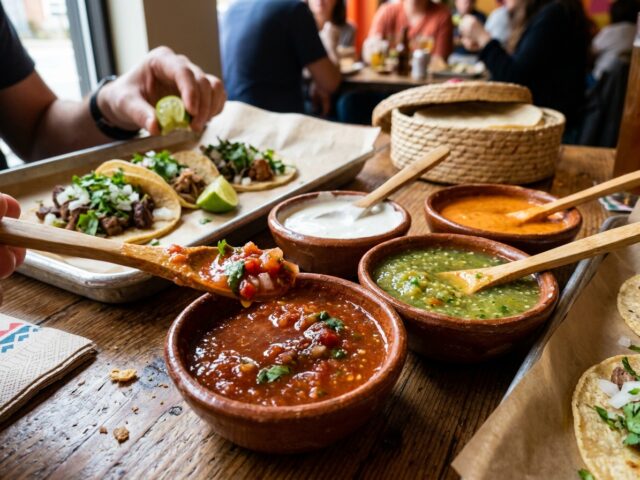
Tacos are tricky because they’re handheld, but you can still plate them beautifully. Stand your tacos upright in a taco holder or lean them against each other on a long platter. Fill them generously but neatly — ingredients spilling out everywhere looks messy, not abundant.
Top each taco with a deliberate garnish: a line of crema, a few pickled onions, a sprinkle of cotija. The best taco toppings add both flavor and color, so use them as visual elements too. Serve with lime wedges and a small ramekin of salsa on the side for a clean, complete look.
Common Plating Mistakes That Kill Your Presentation
Even when you know the basics, a few sneaky habits can undo your hard work. Watch out for these.
Overcrowding the plate. This is the number one issue. When every inch of the plate is covered, the food looks chaotic. Give each component its own space. If you’re serving a big meal, it’s better to use a larger plate or serve in courses than to pile everything on top of each other.
Ignoring the rim. Sauce drips, grease splatters, and stray bits of food on the rim of the plate make the whole thing look sloppy. Always wipe the rim clean before serving. It’s the difference between “home-cooked” and “home-cooked but impressive.”
Using the wrong plate color. Dark food on a dark plate disappears. A chocolate dessert on a brown plate looks like a puddle. Contrast is your friend. Dark food needs a light plate, and light food can handle a darker one.
Garnishing without purpose. A random sprig of rosemary on a plate of spaghetti doesn’t help anyone. Every element on the plate should belong there, both in flavor and in function. If the garnish doesn’t match the dish, skip it entirely. A clean plate with no garnish beats a plate with a confusing one.
Quick Plating Checklist Before You Serve
Before that plate leaves the kitchen, run through this quick mental check. It takes about ten seconds and catches most problems.
Is the rim clean? Does the plate have some breathing room around the food? Is there at least one pop of color? Does the tallest element sit toward the back or center of the plate? And finally — would you be excited to eat this if someone set it in front of you?
That last question is the most important one. You don’t need to plate every weeknight dinner like it’s going on a magazine cover. But when you’re cooking for guests, celebrating a special occasion, or just want to feel a little proud of what you made, these small touches add up fast.
Frequently Asked Questions
What are the five basic plating techniques?
The five core techniques most chefs rely on are the clock method (placing food in zones on the plate), adding height through stacking, using sauce as a design element, leaving negative space around the food, and creating color contrast with garnishes. You don’t need to use all five on every plate — even one or two will make a noticeable difference.
How do I plate food at home without special equipment?
You don’t need squeeze bottles, ring molds, or tweezers. A regular spoon, a pair of tongs, and a damp paper towel for wiping plate rims are all you need. The biggest upgrades come from choosing the right plate size, wiping the rim clean, and arranging food with a little intentional space between components.
Does plating actually change how food tastes?
Research from Oxford University’s Crossmodal Research Laboratory suggests it does. Studies led by Professor Charles Spence found that diners rated identical food as tasting better when it was presented in a visually appealing way. Your brain processes visual cues before flavor cues, so a well-plated dish primes your palate to enjoy the food more. The food itself still needs to taste good — plating enhances the experience, it doesn’t replace flavor.
The next time you cook dinner, take an extra thirty seconds before you carry the plates to the table. Wipe the rim. Add a little height. Drop a few fresh herbs on top. You’ll be surprised how much of a difference those tiny moves make — not just for your guests, but for how you feel about your own cooking.
Good food deserves to look as good as it tastes. And now you know exactly how to make that happen.