You could have the most perfectly seasoned carne asada, the freshest tortilla, and a generous pile of toppings — but drizzle the wrong sauce on top, and the whole taco falls flat. Sauce isn’t just a finishing touch. It’s the thing that ties every layer together, balances heat with tang, and turns a good taco into one you can’t stop eating.
The tricky part? There are dozens of taco sauces out there, and not all of them belong on every taco. A creamy avocado sauce that pairs beautifully with grilled fish would totally overpower a simple street taco with cilantro and onion. The sauce you pick changes the personality of the entire taco.
So let’s talk about the best sauces for tacos — from the classics you’ll find at every taqueria in Mexico to some newer options that have earned their spot. Whether you like things mild, smoky, or “pass me a glass of milk” spicy, there’s a perfect match for your taco style.
Why the Right Sauce Can Make or Break Your Taco
Think of a taco as a small, edible orchestra. The tortilla is the stage. The meat is the lead instrument. The toppings — onion, cilantro, radish — are the supporting players. And the sauce? That’s the conductor pulling everything into harmony.
A great taco sauce does three things at once. It adds moisture so the taco doesn’t feel dry. It introduces a new flavor dimension — whether that’s smoky, tangy, spicy, or creamy. And it bridges the gap between the filling and the toppings so every bite feels complete.
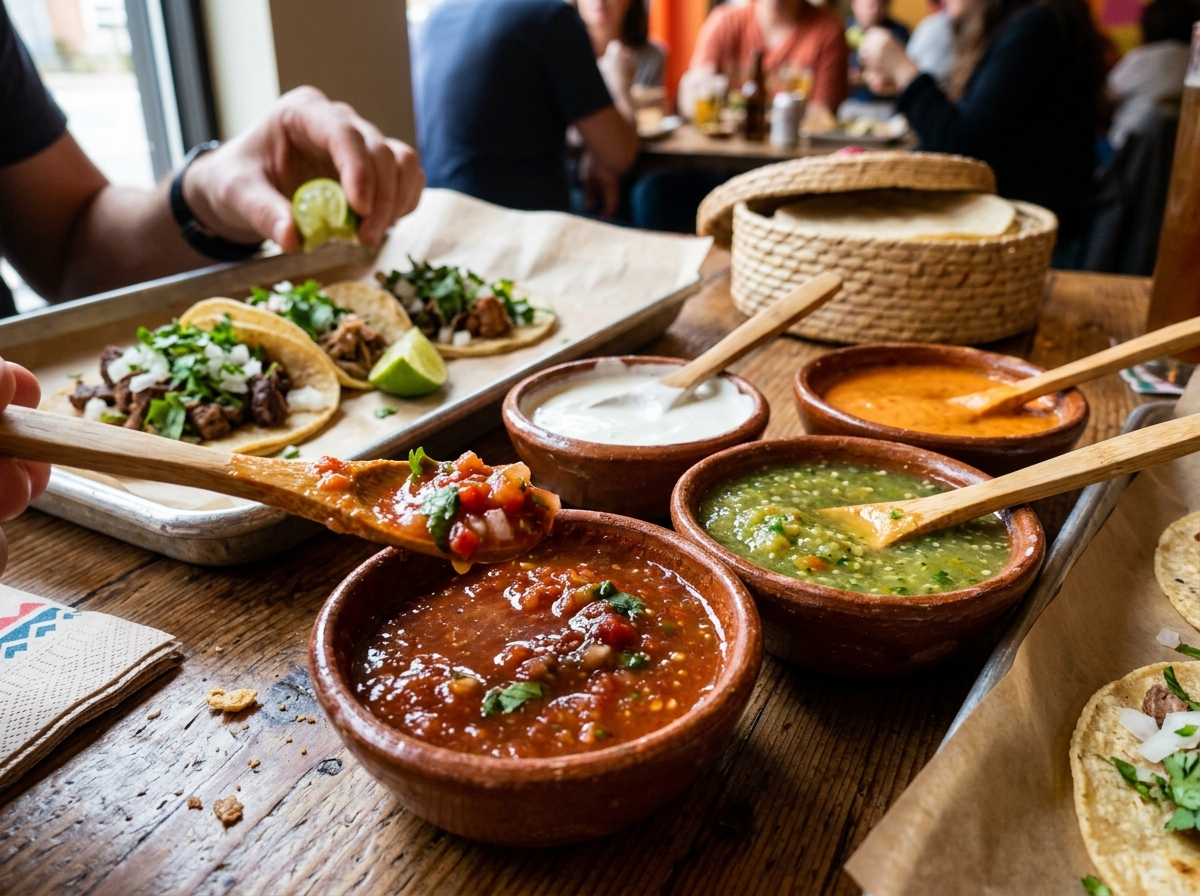
This is exactly why street taco vendors in Mexico City take their salsas just as seriously as their meat preparations. You’ll often see two or three salsas lined up at the counter, each designed for a specific purpose. One might be a thin, vinegary red salsa for cutting through fatty meats. Another could be a roasted green salsa that adds earthiness to chicken. A third might just be pure liquid fire for the brave ones.
Pro Tip: The best approach isn’t to find one “perfect” sauce. It’s to understand what each sauce does and pair it with the right taco. That’s what separates someone who eats tacos from someone who truly gets tacos.
Salsa Roja: The Classic Red That Started It All
If there’s one sauce that represents the soul of Mexican tacos, it’s salsa roja. You’ve seen it everywhere — that bright red, slightly chunky sauce sitting in a molcajete or a squeeze bottle at your local taqueria. And there’s a good reason it’s the default.
Salsa roja is built on a simple foundation: tomatoes, dried or fresh chiles, garlic, and salt. That’s it. But within that simplicity lives a world of variation. Some versions use roasted tomatoes for a deeper, sweeter flavor. Others char the chiles until they’re almost black, which gives the salsa a smoky edge. A few drops of lime juice at the end brighten the whole thing up.
What makes salsa roja so reliable is its versatility. It works on practically every taco — beef, pork, chicken, even vegetarian options. The acidity from the tomatoes cuts through rich, fatty meats like carne asada, while the chile heat adds warmth without overwhelming more delicate fillings.
Did you know? In most of central Mexico, when someone simply says “salsa,” they’re talking about salsa roja. It’s so fundamental that many families have their own recipe passed down through generations, and they’ll argue passionately that theirs is the best.
The beauty of this sauce is its scalability. You can make a mild version with guajillo chiles for the kids, or crank it up with árbol chiles for the adults. Either way, it belongs on your taco table every single time.
Salsa Verde: The Tangy Green That Steals the Show
Salsa verde is salsa roja’s slightly more complex sibling. Where red salsa leans on tomatoes, green salsa gets its identity from tomatillos — those small, bright green fruits wrapped in papery husks. And that single swap changes everything about the flavor profile.
Tomatillos have a natural tartness that tomatoes don’t. When you roast them on a comal or under a broiler, they soften and develop a subtle sweetness that balances out that tang. Blend them with serrano or jalapeño peppers, a handful of cilantro, some onion, and garlic, and you’ve got a sauce that’s bright, zesty, and incredibly fresh.
Salsa verde shines brightest on chicken tacos and pork tacos. There’s something about that tangy green flavor that just clicks with poultry. If you’ve ever had tacos al pastor at a really good spot, chances are they offered a green salsa alongside it — and it probably made the whole experience better.
One version worth knowing about is salsa verde cruda, which skips the roasting step entirely. You just blend raw tomatillos with fresh chiles and cilantro. It’s brighter and more acidic, almost like a taco dressing. This raw version works particularly well on fish tacos and shrimp tacos where you want freshness over smokiness.
Another variation is salsa verde cocida — cooked salsa verde. Here, everything gets simmered together for 15-20 minutes, which mellows the flavors and creates a thicker, silkier texture. This cooked version is fantastic for braised meats and stewed fillings.
Guacamole Salsa: More Than Just Mashed Avocado
Let’s clear something up right away. Guacamole salsa is not the same chunky guacamole you’d scoop up with chips. Taco-style avocado sauce is thinner, smoother, and designed to drizzle — not dollop.
The base is the same: ripe avocados. But from there, you’re blending them with tomatillos or lime juice, adding serrano chiles for heat, tossing in cilantro, and thinning everything out with a splash of water until it reaches a pourable consistency. The result is this gorgeous pale green sauce that’s creamy, slightly spicy, and cool on the tongue.
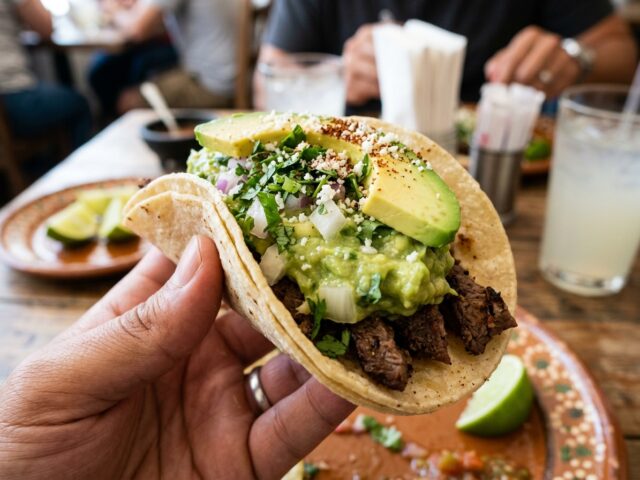
This sauce is an absolute star on grilled meat tacos. The creaminess of the avocado coats your mouth and tempers any char or spice from the meat. It’s especially good on tacos with different types of grilled meats because it adds richness without heaviness.
You’ll find this sauce at almost every street taco cart in cities like Los Angeles, where California-style tacos have turned avocado salsa into a signature element. Many of the best taco spots in LA serve their own version, and regulars will tell you that the avocado salsa is half the reason they keep coming back.
Quick Fact: Avocado-based taco sauces started gaining major popularity outside Mexico in the 1980s and 1990s as the avocado industry in California boomed. Today, it’s one of the most requested taco sauces in the US.
Chipotle Sauce: Smoky, Rich, and Addictive
There’s a depth of flavor in chipotle sauce that no other taco sauce quite replicates. Chipotles are just jalapeño peppers that have been smoked and dried. But that smoking process transforms them into something entirely different — earthy, sweet, smoky, with a medium heat that builds slowly.
Most chipotle taco sauces start with chipotles in adobo, which are the smoked peppers packed in a tomato-vinegar-spice sauce that you’ll find canned in pretty much any grocery store. Blend those with some sour cream or Mexican crema, a squeeze of lime, and a pinch of salt, and you’ve got a sauce that’s equal parts smoky, creamy, and tangy.
This sauce belongs on beef tacos. The smokiness of the chipotle amplifies the charred flavors of grilled steak or barbacoa. It also works surprisingly well on chicken tacos, especially if the chicken has been grilled or roasted with simple seasoning. The sauce provides all the complexity you need.
A less common but fantastic use for chipotle sauce is on vegetarian tacos — roasted sweet potato tacos, black bean tacos, grilled mushroom tacos. The smoky flavor fills the “meaty” gap that plant-based fillings sometimes leave behind.
Pro Tip: If you want to make your chipotle sauce at home, start with just 2-3 chipotles in adobo per cup of crema. You can always add more, but there’s no going back once it’s too smoky or too spicy. Taste as you go.
Pico de Gallo: The Fresh Sauce That Isn’t Really a Sauce
Okay, purists might argue that pico de gallo is a salsa, not a sauce. And technically, they’re right — it’s unblended, chunky, and closer to a relish than anything pourable. But try telling that to the millions of taco lovers who spoon it generously over their tacos every day. It earns its place on this list.
Pico de gallo is raw and simple: diced tomatoes, white onion, fresh cilantro, serrano or jalapeño peppers, lime juice, and salt. No cooking. No blending. Just fresh ingredients cut small and mixed together. The result is a sauce (fine, a salsa) that’s bright, crunchy, and refreshing.
Where pico really excels is on tacos that already have strong, rich, or heavy flavors. A fatty carnitas taco with crispy edges? Pico de gallo cuts right through that richness. Authentic Mexican tacos with simple, bold fillings often just need pico and nothing else.
It’s also the perfect choice when you don’t want heat to overpower the filling. A mild pico lets the meat be the star while adding texture and freshness. This is why you’ll see it as a standard taco topping at restaurants and taco stands alike.
One thing to keep in mind: pico de gallo doesn’t hold up well over time. The salt draws moisture from the tomatoes, and after a few hours, it gets watery. Make it fresh, use it fast, and your tacos will thank you.
Crema: The Cool, Quiet Balancer
Mexican crema doesn’t scream for attention. It’s not spicy, it’s not tangy in an aggressive way, and it definitely won’t blow your head off. But take it away, and you’ll immediately notice what’s missing.
Crema is essentially Mexican-style sour cream, though it’s thinner, milder, and slightly sweeter than American sour cream. It’s meant to be drizzled over tacos in thin lines — not globbed on in huge spoonfuls. That drizzle creates a cooling effect that balances spice, adds a silky texture, and rounds out sharp or acidic flavors from other sauces and toppings.
You’ll find crema most commonly on tacos that carry real heat. Think spicy chorizo tacos, chili-rubbed fish tacos, or anything involving habanero-based salsas. The fat in the crema actually binds with the capsaicin molecules from the chiles, which is why it cools your mouth more effectively than water ever could.
Crema also does something interesting texturally. When it drizzles over a warm taco, it softens slightly and melts into the other ingredients, creating this cohesive bite where everything just flows together.
If you can’t find Mexican crema at your store, you can thin out regular sour cream with a little bit of lime juice and whole milk. Stir until it’s pourable, and you’ll get pretty close to the real thing.
Habanero Salsa: For the Heat Seekers
Let’s be honest — some people eat tacos specifically for the burn. If that’s you, habanero salsa is your ride-or-die.
Habaneros are serious chiles. They clock in between 100,000 and 350,000 Scoville Heat Units, which puts them far above jalapeños (2,500–8,000 SHU) and even serranos (10,000–25,000 SHU). But what separates habaneros from being purely painful is their flavor. Underneath that intense heat, there’s a fruity, almost tropical quality that adds something genuinely unique to tacos.
The best habanero taco sauces lean into that fruitiness. Many recipes from the Yucatán Peninsula — where habaneros are a staple — combine them with roasted tomatoes, charred onion, bitter orange juice (naranja agria), and salt. The result is a sauce that burns, absolutely, but also tastes incredible.
Habanero salsa pairs beautifully with cochinita pibil (slow-roasted pork from the Yucatán), grilled seafood tacos, and even egg-based breakfast tacos. The trick is using it sparingly. A few drops go a long way. You can always add more, but you can’t un-add it once your tongue is on fire.
Warning: If you’re making habanero salsa at home, wear gloves when handling the peppers. The oils can linger on your skin for hours, and touching your eyes after cutting habaneros is an experience you’ll only need once to never repeat.
Salsa Macha: The Crunchy, Oily Wild Card
Salsa macha is having a moment right now, but it’s been a staple in Veracruz and Oaxaca for generations. Think of it as Mexico’s answer to chili crisp — a blend of dried chiles, nuts, seeds, garlic, and oil that creates a textured, crunchy, deeply flavorful sauce unlike anything else on this list.
The traditional recipe uses dried morita or árbol chiles fried in oil until crispy, then blended (but not smoothly) with peanuts or sesame seeds, fried garlic, and a touch of vinegar. The oil becomes infused with all those flavors, and the chunky bits give every spoonful a satisfying crunch.
What makes salsa macha special for tacos is that it adds a dimension no other sauce can: texture. While most taco sauces are smooth or semi-smooth, salsa macha introduces little crispy, nutty bits that contrast with soft tortillas and tender meat. Spoon it over a simple chicken taco and suddenly you’ve got layers of flavor and crunch that feel almost gourmet.
Salsa macha also has a long shelf life compared to fresh salsas. Because the chiles and nuts are preserved in oil, a jar of salsa macha can last weeks in the fridge. This makes it a great option if you want to have a taco sauce ready to go without making something fresh every time.
It’s worth noting that the evolution of taco fillings has brought sauces like salsa macha into mainstream popularity. As diners explore beyond the standard red-and-green salsa options, oil-based sauces have become increasingly popular at taquerias and food trucks across the US.
Mango Habanero Salsa: Sweet Heat Done Right
Here’s where things get interesting. Mango habanero salsa combines two flavors that seem like they shouldn’t work together — sweet, juicy tropical fruit and face-melting chili pepper — and somehow creates something magical.
The best versions start with ripe mango (not green or underripe — you need that sweetness), diced and combined with minced habanero, red onion, cilantro, lime juice, and a pinch of salt. Some recipes add a splash of rice vinegar or even a drizzle of honey, though the mango’s natural sugar usually does the job on its own.
This sauce was practically made for fish tacos and shrimp tacos. The tropical sweetness of the mango complements seafood in a way that tomato-based salsas just can’t match. That habanero burn shows up a second or two after the sweetness hits, creating this rollercoaster of flavor that keeps you reaching for another bite.
It also works surprisingly well on pork tacos. If you’re making al pastor — which already has pineapple as a key ingredient — a mango habanero salsa doubles down on that sweet-savory-spicy combination that makes al pastor so beloved.
Did you know? Fruit-based salsas have roots in coastal Mexican cuisine, where the abundance of tropical fruits naturally made their way into sauces and marinades. It’s not a modern fusion invention — it’s tradition.
Salsa de Árbol: Thin, Red, and Fierce
If you’ve ever sat down at a taco stand in Mexico and reached for that thin, reddish-orange sauce in a squeeze bottle — the one the vendor gave you a knowing look about — you’ve probably met salsa de árbol.
Chile de árbol is a small, slender dried chile that packs serious heat (15,000–30,000 SHU) but also carries a clean, sharp flavor without much smokiness. To make this salsa, the dried chiles are typically toasted in a dry pan until fragrant, then blended with roasted tomatoes or tomatillos, garlic, and a bit of water. The result is a thin, pourable sauce that delivers a clean punch of heat.
The thin consistency is deliberate. Salsa de árbol is designed to soak into the tortilla and blend with the meat juices, not sit on top like a chunky salsa would. This makes it ideal for street-style tacos — the types of Mexican tacos that come on small, soft double tortillas with just meat, onion, and cilantro.
Many taco lovers in Mexico consider salsa de árbol their “everyday” hot sauce. It’s not as complex as salsa macha, not as smoky as chipotle, and not as fruity as habanero. It’s straightforward heat with good chile flavor, and sometimes that’s exactly what a taco needs.
How to Pair Sauces With Your Taco Fillings
Understanding which sauce goes with which taco isn’t about following strict rules. It’s about matching flavors in a way that makes sense. Here’s a practical framework to keep in mind.
For fatty, rich meats like carnitas, barbacoa, or birria — go with something acidic. Salsa roja, salsa verde, or pico de gallo will cut through the richness and keep each bite from feeling heavy.
For grilled meats like carne asada or grilled chicken — smoky sauces like chipotle crema or salsa macha enhance the charred, smoky flavors already present in the meat.
For seafood tacos — fresh, bright sauces win here. Mango habanero, avocado salsa, or a raw salsa verde cruda keep things light and let the delicate fish or shrimp flavor come through.
For spicy fillings like chorizo or chili-rubbed meats — reach for crema or guacamole salsa. Something creamy that cools the heat rather than adding more of it.
For vegetarian tacos — salsa macha adds the depth and richness that plant-based fillings sometimes need. Chipotle sauce works here too, giving mushroom or bean tacos a smoky, “meaty” quality.
The beauty of choosing your tortilla and then picking the right sauce is that you can completely transform the same filling into a different experience just by swapping what you drizzle on top.
Making Taco Sauces at Home: What You Need to Know
Here’s the thing that surprises most people: almost every sauce on this list takes less than 15 minutes to make from scratch. You don’t need special equipment. A blender (even a stick blender works), a skillet or comal, and fresh ingredients are all it takes.
The single most important technique to master is toasting. Whether you’re working with dried chiles, fresh tomatoes, tomatillos, garlic, or onions, charring them in a dry pan or under a broiler develops deeper, more complex flavors. A raw tomato blended with chiles tastes flat. A roasted tomato blended with toasted chiles tastes like it came from a restaurant.
Salt is the second thing that makes or breaks homemade taco sauces. Most people under-salt their salsas, which leaves them tasting “fine” but not exciting. Add salt gradually, tasting after each pinch, and you’ll hit a point where the flavors suddenly pop. That’s the sweet spot.
Fresh lime juice is the third key. A squeeze of lime at the end of any sauce — red, green, creamy, or oil-based — adds a brightness that ties everything together. Don’t skip it, and don’t substitute bottled lime juice if you can avoid it. Fresh is noticeably better.
One more practical note: homemade salsas (except oil-based ones like salsa macha) should be used within 3-5 days. Store them in a sealed container in the fridge, and give them a stir before serving since the ingredients tend to separate.
FAQ
What’s the most popular sauce for tacos in Mexico?
Salsa roja and salsa verde are the two most widely used taco sauces across Mexico. Almost every taqueria, street cart, and home kitchen has at least one of them ready to go. The specific recipe varies by region — salsas in the north tend to be simpler and spicier, while central and southern Mexico lean toward more complex, roasted versions. Looking at the history of tacos shows that these two sauces have been fundamental to taco culture for generations.
Can I use store-bought salsa on tacos?
You can, but there’s a noticeable difference. Store-bought salsas are made for shelf stability, which means they’re usually cooked at high temperatures and contain preservatives that change the flavor and texture. They tend to taste more vinegary and less fresh than homemade versions. If you’re in a pinch, choose a refrigerated salsa from the deli section rather than a jarred one from the shelf — it’ll be closer to the real thing.
What sauce goes best on fish tacos?
Creamy sauces work best on fish tacos because they complement the delicate flavor of the fish without overpowering it. Avocado salsa, chipotle crema, or a mango habanero salsa are all excellent choices. You want something that adds flavor and moisture without masking the fish. A squeeze of fresh lime on top pulls everything together.
How spicy should taco sauce be?
That depends entirely on your tolerance, but here’s a good rule of thumb: the sauce should add heat that you can taste and enjoy, not heat that makes you stop eating. If you’re cooking for a group, put out mild and hot options side by side and let people choose. You can always offer a crema or sour cream alongside spicier sauces so people can balance the heat themselves.
What’s the difference between salsa and taco sauce?
In everyday American usage, “taco sauce” often refers to the smooth, mild, slightly sweet sauce you find in bottles at the grocery store — think Taco Bell-style sauce. “Salsa” usually means the fresh or cooked blended sauces made from actual chiles, tomatoes, and other whole ingredients. Traditional Mexican taco sauces are always salsas in the true sense — made from real, minimally processed ingredients. The bottled “taco sauce” is an American commercial invention that doesn’t really have a counterpart in Mexican cuisine.
Your Taco, Your Rules
Here’s the honest truth about taco sauces: there’s no single “best” option. The best sauce is the one that makes your taco taste the way you want it to taste. Maybe that’s a simple drizzle of salsa roja on a street taco. Maybe it’s a generous spoon of salsa macha on a mushroom taco. Maybe it’s three different sauces on the same taco because you’re feeling adventurous.
The real move is to build a small rotation of sauces you can make confidently. Start with a good salsa roja and salsa verde — those two alone will cover 80% of taco situations. Then branch out into chipotle crema or salsa macha when you’re ready to experiment.
Next time you set up a taco spread for family or friends, put out three or four different sauces and watch what happens. People will mix and match, discover combinations they love, and argue about which one’s the best. And honestly? That conversation over tacos and sauces — that’s the whole point.