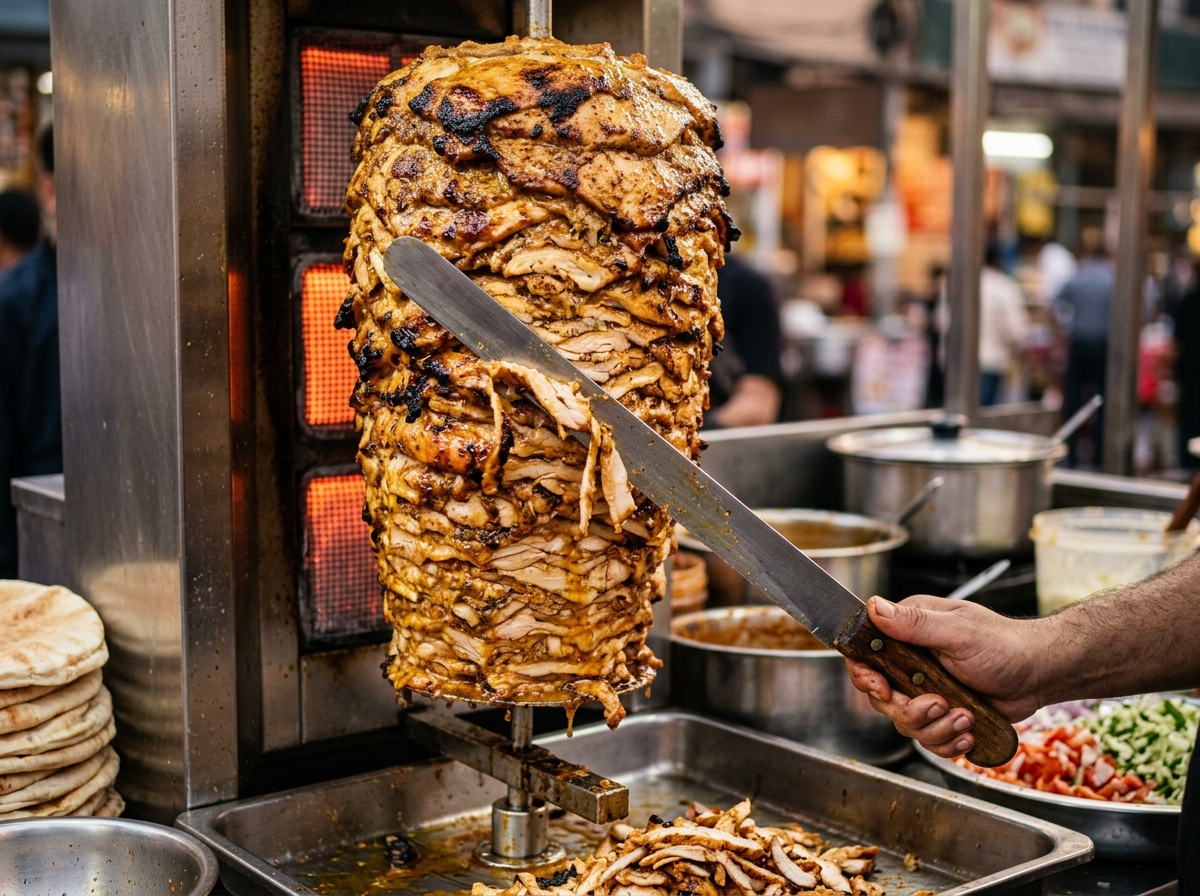
You know that moment at the shawarma stand when the cook shaves off those crispy, glistening layers of chicken right off the towering spit? The edges are charred, the inside is impossibly juicy, and the whole thing smells like cumin and garlic and something you can’t quite name but would happily follow down a street for. You’ve probably thought, “I want to make that at home.” And then you looked at the six-foot rotating metal tower and thought, “Yeah, right.”
Here’s the good news: you absolutely can make a chicken shawarma recipe at home that gets you remarkably close to that street-cart magic. You won’t need a commercial setup, and you won’t need to spend $800 on a restaurant-grade rotisserie (though we’ll talk about those too, if you’re feeling ambitious). What you will need is patience, a solid marinade, and a basic understanding of why the vertical spit works the way it does — because once you get the “why,” the “how” becomes a lot easier.
What Makes Vertical Spit Chicken Shawarma Different
Most people lump shawarma in with gyros and doner kebab, and honestly, they’re all cousins in the same family tree. The vertical spit chicken you see at Middle Eastern shops traces its roots back to the Ottoman-era doner kebab, where layers of seasoned meat were stacked on a vertical rotisserie and slow-roasted next to a heat source. The word “shawarma” itself comes from the Turkish “çevirme,” which literally means “turning.”
But the real magic isn’t in the name. It’s in the physics.
When meat is stacked on a vertical spit and rotated slowly next to a vertical heat source, something specific happens that you can’t easily replicate on a flat grill or in a sheet pan. The outer layer of the meat stack faces the heat and develops a deep, caramelized crust through the Maillard reaction — that chemical browning process that creates hundreds of new flavor compounds on the surface of the meat. Meanwhile, the fat from the outer layers renders and drips downward, continuously basting the layers below. This self-basting effect is what gives shawarma its signature combination of crispy charred edges and tender, moist interior.
Think of it like a slow, vertical braise where the meat cooks in its own seasoned fat while the outside gets kissed by direct heat. That’s a texture and flavor profile you simply don’t get from laying chicken flat on a grill grate.
Why Chicken Thighs Beat Breasts Every Time
If you’re making homemade shawarma, reach for boneless, skinless chicken thighs. Chicken breasts will dry out on a spit because they lack the fat content to survive the extended cooking time. Thighs have more intramuscular fat and connective tissue, which breaks down during the slow rotation and keeps the meat juicy even as the exterior chars. This is one of those situations where the cut of meat matters more than the seasoning. You can have the most perfectly balanced spice blend in the world, and it won’t save a chicken breast from turning into sawdust on a vertical spit.
Choosing Your Setup — From Real Spit to Smart Workarounds
Let’s be honest about the equipment question, because this is where most homemade shawarma guides either oversell or undersell the situation.
The Home Vertical Rotisserie
Yes, you can buy a countertop shawarma spit at home. They exist, they range from about $50 to $200, and they work on the same basic principle as the commercial version — a motorized spit that rotates the meat next to a heating element. The results are genuinely good, and if you plan to make shawarma more than a few times a year, it’s a worthwhile investment. The trade-off is that these machines are small, so your meat stack will be maybe two to three pounds instead of the twenty-pound towers you see at restaurants. That means less of the dramatic “shave off the crispy outer layer” effect, but the flavor and texture are still a big step up from flat-cooking methods.
The Grill-and-Skewer Method
If you don’t want to buy a dedicated machine, your best bet is a sturdy metal skewer and a charcoal or gas grill. Stack your marinated chicken thighs onto the skewer, compressing them tightly, and stand the skewer upright on the grill using indirect heat. You can prop it against the grill lid or use a foil-wrapped brick to keep it vertical. It’s a bit janky, and I won’t pretend it’s elegant, but it works. The key is keeping the heat medium and indirect so the chicken cooks through without burning the outside before the inside reaches a safe temperature.
The Oven Loaf Pan Hack
No grill, no rotisserie, no problem. Thread your marinated chicken onto a thick wooden skewer, stand it upright in a small loaf pan or oven-safe dish, and roast at around 350°F. The pan catches the dripping fat (which you can spoon back over the meat halfway through), and the vertical orientation still gives you better results than laying the pieces flat. It won’t give you the same level of char as an open flame, but you can finish it under the broiler for a couple of minutes to get those crispy edges.
The Marinade That Actually Works
A great chicken shawarma recipe lives or dies by its marinade. This isn’t the place for a quick 20-minute soak. You want a wet marinade that combines acid, fat, and a warm spice blend, and you want to give it time — ideally overnight, but at minimum four to six hours.
The base of a proper shawarma marinade is plain whole-milk yogurt. The lactic acid in yogurt gently breaks down the protein structure in the chicken, tenderizing it in a way that harsher acids like lemon juice or vinegar can’t match on their own. You still want some lemon juice for brightness, but the yogurt does the heavy lifting. If you’re curious about how acid and fat interact to build flavor in cooking, the balance of acid and fat is one of the most fundamental dynamics in any kitchen, and shawarma marinade is a perfect example of that principle in action.
For the fat component, use a good olive oil. It carries the fat-soluble flavors from your spices and helps the exterior brown evenly on the spit.
The Spice Blend
Here’s where you build the flavor profile that makes shawarma taste like shawarma and not just “seasoned chicken.” You want warm, earthy, slightly sweet spices. A solid starting blend includes ground cumin, coriander, smoked paprika, turmeric, a pinch of cardamom, a pinch of cinnamon, garlic powder, and a generous amount of salt. Some recipes add a touch of cayenne or Aleppo pepper for heat, which I’d encourage if you like a little kick.
The reason these specific spices work so well together is that they create layers of umami-rich, aromatic depth that intensify as the meat cooks slowly on the spit. Umami is often called the “fifth taste,” and the combination of yogurt, garlic, cumin, and slow-rendered chicken fat hits that savory note hard.
A quick note on the marinade-versus-rub question: for shawarma, a wet marinade is the right call. A dry rub sits on the surface and builds crust, which is great for a steak or a brisket, but shawarma needs the penetrating tenderization that only a liquid marinade provides. The yogurt needs to get into the meat fibers, not just coat the outside.
Building and Cooking Your Shawarma Stack
This is the part that feels like a craft project, and honestly, that’s half the fun.
Stacking the Meat
Take your marinated chicken thighs out of the fridge about 30 minutes before you plan to cook. Cold meat cooks unevenly, especially on a spit where you’re relying on consistent heat exposure. Thread the thighs onto your skewer or spit rod, pressing each piece firmly against the one below it. You want a tight, compact column with no gaps. Gaps create uneven cooking and can cause the stack to wobble or lean, which is exactly as messy as it sounds.
If you’re using a home rotisserie, follow the manufacturer’s instructions for securing the meat. Most come with prongs or forks that hold the stack in place. If you’re using the skewer-and-grill method, push the bottom of the skewer into a halved onion or a small potato to create a stable base. It looks silly, but it keeps the whole thing upright. I learned this the hard way after my first attempt slowly tilted and dumped half the chicken into the coals.
Cooking Temperature and Timing
This is where food safety matters, so let’s be specific. The USDA recommends that all poultry reach an internal temperature of 165°F to be safe to eat (USDA Safe Minimum Internal Temperature Chart). When you’re cooking a dense stack of chicken on a vertical spit, the center of the stack takes significantly longer to reach that temperature than the outer layers. This is the main challenge of homemade shawarma — you need the outside to char without the inside staying in the temperature danger zone (between 40°F and 140°F) for too long.
Food Safety Note: The information above reflects general USDA guidelines for poultry safety. If you’re cooking for individuals who are immunocompromised, pregnant, elderly, or very young, err on the side of caution and verify temperatures with a calibrated instant-read thermometer. This is general cooking guidance, not a substitute for professional food safety advice.
For a home setup with a two-to-three-pound stack, plan on roughly 60 to 90 minutes of cooking time at medium heat. If you’re using a countertop rotisserie, follow the machine’s guidelines but still verify with a meat thermometer. Insert the thermometer into the thickest part of the stack, near the center, to get an accurate reading. Knowing when chicken thighs are done by temperature rather than guesswork is the single best habit you can build for food safety.
Pro Tip: As the outer layer of the stack develops a deep golden-brown crust, you can shave it off with a sharp knife and set it aside while the inner layers continue cooking. This is exactly what shawarma shops do, and it’s the secret to getting both crispy and juicy textures from the same stack. Just keep rotating and shaving as the meat cooks through.
Resting Before Serving
Once the chicken hits 165°F at the center, pull it off the heat and let it rest for at least 10 minutes before you do your final shave. Resting meat allows the juices to redistribute throughout the fibers instead of running out onto your cutting board the moment you slice into it. Ten minutes feels like an eternity when the kitchen smells that good, but it makes a real difference in the final texture.
Serving Your Homemade Shawarma Right
You’ve done the hard part. Now let’s not undermine it with sad, dry pita and ketchup.
Traditional chicken shawarma is served in warm pita bread or flatbread with a few specific accompaniments that balance the rich, fatty meat. You want something creamy, something acidic, and something crunchy. A classic combination is garlic sauce (toum), pickled turnips, sliced tomatoes, and a handful of fresh parsley. Tahini sauce is another excellent option if you prefer something nuttier and less pungent than raw garlic sauce.
If you’re serving a crowd, set up a build-your-own shawarma station with warm pita, the shaved chicken, and a few bowls of toppings. Pickled red onions, shredded lettuce, and a drizzle of hot sauce are all welcome additions. The point is contrast — the warm, spiced, slightly charred chicken needs cool, bright, acidic elements to cut through the richness.
Frequently Asked Questions
Can I make shawarma without a vertical spit?
Yes, and plenty of home cooks do. The oven loaf pan method described above gets you surprisingly close to the real thing. You can also marinate chicken thighs, lay them flat on a hot cast-iron skillet, and press them down with a heavy pan to get good contact and char. It won’t have the self-basting effect of a true vertical spit chicken setup, but the marinade and spice blend will still give you authentic shawarma flavor. The spit is about texture, not just taste.
How long should I marinate chicken for shawarma?
The sweet spot is 12 to 24 hours in the refrigerator. The yogurt-based marinade needs time to penetrate the meat and tenderize it. Anything less than four hours and you’re mostly just coating the surface. Anything beyond 24 hours and the acid can start to break down the texture too much, giving the chicken a slightly mushy quality. Plan ahead and marinate the night before you want to cook.
What’s the difference between shawarma, gyros, and doner kebab?
They’re all vertical-spit roasted meats from the same broad culinary tradition, but they differ in origin, meat choice, and seasoning. Doner kebab is the Turkish original, typically made with lamb or beef. Gyros are the Greek adaptation, usually lamb or a lamb-beef blend, seasoned with oregano and rosemary. Shawarma is the Middle Eastern version, most commonly chicken or lamb, with a warmer spice profile featuring cumin, cardamom, and turmeric. The cooking method is nearly identical; the flavor profiles are what set them apart.
Making vertical spit chicken shawarma at home is one of those cooking projects that feels way more impressive than it actually is. The marinade does most of the work, the spit (or your clever workaround) handles the texture, and the slow rotation takes care of the rest. Your first attempt might not look like the towering spits you see in Istanbul or Beirut, and that’s completely fine. The flavor will be there, the char will be there, and the satisfaction of shaving your own crispy chicken off a homemade spit is genuinely hard to beat.
So grab some chicken thighs, mix up that yogurt marinade tonight, and fire up whatever setup you’ve got tomorrow. Your kitchen is going to smell incredible, and your family is going to wonder why you ever ordered takeout.