A pellet grill can give your hamburgers something a gas or charcoal grill simply can’t — real wood-fired smoke flavor baked right into every bite. But here’s the thing most people get wrong: they treat a pellet grill exactly like a gas grill, crank it to high, slap the patties on, and wonder why the burgers taste dry or barely smoky. Pellet grills play by slightly different rules, and once you understand those rules, you’ll make burgers that honestly ruin restaurant burgers for you.
Whether you own a Traeger, a Pit Boss, a Camp Chef, or any other pellet smoker, this guide walks you through the full process — from choosing the right ground beef to pulling perfectly cooked hamburgers off the grate. No fluff, no guesswork, just what actually works.
Why a Pellet Grill Makes Better Burgers
You might be wondering — is there really a difference between cooking burgers on a pellet grill versus a regular gas grill? Short answer: yes, and it’s noticeable.
A pellet grill burns compressed hardwood pellets. Those pellets produce clean smoke that infuses your meat with flavor you simply don’t get from propane or even charcoal briquettes. Think of it as the difference between cooking over a campfire versus cooking over a stove burner. Both get the job done, but one adds character.
The other advantage is temperature control. Pellet grills use a digital controller that holds your set temperature within a tight range, usually within 5–10°F. You’re not babysitting vents or dealing with hot spots. Set it and trust it.
That said, most pellet grills don’t produce the same searing heat as a gas grill cranked to 500°F+. The heat is more indirect, more oven-like. And that’s actually fine for burgers — you just need to adjust your approach, which is exactly what we’ll cover below.
If you’ve already grilled burgers on gas and want to compare techniques, check out our guide on how to grill burgers on a gas grill for a side-by-side perspective.
Choosing the Right Meat for Pellet Grill Burgers
Before you even fire up the grill, let’s talk about the beef. Your meat choice makes or breaks the final burger — the grill just amplifies what’s already there.
Go with 80/20 ground beef. That’s 80% lean meat, 20% fat. The fat is non-negotiable here. On a pellet grill, where heat is more gentle and indirect, that 20% fat renders slowly, keeping the patty juicy and tender throughout the cook. Leaner blends like 90/10 or 93/7 tend to dry out, especially at higher grill temps.
If you want to get fancy, ask your butcher for a blend of chuck and brisket — roughly 70/30 or 75/25. The brisket fat adds a richer, beefier flavor that pairs beautifully with wood smoke. Some pitmasters swear by adding a small percentage of short rib into the grind for extra depth.
Ground turkey or chicken burgers work on a pellet grill too, but they need special attention since they’re much leaner. If turkey burgers are your thing, our guide on grilling turkey burgers covers the specific temps and times you’ll need.
Pro Tip: Always use cold ground beef straight from the fridge. Warm meat is harder to form into patties and the fat starts breaking down before it even hits the grill.
How to Form the Perfect Burger Patty
This sounds basic, but patty formation is where a lot of people unknowingly sabotage their burgers.
Take about 6 to 8 ounces of ground beef per patty. That translates to roughly ⅓ to ½ pound each — a good size that cooks evenly on a pellet grill without being so thick that the center stays raw while the outside overcooks.
Gently shape the meat into a disc about ¾ inch thick and slightly wider than your bun. Here’s the key word: gently. Don’t compress the meat like you’re packing a snowball. Overworked beef leads to dense, tough burgers — the kind that feel like hockey pucks. You want the patty to barely hold together.
Now, press your thumb into the center of each patty to create a small shallow dimple. Why? Because burgers puff up in the middle as they cook. That dimple counteracts the swelling and gives you a flat, even patty instead of a meatball.
Season both sides generously with salt and freshly cracked black pepper. That’s really all you need. If you want to add garlic powder, onion powder, or a pinch of smoked paprika, go for it — but don’t overdo the seasoning. The pellet grill smoke is already adding a layer of flavor that most grills can’t.
Setting Up Your Pellet Grill: Temperature and Pellets
Getting your grill ready is straightforward, but a few choices here affect the final result significantly.
What Temperature Should You Set?
This depends on the style of burger you’re after. You essentially have two approaches.
The sear method (high heat): Set your pellet grill to 450°F. This gives you a faster cook with a decent crust on the outside. Most burgers will be done in 8 to 12 minutes total at this temp. It’s the closest you’ll get to a traditional grill experience on a pellet smoker.
The smoke-then-sear method (low-to-high): Start at 225°F for about 30 minutes, then crank it up to 450°F to finish. This two-stage approach maximizes smoke absorption during the low-and-slow phase, then gives you that crispy exterior sear at the end. The result is a burger with a visible smoke ring and noticeably deeper flavor.
If you’re new to pellet grilling burgers, start with the straight 450°F method. It’s simpler and still gives great results. Once you’re comfortable, experiment with the reverse sear.
For a deeper breakdown of temperature precision across different doneness levels, our burger temperature guide covers everything from rare to well-done with exact internal temps.
Which Wood Pellets Work Best?
Pellet flavor matters more than most people realize. Here’s a quick breakdown of the most popular options for burgers:
Hickory gives a strong, classic smoky flavor — think backyard barbecue. It’s the most popular choice and works great with beef.
Mesquite is bolder and more intense. A little goes a long way, and it can overpower thinner patties if you’re not careful.
Cherry or apple pellets produce a lighter, slightly sweet smoke. They’re excellent if you don’t want the smoke to dominate.
Competition blends (usually a mix of hickory, cherry, and maple) are a safe all-around choice. Most pellet grill brands sell their own version.
For burgers specifically, hickory or a competition blend is your best bet.
Step-by-Step: Cooking Hamburgers on a Pellet Grill
Alright, let’s cook. Here’s the process from start to finish.
Preheat the Grill
Turn on your pellet grill and set it to your target temperature — either 225°F for the smoke-first method or 450°F for direct grilling. Close the lid and let it preheat for at least 10 to 15 minutes. You want the grates hot and the smoke flowing cleanly before any meat goes on.
A thin blue smoke coming from the chimney means clean combustion. Thick white billowy smoke means the fire is still getting established — wait until it settles.
Place the Patties on the Grate
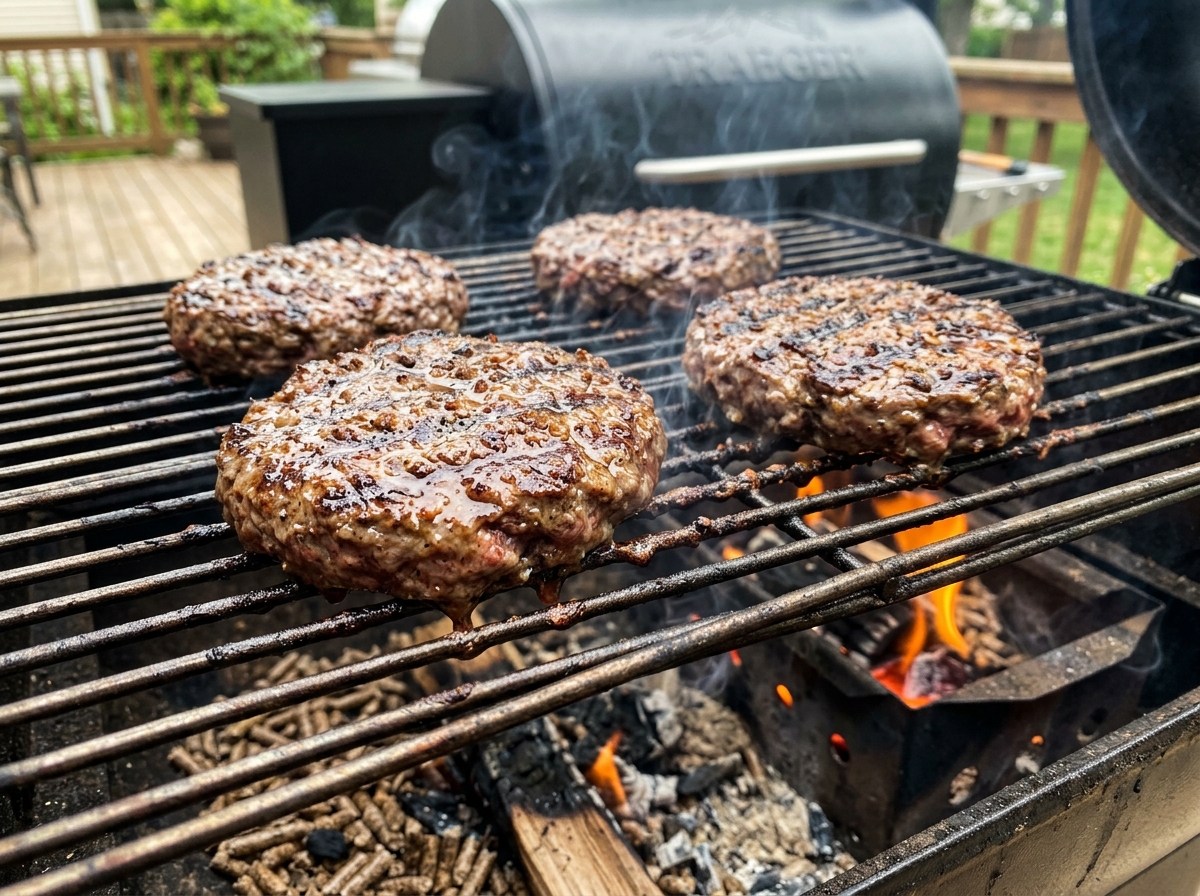
Set your patties directly on the grill grate. Leave about an inch of space between each one so air and smoke circulate evenly. Don’t spray the grates with oil — the fat in 80/20 beef prevents sticking on its own.
If you’re using the 450°F method: Cook for about 4 to 5 minutes on the first side, then flip once. Cook another 4 to 5 minutes on the second side. Total cook time runs 8 to 12 minutes depending on patty thickness and your target doneness.
If you’re using the smoke-then-sear method: Let the burgers sit at 225°F for 25 to 30 minutes with the lid closed. Don’t flip during this phase — you’re building smoke flavor, not searing. Once they hit an internal temp of about 120–125°F, crank the grill to 450°F (or use a separate cast iron skillet on the grill grate) and sear each side for 2 to 3 minutes.
Don’t Press the Patties
This one’s worth calling out on its own. Resist the urge to press down on the burgers with your spatula. Every time you press, you’re squeezing out juice and fat — the very things that make the burger moist and flavorful. Just let them cook.
Check Internal Temperature
Use an instant-read meat thermometer. Don’t guess. Color alone is unreliable — a burger can look done on the outside and be raw in the center, or look pink inside but actually be at a safe temperature.
Here are the USDA-recommended internal temperatures:
Medium-rare: 130–135°F (a warm, red center)
Medium: 140–145°F (pink center, most popular doneness)
Medium-well: 150–155°F (slight hint of pink)
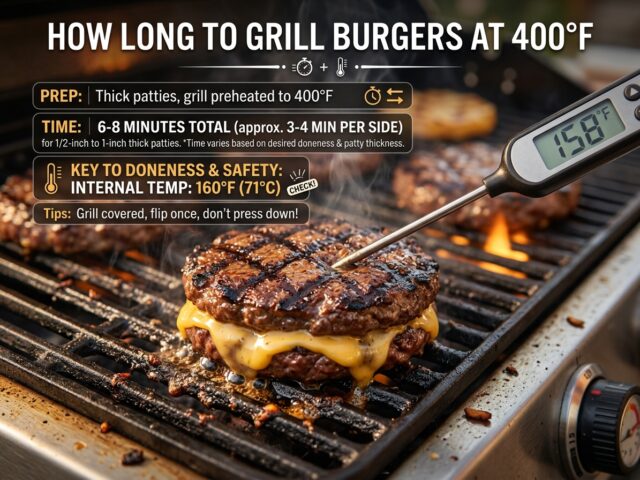
Well-done: 160°F+ (no pink, which is the USDA’s official safe minimum for ground beef)
Our detailed hamburger internal temp chart gives you a visual reference you can bookmark for future cooks.
Quick safety note: Ground beef is different from steaks. With a steak, bacteria only live on the surface. With ground beef, the grinding process can distribute bacteria throughout. That’s why the USDA recommends 160°F for ground beef. If you prefer your burgers below that temp, use high-quality, freshly ground beef from a trusted source.
Add Cheese at the Right Moment
If you’re making cheeseburgers — and you should — add the cheese during the last 1 to 2 minutes of cooking. Close the lid immediately after placing the cheese. The trapped heat melts it perfectly without overcooking the patty.
American cheese melts the smoothest. Cheddar, pepper jack, and smoked gouda are all great choices that pair well with the smoky flavor from the pellets.
Rest the Burgers
Pull the patties off the grill and let them rest on a plate or cutting board for 2 to 3 minutes before assembling. Resting lets the juices redistribute through the meat. Skip this step and those juices end up in the bun instead of in the bite.
Building the Burger: Buns, Toppings, and Sauces
A great patty deserves a great build. Here’s how to put it all together without overthinking it.
Toast Your Buns
Place your buns cut-side down on the grill grate during the last minute or two of cooking. Toasted buns add texture and, more importantly, create a barrier that prevents the juices from making the bread soggy. Brioche buns hold up especially well — they’re sturdy, slightly sweet, and toast beautifully.
Layer Smart
Order matters. Here’s a classic layering that keeps everything stable:
Bottom bun → sauce → lettuce → patty → cheese → tomato → onion → pickles → top bun.
Putting the lettuce under the patty acts as a moisture shield for the bottom bun. Sauce goes on the bottom bun too, so it doesn’t drip off the top.
Sauce and Topping Ideas
Keep it simple or go bold — your call. A basic spread of ketchup, mustard, and mayo works perfectly. For something more interesting, mix mayo with sriracha and a squeeze of lime for a quick spicy aioli.
Grilled onions cooked right on the pellet grill alongside your burgers pick up that same smoky flavor. Thick-cut tomato slices, crisp lettuce, and dill pickles round things out. If you want a full rundown of topping combinations, our best taco toppings guide covers a lot of similar flavor-pairing principles that translate surprisingly well to burgers.
Common Mistakes to Avoid
Let’s cover the things that trip people up most often when cooking hamburgers on a pellet grill.
Opening the lid too often. Every time you lift the lid, you lose heat and smoke. Pellet grills take longer to recover temperature than gas grills. Check on the burgers once or twice — not every 30 seconds.
Using lean meat. We’ve covered this, but it’s worth repeating. Anything leaner than 80/20 is a gamble on a pellet grill. You’ll almost certainly end up with dry burgers.
Skipping the preheat. Putting burgers on a cold grill leads to uneven cooking and the patties can stick to the grates. Give it a full 10 to 15 minutes.
Not knowing your grill’s hot spots. Even with digital controllers, most pellet grills run slightly hotter near the fire pot (usually on the left or center). Place patties accordingly and rotate if needed.
Cooking frozen patties without adjusting. You can absolutely cook frozen burgers on a pellet grill, but they need more time and careful temp monitoring. If you’re working with frozen patties, our guide on how to grill frozen burgers breaks down the timing adjustments.
Pellet Grill Burger Variations Worth Trying
Once you’ve nailed the basic smoked burger, experiment a little. Here are a few ideas that work particularly well on a pellet grill.
Smash Burgers on a Cast Iron Skillet
Place a cast iron skillet or griddle directly on your pellet grill grate and crank the heat to 450–500°F. Use 2-ounce balls of beef, smash them flat with a sturdy spatula, and cook for about 2 minutes per side. The pellet smoke infuses the air around the skillet, giving you thin, crispy-edged smash burgers with a hint of wood-fired flavor. It’s the best of both worlds.
Stuffed Burgers (Juicy Lucys)
Take two thin patties, place a chunk of cheese (or blue cheese crumbles, or jalapeño and cream cheese) in the middle, seal the edges together, and cook at 375°F for about 14 to 16 minutes. The slower, indirect heat of a pellet grill is actually ideal for stuffed burgers because it gives the cheese time to fully melt inside without burning the exterior.
Smoked Burger with a Brisket Twist
Mix your ground beef with leftover chopped brisket or use a chuck-and-brisket grind. Smoke at 225°F for 30 minutes, then sear at 450°F. Top with pickled onions and a tangy barbecue sauce. It’s essentially a barbecue sandwich disguised as a burger.
Sides That Go Great with Pellet Grill Burgers
A smoked burger needs sides that match its vibe. Homemade french fries are the obvious classic — golden, crispy, and completely addictive. You can even toss the fries on the pellet grill in a perforated pan for a smoky spin.
For game day or a backyard cookout, comfort foods like corn dogs or a side of Nashville hot chicken tenders take the whole spread up a level. And honestly, a simple coleslaw or a fresh tomato-cucumber salad balances out all that rich, smoky beef beautifully.
FAQ
How long does it take to cook burgers on a pellet grill at 400°F?
At 400°F, expect about 10 to 14 minutes total for a ¾-inch thick patty — roughly 5 to 7 minutes per side. Always verify doneness with an instant-read thermometer rather than relying on time alone. Patty thickness, outdoor temperature, and your specific grill model all affect cook time. For more specifics at this temp, our grilling burgers at 400°F guide dives deeper.
Can you get a good sear on a pellet grill?
You can, but it won’t be identical to a gas grill sear. Pellet grills max out around 450–500°F, which is enough for a decent crust but not the same as a 700°F sear from a gas grill’s infrared burner. The workaround is using a cast iron skillet or griddle on the grill grate — it concentrates heat and gives you a much better crust while still benefiting from the smoke.
Do you flip burgers on a pellet grill?
Yes, flip them once — about halfway through the cook. If you’re using the smoke-then-sear method, don’t flip during the low-heat smoking phase. Only flip when you move to the high-heat searing stage. One flip is enough. Multiple flips don’t help and can break apart patties that haven’t set yet.
What’s the best pellet grill temperature for juicy burgers?
For maximum juiciness, the smoke-then-sear method works best. Start at 225°F for 25–30 minutes to slowly render the fat without squeezing out moisture, then sear at 450°F for 2–3 minutes per side. If you want a quicker cook, 375°F is a nice middle ground — hot enough for a light crust but gentle enough to keep the interior moist.
Are pellet grill burgers healthier than pan-fried burgers?
Pellet grilling allows fat to drip away from the patty through the grill grate, which can slightly reduce the overall fat content compared to pan-frying where the patty sits in its own rendered fat. The difference isn’t dramatic, but it’s there. The bigger health factor is the meat quality itself — choosing grass-fed beef or quality 80/20 ground chuck matters more than the cooking method.
Your Next Cookout, Sorted
Cooking hamburgers on a pellet grill isn’t complicated — it just requires a slightly different mindset than gas or charcoal grilling. Use 80/20 beef, don’t overwork your patties, choose the right temperature approach for the flavor you want, and let your thermometer be the final judge of doneness.
The real payoff is that smoky, wood-fired flavor you can’t fake with liquid smoke or seasoning blends. Once you’ve tasted a burger that’s been kissed by hickory or cherry wood smoke for 30 minutes, plain grilled burgers start to feel a little… boring.
So fire up the pellet grill this weekend, try the smoke-then-sear method at least once, and see what you think. You’ll probably never go back.