You know that moment at a steakhouse when the server sets down a ribeye with a little pat of golden butter slowly melting across the top? That butter isn’t plain. It’s packed with herbs, garlic, maybe a hit of blue cheese. That’s compound butter, and you can make it at home in about ten minutes. It might be the easiest upgrade your cooking will ever get.
What Is Compound Butter, Exactly?
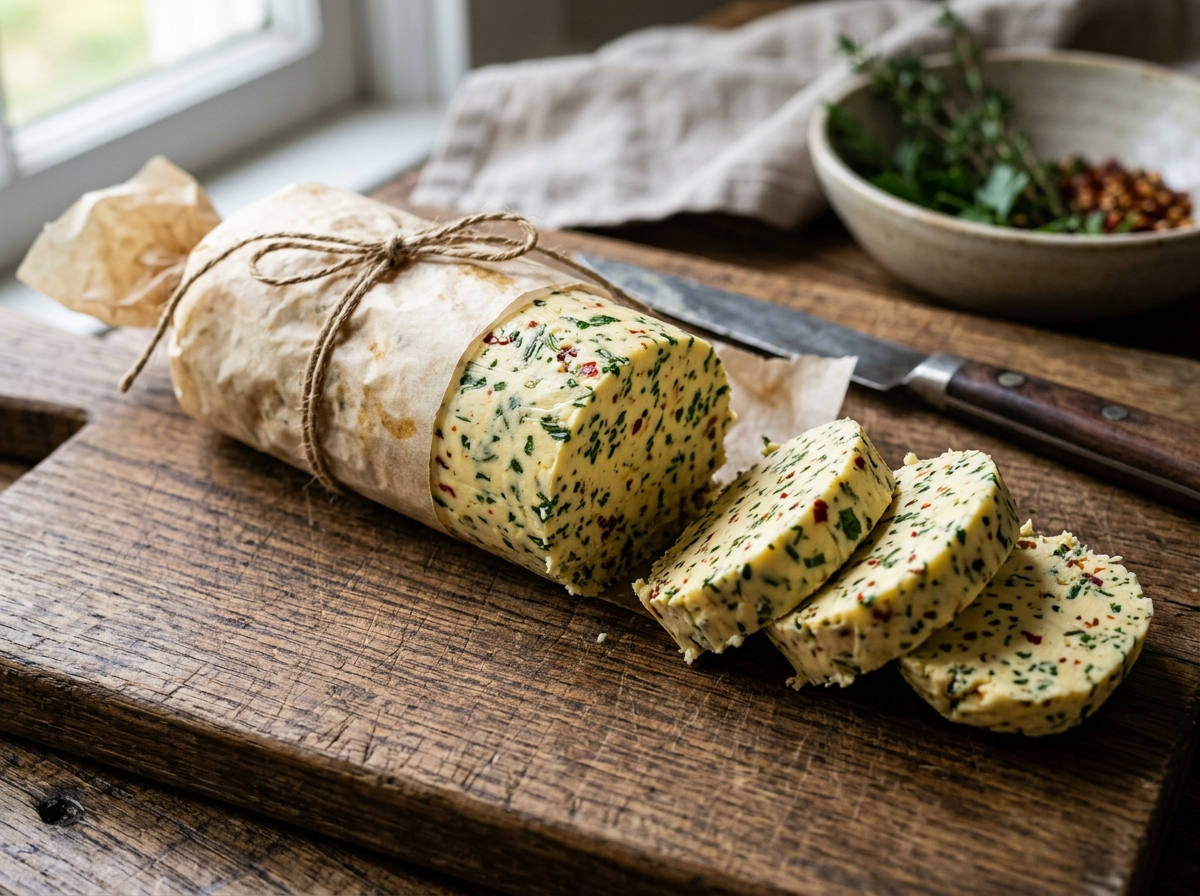
Compound butter is regular butter that you’ve softened and mixed with other ingredients — herbs, spices, citrus zest, cheese, honey, or whatever flavors you like. You roll it into a log, chill it until firm, and slice off rounds whenever you need them. That’s the whole idea.
The French call it beurre composé, and it has been a staple in professional kitchens since at least the days of Auguste Escoffier in the early 1900s. The concept is straightforward. Butter is already delicious on its own. When you fold in bold flavors, it becomes a ready-made finishing sauce that melts right into your food.
Think of it as a shortcut to restaurant-quality results without any extra cooking time. You don’t need to build a pan sauce, deglaze a skillet, or reduce a demi-glace. A cold slice of compound butter does the same job while you focus on the rest of the meal.
A compound butter recipe can be as basic as butter plus minced garlic and parsley, or as adventurous as butter blended with miso paste and toasted sesame oil. The technique stays exactly the same no matter what you mix in, which is part of why this is such a useful skill to have in your back pocket.
Why Compound Butter Works So Well
Butter is roughly 80% fat, and fat is one of the most effective flavor carriers in all of cooking. Many of the aromatic compounds in garlic, fresh herbs, and spices are fat-soluble. That means they dissolve directly into the butter and spread evenly across your food when it melts. You get a more uniform, deeper flavor than you would from just sprinkling those same ingredients on top of a finished dish.
This is the same principle behind why a drizzle of good olive oil makes a tomato salad taste better, or why acid and fat work together to balance a dish. The fat coats your tongue and delivers flavor compounds straight to your taste receptors. Compound butter takes that effect and concentrates it into a single, easy-to-use package.
Compound butter also adds richness and moisture at the same time. When a pat melts over a hot piece of meat, it bastes the surface in a thin layer of seasoned fat. That layer adds a silky mouthfeel and helps carry umami-rich flavors from the meat itself, making everything taste more rounded and complete.
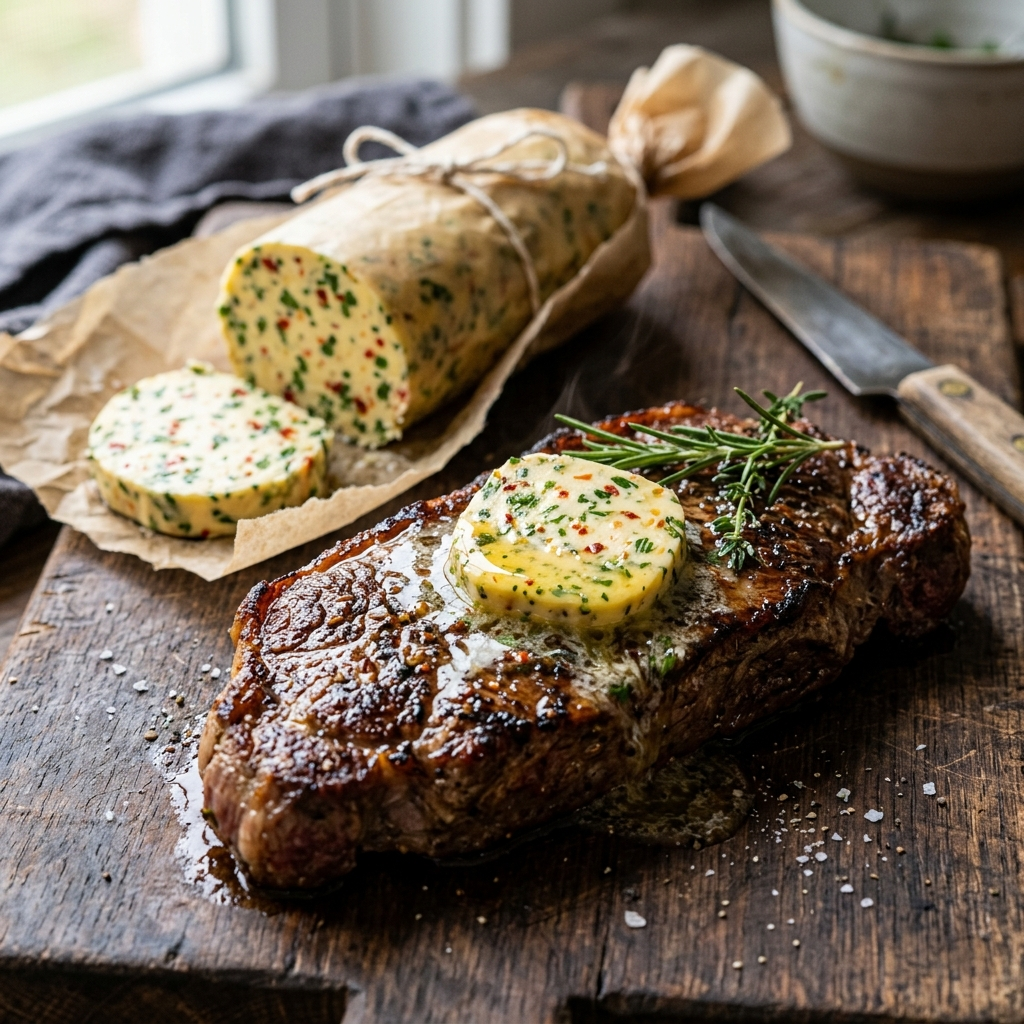
Here’s a practical detail most recipe blogs skip: timing matters more than you’d think. If you drop compound butter on a steak the second it comes off a screaming-hot grill, the butter melts too fast and runs right off into the plate. You lose most of the flavor you worked to build. But if you add it during the last minute or two of resting your meat, the butter melts slowly and actually clings to the surface of the steak. That small shift in timing makes a noticeable difference in how much flavor you taste in every single bite.
How to Make Compound Butter at Home
The process is almost too easy, but a few small details separate a good compound butter from a great one. Pay attention to the texture of your butter before you start mixing, and you’ll get clean, even results every time.
Start with unsalted butter. You want to control the salt level yourself, especially if you’re adding salty ingredients like Parmesan, capers, or soy sauce. Pull the butter out of the fridge about 30 to 45 minutes before you plan to mix. You need it soft enough to mash with a fork but not so warm that it turns greasy and starts to separate. If your kitchen runs hot, 20 minutes might be plenty. The butter should yield to gentle pressure without looking shiny or oily on the surface.
Once it’s softened, mash it in a bowl with a fork or a rubber spatula until it’s smooth and pliable. Add your flavorings and mix until everything is evenly distributed throughout the butter. This is where you want to taste as you go. Spread a tiny amount on a piece of bread or a plain cracker to check the balance. Keep in mind that the flavors will mellow slightly once the butter chills and firms up, so you can go a touch bolder than your first instinct tells you.
Now shape it. Spoon the mixture onto a sheet of plastic wrap or parchment paper. Use the wrap to help you roll the butter into a tight cylinder, about an inch and a half in diameter. Twist the ends closed like a candy wrapper and refrigerate the log for at least an hour to firm up. That’s it. You now have a log of flavored butter for steak, vegetables, bread, or anything else you want to dress up.
Pro tip: If you’re serving the compound butter at a dinner party, pull the log out of the fridge about 15 minutes before you plan to slice it. Cold butter crumbles when you cut it. Slightly cool butter gives you clean, neat rounds that look professional on the plate.
Three Compound Butter Recipes to Try First
A classic garlic herb butter is the best starting point for most home cooks. Mix one stick of softened unsalted butter with two cloves of finely minced garlic, two tablespoons of chopped fresh parsley, a teaspoon of fresh thyme leaves, a squeeze of lemon juice, and a generous pinch of kosher salt. This is the one you’ll reach for most often, and it’s the closest match to what you’ll find at most steakhouses. If you’re new to working with fresh herbs and aren’t sure which ones hold their flavor best in butter, our beginner’s guide to fresh herbs and spices breaks down the best options.
For something bolder, try a blue cheese and chive butter. Blend one stick of softened butter with two ounces of crumbled blue cheese, a tablespoon of finely snipped chives, and a few cracks of black pepper. Hold off on extra salt until you taste the mixture — blue cheese brings plenty of saltiness on its own. This one is a natural fit for a thick-cut ribeye or a loaded baked potato.
If you want a sweet option, a honey cinnamon butter works beautifully on warm biscuits, pancakes, or roasted sweet potatoes. Mix one stick of butter with two tablespoons of honey, half a teaspoon of ground cinnamon, and a tiny pinch of salt to keep the sweetness from becoming cloying. Kids tend to love this one, and it disappears fast at brunch.
How to Use Compound Butter
The most famous use is also the simplest. Slice a round of compound butter and lay it on a hot steak just as it finishes resting. The residual heat from the meat melts the butter into a glossy, seasoned glaze that makes the whole dish feel like a special occasion. If you want a proper crust on your steak before the butter goes on, our guide to how to grill steak covers temperature and timing in detail.
But limiting compound butter to steak is a bit like buying a Swiss Army knife and only using the bottle opener. This stuff is versatile.
Toss a slice into a bowl of hot pasta right before serving. The butter melts into the starchy pasta water and creates a quick, silky sauce without any cream or cheese. A garlic herb compound butter works especially well with linguine, fettuccine, or even a simple bowl of buttered noodles.
Spread it on warm bread or dinner rolls instead of plain butter. This is a crowd-pleaser at holiday dinners and backyard cookouts alike, and it takes zero extra effort once the butter log is already sitting in your fridge.
Melt a round over roasted or grilled vegetables. Corn on the cob, asparagus, and baked potatoes are the obvious choices, but try it on roasted carrots, grilled zucchini, or even steamed broccoli for a pleasant surprise. The fat helps your body absorb fat-soluble vitamins from the vegetables, so it’s not just about taste.
Stir a small piece into scrambled eggs right at the end of cooking, off the heat. The compound butter adds a creamy richness that plain butter can’t match because the herbs and garlic are already evenly distributed through the fat.
Top a piece of pan-seared fish with a lemon-dill compound butter. The bright acidity from the lemon cuts through the richness of the butter and complements the delicate flavor of salmon, trout, or halibut without overpowering it.
You can even use compound butter as a quick finishing touch for soups. A small round swirled into a bowl of tomato soup or butternut squash soup adds depth and a velvety texture that makes the whole bowl feel more satisfying.
The general rule is to treat compound butter as a finishing ingredient, not a cooking fat. You add it at the end, off direct heat, so the flavors stay bright and the butter doesn’t break, separate, or burn.
Storing and Freezing Compound Butter Safely
Because compound butter contains fresh ingredients like raw garlic, herbs, and citrus juice, it doesn’t last quite as long as a plain stick of butter sitting in your fridge. A tightly wrapped log will stay good for about one to two weeks in the refrigerator. Keep it in the coldest part of your fridge — usually the back of a middle shelf — rather than in the door where the temperature swings every time someone opens it.
If you want to keep it longer, the freezer is your best option. A well-wrapped log of compound butter freezes beautifully for up to three months without losing much flavor or texture. I like to slice the log into individual rounds before freezing, separating each slice with a small square of parchment paper. That way you can grab exactly the number of portions you need without thawing the whole log and refreezing it, which can degrade the texture.
A quick but important note on food safety: garlic-in-butter and garlic-in-oil mixtures carry a small risk of botulism if left at room temperature for extended periods. The USDA’s Food Safety and Inspection Service recommends keeping any garlic-infused butter refrigerated and discarding it if it has been left out for more than two hours (USDA Food Safety Guidelines). For a deeper look at safe storage temperatures and why they matter, read about the food safety temperature danger zone. When in doubt, keep it cold and use it up within two weeks.
Disclaimer: This is general food safety information and is not a substitute for guidance from the USDA’s Food Safety and Inspection Service or your local health authority.
Frequently Asked Questions
How long does compound butter last in the fridge?
A tightly wrapped log of compound butter will keep for one to two weeks in the refrigerator. The exact timeline depends on what you mixed in. Butter with fresh garlic or citrus zest leans toward the shorter end of that range, while a simple honey butter can stretch closer to the full two weeks. Always give it a sniff before using — if it smells sour, rancid, or just off, toss it and make a fresh batch.
Can you freeze compound butter?
Yes, and it freezes very well. Wrap the log tightly in plastic wrap and then add a layer of aluminum foil or place it inside a freezer-safe bag to prevent freezer burn. It will hold its quality for about three months. Slicing the log into individual rounds before freezing makes it much easier to use later, since you can pull out one or two portions without thawing the entire thing.
Should I use salted or unsalted butter for compound butter?
Unsalted butter is the better choice because it gives you full control over the seasoning. Many compound butter recipes include salty ingredients like Parmesan cheese, capers, or soy sauce, and starting with salted butter can push the final product into oversalted territory. If unsalted butter is all you have on hand, just hold back on any added salt until you taste the finished mixture and adjust from there.
What’s the difference between compound butter and clarified butter?
They are completely different things that serve different purposes. Compound butter is regular butter mixed with flavorings like herbs, spices, or cheese. Clarified butter is butter that has been gently heated to separate out the milk solids and water, leaving behind pure butterfat with a higher smoke point and a longer shelf life. Clarified butter is great for high-heat cooking, but it doesn’t carry added flavors the way compound butter does. You can even use clarified butter as a base for compound butter if you want a version that lasts longer in the fridge.
Compound butter is one of those rare cooking tricks that sounds impressive but takes almost no effort to pull off. Make a log this weekend, keep it in the fridge, and start dropping slices on everything from your Tuesday night steak to your morning toast. Once you get in the habit, you’ll genuinely wonder how you ever settled for plain butter.