
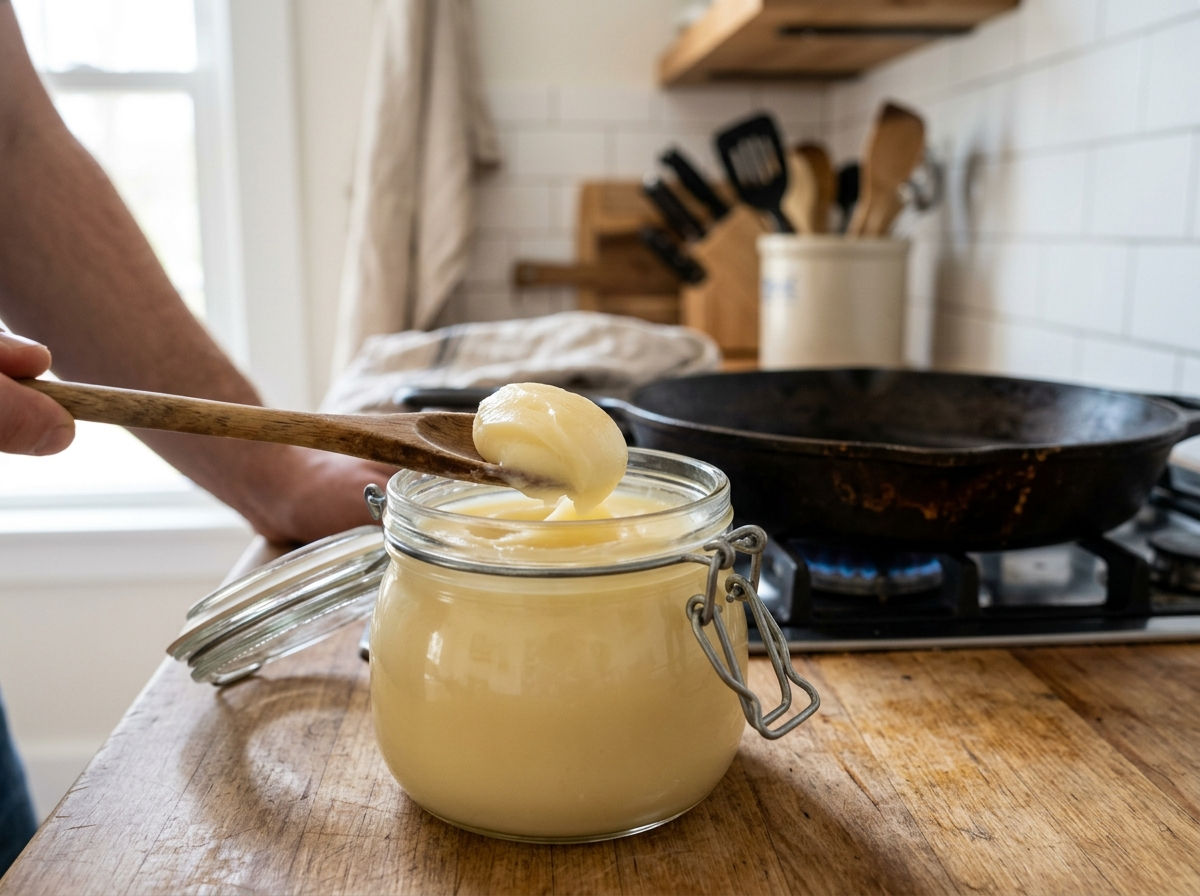
You’ve probably seen it popping up everywhere — TikTok videos of golden french fries, Instagram posts about “ancestral cooking,” and your foodie friend who suddenly won’t stop talking about frying everything in beef fat. But what is beef tallow, really? And is it actually worth keeping a jar of it next to your stove?
Let’s break it all down in plain English so you can decide for yourself.
What Is Beef Tallow, Exactly?
Beef tallow is rendered beef fat. That’s it. When you take the hard, waxy fat from around a cow’s kidneys and internal organs — a cut called suet — and slowly melt it down, strain out the impurities, and let it cool, you get tallow.
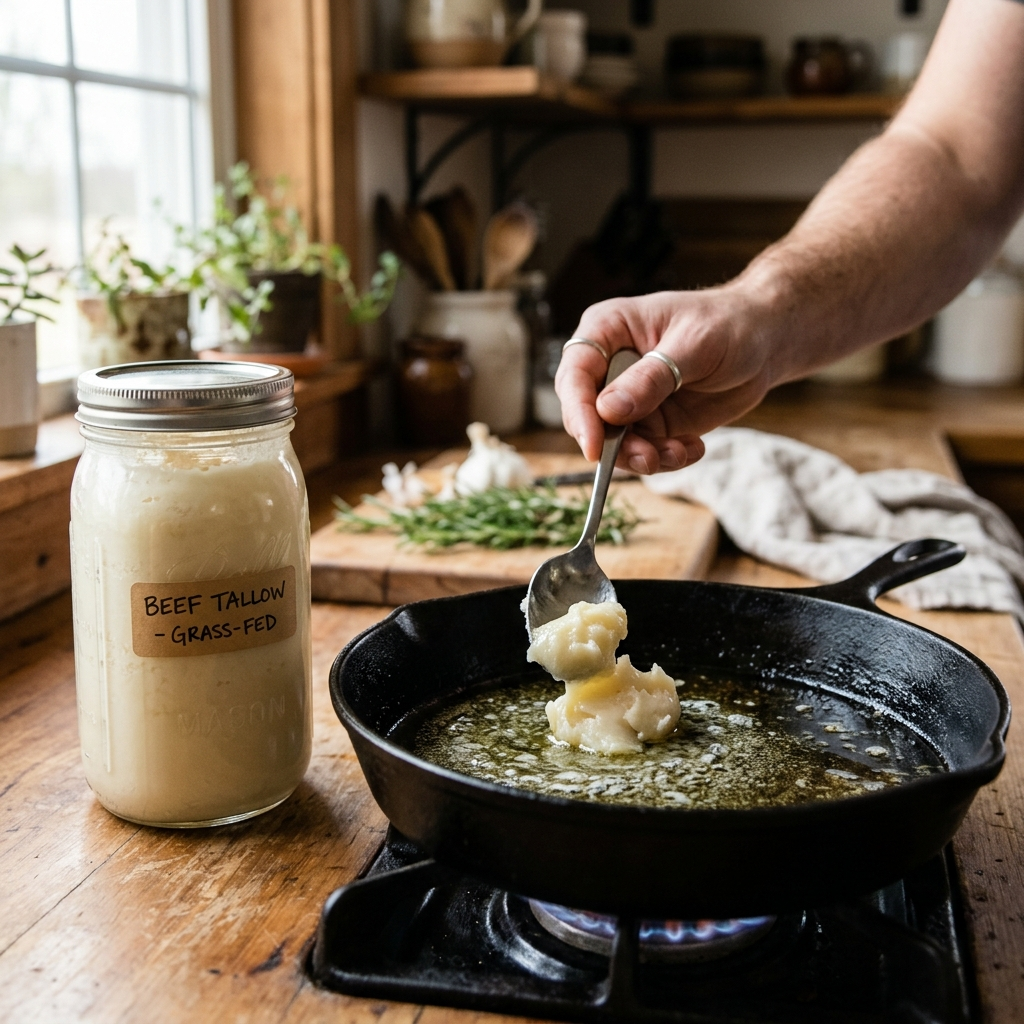
Think of it like clarified butter, but from a cow’s body fat instead of cream. The rendering process removes water and meat bits, leaving behind a pure, shelf-stable cooking fat. At room temperature, tallow is solid and white, kind of like a candle. Heat it up, and it melts into a clear, golden liquid.
Most people are surprised by how neutral it actually tastes. It has a mild, slightly savory flavor that doesn’t scream “beef” the way you might expect.
People have cooked with tallow for centuries. Before vegetable oils took over grocery store shelves in the mid-1900s, beef tallow and lard (rendered pork fat) were the go-to cooking fats in most kitchens. McDonald’s famously fried their french fries in beef tallow until 1990, which is why older customers still swear the fries tasted better back then. That wasn’t nostalgia talking — it was the fat.
How Is Beef Tallow Made?
The process is straightforward, and you can even do it at home if you’re feeling ambitious.
A butcher or processor starts with raw suet, chops it into small pieces, and heats it slowly over low heat. As the fat melts, the solid bits — called cracklings — separate out. You strain everything through cheesecloth, pour the liquid fat into a jar, and let it cool. The result is clean, white tallow that’s ready to cook with.
If you buy tallow at the store, it’s gone through this same basic process, just on a larger scale. Look for brands that say “100% grass-fed beef tallow” if you want a product with a richer nutrient profile. Grass-fed tallow tends to contain more fat-soluble vitamins like A, D, E, and K compared to grain-fed versions, though both work perfectly fine for everyday cooking.
Quick Fact: Rendering your own tallow at home takes about 3–4 hours on the stovetop. It fills your kitchen with a smell that’s somewhere between a Sunday roast and a candle factory. Totally normal, but maybe crack a window.
Cooking With Beef Tallow: What You Need to Know
This is where things get fun. Cooking with beef tallow is a lot like cooking with butter or coconut oil, but with a few key advantages that make it a favorite for high-heat work.
Smoke Point and Heat Tolerance
Beef tallow has a smoke point of around 400–420°F (about 205–215°C). That puts it right in the sweet spot for frying, searing, and roasting. For comparison, butter starts smoking at around 350°F, and extra virgin olive oil taps out near 375°F.
What does that mean for you in the kitchen? It means you can crank up the heat without your fat breaking down, smoking up your house, or developing off flavors. When a fat passes its smoke point, it doesn’t just taste bad — it releases compounds you’d rather not eat. Tallow gives you a wider safety margin, which is especially helpful if you’re choosing the best oil for homemade french fries or searing a thick steak at high heat.
Flavor Profile
Here’s the thing most people get wrong about tallow: they expect everything to taste like a hamburger. It doesn’t. Good-quality tallow has a very mild, slightly nutty, savory richness. It adds depth without taking over. Your roasted potatoes won’t taste like pot roast. They’ll just taste like the best roasted potatoes you’ve ever had.
That said, cheaper or poorly rendered tallow can have a stronger, gamier flavor. If you try tallow and it tastes overwhelmingly beefy, you probably got a lower-quality product. Try a different brand before writing it off entirely.
Texture and Crisp Factor
This is where tallow really shines, and it’s the reason so many cooks are obsessed with it. Tallow creates an exceptionally crispy exterior on fried and roasted foods. The science is simple: tallow is almost entirely fat with zero water content. Water is the enemy of crispiness because it steams the food instead of browning it. Since tallow is pure fat, it promotes rapid, even browning through the Maillard reaction — the same chemical process that gives a perfect steak crust its deep, savory color.
The first time I fried potatoes in tallow instead of vegetable oil, the difference was immediate. The outside shattered when I bit into it, and the inside stayed fluffy and steaming. It was the kind of fry that makes you close your eyes and nod slowly. Vegetable oil just can’t replicate that texture, no matter how hot you get it.
If you’re curious about how fat interacts with other flavor elements in your cooking, it helps to understand how acid and fat balance each other on the plate — tallow’s richness pairs beautifully with a squeeze of lemon or a splash of vinegar to cut through the heaviness.
Beef Tallow Uses in the Kitchen
So what should you actually cook with it? Tallow is versatile, but it truly excels in a few specific areas.
Frying and deep-frying is the number one use. French fries, fried chicken, doughnuts, and golden crisp french fries at home come out remarkably crunchy when tallow is in the pot. Its high smoke point and zero water content make it one of the best frying fats you can use.
Roasting vegetables is another winner. Toss potatoes, carrots, or Brussels sprouts in melted tallow before they hit the oven. You’ll get caramelized edges and a richness that olive oil struggles to match at high roasting temperatures.
Searing meat works beautifully too. Because tallow can handle high heat without burning, it’s ideal for getting a hard sear on steaks, pork chops, or chicken thighs. It also adds a subtle savory note that complements red meat especially well.
Sautéing and pan-frying are totally fine as well. Use it the same way you’d use butter or oil for sautéing vegetables or proteins on the stovetop. Just remember it’s solid at room temperature, so you’ll need to scoop it out and let it melt in the pan before adding your food.
Baking is a lesser-known but legitimate use. You can substitute tallow for butter or shortening in pie crusts, biscuits, and savory pastries. It creates an incredibly flaky texture because of its high fat content and firm structure when cold. Think of it like lard’s close cousin — and lard has been a baking staple for generations.
Seasoning cast iron is a bonus use that doesn’t involve eating. A thin coat of tallow baked onto a cast iron skillet creates a durable, non-stick patina. Many cast iron enthusiasts prefer it over flaxseed oil, which tends to flake over time.
Beef Tallow vs Butter: Which Should You Reach For?
This is the comparison everyone wants, so let’s be honest about it: beef tallow vs butter isn’t really an either/or situation. They each have strengths, and the best cooks use both depending on the job.
| Feature | Beef Tallow | Butter |
|---|---|---|
| Smoke point | 400–420°F | ~350°F |
| Flavor | Mild, savory, neutral | Rich, creamy, distinct |
| Texture at room temp | Solid, waxy | Soft, spreadable |
| Water content | Nearly zero | ~16% |
| Best for | Frying, searing, roasting | Baking, finishing, sauces |
| Shelf life (room temp) | Several months | A few days |
| Saturated fat | ~50% | ~51% |
| Cost | Moderate to high | Moderate |
As you can see, their fat profiles are actually quite similar. Both are roughly half saturated fat. The big practical differences come down to smoke point, water content, and flavor.
Butter brings a creamy, unmistakable richness that tallow can’t replicate. You wouldn’t want tallow in a beurre blanc sauce or melted over pancakes. But butter burns easily, which makes it a poor choice for high-heat searing or deep-frying. That’s where tallow steps in.
A smart approach is to keep both in your kitchen. Use tallow when you need high heat and maximum crispiness. Use butter when you want that classic creamy flavor and you’re cooking at lower temperatures. Many professional chefs actually blend the two — starting a sear in tallow and finishing with a knob of butter basted over the top for flavor. That’s a trick worth stealing for your next steak night.
Is Beef Tallow Healthy?
This is the question that sparks the most heated debates online, so let’s be straightforward about it rather than overselling either side.
Beef tallow is high in saturated fat — about 50% of its total fat content. For decades, mainstream nutrition guidelines have recommended limiting saturated fat because of its association with elevated LDL cholesterol and heart disease risk. The American Heart Association still advises keeping saturated fat to about 5–6% of your daily calories, and the Harvard T.H. Chan School of Public Health echoes a similar position on prioritizing unsaturated fats.
At the same time, the science on saturated fat has become more nuanced in recent years. Some large-scale reviews, including a widely cited 2010 meta-analysis published in the American Journal of Clinical Nutrition, found insufficient evidence to conclude that saturated fat alone directly causes heart disease. The type of saturated fat, the overall diet context, and individual genetics all seem to matter more than a simple “saturated fat is bad” rule.
Tallow also contains oleic acid, the same monounsaturated fat found in olive oil, which makes up roughly 42% of its fat profile. It provides fat-soluble vitamins (A, D, E, K), especially when sourced from grass-fed cattle. And unlike many heavily processed seed oils, tallow is minimally processed and contains no trans fats.
The honest answer? Tallow is a whole-food fat that’s been part of human diets for thousands of years. Used in moderation as part of a balanced diet, most current evidence suggests it’s fine for the average person. But if you have specific heart health concerns or your doctor has told you to limit saturated fat, that advice should take priority over anything you read on the internet.
Disclaimer: This is general nutritional information, not medical advice. If you have cardiovascular disease, high cholesterol, or other health conditions affected by dietary fat, talk to your doctor or a registered dietitian before making significant changes to your diet.
How to Store Beef Tallow
One of tallow’s biggest practical advantages is how easy it is to store. Because it’s pure fat with almost no water, bacteria have a very hard time growing in it. This is the same reason your ancestors didn’t need refrigeration for their cooking fats.
An unopened jar of commercially rendered tallow can sit in a cool, dark pantry for up to a year. Once you open it, you have options. If you use it frequently, keeping it on the counter is fine for a few weeks — just keep it away from direct sunlight and heat. Scoop out what you need with a clean, dry spoon every time. Introducing water or food particles into the jar is the fastest way to make it go rancid.
For longer storage, pop it in the fridge, where it’ll last six months to a year. You can also freeze tallow in portions for up to two years. It thaws quickly at room temperature because of its relatively low melting point (around 95–105°F).
If your tallow starts smelling sour, fishy, or just “off,” trust your nose and toss it. Rancid fat won’t make you acutely sick, but it tastes terrible and contains oxidized compounds you’d rather avoid. Proper storage and clean handling are key — and the same principles apply to keeping food safe at the right temperatures across your entire kitchen.
Frequently Asked Questions
Does beef tallow taste like beef?
Not really, no. High-quality, well-rendered tallow has a very mild, slightly nutty flavor that’s more neutral than you’d expect. It adds a subtle savory richness to food without making everything taste like a steak. If your tallow tastes strongly beefy, it may be lower quality or not fully rendered — try a different brand before giving up on it.
Can you use beef tallow for deep-frying?
Absolutely. Tallow is one of the best fats for deep-frying because of its high smoke point (400–420°F) and zero water content. It produces incredibly crispy results and doesn’t break down as quickly as many vegetable oils at high temperatures. Just make sure your frying temperature stays below the smoke point for the best results and safest cooking.
Is beef tallow the same as lard?
No. Tallow comes from beef (cattle), while lard comes from pork (pigs). They’re both rendered animal fats and can often be used interchangeably in cooking, but they have slightly different flavors, textures, and fat compositions. Lard tends to be softer at room temperature and has a milder flavor, while tallow is firmer and slightly more savory.
Where can I buy beef tallow?
You can find it at many health food stores, specialty butcher shops, and online retailers. Look for products labeled “100% grass-fed beef tallow” for the best quality. Some grocery stores also carry it in the cooking oil or baking aisle, though availability varies by location. You can also ask your local butcher for suet and render it yourself at home if you want the freshest option.
Beef tallow isn’t a magic ingredient, and it’s not a health miracle despite what some corners of the internet might tell you. It’s a simple, traditional cooking fat that happens to do a few things exceptionally well — namely, making fried and roasted foods absurdly crispy while standing up to high heat without burning.
If you’ve been curious about it, the easiest way to start is dead simple. Grab a jar, melt a couple of tablespoons in a skillet, and roast some potatoes at 425°F. The results will speak for themselves. From there, you’ll figure out where tallow fits into your cooking routine and where butter or olive oil still does the job better.
Good cooking is about having the right tool for the right moment. Tallow is one more tool worth adding to your collection. Now go make something crispy.


1 Comment