You bought a smoker. You loaded up a brisket at 8 AM, expecting lunch by noon. By 4 PM, the meat was still tough, your patience was gone, and your family was ordering pizza. Sound familiar?
That’s the moment most people realize they don’t actually understand low and slow cooking yet. They know the phrase, but the “why” and “how” behind it are a different story.
Low and slow cooking means cooking food — usually tough cuts of meat — at a low temperature (typically 225–275°F) for a long period of time, often 6 to 16 hours, until the connective tissue breaks down into silky, tender gelatin.
That one sentence is the whole idea. Everything else is just details. And those details are what turn a chewy disappointment into the kind of pulled pork that falls apart when you look at it.
The Basics of Low and Slow Cooking
At its core, low and slow is about patience. You’re trading high heat and speed for gentle, sustained warmth that transforms meat from the inside out.
Think of it this way. A steak is like a sprint — hot, fast, done in minutes. A brisket is a marathon. You can’t rush it without consequences.
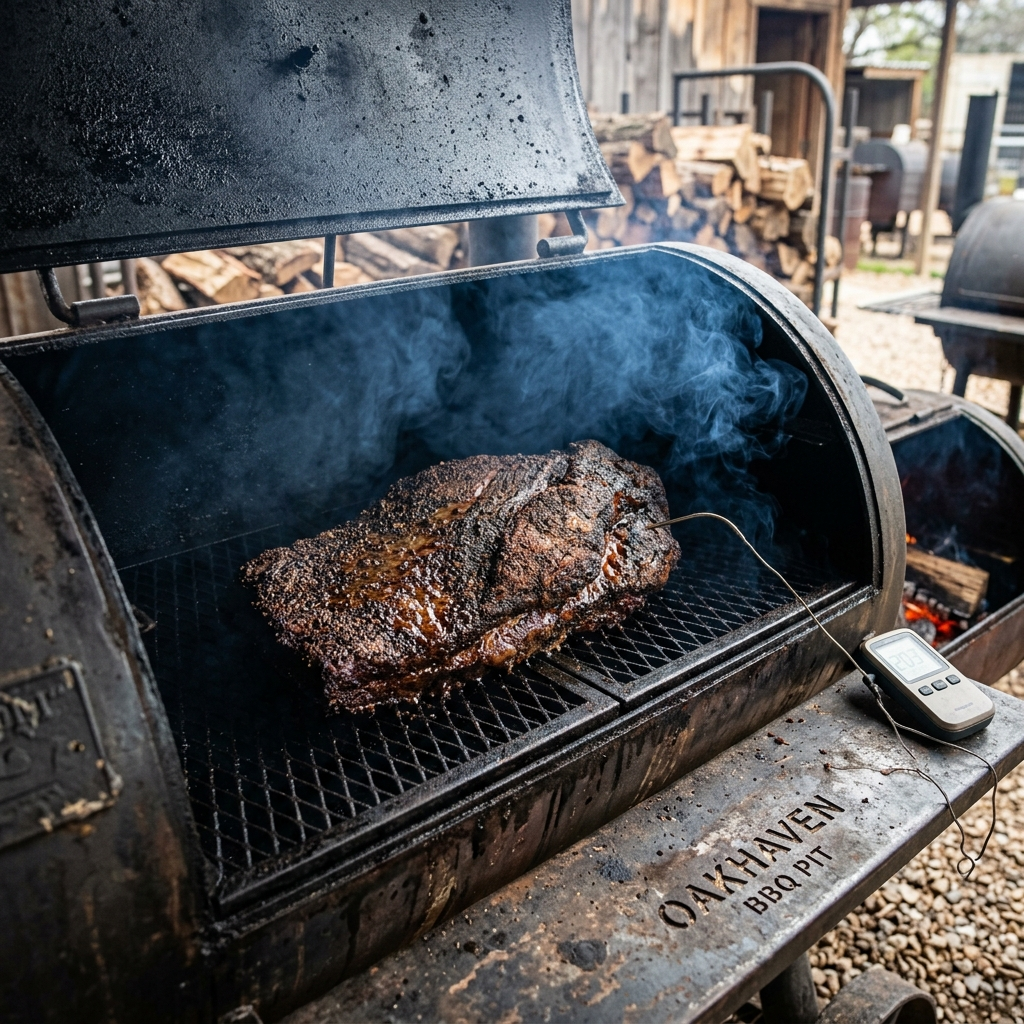
The “low” part refers to your cooking temperature. In the BBQ world, that usually means keeping your smoker or grill between 225°F and 275°F. Some pitmasters go even lower, around 200°F, for specific cooks. The “slow” part is the time commitment. A pork shoulder might need 10 to 14 hours. A full packer brisket can take 12 to 16 hours or more, depending on size and temperature.
You can do low and slow on a dedicated offset smoker, a pellet grill, a charcoal kettle with indirect heat, or even in your kitchen oven. The heat source matters less than the principle: steady, gentle heat over many hours.
This is also what separates true barbecue from grilling. If you’re curious about that distinction, there’s a deeper breakdown of grilling vs. BBQ that clears up a lot of confusion. Grilling is direct, high heat. Barbecue is indirect, low heat. They’re practically opposite techniques that happen to both involve fire.
Why Low and Slow Actually Works
Here’s where things get interesting, and where most beginner guides skip the details.
Tough cuts of meat — brisket, pork shoulder, beef ribs — are loaded with connective tissue. That tissue is mostly collagen, a tough protein that makes these cuts chewy and unpleasant if you cook them quickly. A fast sear on a brisket flat will give you something that tastes like a leather belt.
But collagen has a secret. When you expose it to gentle heat over a long period, it slowly converts into gelatin. Gelatin is soft, silky, and moisture-rich. It’s the same stuff that makes bone broth thick and jiggly when it cools in the fridge.
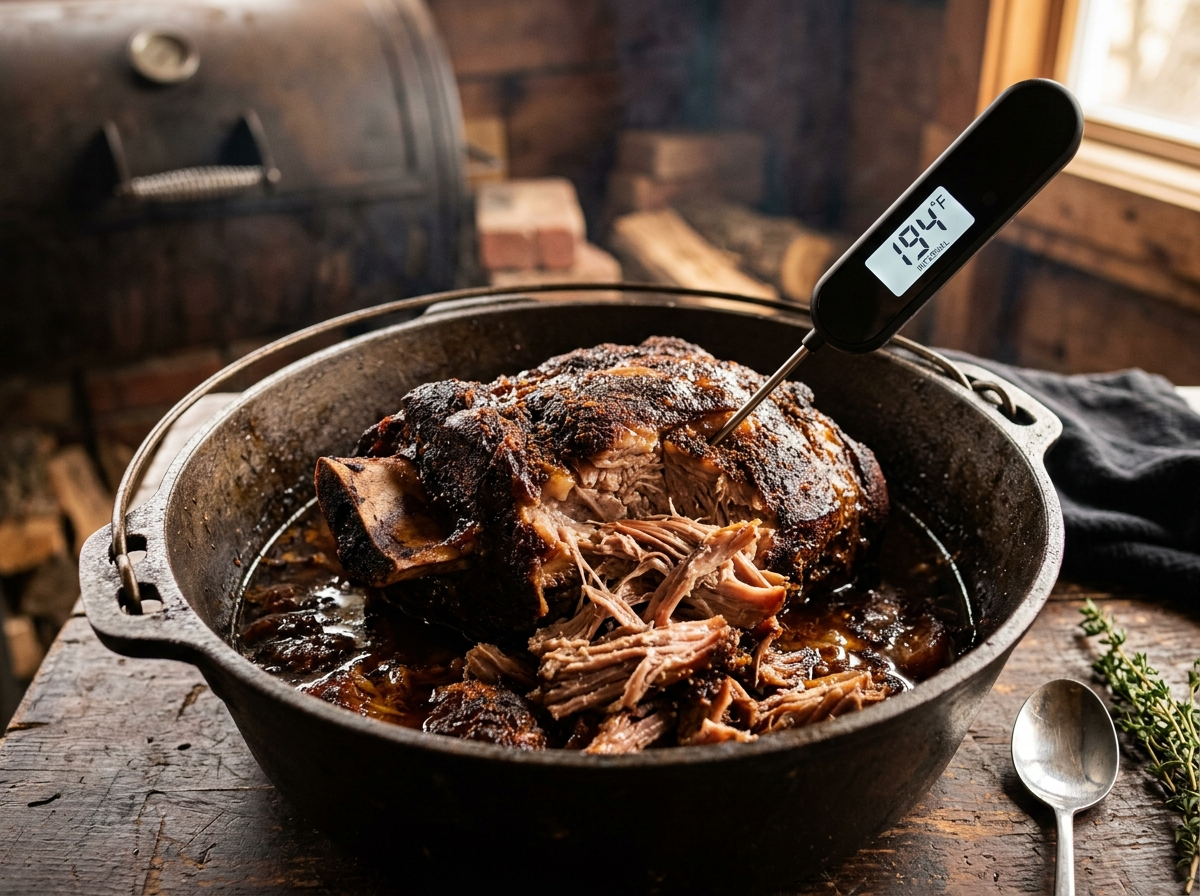
The conversion starts around 160°F internal temperature and picks up speed between 180°F and 200°F. That’s why you can’t just cook a pork shoulder to 165°F and call it done. At 165°F, the collagen hasn’t had enough time to break down. The meat is technically safe to eat, but it’ll be tough and dry. You need to push it to 195°F–205°F internal, and you need to get there slowly so the collagen has hours to do its work.
The way heat affects muscle fibers in meat is a big part of this equation. Muscle fibers tighten and squeeze out moisture as they heat up. If you blast them with high heat, they seize up fast and wring themselves dry. Low heat lets them relax more gradually, retaining more of their natural juices while the collagen melts around them.
The Role of Time vs. Temperature
This is the part that trips up a lot of home cooks. You might think you can just crank the heat to 350°F and get the same result in half the time. Technically, the collagen will still break down at higher temperatures. But the muscle fibers will overcook and dry out before the connective tissue finishes its job.
Low and slow works because it keeps the muscle fibers in a more forgiving temperature zone for longer, giving the collagen time to dissolve without squeezing all the moisture out of the meat. It’s a balancing act, and the low temperature is what keeps the balance in your favor.
Best Meats for Low and Slow Cooking
Not every cut of meat benefits from this method. A filet mignon would be ruined by 12 hours in a smoker. Low and slow is designed for the tough, hardworking muscles that animals use constantly — the shoulders, the chest, the ribs.
Pork shoulder (also called pork butt or Boston butt) is the most forgiving cut you can cook low and slow. It has a thick layer of fat and tons of connective tissue, which means it’s almost impossible to dry out. This is the cut behind great pulled pork, and it’s the one I’d hand to any beginner on their first smoke.
Beef brisket is the king of low and slow BBQ and also the most demanding. It’s a huge, flat muscle from the cow’s chest with a thick fat cap on one side and lean meat on the other. Getting both parts tender at the same time takes practice. But when you nail it, nothing else compares.
Beef ribs, pork ribs, and beef chuck roast are also excellent candidates. Chicken thighs and whole chickens can be cooked low and slow too, though they don’t need nearly as much time as red meat.
The common thread? These are all cuts with significant connective tissue and intramuscular fat. Lean, tender cuts like chicken breast, pork loin, or sirloin steak don’t have enough collagen to benefit from long cooking. They’ll just dry out.
Low and Slow Temperatures and Times
So what numbers should you actually aim for? Here’s a practical starting point.
For your cooker temperature, 225°F is the classic target. Many pitmasters prefer 250°F–275°F because it shortens the cook slightly without sacrificing tenderness. Going below 200°F is risky from a food safety standpoint because the meat spends too long in the temperature danger zone where bacteria multiply rapidly.
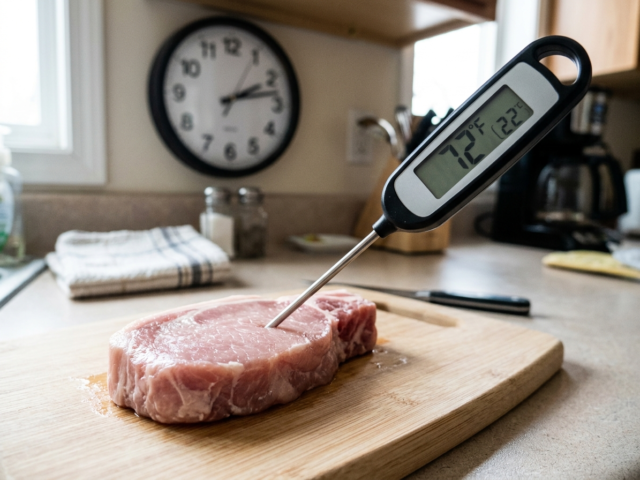
Food safety note: The USDA recommends that meat should not remain between 40°F and 140°F for more than two hours. When you’re cooking a large cut at low temperatures, the outer layers heat up quickly enough to stay safe, but it’s a real concern if your cooker temperature drops too low or if you’re cooking in cold weather. Always use a reliable meat thermometer to track your internal temps, and consult the USDA’s safe minimum internal temperature guidelines for the specific meat you’re cooking. This is general information and not a substitute for professional food safety guidance.
For internal temperatures, you’re looking at different targets depending on the cut. Pulled pork needs to reach 195°F–205°F to shred properly. Brisket is usually done between 195°F and 203°F, though tenderness matters more than the exact number — the probe should slide in like warm butter. Ribs are typically done around 190°F–203°F.
As for timing, plan on roughly 1 to 1.5 hours per pound for pork shoulder and brisket at 225°F–250°F. A 10-pound pork shoulder will take around 10 to 14 hours. A 14-pound packer brisket might take 12 to 16 hours. These are estimates, not guarantees. Every piece of meat is different, and your cooker’s actual temperature will fluctuate.
The Dreaded Stall
Somewhere around 150°F–170°F internal, your meat’s temperature will stop rising. It might sit there for two, three, even four hours. This is called the stall, and it’s the moment most first-timers panic and crank the heat.
Don’t. The stall happens because moisture is evaporating from the surface of the meat, cooling it down the same way sweat cools your skin. Eventually, the surface dries out enough that evaporation slows, and the internal temperature starts climbing again. If you want a full breakdown of why the BBQ stall happens and how to handle it, there’s a detailed explanation that’ll save you a lot of stress.
Some pitmasters wrap their meat in butcher paper or foil during the stall to push through it faster. This is called the Texas crutch, and it works by trapping moisture and stopping the evaporative cooling. It’s a perfectly valid technique, though it can soften the bark on the outside of the meat.
Speaking of bark, that dark, flavorful crust that forms on the outside of smoked meat is one of the best parts of low and slow cooking. If you want to understand what BBQ bark is and how to build it, it’s worth a read before your next cook.
Low and Slow vs. Hot and Fast
You might be wondering if low and slow is always the better choice. It’s not. It’s just a different tool for a different job.
Hot and fast cooking — think 350°F to 500°F and above — is perfect for tender cuts that don’t have much connective tissue. Steaks, burgers, chicken breasts, and vegetables all do better with quick, high heat. You want a good sear, a crispy exterior, and a juicy interior, and you want it in minutes, not hours.
Low and slow is for the tough cuts that need time to transform. You wouldn’t smoke a ribeye for 10 hours, and you wouldn’t sear a pork shoulder for 5 minutes per side. Each method matches the structure of the meat.
Some experienced pitmasters actually cook certain cuts hot and fast with great results — chicken and even ribs can be done at 300°F–350°F in a fraction of the time. If you’re curious about the other end of the spectrum, this guide to hot and fast meat cooking basics covers when and why you’d choose that route.
The real skill is knowing which method fits the cut in front of you.
Getting Started With Your First Low and Slow Cook
If you’re ready to try this for the first time, keep it simple. Start with a pork shoulder. It’s cheap, forgiving, and almost impossible to mess up badly.
Season it generously the night before with salt, pepper, and whatever rub you like. Let it sit uncovered in the fridge so the surface dries out a bit — that helps with bark formation.
Fire up your smoker or grill for indirect heat and get it stable at 225°F–250°F. Put the meat on, insert your meat thermometer probe into the thickest part, and then do the hardest thing in all of cooking: walk away.
Resist the urge to open the lid every 30 minutes. Every time you peek, you lose heat and add time to your cook. Trust the process. Check your fuel and your water pan if you’re using one, but otherwise, let the smoker do its job.
When the internal temperature hits the stall around 155°F, be patient. You can wrap it if you want to speed things up, or you can just wait it out. Either way, the temperature will start climbing again.
Pull the meat when it hits 195°F–205°F and the probe slides in with almost no resistance. Then let it rest. This is non-negotiable. Resting meat allows the juices to redistribute through the muscle fibers instead of running out onto your cutting board. Give a pork shoulder at least 30 to 60 minutes wrapped in a towel inside a cooler. Yes, a cooler. It works beautifully.
Frequently Asked Questions
What temperature is considered low and slow?
Low and slow cooking typically happens between 225°F and 275°F (107°C–135°C). Some cooks go as low as 200°F for specific applications, but dropping below that increases food safety risks because the meat spends too long in the bacterial danger zone. The sweet spot for most backyard BBQ is 225°F–250°F.
Can you cook low and slow in a regular oven?
Absolutely. Your oven is actually one of the most consistent low and slow tools you own because it holds a steady temperature better than most backyard smokers. Set it to 250°F–275°F, put your seasoned meat in a Dutch oven or roasting pan with a tight lid, and let it go. You won’t get smoke flavor, but the tenderness will be just as good. You can finish the meat on a hot grill for a few minutes at the end to add some char and smokiness.
Is low and slow cooking healthier than high-heat cooking?
It depends on what you mean by healthier. Low and slow cooking doesn’t produce the same level of heterocyclic amines (HCAs) and polycyclic aromatic hydrocarbons (PAHs) that form when meat is charred at very high temperatures, according to research from the National Cancer Institute. These compounds have been linked to increased cancer risk in animal studies. On the other hand, low and slow BBQ often involves fatty cuts of meat and sugary sauces, so the overall nutritional picture depends on the specific dish and your portion size. Neither method is inherently “healthy” or “unhealthy” on its own.
How do I know when my low and slow meat is actually done?
Temperature is your starting point, but tenderness is the real test. A pork shoulder at 195°F might still be tough, while one at 203°F might be perfect. The best way to check is to insert your thermometer probe into several spots. If it slides in with almost no resistance — like pushing a warm knife through butter — the collagen has broken down and the meat is done. If you feel tightness or resistance, it needs more time regardless of what the thermometer says.
Low and slow cooking isn’t complicated, but it does ask something most of us aren’t great at giving: patience. The science is straightforward. The technique is simple. The hard part is trusting the process when you’re six hours into a brisket and the temperature hasn’t moved in ninety minutes.
Start with a pork shoulder on a weekend when you don’t have anywhere to be. Keep your temperature steady, keep the lid closed, and let time do the heavy lifting. The first time you pull apart a piece of meat that practically shreds itself, you’ll understand why people get obsessed with this method.
Your smoker is waiting. Go make something incredible.

1 Comment