Bad fries are often an oil problem, not a potato problem. A weak choice can leave your homemade French fries pale, greasy, and limp, even if you cut the potatoes perfectly. If you’re stuck between peanut, canola, vegetable, olive, and avocado oil, the good news is simple: you don’t need chef training. You just need the right oil for high heat, clean flavor, and crisp edges
Why oil choice matters for French fries
Quick answer: For most home cooks, refined peanut oil gives the best classic fry result. Canola oil and a plain vegetable oil blend are the easiest budget picks. Refined avocado oil also works well, but it usually costs more than most people want to spend on a pot of fries.
Oil does more than keep potatoes from sticking. It carries heat into the fries, helps build the crust, and shapes the final flavor. Pick the wrong one, and your fries can turn heavy or oddly flavored before you even salt them.
The first thing people hear about frying oil is smoke point. That matters, but it isn’t the whole story. Most homemade fries cook best between 325°F and 375°F. So yes, you want an oil that can stay stable above that range. But you also want one that tastes clean, doesn’t cost a fortune, and stays pleasant for more than one batch.
Refined oils usually work better for deep frying than unrefined ones. Why? Refining removes bits that burn faster. That’s why refined peanut oil behaves very differently from some unrefined specialty oils, and why light or refined olive oil is not the same thing as extra virgin olive oil.
A lot of people assume the oil with the highest smoke point automatically wins. Not really. Think of it like buying tires for your car. Top speed matters, but grip, price, and how they feel on the road matter too. The same goes for fry oil.
Quick fact: Fresh oil at the right temperature often beats expensive oil used badly.
Did you know? Older fry shops often used animal fat, not bottled vegetable oil. If you’re curious about how fries changed over time, the background and history of homemade French fries is a fun read.
The best oil for homemade French fries
Here’s the short version before we get into the details.
| Oil | Approx. smoke point* | Flavor | Cost | Best for |
|---|---|---|---|---|
| Refined peanut oil | 450°F | Clean, slightly rich | $$ | Best overall classic fry taste |
| Canola oil | 400°F | Very neutral | $ | Best budget pick |
| Vegetable oil blend | 400–450°F | Neutral | $ | Easy everyday choice |
| Refined avocado oil | 500°F | Mild | $$$ | High heat, premium option |
| Rice bran or high-oleic sunflower oil | 440–450°F | Light, clean | $$–$$$ | Crisp fries with mild flavor |
| Light/refined olive oil | Up to 465°F | Mild olive note | $$–$$$ | Small batches if you already keep it |
*Smoke point can vary by brand and refinement.
Peanut oil
If you want fries that remind you of a solid diner or old-school burger spot, peanut oil is hard to beat. It handles the two-stage fry very well, and it stays steady at the temperatures fries need.
The flavor is mild, though some people notice a faint nutty note. In a good way, it gives fries a fuller taste without covering up the potato.
It also tends to stay cleaner than some cheap oils during frying. That makes it a favorite for people who fry often.
One caution: if you’re cooking for guests and anyone has a peanut allergy, don’t guess. Choose another oil. Allergy questions belong in the safety-first category.
Canola oil
Canola oil is the workhorse. It’s affordable, easy to find, and neutral enough that your fries taste like potatoes, not the bottle they came out of.
If you make fries once in a while and want one reliable option, canola is a very smart pick. It doesn’t have the same “special occasion” feel as peanut oil, but it performs well and keeps the grocery bill sane.
A lot of home cooks overthink this part. Truth is, canola makes very good fries if your temperature and technique are right.
Vegetable oil blends
A standard vegetable oil bottle often contains a mix of oils like soybean, canola, or corn oil. For fries, that can be perfectly fine.
Blends are common in restaurants because they offer stable frying, easy sourcing, and low cost. At home, they work for the same reasons. Just check the label so you know what you’re buying. One brand’s “vegetable oil” may behave a little differently from another.
If your goal is simple, golden fries on a normal weeknight, a plain vegetable blend does the job.
Avocado oil, rice bran oil, and sunflower oil
These oils usually show up in “best frying oil” debates because they handle heat well and taste fairly clean.
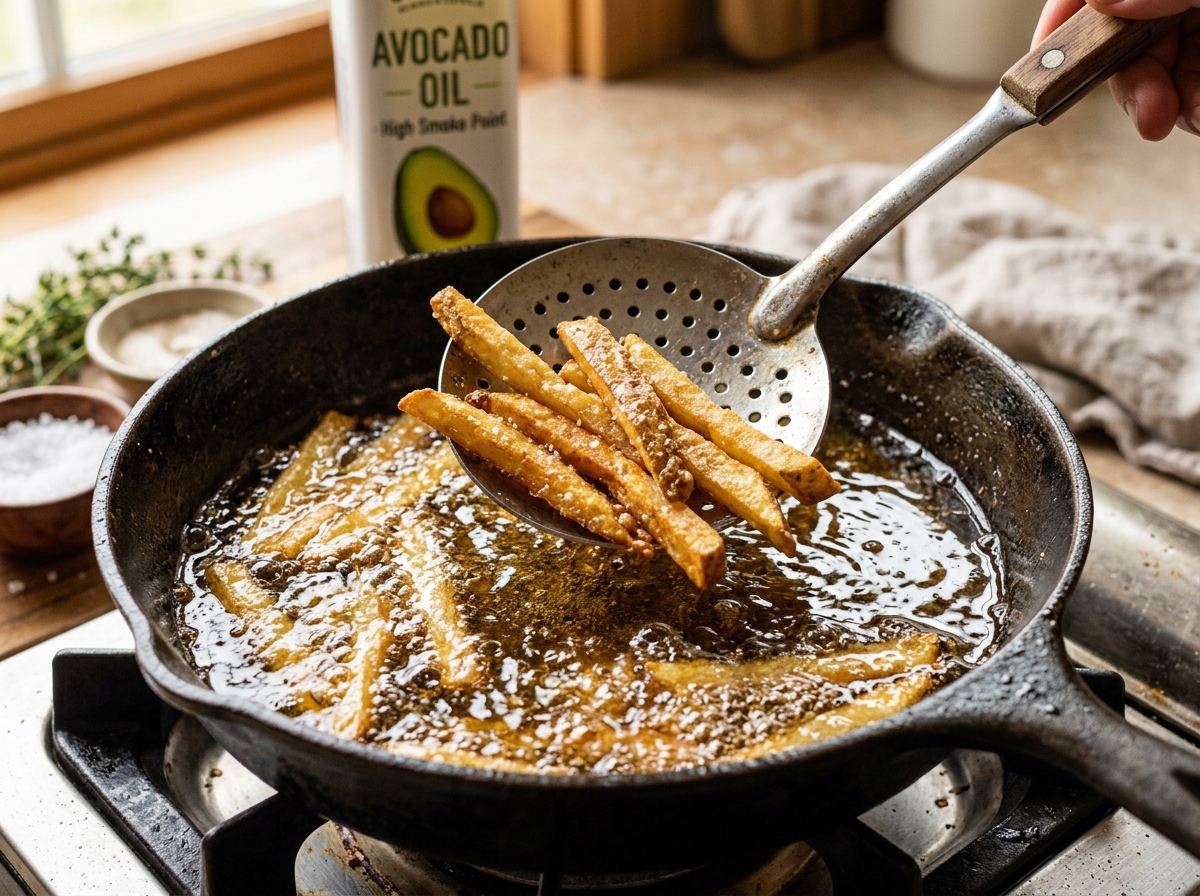
Refined avocado oil has a very high smoke point. That gives you a comfortable margin if your thermometer runs a little high or your burner heats unevenly. The downside is the price. Filling a pot with avocado oil can feel a bit painful.
Rice bran oil and high-oleic sunflower oil land in a nice middle zone. They fry beautifully, stay fairly light in flavor, and can give you crisp results. Availability is the main issue. In some stores, they’re easy to find. In others, not so much.
Light or refined olive oil
Yes, olive oil can work for fries. The key is choosing the right kind.
Light olive oil or refined olive oil can handle higher heat than extra virgin olive oil. That makes it more practical for frying. Extra virgin has stronger flavor, usually a lower smoke point, and a much higher price for this kind of job.
If you already keep refined olive oil at home and want to fry a small batch, go ahead. If you’re shopping just for fries, canola or peanut oil usually gives you a better value.
Oils to avoid or use with caution
Some oils sound good on paper but create trouble in real life.
Extra virgin olive oil and strongly flavored unrefined oils
Extra virgin olive oil is great for dressings, dipping bread, and finishing roasted vegetables. Deep frying fries in it? That’s usually not the best use.
Its flavor is more assertive, and it can smoke earlier than refined frying oils. The result can taste heavy, bitter, or just too “olive-y” for classic fries.
The same goes for strongly flavored oils like toasted sesame oil, walnut oil, and similar specialty oils. They have their place. French fries usually aren’t it.
Butter and low-smoke fats
Regular butter burns fast because of the milk solids. That means it can brown or burn before your fries are finished. You can use ghee for some frying jobs, but it changes the flavor a lot and isn’t what most people want for standard fries.
Coconut oil can technically fry, yet it gives a noticeable taste. If you love that flavor, fine. Most people expecting diner-style fries won’t love the surprise.
Old or overheated oil
This is the most ignored problem of all.
You can buy expensive avocado oil, baby the potatoes, and still end up with bad fries if the oil is old. Once oil smells stale, smoky, fishy, or burnt, it drags every batch down with it.
A tired oil also starts smoking sooner. That makes people blame the oil type, when the real issue is that the oil is done.
A common misconception is that “healthy” oil automatically means better frying. Not always. Deep frying is hard work for any oil. Stability, freshness, and temperature control still decide the result.
How to choose the right oil for your kitchen
You don’t need a perfect oil. You need the right fit for your habits, budget, and taste.
Best pick for most homes
If you want one easy answer and don’t feel like testing six bottles, buy canola oil.
It’s cheap, neutral, forgiving, and widely available. For a lot of people, that’s enough to make it the best choice.
Best pick for classic fry-shop flavor
Go with refined peanut oil if taste matters most.
It gives you that familiar fried-potato flavor many people chase at home. The crust stays crisp, and the inside still tastes like potato instead of fryer grease.
Best pick if you’re watching cost
For bigger batches or family fry nights, vegetable oil or canola oil makes the most sense.
You’ll use a fair amount of oil to fill a pot safely. Spending premium money on avocado oil for three pounds of fries isn’t always worth it unless you already prefer it for other reasons.
Best pick for air fryer or oven fries
If you’re not deep frying, your options open up a bit.
Oven fries and air fryer fries use only a light coating of fat, so canola, avocado, or even olive oil can all work well. In that setup, flavor matters more and oil breakdown matters a little less because the potatoes aren’t sitting in a pot of hot oil.
If you’d rather use less oil overall, this guide on how to fry at home without deep frying can help you get crispy results with a simpler setup.
Best pick if health or allergies matter
If you’re choosing oil with nutrition in mind, keep the bigger picture in view. Fries are still fried potatoes, no matter how fancy the bottle is.
Many people prefer canola, high-oleic sunflower, rice bran, or avocado oil because they handle heat well and keep a mild taste. That’s a reasonable approach. Still, portion size, oil freshness, and how often fries show up on the table matter just as much.
Medical note: If you’re picking oil for a heart-health plan, allergies, or another medical reason, use your doctor’s or dietitian’s advice over any general article.
How to fry homemade French fries for better texture
The best oil won’t save bad technique. Crisp fries come from good prep, dry potatoes, and steady heat.
Here’s a simple method that works well in a Dutch oven or deep pot.
- Choose russet potatoes.
Russets have the starch level most people want for classic fries. You get a fluffy center and a crisp shell. Yukon Golds can taste great too, but they usually turn out creamier and a little less crisp. - Cut them evenly.
Uniform size matters more than fancy knife skills. If one fry is thin and the next is thick, one will darken before the other finishes. - Soak if you want a cleaner crust, then dry very well.
A 30-minute soak in cold water can wash off some surface starch. After that, dry the fries thoroughly with towels. Wet potatoes are a splatter hazard, and they also steam instead of crisping. - Heat the oil to about 325°F for the first fry.
Use enough oil so the fries can float freely. Fry in small batches for about 4 to 6 minutes, until they look pale and tender, not brown. - Let the fries rest, then fry again at 375°F.
The second fry is where the color and crunch show up. Give them 2 to 4 minutes, depending on thickness. - Salt right away and serve hot.
Salt sticks best while the surface is still fresh from the fryer.
Think of the double fry like this: the first round cooks the inside, and the second round builds the shell. Skip that second step and the fries often taste good for a minute, then soften fast.
Pro tip: Don’t crowd the pot. Too many fries at once drop the oil temperature, and low temperature means greasy fries.
Warning: Never add damp potatoes to hot oil. Water and hot oil don’t play nicely.
If you want the full potato-prep side of the process, this guide to golden crisp French fries breaks it down in more detail.
A thermometer is worth every penny here. Guessing the oil temperature is one of the fastest ways to waste both potatoes and oil. The same rule shows up in other fried foods too, and this article on deep-frying accuracy for mozzarella sticks explains why a small temperature swing can change texture so quickly.
Can you reuse oil after frying fries?
Yes, you can usually reuse oil after frying potatoes, as long as you treated it well.
Potatoes are fairly kind to fry oil. They don’t leave behind as much mess as breaded chicken or battered fish. That means fry oil used only for French fries often stays usable longer than people expect.
How many times can you reuse it?
A clean batch of fry oil can often be reused 2 to 4 times at home. Sometimes more, sometimes less. It depends on the temperature, what you cooked in it, and how many crumbs or burnt bits are floating around.
If you overheated it once, its life gets shorter. If you fried several careful batches of plain potatoes and strained it well, it may stay in good shape for another round.
How to store used fry oil
Let the oil cool completely. Then strain it through a fine mesh strainer, cheesecloth, or coffee filter into a clean container.
Label it if you can. “Fries only” is a good note. You don’t want your next batch of potatoes tasting like onion rings or fish.
Keep it covered in a cool, dark place if you’ll use it soon. For longer storage, many people refrigerate it. Some oils cloud in the fridge, which looks odd but isn’t automatically a problem.
Signs the oil is done
Throw it out if you notice any of these:
- It smells sour, stale, or burnt
- It smokes much earlier than before
- It looks very dark or feels sticky
- It foams too much during frying
Once oil reaches that stage, it won’t magically recover.
How to dispose of it safely
Don’t pour used oil down the sink. It can clog pipes and make a mess later.
Let it cool, seal it in a container, and throw it out if your local area doesn’t offer oil recycling. Some towns and cities do take used cooking oil, so it’s worth checking.
4. FAQ Section
FAQ
What is the best oil for homemade French fries?
For most people, refined peanut oil is the best all-around choice for homemade French fries. It handles high heat well, tastes clean, and gives fries that classic crisp finish.
If you want a cheaper and easier option, canola oil or a basic vegetable oil blend is a strong second choice. The difference in results is often smaller than people expect, especially if your frying temperature is right.
What’s the healthiest oil for frying French fries?
No oil turns French fries into a health food. They’re still fried potatoes.
That said, many home cooks choose canola oil, high-oleic sunflower oil, rice bran oil, or refined avocado oil because they handle frying heat well and have mild flavor. If you need to follow a medical diet or avoid certain fats, let your doctor or dietitian guide that decision.
Can I use olive oil for homemade French fries?
Yes, but pick light or refined olive oil if you’re deep frying. It handles heat better and tastes milder than extra virgin.
Extra virgin olive oil isn’t the best fit for a full pot of fries. It costs more, adds stronger flavor, and can smoke earlier depending on the brand. For oven fries or air fryer fries, olive oil is much easier to use in a small amount.
What oil do restaurants use for fries?
Many restaurants use canola oil, soybean oil, peanut oil, or a blended frying oil. Large kitchens care about steady results, cost, supply, and allergen policies as much as flavor.
That’s one reason restaurant fries don’t all taste the same. The potato, the oil, the fryer temperature, and how often the oil gets changed all shape the final result.
Why are my homemade fries greasy instead of crispy?
The most common reason is oil that’s too cool. Fries soak up more oil when the temperature drops too far.
Other common causes include wet potatoes, overcrowding the pot, old oil, uneven cuts, and skipping the second fry. If your fries come out limp, don’t blame the potato first. Check the oil temperature and the batch size.
5. Conclusion
If you want the easiest path to better fries, start with refined peanut oil for the best classic flavor or canola oil for the best everyday value. Then do the simple things right: dry the potatoes well, use a thermometer, and fry in two stages.
That one change can fix a lot. Your next batch doesn’t need fancy tools or a restaurant fryer. Pick a solid oil, keep it fresh, and give the fries the heat they deserve. The crunch will take care of the rest.