In many taquerías, the best taco shows up with just onion, cilantro, salsa, and lime. That surprises a lot of people. If you’re asking what are the best taco toppings, the answer usually isn’t “add everything.” A great taco needs balance, not a pile-up. Once you know which toppings add freshness, heat, crunch, or creaminess, building tacos gets much easier.
The best taco toppings start with balance
A taco topping is “best” when it makes the filling taste better, not when it covers it up.
That’s the whole game.
The meat, beans, fish, or vegetables already bring their own flavor. Your toppings should add one or two missing pieces. Maybe the taco needs acid. Maybe it needs crunch. Maybe it needs something cool to calm the heat.
If you’ve ever eaten a taco that tasted messy, flat, or weirdly heavy, the problem usually wasn’t the filling. The topping combo was off.
If you want a more traditional frame of reference, our guide to authentic Mexican tacos shows how many classic tacos stay simple on purpose.
Balance beats quantity
Most good taco toppings do one of five jobs:
- Freshness
- Acidity
- Creaminess
- Crunch
- Heat
You don’t need all five every time.
A rich taco like carnitas may only need onion, salsa verde, and lime. A fried fish taco might want cabbage, crema, and a little pico de gallo. A bean taco may need pickled onions and cotija to wake it up.
Think about tacos like music. If every instrument plays at full volume, you don’t hear the song. If each one has a role, it works.
Quick fact: Many street tacos in Mexico stay small and lightly topped so you can taste the tortilla, the filling, and the salsa in one bite.
Match the topping to the filling
This is where people get stuck. They use the same taco toppings for everything.
That’s like putting ranch on every salad. It works sometimes. It also bulldozes delicate flavors.
Rich meats like barbacoa, birria, carnitas, and carne asada usually love bright toppings. Chopped onion, cilantro, lime, radish, and sharp salsa cut through the fat and make each bite feel lighter.
Milder fillings like grilled chicken, beans, mushrooms, or roasted cauliflower can handle a little more help. They often taste better with avocado, crema, pico de gallo, or crumbly cheese.
Crispy seafood tacos almost always need texture and a creamy element. That’s why cabbage and crema show up so often in Baja-style tacos.
If you’re still choosing the filling, this breakdown of Mexican taco meat types can help you pair toppings with the right protein from the start.
The best taco toppings to keep on hand
You don’t need a giant taco bar with 14 bowls and three kinds of shredded cheese.
A small set of smart toppings will cover most taco nights. The trick is choosing toppings that do different jobs, not versions of the same job.
Fresh toppings that wake up the taco
Fresh toppings are the fastest way to make a taco feel alive.
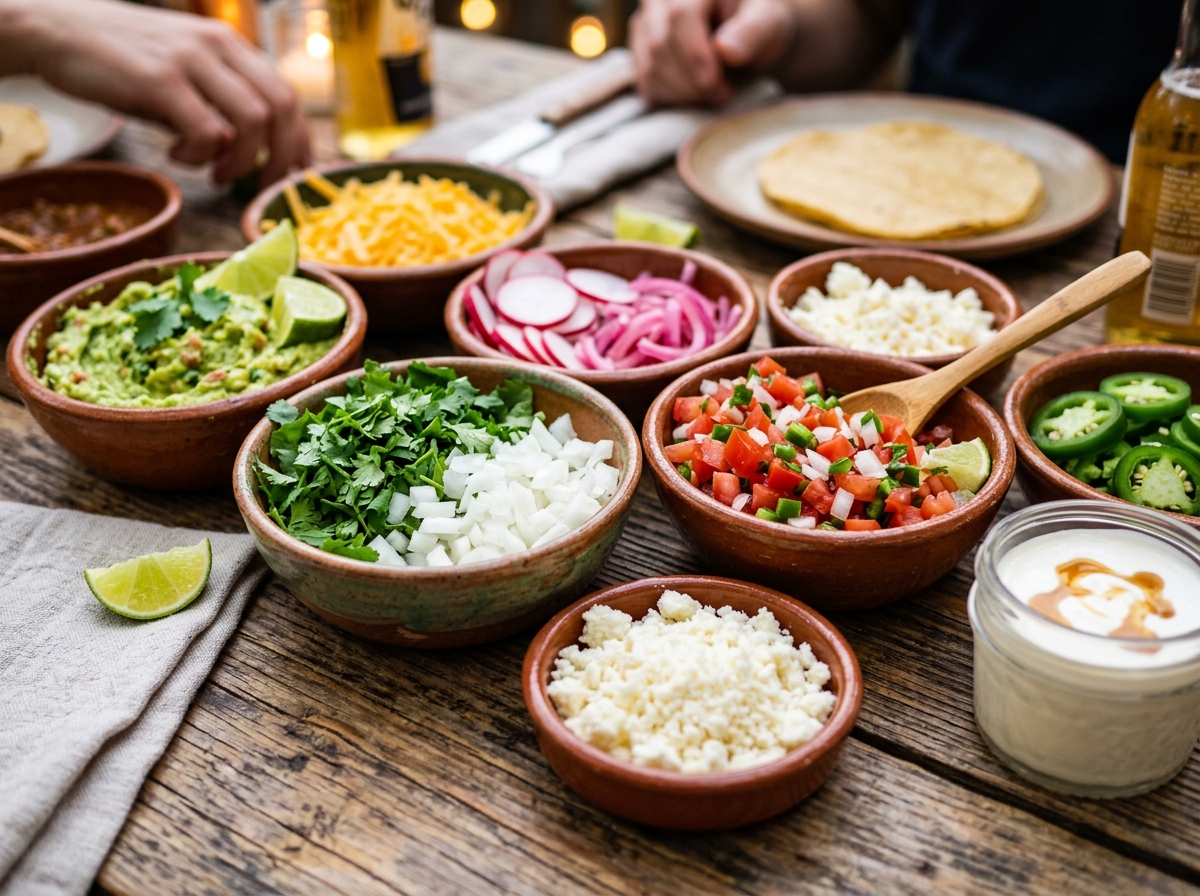
Chopped white onion is one of the classics for a reason. It brings sharpness and bite. White onion works especially well on carne asada, barbacoa, birria, al pastor, and carnitas.
Cilantro adds a bright, green note that makes rich fillings taste cleaner. If cilantro tastes soapy to you, that’s real for some people. Skip it and use extra onion, radish, or a little parsley.
Lime wedges might be the most underrated taco topping of all. A squeeze of lime wakes up meat, lifts salsa, and balances salt. If your tacos taste dull, lime often fixes it in two seconds.
Pico de gallo gives you freshness plus moisture. It’s made with chopped tomato, onion, cilantro, chile, and lime. It’s great on chicken tacos, fish tacos, shrimp tacos, and weeknight ground beef tacos.
Radishes don’t get enough attention at home. Many taquerías serve them on the side because they add peppery crunch and a clean finish.
Pro tip: Squeeze lime onto the filling itself, not just over the top. The flavor hits better that way.
Creamy toppings that soften heat
Creamy toppings can cool spicy tacos and add body to lean fillings.
Avocado is simple, buttery, and flexible. Sliced avocado works better than heavy guacamole when you want a cleaner taco. Guacamole brings more flavor but also more weight. On soft tacos with already-rich meat, too much guac can crowd the bite.
Mexican crema is thinner and tangier than sour cream. It drizzles easily and doesn’t feel as heavy. That makes it a great fit for fish tacos, chicken tacos, potato tacos, and roasted veggie tacos.
Sour cream still has a place, especially in Tex-Mex taco builds or crunchy taco shells with seasoned ground beef. It’s familiar, cool, and mild. It’s just not the default for every taco.
If you like regional taco styles, our guide to different types of Mexican tacos shows how toppings shift from one taco style to another.
Spicy toppings that add heat and depth
Not all spicy toppings taste the same.
Salsa verde usually brings tang and a sharper kick. It pairs really well with pork, chicken, and carnitas.
Salsa roja can be earthy, smoky, or bright, depending on the chiles and tomatoes. It often shines on beef tacos, barbacoa, and grilled meats.
Chipotle sauce adds smoky heat and a little sweetness. It works nicely on shrimp tacos, chicken tacos, and taco bowls.
Fresh jalapeños or serranos give a greener, more direct heat. Great if you like a clean burn.
Pickled jalapeños bring both spice and acid, which makes them extra useful on bean tacos, chicken tacos, and ground beef tacos.
Sauce matters more than people think. A bland taco can turn great with the right salsa, while the wrong one can drown a good filling. If you want pairing ideas, take a look at these best taco sauces.
Crunchy and pickled toppings for texture
A soft tortilla plus soft filling plus soft toppings can get boring fast.
That’s where crunch steps in.
Shredded cabbage is one of the best taco toppings for fish and shrimp because it stays crisp longer than lettuce. It also stands up well to crema and lime.
Lettuce works best in American-style tacos, especially crunchy shells with seasoned beef, cheddar, and tomato. It gives volume and coolness, but it can feel watery on small street-style tacos.
Pickled red onions add color, acidity, and a mild bite. They’re a strong choice for pork tacos, chicken tacos, cochinita-style flavors, and veggie tacos.
Pickled carrots or escabeche vegetables bring acid, spice, and a little snap. If you like taco cart food, you’ve probably seen these next to the salsa.
Did you know? Baja-style fish tacos often use cabbage instead of lettuce because cabbage stays crisp even with hot fish and creamy sauce.
Cheese and finishing touches
Cheese on tacos isn’t wrong. It just depends on the taco.
Queso fresco is mild, crumbly, and light. It works well on beans, potatoes, chicken, and veggie tacos.
Cotija is saltier and bolder. A little goes a long way. It’s great as a finishing sprinkle on grilled corn tacos, black bean tacos, and creamy fish tacos.
Cheddar fits classic American taco night better than small street tacos. It melts well and tastes good with ground beef, lettuce, tomato, and sour cream.
Monterey Jack is a softer, milder choice for melted tacos, quesadillas, and griddled taco styles.
Then there are the finishing extras: a pinch of sea salt, cracked black pepper, extra lime, or a dash of hot sauce. Tiny moves, big payoff.
Quick fact: Many tacos don’t need cheese at all. Rich meats already bring plenty of flavor and fat.
Best taco toppings for each kind of taco
You can make better choices faster if you stop asking, “What toppings go on tacos?” and start asking, “What toppings go on this taco?”
That one shift changes everything.
Carne asada, barbacoa, and beef tacos
Beef tacos usually bring deep, savory flavor. They don’t need much help.
For carne asada, stick with chopped onion, cilantro, salsa roja, and lime. That combo lets the grilled flavor stay front and center.
For barbacoa or other juicy shredded beef, onion and cilantro still work well, but a sharper salsa and radish can keep the taco from feeling too heavy.
For ground beef tacos, you can go two ways. If you want a more American taco-night style, use lettuce, tomato, shredded cheddar, and sour cream. If you want a lighter soft taco, use pico de gallo, avocado, and hot sauce instead.
Too much dairy on beef tacos can flatten the char and spices. Use it lightly.
Al pastor, carnitas, and pork tacos
Pork tacos love contrast.
Al pastor works best with onion, cilantro, salsa, and pineapple. The sweet-savory mix is part of what makes it special. If you want a closer look at that combo, this guide to tacos al pastor explains why those toppings work so well.
Carnitas are rich and crispy at the edges, so they need something bright. Lime, salsa verde, chopped onion, and pickled onions do the job beautifully.
For smoky pulled pork or slow-cooked pork shoulder tacos, cabbage and crema can work too, especially if you’re mixing Mexican and Tex-Mex styles at home.
Chicken tacos
Chicken has a lighter flavor, so toppings matter more.
For grilled chicken tacos, try pico de gallo, avocado, cotija, and a green salsa. That gives you freshness, richness, salt, and heat without making the taco too heavy.
For shredded chicken or tinga-style chicken, crema and pickled onions can be a great match because they soften the spice and add brightness.
If you like lettuce on chicken tacos, that’s fine. It works better here than on many beef tacos because chicken doesn’t fight with it.
A simple combo that rarely fails: chicken, pico de gallo, avocado, lime.
Fish and shrimp tacos
Fish tacos live or die on texture.
For fried fish tacos, shredded cabbage, crema, lime, and salsa are hard to beat. You want crunch, coolness, and a little acid to cut the fried coating.
For grilled fish or shrimp tacos, avocado, pico de gallo, pickled onion, and a mild chipotle sauce make a strong combo.
This is also where tortilla choice matters a lot. Corn tortillas give a more classic flavor and pair well with grilled seafood, while flour tortillas can feel softer and bigger for loaded taco builds. If you’re choosing between the two, this guide on corn vs flour tortillas breaks down what changes.
Warning: Don’t drown fish tacos in sauce. Seafood gets lost faster than beef or pork.
Bean, mushroom, cauliflower, and potato tacos
Vegetarian tacos need toppings with energy.
Beans and potatoes love cotija, salsa, pickled onions, cabbage, and lime. Those toppings add salt, acid, and crunch to fillings that can otherwise taste soft and starchy.
Mushroom tacos pair well with onion, salsa verde, avocado, and a little queso fresco. Mushrooms already have earthy depth, so they don’t need much cheese.
Roasted cauliflower or sweet potato tacos can handle bolder toppings like chipotle crema, cabbage, and jalapeños because the base is sweet and mild.
If you’re feeding a group, veggie tacos are often the easiest place to offer both creamy and spicy topping options without clashing.
How to build a taco that tastes balanced
Knowing the best taco toppings is only half the job. The way you layer them matters too.
A taco should stay easy to hold, easy to bite, and easy to taste in one mouthful.
Use the simple 3-part topping formula
If you want a taco that almost always works, build it like this:
- Pick one fresh element like onion, cilantro, pico, or cabbage.
- Add one bold element like salsa, pickled onion, jalapeño, or chipotle sauce.
- Finish with one soft element like avocado, crema, or a light cheese.
That’s it.
You can stop there and get a balanced taco most of the time.
A carne asada taco might be onion + salsa roja + lime.
A chicken taco might be pico + avocado + cotija.
A fish taco might be cabbage + crema + salsa verde.
Build in the right order
Start with a warm tortilla. Cold tortillas crack and tear. Warm ones bend and hold the filling better.
Then add the filling in a line through the center. Don’t spread it all over the tortilla. That just makes the edges slippery.
After that, add the toppings that sit closest to the meat, like onion or cabbage. Put wet sauces and crema on last.
If your taco gets juicy, a second tortilla underneath can save the whole thing. That’s one reason many taquerías serve tacos with two corn tortillas.
Know how much topping is too much
A taco isn’t a salad bowl.
If you can’t close it with one hand, you’ve probably gone too far.
A good rule: the toppings should be about one-third of the total bite, not more. The filling should still lead. The tortilla should still matter.
Pro tip: If you’re setting up a taco bar for a party, offer fewer toppings but give them range. One fresh option, one creamy option, one crunchy option, and two salsas usually beat a crowded table full of random bowls.
Common taco topping mistakes
Most bad tacos don’t fail because of one terrible ingredient. They fail because small choices stack up.
Using too many wet toppings
Pico de gallo, salsa, sour cream, guacamole, hot sauce, and juicy meat can turn a taco into soup fast.
That doesn’t mean you should avoid them. Just use them with a lighter hand.
Drain watery pico a bit before serving. Spoon salsa instead of pouring it. Keep crema as a drizzle, not a blanket.
Treating every taco the same
Lettuce, cheddar, and sour cream can be perfect on a crunchy ground beef taco.
They can also feel out of place on al pastor or carne asada.
That’s the part people miss. Taco toppings aren’t one-size-fits-all. A taco from Los Angeles, Mexico City, or Baja California may follow a totally different logic depending on the filling and style.
Forgetting acid
A taco without acid often tastes flat, even if the filling is great.
Lime, pickled onions, salsa verde, pickled jalapeños, and even a tomato-based salsa can fix that. If your taco tastes heavy, add brightness before you add more cheese.
Common misconception: The best taco toppings are the most toppings. In real life, the best tacos usually keep it tighter than that.
4. FAQ Section
FAQ
What are the most traditional taco toppings?
The most traditional taco toppings in many Mexican styles are chopped onion, cilantro, salsa, and lime. That’s especially true for street tacos like carne asada, barbacoa, carnitas, and al pastor. Some regions add radish, cucumber, pickled onions, or pineapple. The main idea stays the same: keep the toppings simple enough that you can still taste the filling.
What taco toppings go best with ground beef tacos?
For classic ground beef tacos, good toppings include shredded lettuce, diced tomato, cheddar, sour cream, jalapeños, and salsa. If you want a lighter version, use pico de gallo, avocado, lime, and hot sauce instead. Ground beef handles both Tex-Mex and fresher toppings well, so you’ve got room to play.
What are the best toppings for fish tacos?
The best fish taco toppings are usually shredded cabbage, crema or a light sauce, lime, salsa, and avocado. Cabbage adds crunch and holds up better than lettuce. Lime cuts through richness. A creamy drizzle balances heat and fried texture. If the fish is grilled, pico de gallo and pickled onion also work really well.
Should tacos have cheese?
Some tacos should. Some really don’t need it.
Cheese works well on ground beef tacos, bean tacos, potato tacos, chicken tacos, and many Tex-Mex styles. On small street tacos with rich meats like carne asada or al pastor, cheese often adds more weight than value. If you do use cheese, choose the style that fits the taco: cotija or queso fresco for lighter finishing, cheddar or Monterey Jack for fuller, melted flavor.
What’s better on tacos, sour cream or crema?
Crema is usually better for a lighter, more traditional taco feel because it’s thinner and tangier. It drizzles well and doesn’t overpower the filling. Sour cream is thicker and richer, so it works nicely on American-style tacos, taco salads, and loaded crunchy tacos. Neither is wrong. It depends on the taco you’re building.
5. Conclusion
A better taco starts with balance
The best taco toppings aren’t the fanciest ones or the longest list on the table. They’re the toppings that make your taco taste brighter, cleaner, crunchier, or just more complete.
So next taco night, don’t set out every topping you own. Pick a filling, choose two or three toppings that support it, and taste as you go. That’s usually the move that turns a decent taco into one you’ll want again.