
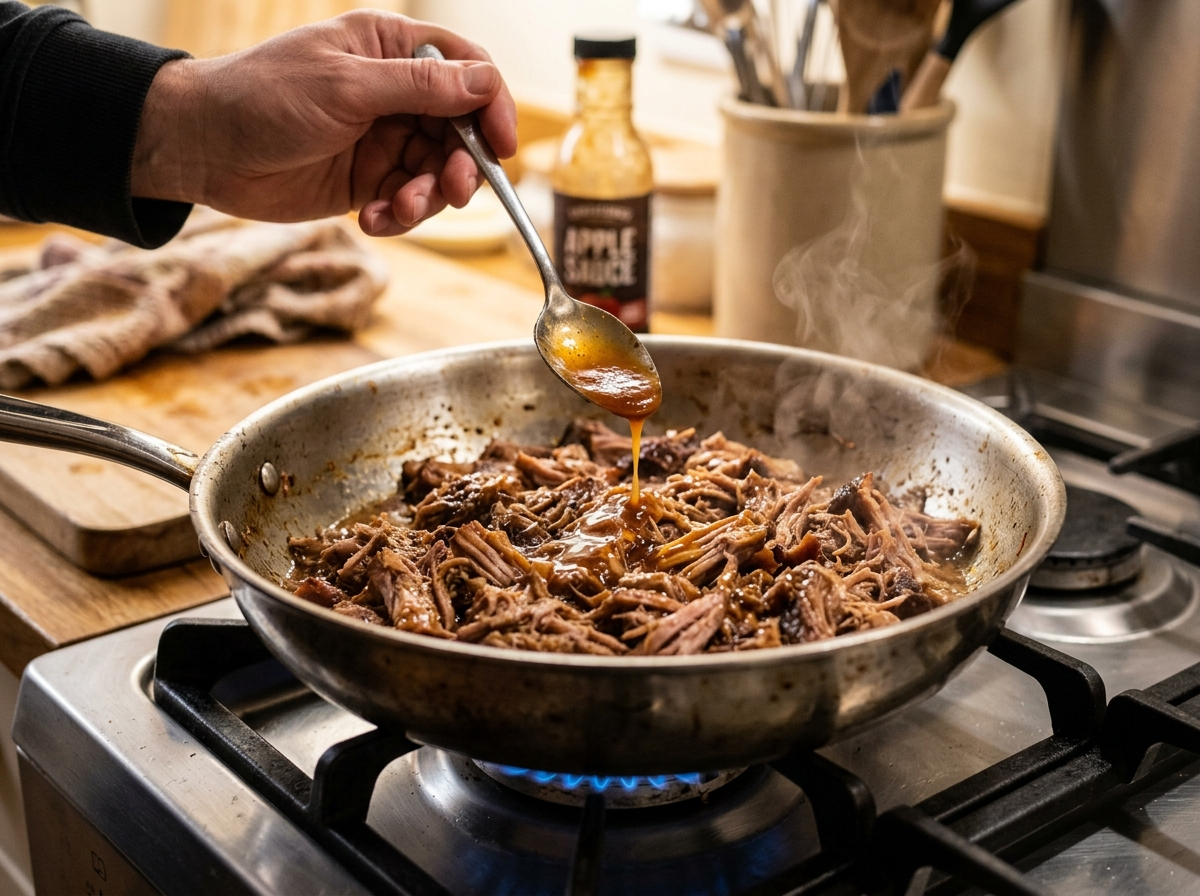
You spent eight hours babysitting a pork shoulder, and the result was glorious — tender, juicy, falling-apart perfection. Now it’s the next day, you’ve got a container of leftovers in the fridge, and you’re staring at it wondering how to bring it back to life without turning it into sad, dry shreds. I’ve been there more times than I’d like to admit, and I’ve also made the mistake of just blasting it in the microwave on high, only to end up with something that tasted like pork-flavored jerky. The good news? Reheating pulled pork without drying it out is totally doable, and it comes down to a few simple principles that work no matter which method you choose.
Why Pulled Pork Dries Out When You Reheat It
Before we get into the how, it helps to understand the why. When you first cook a pork shoulder low and slow, the tough collagen in the meat slowly breaks down into gelatin, and the intramuscular fat renders into the fibers. That’s what gives freshly pulled pork its luscious, melt-in-your-mouth texture. But once that meat cools down and sits in the fridge overnight, some of that moisture redistributes and some of it simply evaporates. The gelatin firms back up, and the fat solidifies into a waxy layer.
When you reheat the meat aggressively — say, in a 400°F oven or a microwave on full power — you drive off the remaining moisture faster than the fat can re-liquefy and coat the fibers. The result is dry, stringy meat that no amount of BBQ sauce can fully rescue. This is the same principle behind why heat affects muscle fibers in meat the way it does: squeeze the fibers too hard with high heat, and they wring out every drop of moisture they’re holding.
The fix is gentle, gradual heat paired with a little added moisture. That’s the short version. Now let’s get into the details.
The Golden Rules for Reheating Pulled Pork
No matter which reheating method you pick, a handful of principles apply every single time. Think of them as your non-negotiables.
Always add liquid. Pulled pork needs a splash of something wet to create steam and replace the moisture it lost in the fridge. Apple juice is the crowd favorite because it complements the smoky, slightly sweet flavor of BBQ pork. Chicken or beef broth works great too, and if you’re in a pinch, even a couple tablespoons of water will do the job. The point is to create a humid environment around the meat as it warms up.
Keep the heat low. You’re not cooking the pork — it’s already cooked. You’re just warming it through. Aim for temperatures around 250°F to 300°F in the oven, or medium-low on the stovetop. High heat is the enemy of juicy leftovers. This is essentially the same low and slow philosophy you used to cook the pork in the first place, just on a much smaller scale.
Cover the meat. Whether you use aluminum foil, a lid, or a damp paper towel in the microwave, trapping steam around the pork is what keeps it moist. An uncovered pile of meat in a hot oven is basically a dehydration experiment.
Reheat to 165°F internal temperature. This is the safe minimum for all reheated leftovers according to the USDA Food Safety and Inspection Service. Use a meat thermometer to check — don’t guess. And if you want to understand why that temperature range matters so much, it’s worth reading up on the food safety temperature danger zone where bacteria multiply fastest.
Food Safety Note: The 165°F reheating guideline is a general food safety standard from the USDA. If you have specific dietary or health concerns, consult a food safety professional. This article provides general information, not personalized safety advice.
Store It Right From the Start
Here’s something most reheating guides skip entirely: how you store the pork in the first place has a huge impact on how it reheats the next day. If you toss a big pile of hot pulled pork into a deep container and shove it in the fridge, the meat at the bottom will steam and get soggy while the top layer dries out from exposure to cold, dry fridge air.
Instead, let the pork cool to room temperature — but don’t leave it out longer than two hours for food safety. Then store it in a shallow, airtight container so the layer of meat isn’t too thick. If you’ve got a lot, split it into two or three containers. Pour any leftover cooking juices or a splash of broth over the top before sealing the lid. That extra liquid acts as a buffer against drying out in the fridge. Stored this way, pulled pork keeps well in the fridge for three to four days and in the freezer for up to three months.
How to Reheat Pulled Pork in the Oven
The oven is the best way to reheat pulled pork when you’ve got a large batch — think a full aluminum pan of leftovers from a weekend cookout or enough to feed a crowd for game day. It takes a little longer than the stovetop or microwave, but the results are the most consistent and the closest you’ll get to that fresh-off-the-smoker texture.
Start by preheating your oven to 250°F. Yes, that feels low, and that’s the point. While the oven heats up, pull the pork out of the fridge and let it sit on the counter for about 15 to 20 minutes. Taking the chill off the meat means it’ll reheat more evenly, similar to why resting meat matters after cooking — you’re managing the temperature gradient so the outside doesn’t overcook before the inside is warm.
Place the pulled pork in an oven-safe dish or a disposable aluminum pan. Drizzle about a quarter cup of apple juice, broth, or even leftover BBQ sauce thinned with a little water over the top. You don’t want to drown it — just enough to create steam. Cover the dish tightly with aluminum foil, making sure there are no gaps where steam can escape.
Slide it into the oven and let it warm for about 20 to 30 minutes for a moderate batch of roughly two to three pounds. If you’re reheating a massive amount, it could take 40 to 45 minutes. Check the internal temperature with a thermometer at the thickest part of the pile. Once it hits 165°F, you’re done. Give it a quick stir, add a little more sauce if you like, and serve.
Here’s a practical detail most articles skip: if your pulled pork has a lot of bark mixed in, the bark pieces can dry out faster than the interior meat. Tuck those bark-heavy bits toward the center of the pan where they’ll stay in contact with the steam and the juicier meat around them.
Reheating Frozen Pulled Pork in the Oven
If you froze your pulled pork — smart move, by the way, because it freezes beautifully — the oven handles it well. The best approach is to thaw it in the fridge overnight and then reheat using the method above. But if you’re in a rush, you can reheat from frozen. Plan on roughly 45 to 60 minutes at 250°F for a frozen block of pulled pork. Break it apart with a fork halfway through once it’s thawed enough to separate, so the heat can reach the center. Add a little extra liquid since frozen meat loses more moisture during the thaw process.
How to Reheat Pulled Pork on the Stovetop
The stovetop is your best bet when you’re reheating a single serving or two and don’t want to wait for the oven to preheat. It’s fast, it gives you a lot of control, and you can adjust the moisture level in real time.
Grab a skillet or saucepan and set it over medium-low heat. Add your pulled pork along with a few tablespoons of liquid — apple juice, broth, or a splash of water with a spoonful of BBQ sauce stirred in. The liquid should coat the bottom of the pan lightly, not pool up like a soup.
Stir the pork gently every couple of minutes, breaking up any cold clumps so the heat distributes evenly. The whole process should take about 5 to 10 minutes depending on how much meat you’re warming. You’ll know it’s ready when the pork is steaming throughout and a thermometer reads 165°F in the center of the pile.
One thing I’ve learned from experience: resist the urge to turn the heat up to speed things along. I once tried to reheat a big bowl of pulled pork on medium-high because I was hungry and impatient, and the bottom layer started to crisp and dry out before the top was even warm. Medium-low is the sweet spot, and patience pays off every time.
How to Reheat Pulled Pork in the Microwave
Let’s be honest — sometimes you just need a quick plate of pulled pork and the microwave is the fastest route. There’s no shame in this. The microwave gets a bad reputation for drying out meat, and that’s fair if you do it wrong, but you can absolutely get decent results if you follow a couple of extra steps.
Start by placing a single serving of pulled pork in a microwave-safe bowl. Add a tablespoon or two of liquid — apple juice or broth works best here — and toss the meat gently so the liquid coats the shreds. Cover the bowl with a damp paper towel. The damp towel is the key trick. It creates a little steam chamber inside the bowl and prevents the microwave from zapping all the moisture straight out of the meat.
Heat on medium power, around 50% to 70%, not full blast. This is where most people go wrong. Full power heats the outer edges of the meat to scorching temperatures while the center stays cold, and those overcooked edges turn rubbery. Medium power takes a little longer — about 1 to 2 minutes per serving — but the heat distributes much more evenly.
Pause halfway through to stir the pork and check how it’s warming up. If it looks dry, add another splash of liquid. Once it’s hot all the way through, let it sit covered for about 30 seconds. The residual heat will finish the job, much like how carryover cooking continues to work even after you pull meat off the heat source.
How to Reheat Pulled Pork on a Smoker or Grill
If you’ve still got the smoker fired up or you want to add a fresh layer of smoke flavor to your leftovers, reheating on a smoker or grill is a fantastic option. This method takes the longest, but the flavor payoff is real.
Set your smoker or grill up for indirect heat at around 225°F to 250°F. Place the pulled pork in a disposable aluminum pan, add a quarter cup of apple juice or broth, and cover the pan tightly with foil. Put it on the indirect side of the grill or in the smoker and let it warm for 30 to 45 minutes, checking the internal temp until it reaches 165°F.
If you want to crisp up the bark a bit, remove the foil for the last 5 to 10 minutes and let the pork catch a little direct heat. Just keep a close eye on it — the line between “nice crispy edges” and “dried out” is thinner than you’d think.
Reheating Method Comparison
| Method | Best For | Time | Difficulty |
|---|---|---|---|
| Oven | Large batches, best texture | 20–45 min | Easy |
| Stovetop | 1–2 servings, quick results | 5–10 min | Easy |
| Microwave | Single serving, fastest option | 1–3 min | Very easy |
| Smoker/Grill | Adding fresh smoke flavor | 30–45 min | Moderate |
Frequently Asked Questions About Reheating Pulled Pork
Can you reheat pulled pork more than once?
Technically yes, but it’s not ideal. Every time you reheat and cool the meat, you lose more moisture and increase the time it spends in the temperature danger zone where bacteria can grow. The safest and tastiest approach is to only reheat the portion you plan to eat and leave the rest in the fridge. If you’ve got a big batch, divide it into single-serving portions before storing so you’re only warming up what you need each time.
What liquid is best for reheating pulled pork?
Apple juice is the most popular choice because its mild sweetness pairs naturally with smoky BBQ flavors. Apple cider vinegar diluted with a little water adds a nice tang if your pork needs brightening up. Chicken broth or beef broth are excellent neutral options that add moisture without changing the flavor profile much. You can also thin your favorite BBQ sauce with a splash of water and use that. The specific liquid matters less than the fact that you use one — the biggest mistake is reheating the pork completely dry.
How do you know when reheated pulled pork is done?
The only reliable way is to use an instant-read meat thermometer and check that the internal temperature has reached 165°F. Visual cues help too — the pork should be steaming hot throughout, the fat should look glossy and melted rather than white and waxy, and the meat should feel tender when you stir it with a fork. If the center of the pile is still cool to the touch or the thermometer reads below 165°F, give it more time.
Can you reheat pulled pork in a slow cooker?
Yes, and it works quite well for large batches. Set the slow cooker to low, add the pork with a half cup of broth or apple juice, cover, and let it warm for two to three hours. Stir once or twice during the process. The slow cooker’s gentle, even heat is ideal for keeping the meat moist, though it does take longer than the oven. This is a great option if you’re prepping for a party and want the pork to stay warm for hours without babysitting it.
Reheating pulled pork doesn’t have to be a gamble. Whether you go with the oven for a big batch, the stovetop for a quick weeknight dinner, or even the microwave when time is tight, the formula stays the same: low heat, added moisture, and a covered environment. Treat your leftovers with a fraction of the patience you gave that pork shoulder on the smoker, and you’ll be rewarded with meat that’s nearly as good as the first time around.
Now that you’ve got your reheated pork ready, check out these 25 ways to serve pulled pork if you need inspiration beyond the classic sandwich. Tacos, nachos, loaded baked potatoes — the possibilities are wide open, and your leftovers deserve a second chance to shine.

1 Comment