Over 4.5 billion tacos get consumed in the United States every single year. And a huge chunk of those tacos? They come straight off a sizzling taco cart at someone’s wedding, birthday party, or corporate event. But here’s the thing most hosts never think about until they’re booking a caterer — what meat is actually going on those tortillas?
It’s not just about picking “beef or chicken” from a dropdown menu. The type of meat a taco cart caterer uses shapes the entire vibe of your event — the flavors, the aroma that pulls guests toward the cart, and honestly, whether people remember the food six months later. If you’re planning an event (or you’re just a curious taco lover), this breakdown covers every protein taco cart caterers typically offer, how they prep it, and what makes each one worth choosing.
Why the Meat Choice Matters More Than You Think
You might assume a taco is a taco. Toss some meat on a tortilla, add salsa, done. But ask anyone who’s worked a taco cart for even a single weekend, and they’ll tell you — the protein is 80% of the experience.
Think about it this way. When you walk past a taco cart and that smoky, charred aroma hits you from twenty feet away, that’s the meat talking. It’s not the cilantro. It’s not the onions. It’s that carne asada searing on a flat-top griddle or al pastor slowly rendering on a vertical spit. The meat sets the tone.
For event hosts, your meat selection also drives your budget. A cart serving birria will cost differently than one doing basic ground beef. The prep time varies. The equipment changes. Some meats need marinating for 24 hours. Others need slow-cooking for 6 to 8 hours before they even reach the cart. So yeah, this decision carries real weight.
And let’s not forget dietary variety. Your guest list probably includes people who don’t eat pork, people who prefer chicken, and maybe a few adventurous eaters who want lengua or cabeza. A good taco cart caterer gives you options — but you need to understand those options to choose wisely.
Carne Asada: The Undisputed King of the Taco Cart
If taco cart catering had a default setting, carne asada would be it. Walk up to almost any street-style taco cart in Los Angeles, Houston, or San Diego, and carne asada is front and center on the menu. There’s a reason for that — it delivers every single time.
What exactly is it? Carne asada literally translates to “grilled meat.” Most caterers use flank steak or skirt steak, marinated in a blend of citrus juice (usually lime and orange), garlic, cumin, chili powder, and fresh cilantro. The marinade tenderizes the cut and loads it with flavor that penetrates deep into the fibers.
The magic happens on the griddle. A skilled taco cart operator sears carne asada at high heat, getting that beautiful crust on the outside while keeping the inside juicy. Then they chop it right there on the flat-top — and that rhythmic chopping sound? It’s basically a dinner bell for your guests.
Why caterers love working with it: Carne asada cooks fast. Unlike proteins that need hours of slow preparation, a properly marinated skirt steak cooks in minutes. That speed matters when you’ve got 150 hungry guests forming a line. It’s also incredibly forgiving — even if the timing isn’t perfect, a good marinade keeps the meat flavorful.
Pro Tip: If you’re booking a caterer, ask what cut they use. Skirt steak has more fat marbling and deeper beefy flavor. Flank steak is leaner and slightly chewier. Both work, but skirt steak is traditionally preferred for authentic carne asada tacos. Some budget caterers substitute cheaper cuts like sirloin, which can taste fine but won’t give you that same melt-in-your-mouth texture.
Al Pastor: The Showstopper With a Vertical Spit
Nothing — and I mean nothing — grabs attention at an event like a trompo spinning on a taco cart. That towering cone of marinated pork, slowly rotating next to an open flame, with a pineapple perched right on top? It’s part food, part performance art.
Al pastor has a fascinating backstory. Lebanese immigrants brought shawarma-style vertical spit cooking to Mexico in the early 1900s. Mexican cooks took that technique and made it their own, swapping lamb for pork and adding achiote paste, dried chilies, and pineapple to the marinade. The result is a sweet, smoky, slightly spicy meat that doesn’t taste like anything else on earth.
How taco cart caterers prep it: The pork (usually shoulder or boneless leg) gets sliced thin, marinated in a paste made from guajillo and ancho chilies, achiote, pineapple juice, vinegar, and spices. Those thin slices get stacked on the vertical spit — the trompo — layer after layer. As the outer edges cook and caramelize, the caterer shaves off strips directly onto your tortilla. Sometimes they catch a piece of roasted pineapple from the top and it falls right onto the meat. That sweet-savory combination is addictive.
What makes it special for events: Honestly, the visual spectacle alone justifies choosing al pastor. Guests pull out their phones. People who weren’t even hungry suddenly get in line. It becomes a conversation piece. But the flavor backs up the show — the caramelized edges, the tender interior, the hint of pineapple sweetness. It’s a complete flavor experience.
Not every caterer offers a true trompo setup, though. Some use a flat-top griddle instead, cooking pre-marinated pork al pastor style without the vertical spit. The flavor is still great, but you lose that wow factor. If you specifically want the full trompo experience for perfect al pastor tacos, confirm this with your caterer before signing a contract.
Pollo (Chicken): The Crowd-Pleaser That Covers Everyone
Here’s a practical truth about event catering — not everyone eats red meat or pork. Religious dietary restrictions, personal preferences, health reasons… there are a dozen reasons someone might skip the carne asada and carnitas. That’s exactly where chicken tacos for catering become essential.
Most taco cart caterers offer pollo asado — grilled chicken that’s been marinated in citrus, garlic, and spices. The standard approach is to grill bone-in chicken thighs (thighs have way more flavor and moisture than breast meat), then chop or shred them on the flat-top.
Some caterers go a different route with pollo a la plancha, which means the chicken is cooked entirely on the griddle. Others offer tinga de pollo — shredded chicken braised in a smoky chipotle-tomato sauce. Tinga has a saucier, more stew-like texture compared to grilled chicken, and it’s packed with deep, smoky heat.
Quick fact: Chicken is typically the most budget-friendly protein on a taco cart menu. If you’re working with a tight catering budget but still want quality, leaning heavier on chicken (maybe pairing it with one premium option like al pastor or birria) is a smart move.
The key to great chicken on a taco cart is avoiding dryness. An experienced caterer knows to use thigh meat, maintain proper marinading time (at least 4 to 6 hours), and not overcook. Dry chicken in a taco is a dealbreaker — no amount of salsa fixes that.
Carnitas: Low and Slow Perfection
Carnitas means “little meats” in Spanish, and the preparation method is what sets it apart from everything else on this list. While carne asada and al pastor cook relatively fast with high heat, carnitas takes the opposite approach — pork shoulder (also called pork butt) gets braised low and slow until it practically falls apart at the touch of a fork.
Traditionally, carnitas gets cooked in its own fat — a process called confit. The pork simmers in rendered lard in a large copper pot (a cazo) for 3 to 4 hours. The result is meat that’s impossibly tender on the inside with crispy, golden bits on the outside. Those crispy edges are called “puntitas,” and they’re honestly the best part.
How caterers handle it: Because carnitas takes so long to prepare, most taco cart caterers cook it before arriving at your event. They bring it pre-cooked and reheat it on the griddle, crisping up portions as they serve. This is totally normal and doesn’t sacrifice quality — in fact, the reheating step is what creates those amazing crispy bits.
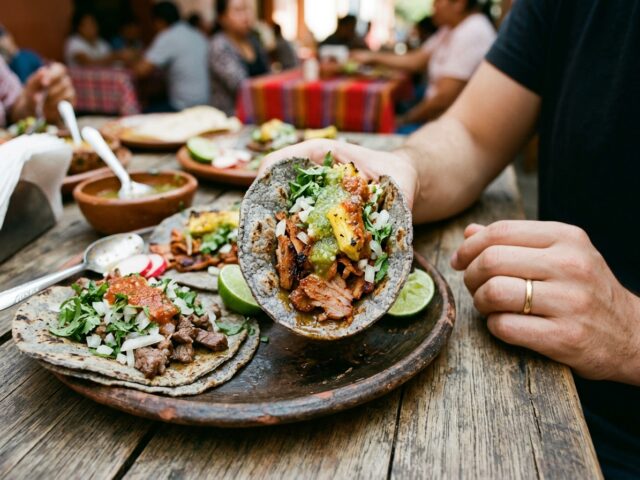
Carnitas pairs beautifully with a fresh corn tortilla (definitely go corn here — the earthy flavor of corn matches the richness of the pork). Add some raw diced onion, cilantro, a squeeze of lime, and a drizzle of salsa verde. That’s it. You don’t need to overcomplicate it.
If your caterer offers carnitas, ask whether they use the traditional confit method or a braising method with broth. Both produce tender meat, but the confit technique gives you richer flavor and better texture on those crisped-up pieces.
Birria: The Trendy Pick That’s Actually Been Around for Centuries
Birria has exploded in popularity over the last few years, especially in the U.S. social media food scene. Quesabirria tacos and birria ramen have taken over Instagram and TikTok. But birria isn’t new — it’s been a staple in Jalisco, Mexico for generations.
Traditional birria uses goat meat (chivo), slow-cooked in a rich, spicy broth made from guajillo, ancho, and pasilla chilies along with tomatoes, onions, garlic, cloves, cumin, and other aromatics. The cooking process takes 4 to 6 hours, and the meat absorbs all those complex flavors until it’s fall-apart tender.
Most taco cart caterers in the U.S. make birria with beef (usually chuck roast or short ribs) rather than goat, since goat can be harder to source in large quantities and has a gamier flavor that not everyone enjoys. Beef birria is absolutely delicious in its own right — rich, slightly spicy, deeply savory, with that signature red-tinted consommé for dipping.
The quesabirria experience: If you’ve seen those red-dipped, cheese-filled tacos all over your feed, that’s quesabirria. The tortilla gets dipped in the birria consommé and griddled with melted cheese, then filled with the shredded birria meat. You get a cup of consommé on the side for dipping. It’s messy, flavorful, and absolutely unforgettable at events.
Did you know? Birria was originally considered a “poor man’s food” in Mexico because goat meat was inexpensive. Now, birria items at U.S. restaurants and taco carts often command premium prices — sometimes $4 to $6 per taco compared to $2 to $3 for standard options.
If birria is on your must-have list, be aware that it requires significant prep time and specialty ingredients. Your caterer will likely charge more for it, and not every taco cart offers it. Ask early.
Chorizo: Bold, Spicy, and Underrated
Chorizo doesn’t always get top billing on taco cart menus, but it should be on your radar. Mexican chorizo (completely different from Spanish chorizo, by the way) is raw ground pork seasoned heavily with chili peppers, vinegar, garlic, and spices. It’s crumbled and cooked on the griddle, where it releases those gorgeous red oils and develops a slightly crispy texture.
The flavor is bold — earthy from the dried chilies, tangy from the vinegar, with a warmth that builds as you eat. It’s not “blow your head off” spicy, but it has real presence.
Taco cart caterers often pair chorizo with other fillings. A popular combination is chorizo and potato (chorizo con papas), where diced potatoes get cooked in the rendered chorizo fat and mixed together. It’s hearty, affordable, and hits differently than the pure-meat options.
Some caterers also offer a breakfast taco setup with chorizo and scrambled eggs. If you’re hosting a morning or brunch event, this is a strong option that guests won’t expect from a taco cart.
One thing to watch for: Quality varies significantly with chorizo. Cheap commercial chorizo can be overly greasy and taste one-dimensional. A caterer who makes their own chorizo blend (or sources from a reputable carnicería) will give you a noticeably better product. It’s worth asking.
Beyond the Basics: Specialty and Adventurous Meats
Most taco cart caterers build their core menu around the proteins above. But if you want to go deeper — or if you’re catering for a crowd that knows and loves authentic Mexican tacos — there are some specialty options worth exploring.
Lengua (Beef Tongue)
Yes, it’s exactly what it sounds like. And yes, it’s one of the most tender, flavorful taco meats you’ll ever eat. Beef tongue gets slow-braised until soft, then diced and crisped on the griddle. The texture is incredibly smooth — almost buttery. People who try it for the first time are usually surprised by how much they enjoy it.
Not every caterer offers lengua because sourcing it in quantity can be tricky, and it takes hours of cooking. But if it’s available, it’s worth adding — even as a small-batch option for adventurous guests.
Cabeza (Beef Head Meat)
Another traditional option that sounds intimidating but tastes incredible. Cabeza includes meat from the cheeks, lips, and other parts of the cow’s head, slow-cooked until supremely tender. Cachete (cheek meat) is the most popular sub-cut and has a rich, beefy flavor with a soft, yielding texture.
Barbacoa
Often confused with birria, barbacoa is its own distinct preparation. Traditionally made from beef cheeks (or the whole cow’s head), barbacoa is wrapped and slow-steamed for hours. The meat comes out shreddable and deeply flavored. In many parts of Mexico, barbacoa is a weekend-morning tradition — served on fresh tortillas with consommé, onions, and cilantro.
These specialty meats reflect the evolution of taco fillings from simple street food to a full culinary tradition with dozens of regional variations. If you want a taco cart experience that feels truly authentic, including at least one of these options makes a real difference.
How to Choose the Right Meats for Your Event
Alright, so you’ve got all these options. How do you actually decide what goes on your menu? Here’s how to think about it practically.
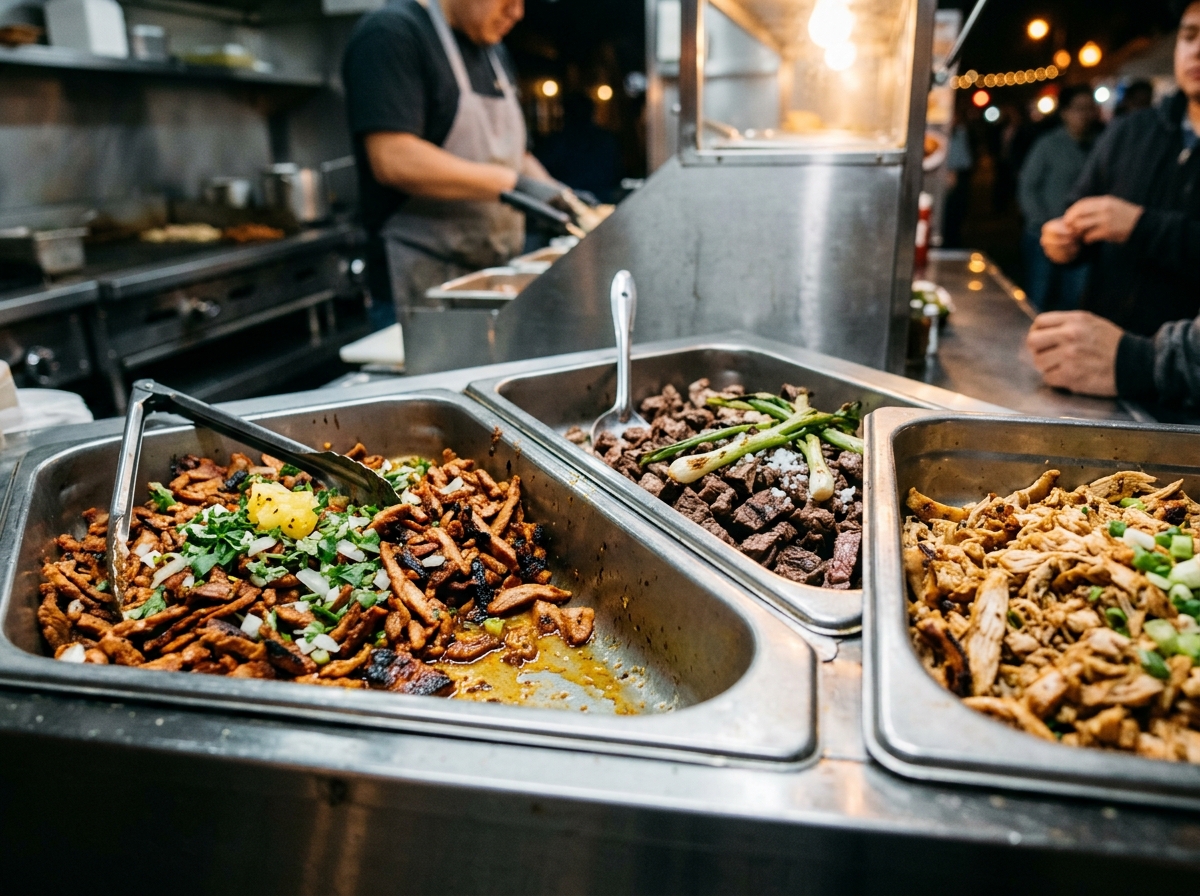
Consider your guest count and demographics. For a wedding with 200 guests across different ages and backgrounds, you want at least three proteins — typically carne asada, chicken, and one pork option (al pastor or carnitas). That combination covers almost everyone. If you know your crowd leans adventurous, swap one of those for birria or add it as a fourth option.
Think about your budget honestly. Meats are the single biggest cost driver for taco cart catering. Al pastor with a real trompo costs more because of the equipment and prep time. Birria costs more because of the long cook. Chicken and carnitas tend to be the most cost-effective. Most caterers offer package pricing based on how many proteins you select — two proteins is the standard minimum, three is the sweet spot, four or more is premium.
Match the vibe of your event. A casual backyard birthday party? Carne asada and carnitas feel right. A corporate event where you want to impress? Al pastor with the trompo and birria with consommé cups make a statement. A late-night after-party following a wedding? Quesabirria tacos are absolutely perfect.
Don’t forget the supporting cast. Your meat is only as good as what surrounds it. Make sure your caterer brings quality taco toppings — fresh pico de gallo, guacamole or sliced avocado, multiple salsa options (a mild salsa verde and a spicy salsa roja at minimum), pickled onions, radishes, and plenty of lime wedges. And the tortillas matter hugely too. Fresh, warm tortillas made on-site can elevate even simple fillings.
What Separates a Good Taco Cart Caterer From a Great One
You can have the best cut of meat in the world, but if the caterer doesn’t know how to handle it, you’ll taste the difference. Here’s what experienced hosts look for.
Marinade time and technique. Great caterers marinate their meats for 12 to 24 hours. That overnight soak allows acids and spices to fully penetrate the protein. If a caterer tells you they marinate “for a few hours,” that’s a yellow flag — it’ll taste fine but won’t have the depth of flavor you get with a proper overnight treatment.
Cooking on-site vs. pre-cooking. The best taco cart caterers do as much cooking as possible right at your event. Carne asada seared fresh on the griddle tastes completely different from carne asada that was cooked three hours ago and reheated. Carnitas and birria are exceptions — those have to be pre-cooked due to the long cooking times — but they should still be finished and crisped on the griddle at your event.
Sourcing quality ingredients. Ask your caterer where they get their meat. A caterer who sources from a local carnicería (Mexican butcher shop) or works with a quality meat distributor is likely giving you a better product than one buying pre-marinated, pre-packaged meats from a wholesale club.
The overall variety of Mexican taco meat types they offer also tells you something about their expertise. A caterer with a long, diverse menu probably has deep knowledge of Mexican cuisine. A caterer who only offers “beef, chicken, or pork” without specific preparations might be less specialized.
FAQ
What is the most popular meat for taco cart catering?
Carne asada (grilled steak, usually skirt or flank) is the most requested protein at taco cart events across the U.S. It cooks quickly, tastes incredible, and appeals to almost everyone. Most caterers list it as their number one seller, followed closely by chicken and al pastor.
Can I request specialty meats like lengua or birria from a taco cart caterer?
Absolutely, but you’ll want to ask well in advance — ideally at least 2 to 3 weeks before your event. Specialty meats require specific sourcing and extended prep time. Not every caterer offers them as standard options, so confirm availability and expect a higher per-person cost for premium proteins like birria or lengua.
How many meat options should I choose for my taco cart catering?
For most events, three proteins is the ideal number. It gives guests enough variety without overwhelming the caterer or inflating your budget. A classic combination would be carne asada, chicken, and either al pastor or carnitas. If your budget allows, adding a fourth option like birria or chorizo takes the experience up a level.
Is the meat at taco carts safe and properly handled?
Reputable taco cart caterers hold food safety certifications and follow local health department regulations. They maintain proper cooking temperatures, use fresh ingredients, and keep cold items refrigerated until cooking time. Always verify that your caterer has the necessary permits and insurance for your area. Don’t hesitate to ask about their food safety practices — any professional caterer will be happy to answer.
What’s the difference between birria and barbacoa?
Both involve slow-cooking beef until tender, but the preparation differs. Birria uses a spicy chile-based broth and the meat essentially braises in that liquid — it’s saucier and comes with consommé for dipping. Barbacoa is traditionally steam-cooked (often wrapped in maguey leaves) and has a simpler, more pure beef flavor. Both are incredible on tacos, just different experiences.
Your Next Move
The meat on a taco cart isn’t just filling — it’s the entire foundation of the experience you’re creating for your guests. Whether you go classic with carne asada and chicken, pull out the showstopper trompo for al pastor, or lean into the birria trend with consommé cups, your choice shapes how people remember the food.
Talk to two or three caterers before booking. Ask them to walk you through their different types of Mexican tacos and proteins. Taste samples if they offer them. Pay attention to how they talk about their food — a caterer who lights up when describing their marinade recipe or their grandmother’s carnitas technique is someone who cares about what ends up on that tortilla.
And if you’re still not sure which direction to go? Start with carne asada, al pastor, and chicken. That trio has been the backbone of taco cart catering for decades, and there’s a beautiful reason it keeps working — it’s just really, really good.