The oldest taco filling wasn’t beef, chicken, or even pork. It was small fish wrapped in corn tortillas, eaten by the people living in the Valley of Mexico sometime around 500 BC. That’s over 2,500 years of taco history — and the fillings inside those tortillas have changed dramatically since then.
If you’ve ever bitten into a birria taco dripping with consommé, or a crispy battered fish taco topped with creamy slaw, you’ve tasted the result of centuries of cultural exchange, migration, trade, and pure culinary creativity. Taco fillings didn’t just “evolve” randomly. They tell a real story — about who was cooking, what ingredients were available, and how different cultures influenced one plate of food.
Let’s walk through that story, from pre-Hispanic Mexico all the way to your favorite taco truck in 2025.
The Pre-Hispanic Origins: Where It All Started
Before the Spanish ever set foot in the Americas, indigenous communities across Mesoamerica were already wrapping food in corn tortillas. The Aztecs, Maya, and other groups had perfected nixtamalization — a process of treating corn with lime to make masa — and used tortillas as both plate and utensil.
The fillings back then were simple but deeply connected to the land. Freshwater fish from the lakes surrounding Tenochtitlán (modern-day Mexico City), insects like chapulines (grasshoppers), small game, beans, squash, and wild herbs made up the bulk of what went inside. There was no cheese. No sour cream. No lettuce. And definitely no ground beef.
Did you know? Insects as taco fillings aren’t just ancient history. In Oaxaca, Mexico, chapulines are still a popular taco filling today — seasoned with garlic, lime, and chili salt. It’s a tradition that’s literally thousands of years old.
What’s fascinating is that these early fillings were entirely plant-based or featured protein sources that modern Western diets would consider unusual. But they were nutritious, sustainable, and perfectly suited to the local ecosystem. The concept of filling a tortilla with whatever your land provided — that’s the original spirit of the taco, and it’s still the philosophy behind authentic Mexican tacos today.
The Spanish Conquest Changed Everything
When Hernán Cortés and the Spanish arrived in 1519, they brought more than weapons and ambition. They brought pigs, cattle, sheep, goats, chickens, rice, wheat, and dairy. These ingredients fundamentally transformed Mexican cuisine over the next few centuries.
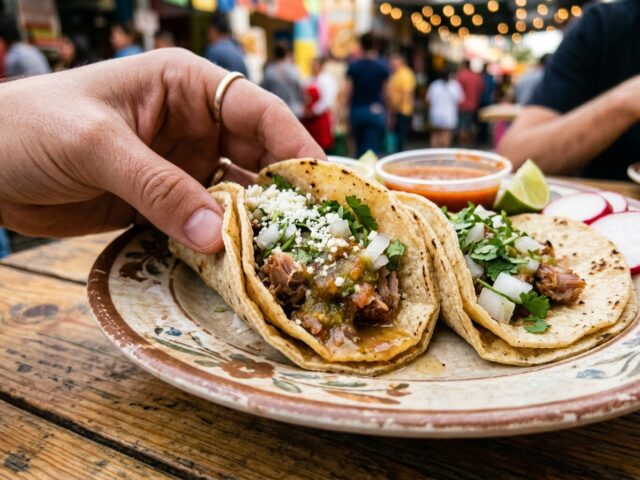
Pork became one of the most important additions. Indigenous cooks quickly adopted it, and regional pork-based taco fillings started appearing across Mexico. Carnitas — slow-braised pork cooked in its own fat until impossibly tender — became a staple in Michoacán. Cochinita pibil, pork marinated in achiote paste and sour orange then wrapped in banana leaves and slow-roasted, became the pride of the Yucatán Peninsula.
Beef cattle changed the game in northern Mexico, where vast grasslands supported ranching. This is where carne asada culture was born — thin cuts of beef, seasoned simply, grilled over open flame, and served in flour tortillas. If you’ve ever enjoyed a perfect carne asada taco, you’re eating the direct descendant of this colonial-era culinary fusion.
Cheese — particularly fresh, crumbly varieties like queso fresco — started showing up as a topping and filling ingredient. And chicken, brought by the Spanish as domesticated poultry, gradually became one of the most versatile taco proteins across every region of Mexico.
But here’s what often gets overlooked: indigenous cooks weren’t passive recipients of Spanish ingredients. They actively adapted these new proteins to existing cooking techniques and flavor profiles. They used traditional chili-based salsas, herbs like epazote and hoja santa, and slow-cooking methods that had existed for generations. The result wasn’t Spanish food or indigenous food. It was something entirely new — the foundation of what we now call Mexican cuisine.
Regional Specialization: How Geography Shaped Fillings
Mexico is a massive country with wildly different climates, coastlines, mountains, and agricultural zones. And each region developed its own signature taco fillings based on what was locally available. This regional specialization is one of the most interesting chapters in the evolution of taco fillings.
Coastal Regions: Seafood Takes Center Stage
Along the Pacific coast, especially in Baja California and Sinaloa, seafood became the star. The Baja fish taco — battered, fried white fish served with shredded cabbage and a creamy sauce — is now famous worldwide, but it started as a humble fisherman’s meal in Ensenada during the 1950s and 60s. Shrimp tacos, octopus tacos, and marlin tacos also became coastal specialties.
Central Mexico: The Offal and Street Food Revolution
Mexico City became the undisputed capital of street taco culture. And the fillings here tell the story of a working-class city that wasted nothing. Tacos de suadero (beef brisket fat), tacos de lengua (tongue), tacos de cabeza (head meat), tripa (tripe), and other offal-based fillings became the backbone of the city’s taquería scene.
These aren’t “exotic” or “adventurous” fillings — they’re practical. Working families needed affordable, high-calorie, protein-rich meals. Every part of the animal served a purpose. And taqueros (taco makers) turned these humble cuts into something genuinely delicious through slow cooking, perfect seasoning, and generations of technique. Understanding the range of Mexican taco meat types gives you a real window into this resourceful approach to cooking.
Northern Mexico: Grilled Meats and Flour Tortillas
Up north, the cattle ranching culture produced a distinctly different taco tradition. Grilled meats dominated — carne asada, arrachera (skirt steak), and cabrito (young goat). And here’s where the debate between corn and flour tortillas really comes alive, because northern Mexican tacos almost exclusively use flour tortillas, which are softer and larger, perfect for holding generous portions of grilled meat.
Southern Mexico and the Yucatán: Slow-Cooked and Spiced
The south brought entirely different flavor profiles. Mole-based fillings, cochinita pibil, and poc chuc (grilled pork marinated in sour orange) reflected Mayan culinary traditions blended with Spanish influences. The spice profiles here — heavy on achiote, habanero, and citrus — stand apart from the rest of Mexico.
The Game-Changer: Tacos al Pastor
No conversation about taco filling evolution is complete without talking about tacos al pastor. This single filling represents one of the most beautiful examples of cross-cultural culinary fusion in food history.
Here’s the backstory. In the early 20th century, Lebanese and other Middle Eastern immigrants arrived in Mexico, particularly in Puebla and Mexico City. They brought shawarma — spit-roasted lamb, shaved off a vertical rotisserie. Mexican cooks saw this technique and thought, “We can work with that.”
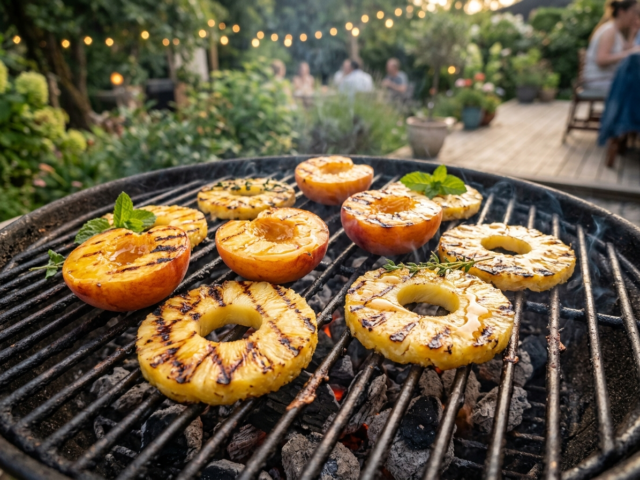
They swapped lamb for pork. They marinated it in a blend of dried chilies, achiote, pineapple, and spices. They kept the vertical spit but topped it with a chunk of pineapple that caramelized as the meat cooked. The result? Tacos al pastor — arguably the most iconic taco filling in the world.
What makes al pastor so significant in the evolution of taco fillings is that it proves tacos have never been a “pure” or “static” food. They’ve always absorbed influences from whoever shows up. Lebanese immigrants didn’t “change” Mexican food — they contributed to its ongoing evolution. And Mexican cooks didn’t just copy shawarma — they transformed it into something unmistakably their own.
Today, if you want to nail this filling at home, getting the marinade and cooking technique right makes all the difference. A good guide on perfecting al pastor tacos can walk you through the details.
Tacos Cross the Border: The American Chapter
The story of taco fillings in the United States is its own complicated, fascinating, and sometimes controversial chapter.
Mexican immigrants brought tacos to the American Southwest in the late 1800s and early 1900s. The “Chili Queens” of San Antonio, Texas — Mexican and Mexican-American women who sold food from outdoor stands — were some of the earliest taco vendors in the U.S. Their fillings were traditional: slow-cooked meats, simple salsas, fresh tortillas.
But then something happened. American food companies and fast-food chains got involved, and taco fillings started to shift toward what was cheap, familiar, and easy to mass-produce.
The Rise of Ground Beef
Ground beef seasoned with a packet of “taco seasoning” became the default American taco filling by the mid-20th century. Glen Bell, the founder of Taco Bell (launched in 1962), popularized the hard-shell taco filled with seasoned ground beef, shredded iceberg lettuce, diced tomato, and yellow cheese. It was affordable, fast, and appealing to American palates — but it had almost nothing in common with Mexican tacos.
This isn’t about bashing Taco Bell. It served a purpose: it introduced millions of Americans to the basic concept of a taco. But it also created a massive misconception — that tacos = ground beef in a crunchy shell. For anyone who’s tried the real thing, the difference is night and day.
Tex-Mex and Cal-Mex Innovations
Tex-Mex cuisine developed its own taco filling traditions — heavier on cheese, sour cream, and beans. Breakfast tacos filled with scrambled eggs, bacon, potatoes, and cheese became a religion in Texas. Meanwhile, California-style tacos brought a lighter, fresher approach. Think grilled fish, avocado, citrus-based salsas, and an emphasis on high-quality produce.
The role of avocado in tacos is worth mentioning here. While avocado has been part of Mexican cuisine for thousands of years, its prominence as a taco topping — sliced, mashed into guacamole, or turned into crema — really exploded in the California taco scene and then spread nationwide.
The Modern Taco: Fillings in the 21st Century
Walk into any taco spot in a major city today — whether it’s a street cart, a trendy restaurant, or a taco catering setup — and you’ll see a filling menu that would have been unimaginable even 30 years ago. The 21st century has brought an explosion of creativity to what goes inside a tortilla.
Birria: The Filling That Broke the Internet
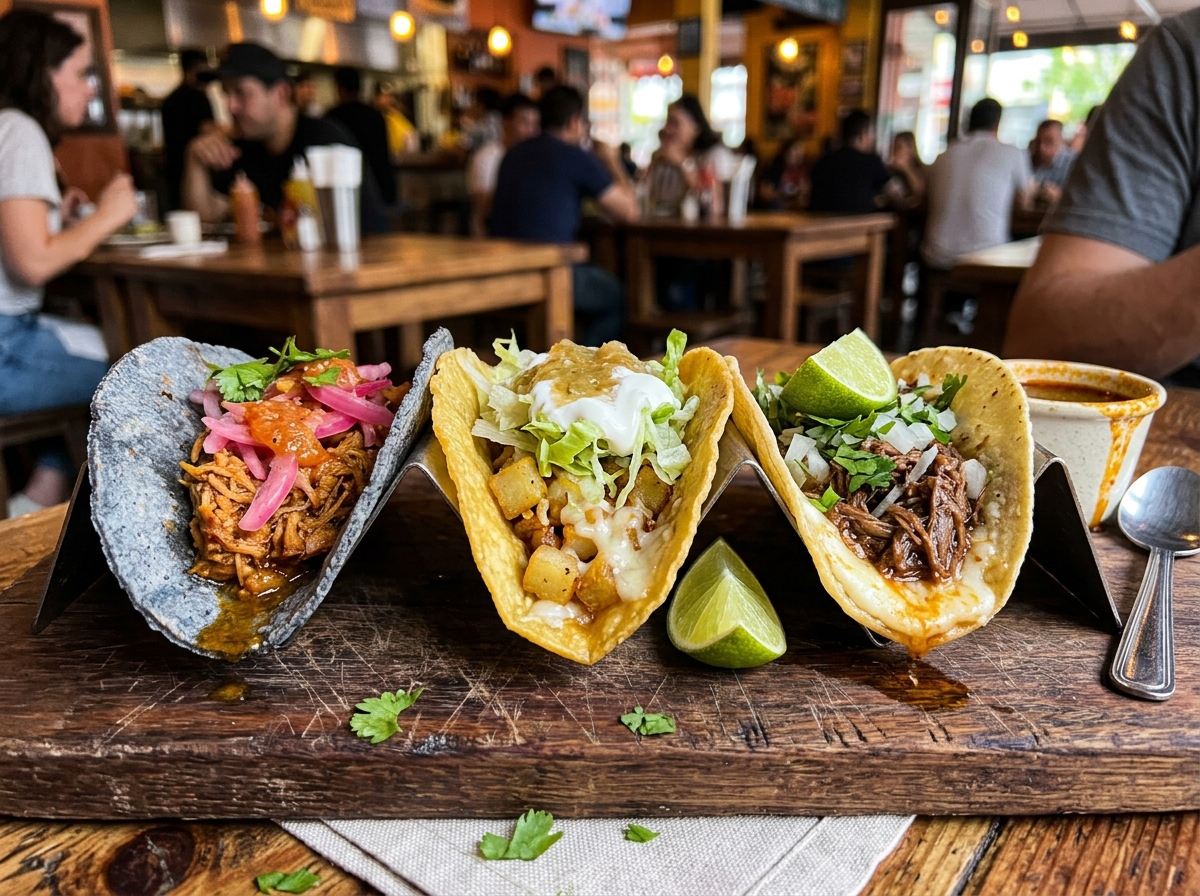
If one filling defined the 2020s taco scene, it’s birria. Originally a slow-braised goat stew from Jalisco, birria tacos (specifically quesabirria — birria-filled tacos dipped in consommé-infused oil and griddled until crispy) went massively viral on social media around 2019-2020. Restaurants and food trucks across the U.S. couldn’t keep up with demand.
What’s interesting is that birria isn’t new at all. It’s been a celebratory dish in Mexico for generations. But social media — particularly Instagram and TikTok — turned it into a global phenomenon practically overnight. The visual appeal of that cheese pull combined with the rich, red consommé for dipping? Irresistible on a screen.
Plant-Based and Vegetarian Fillings
The taco world has also responded to the growing demand for plant-based options, and honestly, this isn’t as “modern” as people think. Mexican cuisine has always had incredible vegetarian fillings — rajas con crema (roasted poblano strips with cream), huitlacoche (corn fungus, considered a delicacy), squash blossom, nopales (cactus paddles), and simple bean tacos have been around forever.
What’s newer is the appearance of processed plant-based proteins — like Beyond Meat or jackfruit “carnitas” — in taco fillings. These cater more to the American and international market than to traditional Mexican cooking, but they represent a real and growing segment of the taco world.
Fusion Fillings: Where Cultures Meet
Korean BBQ tacos. Tandoori chicken tacos. Jerk chicken tacos. Thai peanut shrimp tacos. The fusion taco movement, kickstarted in large part by Roy Choi’s Kogi BBQ truck in Los Angeles around 2008, opened the floodgates for cross-cultural taco fillings.
If you’re ever in the city and want to experience this range firsthand, exploring the best tacos in Los Angeles is basically a world food tour wrapped in tortillas.
Some purists push back against fusion tacos, arguing they dilute the authenticity of Mexican food. That’s a valid concern. But if you look at the full history of tacos, you’ll see that tacos have always been a fusion food. Al pastor came from Lebanese shawarma. Beef tacos exist because of Spanish cattle. The taco’s greatest strength has always been its ability to absorb new influences without losing its identity.
The Role of Sauces and Toppings in Filling Evolution
You can’t really talk about how taco fillings have evolved without mentioning what goes on top of them. Sauces and toppings haven’t just accompanied fillings — they’ve actively shaped which fillings work and which don’t.
Traditional salsas — salsa verde, salsa roja, pico de gallo — have been constants. But the modern taco scene has expanded into chipotle cremas, habanero-mango salsas, and fermented hot sauces that add entirely new dimensions to the eating experience. A well-paired taco sauce can transform a simple chicken taco into something you think about for days.
The best taco toppings have similarly evolved. Pickled red onions, microgreens, cotija cheese, and radish slices have replaced the generic lettuce-tomato-sour cream trio that dominated American tacos for decades. Each topping choice influences what filling works best, creating an ecosystem of flavor where every component matters.
And let’s talk about why many authentic tacos use two tortillas instead of one. That double-tortilla tradition exists specifically because of the fillings — juicy, saucy meats that would soak through a single tortilla. The filling literally shaped the structure. That’s how interconnected every element of a taco really is.
What’s Next? The Future of Taco Fillings
So where are taco fillings headed? A few trends are already taking shape in 2025 that point toward the future.
Hyper-regional Mexican fillings going global. Fillings that were once only available in specific Mexican states — like barbacoa de borrego from Hidalgo, or tacos gobernador (shrimp and cheese) from Sinaloa — are showing up on menus in New York, London, and Tokyo. Social media and food tourism are accelerating this spread in ways we’ve never seen before.
Sustainability-driven proteins. Insects are making a comeback — not just as a novelty, but as a genuine protein source. Cricket-based taco fillings and other entomophagy-friendly options are appearing at forward-thinking restaurants. Ironically, this brings the taco full circle, right back to those pre-Hispanic chapuline fillings from thousands of years ago.
Smoked and slow-cooked everything. The American barbecue and smoking culture has crossed into taco territory. Brisket tacos, smoked pork belly tacos, and wood-fired proteins are becoming standard at taco spots that care about technique. You can explore the different types of Mexican tacos to see just how wide the spectrum has become.
Elevated simplicity. There’s also a counter-movement happening — a return to very simple, very high-quality fillings. Just excellent carne asada, a perfect tortilla, and a good salsa. No fusion, no gimmicks. It’s a reaction to over-complication, and it honors the idea that a taco’s magic has always been in the quality of a few key elements done right.
FAQ
What were the original taco fillings?
The earliest taco fillings, dating back to around 500 BC in the Valley of Mexico, consisted primarily of small freshwater fish, insects like grasshoppers, beans, squash, and wild herbs. All wrapped in hand-made corn tortillas. Meat from larger animals like pork and beef didn’t appear until after the Spanish conquest in the 1500s.
How did tacos al pastor originate?
Tacos al pastor originated from the influence of Lebanese immigrants who came to Mexico in the early 1900s and brought the shawarma technique — spit-roasting meat on a vertical rotisserie. Mexican cooks adapted this by swapping lamb for pork, adding a chili-achiote marinade, and topping the spit with pineapple. The result became one of Mexico’s most iconic taco fillings.
Why are there so many different taco fillings in Mexico?
Mexico’s geographic and climatic diversity is the main reason. Coastal regions developed seafood fillings, northern cattle-ranching areas focused on grilled beef, central Mexico became known for offal-based street tacos, and the south specialized in slow-cooked, heavily spiced meats. Each region used what was locally available and applied generations of cooking knowledge to create distinct filling traditions.
Are traditional taco fillings healthier than modern ones?
Many traditional fillings — especially those based on grilled meats, beans, nopales, and fresh salsas — tend to be lower in processed ingredients and added fats compared to Americanized versions loaded with cheese, sour cream, and fried shells. That said, “healthy” depends on portion size, preparation method, and what you pair with the filling. Both traditional and modern fillings can fit into a balanced diet.
What’s the most popular taco filling right now?
As of 2025, birria (specifically quesabirria) remains one of the trendiest fillings globally, thanks to its social media popularity. But in terms of everyday consumption, carne asada, al pastor, and carnitas continue to dominate at taquerías across Mexico and the United States. Chicken tacos are also among the highest sellers, especially in catering settings.
The taco started as a simple vehicle — a way for workers and families to eat a filling meal with their hands. Over 2,500 years, the fillings inside have reflected every major shift in Mexican and American food culture: indigenous traditions, colonial influences, immigration, industrialization, globalization, and now, the viral power of social media.
What hasn’t changed is the fundamental idea. Take a tortilla. Fill it with something good. Eat it. That’s it. The beauty of the taco is that it welcomes whatever you put inside — as long as it’s made with care. So next time you’re holding a taco, take a second to think about the centuries of history folded into that single bite. And then, obviously, just enjoy it.