Popeyes sold out their spicy chicken sandwich within two weeks of launching it back in 2019. Two weeks. That single menu item sparked what people now call the “chicken sandwich wars,” pulling in Chick-fil-A, McDonald’s, Wendy’s, and KFC into a race nobody saw coming. Fast forward to 2025, and the spicy chicken sandwich isn’t just a fast food trend anymore — it’s a full-blown cultural staple.
But here’s the thing most people don’t realize. You can make a spicy chicken sandwich at home that genuinely tastes better than anything from a drive-through window. You control the spice level. You pick the quality of the chicken. You decide how crispy that coating gets. And once you understand the basic mechanics behind what makes a truly great one, you’ll wonder why you ever waited in those long lines.
This article breaks down everything — from choosing the right chicken cut to nailing that fiery, crunchy coating, building the perfect stack of toppings, and avoiding the mistakes that leave most homemade attempts tasting flat. Whether you’re a total beginner or someone who’s already tried a few recipes and felt disappointed, you’ll walk away with real, usable knowledge.
What Actually Makes a Spicy Chicken Sandwich So Good?
Let’s start with something most recipes skip over — the why behind the craving. A great spicy chicken sandwich works because it hits multiple flavor and texture notes at the same time. You’ve got the crunch from the breading, the juicy tenderness of the chicken, the heat that builds with each bite, and then the cooling relief from a creamy sauce or crisp pickles. That contrast is addictive.
Think of it like a good song. The beat, the melody, the lyrics — they all do something different, but together, they create something you want to replay. A spicy chicken sandwich does the exact same thing on your palate.
The heat isn’t just “spicy for the sake of spicy.” Good heat enhances flavor. Capsaicin — the compound in chili peppers that creates that burning sensation — actually triggers your brain to release endorphins. So there’s a real, chemical reason you feel happy eating one. Your taste buds light up, your body responds, and you reach for another bite before you’ve even finished chewing the first.
That’s why a bland, soggy chicken patty with some hot sauce drizzled on top never satisfies. It’s missing the architecture. And that architecture? It’s not complicated to build. You just need to understand each layer.
Choosing the Right Chicken — This Decision Changes Everything
The single biggest factor in your spicy chicken sandwich isn’t the spice blend or the breading technique. It’s the chicken itself. Pick the wrong cut, and no amount of seasoning will save you.
Chicken breast is the classic choice, and for good reason. It gives you that wide, flat surface area that fits perfectly in a bun. But chicken breast has a reputation for drying out, and that reputation is well-earned. If you overcook it by even a couple of minutes, you’ll end up chewing through something that feels like cardboard wrapped in breadcrumbs.
The fix? Pound it out. Take your chicken breast, put it between two sheets of plastic wrap or parchment paper, and use a meat mallet (or even a heavy pan) to flatten it to an even thickness — about ¾ inch. This does two things. It helps the chicken cook evenly so you don’t get a dry edge and a raw center. And it gives you better chicken-to-bun ratio, which sounds nerdy, but matters a lot when you take that first bite.
Chicken thighs are the other option, and honestly? They’re more forgiving. Thighs have more fat, which means more flavor and more moisture. They’re harder to overcook. The texture is slightly different — a bit more tender, a bit less “meaty” — but many home cooks prefer them for sandwiches because the result is juicier with less effort.
Pro Tip: If you’re using boneless, skinless chicken thighs, trim off any large pieces of excess fat, but don’t go overboard. A little fat is your friend here. It renders during cooking and keeps things moist.
Some people use chicken tenders, and while they work in a pinch, they don’t give you the same substantial bite. Tenders are better suited for spicy chicken tenders as a standalone snack rather than a sandwich.
The Brine and Marinade — Where the Flavor Starts
Skipping the marinade is the number one mistake home cooks make with spicy chicken sandwiches. They season the breading, they season the sauce, but the chicken itself tastes like… nothing. Just protein holding everything else together.
You want flavor all the way through, not just on the surface.
A buttermilk marinade is the gold standard, and there’s science behind it. Buttermilk is slightly acidic, which gently breaks down the outer proteins of the chicken. This does two things — it tenderizes the meat, and it creates a slightly tacky surface that breading clings to like glue. That’s why every fried chicken spot worth its salt uses buttermilk.
Here’s a simple marinade that works every single time: take about a cup and a half of buttermilk, add a tablespoon of hot sauce (Louisiana-style like Crystal or Frank’s works great here), a teaspoon of garlic powder, a teaspoon of smoked paprika, half a teaspoon of cayenne, and a generous pinch of salt. Whisk it all together, submerge your chicken, and let it sit in the fridge.
How long should you marinate? At minimum, two hours. Ideally, overnight. If you’re in a real rush, even 30 minutes helps, but the longer that chicken sits in the buttermilk bath, the more tender and flavorful it becomes. Don’t go past 24 hours though — the acid can start breaking down the meat too much, and you’ll get a mushy texture nobody wants.
If you’ve ever made Nashville hot chicken at home, you’ll recognize this same buttermilk soak. It’s a technique that crosses over into all kinds of fried chicken styles because it simply works.
Building the Perfect Spicy Breading
This is where your sandwich gets its identity. The breading is the armor — the crunchy, seasoned shell that holds everything together and delivers that first hit of spice before your teeth even reach the chicken.
The Dry Mix Foundation
Start with all-purpose flour as your base. About a cup and a half for two sandwiches. To that, you’re adding your heat and your flavor.
For the spice profile, you want layers of heat rather than just one note. Cayenne pepper brings sharp, immediate heat. Smoked paprika adds depth and a subtle sweetness. A pinch of ground habanero or ghost pepper powder (if you can handle it) adds lingering, slow-building heat. Garlic powder and onion powder round everything out so it doesn’t taste one-dimensional.
A trick that separates great fried chicken from good fried chicken: add a couple tablespoons of cornstarch to your flour mix. Cornstarch creates extra crispiness that lasts. You know how some fried chicken gets soggy within five minutes of coming out of the oil? Cornstarch helps prevent that. It creates a lighter, crunchier coating that holds up even after you stack it in a bun with sauce.
The Double-Dip Method
Don’t just dredge your chicken in flour once. Use the buttermilk-to-flour double dip. Pull your chicken from the marinade, let the excess drip off, press it into the seasoned flour, then dip it back into the buttermilk, and press it into the flour again. This second coat is what gives you those craggy, textured bits that fry up into ultra-crispy nooks and crannies.
Press the flour in firmly. Don’t just dust it. You want the breading to really adhere. Then set the breaded chicken on a wire rack for about 10 minutes before frying. This rest period lets the coating set and bond to the chicken, so it doesn’t slide off in the oil.
Did You Know? The “shaggy” look you see on the best fried chicken sandwiches comes from deliberately dripping a little buttermilk into the flour and working it in with your fingers. Those small clumps fry up into the crunchiest bits. It’s a technique fried chicken champions at competitions swear by.
Frying Your Chicken — Temperature Is Non-Negotiable
You can do everything right up to this point and still ruin the sandwich with bad frying technique. And the whole thing comes down to oil temperature.
The sweet spot is 350°F to 375°F (175°C to 190°C). Use a thermometer. Seriously. Guessing the oil temperature is how you end up with chicken that’s burnt on the outside and raw in the middle, or chicken that absorbed so much oil it’s greasy and heavy.
If you don’t own a deep fryer, a heavy-bottomed pot or Dutch oven works perfectly. Fill it with about 2-3 inches of oil. Peanut oil is the top choice for frying chicken because it has a high smoke point and a clean, neutral flavor. Vegetable oil and canola oil work fine too. Avoid olive oil — its smoke point is too low for deep frying.
If you’re not comfortable with deep frying, pan-frying at home is a great alternative that uses less oil and still gives you solid results. You won’t get quite the same even crust, but with the right technique, you’ll get close.
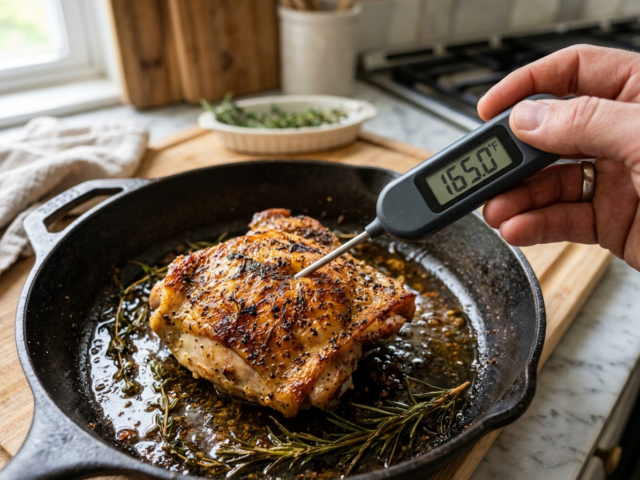
Frying time depends on the thickness of your chicken. A pounded breast or a thigh will take about 6-8 minutes total, flipping once halfway through. The internal temperature needs to reach 165°F (74°C) — use an instant-read thermometer to check. This isn’t optional. Undercooked chicken is a food safety issue.
⚠️ Warning: Don’t crowd the pot. Dropping too many pieces in at once causes the oil temperature to plummet. Cold oil means greasy, soggy chicken. Fry one or two pieces at a time, and let the oil come back to temperature between batches.
Once the chicken comes out, set it on a wire rack — not paper towels. Paper towels trap steam underneath, which makes the bottom of your chicken lose its crispness. A wire rack lets air circulate all around, keeping every side crunchy.
The Spicy Sauce — Your Secret Weapon
The sauce can make or break the entire sandwich. Too much, and you’ve got a soggy mess. Too little, and the sandwich feels dry. The wrong flavor profile, and it fights against the chicken instead of complementing it.
You’ve got a few directions you can go, and each one changes the personality of your sandwich.
Spicy Mayo is the most popular choice, and it’s dead simple. Mix mayonnaise with hot sauce, a squeeze of lime juice, a tiny bit of garlic powder, and a pinch of salt. Adjust the hot sauce ratio to your tolerance. This gives you that creamy-meets-fiery contrast that works so well against crispy fried chicken.
Hot Honey Drizzle is a newer trend that’s taken off in a big way. The sweetness of honey paired with the burn of chili flakes or cayenne creates this addictive sweet-heat loop. You put it on, and you can’t stop eating. If you haven’t tried hot honey on sandwiches and pizza, you’re genuinely missing out. It’s one of those “where has this been my whole life?” ingredients.
Nashville Hot Oil takes things up several notches. You mix melted butter or the frying oil with cayenne pepper, brown sugar, paprika, and garlic powder, then brush or pour it directly over the fried chicken. This is the technique behind authentic Nashville hot chicken, and it delivers intense, serious heat. Not for the faint of heart, but absolutely for the spice lovers.
Quick Fact: Nashville hot chicken was reportedly created as revenge. Legend says Thornton Prince’s girlfriend made his morning-after chicken extra spicy to punish him for staying out late. He loved it so much, he opened a restaurant. Prince’s Hot Chicken Shack has been open since the 1930s and is still serving that same fiery recipe today.
Picking the Right Bun — Don’t Overlook This
Here’s where a lot of homemade spicy chicken sandwiches fall apart — literally. The bun matters more than you think. You need something soft enough to bite through easily but sturdy enough to hold up against a juicy piece of chicken, sauce, and toppings without falling apart in your hands.
Brioche buns are the top pick for most restaurants and home cooks. They’re slightly sweet, buttery, and soft, with just enough structure to handle the load. The subtle sweetness also plays nicely against the spice — another one of those contrast things that makes the whole sandwich click.
Potato rolls are a close second. They’re softer and squishier, which some people prefer. Martin’s potato rolls have basically become the default for smash burgers, and they work well for chicken sandwiches too — especially if you like a softer bite.
Toast your buns. This isn’t optional. A quick toast on a buttered skillet — maybe 60 seconds per side — gives you a golden, slightly crispy surface that acts as a moisture barrier. Without toasting, the sauce and chicken juices soak right through, and your bun turns into wet bread within minutes.
Toppings That Actually Work (And What to Skip)
The beauty of a spicy chicken sandwich is that it doesn’t need much. In fact, over-loading it with toppings is one of the most common mistakes. You want each element to have a purpose.
Pickles are essential. Not negotiable. The briny, tangy crunch of dill pickles cuts through the richness of the fried chicken and the heat of the spice. It’s a palate reset with every bite. Use crinkle-cut or thick-sliced dill pickles — the thin, floppy ones disappear into the sandwich and don’t give you enough crunch.
Coleslaw is a fantastic addition if you like a bit of freshness and crunch. A vinegar-based slaw works better than a mayo-heavy one here because it adds brightness without making the sandwich too rich. Keep the shreds thin so they don’t overpower the chicken.
Lettuce — specifically, shredded iceberg or a couple of crisp butter lettuce leaves — adds cool crunch. Skip romaine; it’s too watery and wilts fast.
Here’s what to skip: tomatoes. I know that sounds controversial, but raw tomato slices on a fried chicken sandwich add moisture you don’t need and a flavor that gets lost under everything else. They also make the bun soggy faster. If you love tomatoes, save them for a grilled chicken sandwich where they have room to shine.
If you want to explore more topping combinations that pair well with spiced proteins, the same principles apply to building great taco toppings — balance, contrast, and restraint.
How Fast Food Chains Build Theirs (And What You Can Learn)
Looking at what the big chains do — and don’t do — teaches you a lot about sandwich engineering.
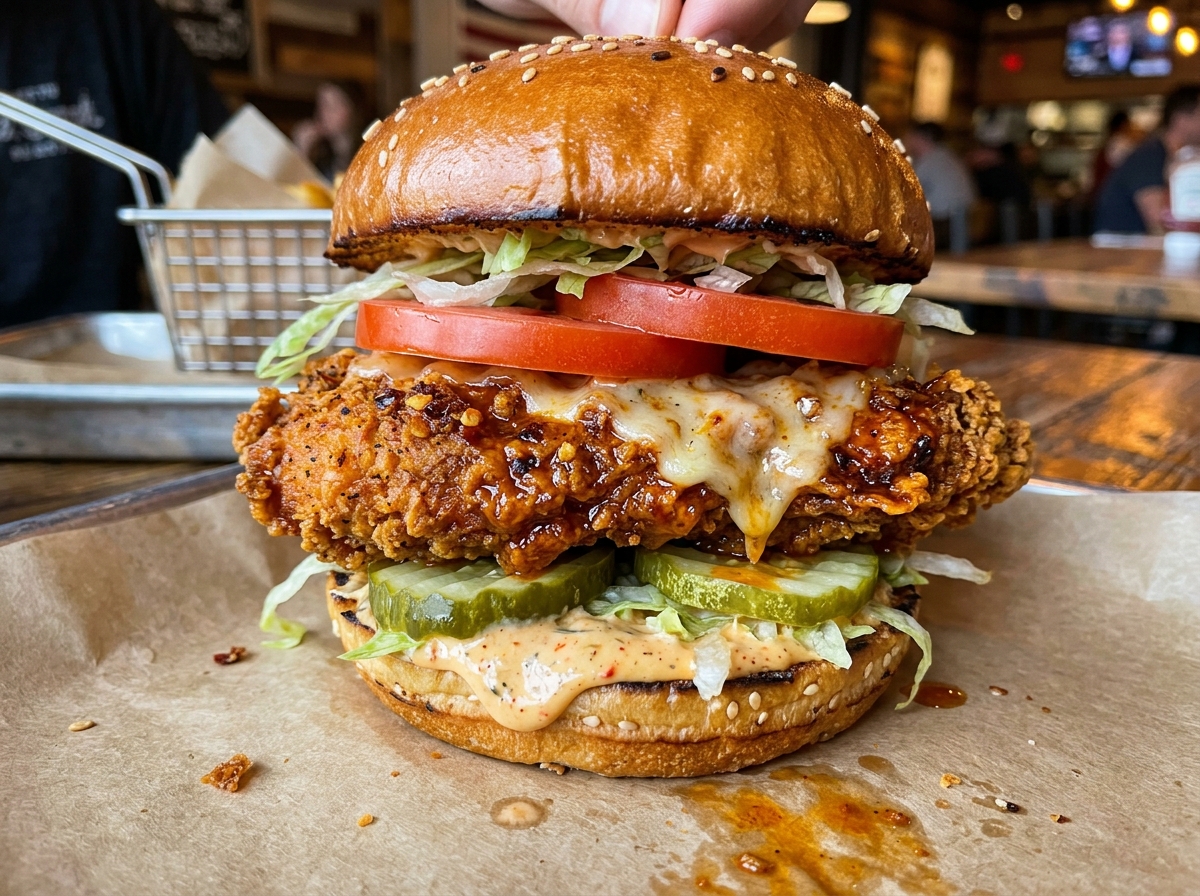
Popeyes’ spicy chicken sandwich uses a buttermilk-battered thigh fillet, barrel-cured pickles, and spicy mayo on a brioche bun. Simple. Three toppings plus the chicken. The genius is in the batter seasoning (heavy on cayenne and garlic) and the quality of the pickles. The takeaway for your kitchen? Keep it simple and make each component count.
Chick-fil-A’s spicy deluxe uses a pressure-cooked breast fillet marinated in a spicy seasoning, with pepper jack cheese, lettuce, and tomato. The spice level is mild compared to Popeyes, which is a deliberate choice — they’re targeting a wider audience. But the pressure-cooking technique is interesting. It locks in moisture in a way that standard deep frying doesn’t. You can’t really replicate pressure frying at home safely, but the lesson here is about moisture — brine your chicken and don’t overcook it.
McDonald’s spicy McCrispy entered the game later and went with a thick, crunchy coating and a spicy pepper sauce. Their breading-to-chicken ratio is higher than most, which tells you something — a lot of the satisfaction in biting into a fried chicken sandwich comes from that initial crunch. Don’t be shy with your breading.
What all three have in common: they don’t overcomplicate the build. The chicken does the heavy lifting. The sauce provides moisture and a secondary flavor hit. One or two crunchy, acidic toppings provide contrast. That’s the formula. You don’t need twelve ingredients to build a sandwich that makes you close your eyes while eating it.
Grilled vs. Fried — Is There a Lighter Option That Still Delivers?
Let’s be honest. A fried chicken sandwich isn’t health food. A single fried spicy chicken sandwich can easily hit 600-800 calories depending on size and toppings. If you’re watching your intake or just want something lighter for a weeknight dinner, a grilled version is absolutely worth trying.
Grilled spicy chicken can still taste great, but you have to adjust your expectations. You won’t get that crunchy coating. The texture is completely different. What you’re aiming for instead is charred, smoky, well-seasoned chicken with a good spicy sauce doing the heavy lifting.
Marinate the chicken the same way — buttermilk, hot sauce, garlic, spices. Then pull it out, pat it dry (important for getting good grill marks), and cook it over medium-high heat for about 5-6 minutes per side. You want that internal temp at 165°F, same as frying.
Where grilled really shines is when you use bold, punchy toppings. A spicy grilled chicken sandwich with pepper jack cheese, pickled jalapeños, and a chipotle mayo on a toasted bun is legitimately delicious. Different from fried, yes — but satisfying in its own way.
If you’re already comfortable grilling proteins, the temperature principles you’d follow for grilling burgers translate directly to chicken. Control your heat, use a thermometer, and don’t walk away from the grill.
Pairing Sides That Complete the Meal
A spicy chicken sandwich is a main event. But the right side dish turns it into a full experience.
French fries are the obvious partner. Crispy, salty fries alongside a spicy sandwich is one of those combinations that just feels right. If you’re making fries from scratch, getting them golden and crispy comes down to the double-fry method and the right oil temperature. The same oil you used for the chicken? Strain it and use it for fries. The residual chicken flavor actually makes the fries taste even better.
Coleslaw on the side works if you didn’t put it on the sandwich. The cool, creamy crunch balances the heat nicely.
Mac and cheese is a Southern comfort food classic that pairs naturally with fried chicken in any form. The richness and creaminess of a good mac tempers the spice without washing it out.
Pickled vegetables — quick-pickled cucumbers, onions, or carrots — give you an acidic, refreshing counterpoint. They cleanse the palate between bites and keep the meal from feeling too heavy.
Adjusting the Heat Level to Your Taste
Not everyone wants their mouth on fire. And that’s fine. The beauty of making a spicy chicken sandwich at home is that you control exactly how much heat goes into every layer.
For mild heat, stick with paprika and a small amount of cayenne (maybe half a teaspoon in the breading). Use a spicy mayo with just a dash of hot sauce. This gives you flavor and warmth without the burn.
For medium heat, increase the cayenne, add some chili powder, and use a more aggressive hot sauce in both the marinade and the sauce. You’ll feel it, but it won’t overwhelm the other flavors.
For serious heat, bring in habanero powder or ghost pepper flakes. Use a Nashville-style hot oil brush on the chicken after frying. Swap regular pickles for pickled jalapeños. And maybe keep a glass of milk nearby — water doesn’t help with capsaicin, but the casein in dairy actually binds to the capsaicin molecules and washes them away.
Pro Tip: Building heat in multiple layers creates a more complex, interesting spice experience than dumping all the heat into one component. A little in the marinade, a little in the breading, a little in the sauce — each layer adds a different moment of heat as you eat.
Common Mistakes That Ruin Homemade Spicy Chicken Sandwiches
Knowing what to do is half the battle. Knowing what not to do is the other half.
Skipping the rest after breading. If you bread the chicken and throw it straight into the oil, the coating will fall off in patches. Give it 10 minutes on a wire rack. The breading sets and adheres properly.
Using cold chicken straight from the fridge. Cold chicken takes longer to cook through, which means the breading can burn before the inside is done. Pull your marinated chicken out of the fridge about 15-20 minutes before you plan to bread and fry it.
Sauce on both buns. This sounds like more flavor, but it’s actually a recipe for a soggy sandwich. Put sauce on the bottom bun only, or on the top bun only. The other bun stays as a dry barrier. Your sandwich holds together longer, and you still get plenty of sauce in every bite.
Not seasoning the flour enough. Most home cooks under-season the breading. You should be able to taste the flour mix on its own and think, “That’s flavorful.” Remember, a lot of that seasoning stays in the bowl — only a fraction of it actually adheres to the chicken.
Cutting the chicken open to check if it’s done. This releases juices and dries out the meat. Use a thermometer instead. An instant-read thermometer costs less than a combo meal at Popeyes and will improve every piece of meat you cook for the rest of your life.
FAQ
What’s the best chicken cut for a spicy chicken sandwich?
Boneless, skinless chicken breast is the traditional choice because of its shape and size. Pound it to an even ¾-inch thickness for consistent cooking. Boneless chicken thighs are a great alternative if you want more moisture and flavor with less risk of drying out. Either cut works well — it comes down to personal preference and how much effort you want to put into preventing dryness.
How do you keep the breading from falling off during frying?
Three things make the biggest difference. First, let the marinated chicken drip off excess buttermilk before dredging. Second, press the flour firmly onto the chicken rather than lightly dusting it. Third, after breading, set the chicken on a wire rack for about 10 minutes before it goes into the oil. This rest period lets the coating bond to the surface, so it stays put during frying.
Can you make a spicy chicken sandwich in an air fryer?
Yes, and the results are surprisingly good. Spray the breaded chicken with cooking oil on both sides and air fry at 375°F for about 10-12 minutes, flipping halfway through. The crust won’t be quite as crunchy as deep-fried, and you won’t get those really craggy, shaggy bits. But you’ll get a solid crunch, good flavor, and significantly fewer calories from oil. It’s a worthwhile trade-off for weeknight dinners.
What drink goes best with a spicy chicken sandwich?
Something cold and slightly sweet works best to counteract the heat. Sweet iced tea is the classic Southern pairing. Lemonade — especially a honey-sweetened one — cools the burn and refreshes the palate. If you’re going for beer, a crisp lager or wheat beer works better than an IPA; hoppy beers can actually amplify the perception of spiciness. Milk or a milkshake is the ultimate heat-killer if you’ve gone overboard on the cayenne.
How spicy is Popeyes’ spicy chicken sandwich compared to homemade?
Popeyes’ version registers as medium heat for most people — it’s got a noticeable kick from cayenne and a spicy mayo, but it won’t make you sweat. A homemade version gives you total control. You can easily make it milder than Popeyes by cutting back on cayenne, or you can push it into Nashville hot territory with habanero powder, ghost pepper flakes, and a hot oil brush. That’s the real advantage of doing it yourself.
Your Next Move
You don’t need a commercial kitchen, a deep fryer, or a culinary degree to make a spicy chicken sandwich that genuinely rivals what you’d get from a restaurant. You need good chicken, a buttermilk soak, properly seasoned breading, the right oil temperature, and toppings that balance each other out.
Start simple. Nail the basic recipe first — buttermilk-marinated chicken, cayenne-garlic flour coating, fried until golden at 350°F, served on a toasted brioche bun with pickles and spicy mayo. Once you’ve got that locked in, start experimenting. Try a hot honey drizzle. Add a Nashville-style spice brush. Swap the pickles for a tangy slaw. Make it yours.
The best spicy chicken sandwich you’ll ever eat? There’s a very real chance it’ll come from your own kitchen. The only way to find out is to fire up the stove this weekend and give it a shot.