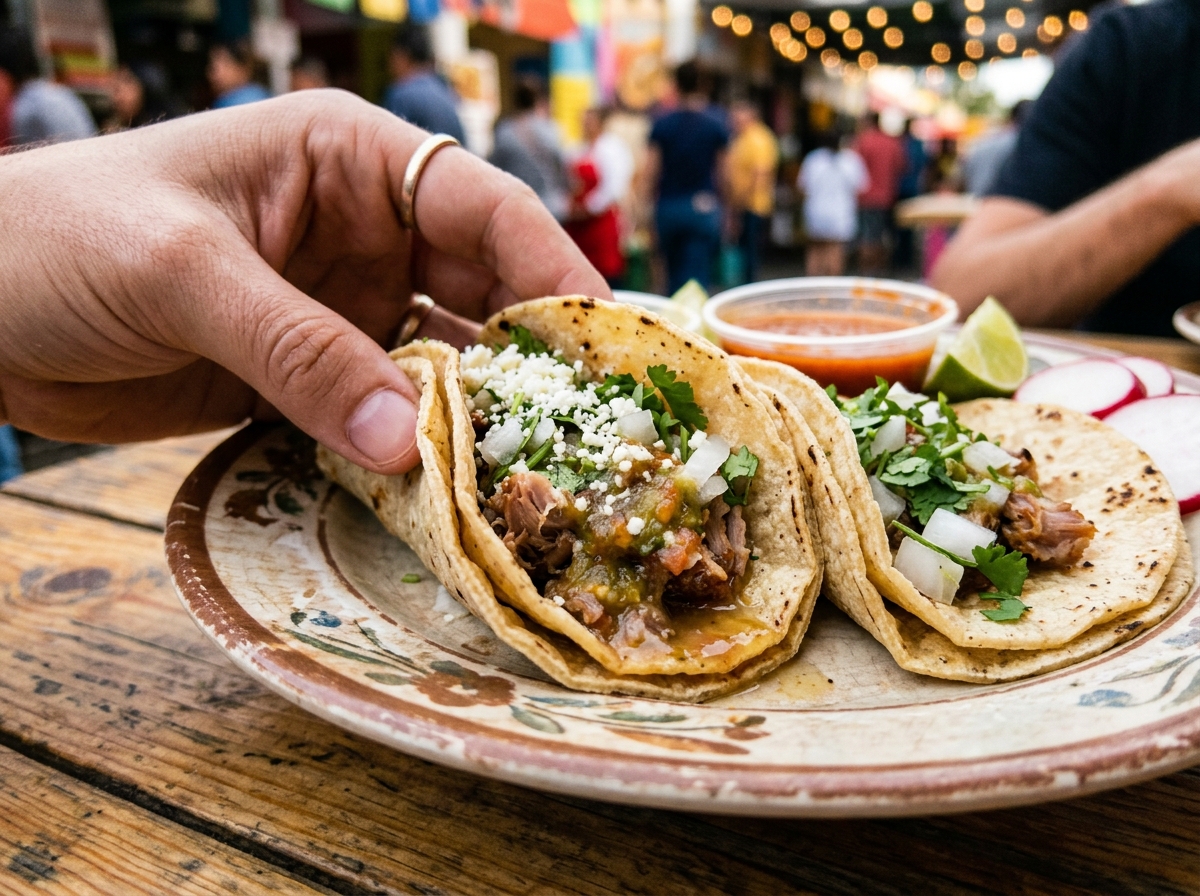
A good taco shouldn’t fall apart after one bite. That’s the real reason so many tacos come with two tortillas. If you’ve been asking why do tacos come with two tortillas, the short answer is simple: the extra tortilla supports the filling, catches the drips, and saves the best bits from landing on your plate. It’s a smart food habit, not just a style choice.
2. Why do tacos come with two tortillas?
Quick fact: tacos usually come with two tortillas for one main reason—function. One tortilla holds the taco. The second one acts like a backup.
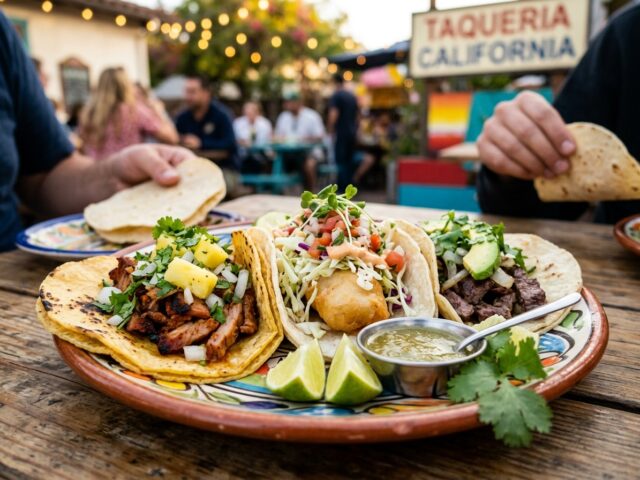
You’ll see this most often with small corn tortillas at taquerias, taco trucks, and street food stands in Mexico and the United States. It’s common with soft tacos that carry juicy meat, chopped onion, cilantro, salsa, and a squeeze of lime.
One tortilla carries the filling. The other one keeps it together.
Think about a street taco loaded with al pastor, carnitas, or barbacoa. The tortilla is small. The filling is hot. The juices are real. After a bite or two, one thin tortilla can start to weaken.
That’s where the second tortilla helps.
Instead of turning soggy or tearing down the middle, the taco keeps its shape a little longer. You get a cleaner bite. You don’t need to catch falling meat with your hands. And your taco still feels soft, not stiff.
A single thick tortilla could do some of that work too. But it would change the whole bite. More on that in a minute.
The bottom tortilla catches the drips and fallen bits
The second tortilla isn’t only there for support. It’s also there to catch what escapes.
Tiny pieces of meat, onion, cilantro, salsa, and rendered fat usually fall out as you eat. In a good taco, that’s normal. The lower tortilla catches all of it.
By the end, that bottom tortilla often becomes a little bonus taco.
Some people eat both tortillas together from the first bite. Others use the second one after the top taco is mostly gone. Both ways make sense. Either way, the second tortilla saves flavor that would otherwise be stuck to the plate.
It’s kind of like the edible version of a safety net.
Two thin tortillas often work better than one weak tortilla
A taco should bend easily and still stay together. Two warm tortillas do that better than one thin, tired tortilla.
They also trap a bit of heat and steam between them. That helps keep the tortillas soft and flexible, especially if they were warmed on a comal, the flat griddle used in many Mexican kitchens and taquerias.
So no, the extra tortilla usually isn’t there to make the plate look fuller. It has a job. In many cases, it does that job really well.
3. Where the double-tortilla habit comes from
The double-tortilla setup didn’t appear because restaurants wanted a fancy look. It comes from the logic of street food.
Tacos were built to be handheld, quick, and satisfying. If you want the wider story behind that, this look at the history of tacos helps connect the dots.
Street-food roots in Mexico
Across Mexico, tacos grew as practical food. You could eat them standing up, on a sidewalk, at a market, or on a short lunch break. That mattered then, and it still matters now.
At a busy taqueria in Mexico City or a taco stand in Los Angeles, speed matters. The taquero warms tortillas, adds filling fast, tops the taco, and moves to the next order. A double stack helps the taco survive that trip from grill to hand.
That’s why many authentic Mexican tacos use small soft tortillas instead of one huge wrap. The taco is meant to be compact, easy to hold, and rich in flavor. Two tortillas help it stay that way.
You’ll notice this even more with meats that release juice right after cooking. Fresh-cut carne asada, suadero, carnitas, and al pastor all have that issue. Delicious problem, sure. Still a problem.
Corn tortillas need a little more support
The tortilla type matters a lot here.
Most double-tortilla tacos use corn tortillas, not flour. Corn tortillas bring the taste many people expect from classic street tacos. They have a toasted corn flavor, a softer chew, and deep roots in Mexican cooking that go back to Mesoamerican food traditions.
But corn tortillas can also split more easily, especially if they’re thin, old, or not warmed well.
That’s why the question makes even more sense once you compare corn vs. flour tortillas. Flour tortillas are usually larger, stretchier, and more forgiving. Corn tortillas taste right for many taco styles, but they don’t always love heavy, wet fillings on their own.
Did you know? A corn tortilla fresh off a hot comal gets more flexible within seconds. Heat makes a huge difference. Cold tortillas crack. Warm tortillas bend.
A lot of people try to recreate taco truck tacos at home with straight-from-the-bag tortillas. Then they wonder why everything breaks. The issue often isn’t the filling. It’s the tortilla handling.
Why not just use one thicker tortilla?
Fair question.
Some places do use one thick handmade tortilla, and those tacos can be excellent. In fact, a fresh handmade tortilla can be strong enough to hold plenty on its own.
Still, one thick tortilla creates a different kind of taco.
It feels heavier. It can dominate the bite. It changes how the taco folds in your hand. With delicate or juicy fillings, that can be a bad trade.
Two thinner tortillas keep the taco soft and flexible without making the bread part overpower the filling. That’s a big reason taco vendors stick with the double layer instead of making every tortilla extra thick.
There’s also a practical side. In a busy stand, it’s easier to stack two ready tortillas than to rely on one thicker tortilla every single time. Street food usually grows from what works fast, tastes good, and wastes less.
No official taco rulebook says every taco must have two tortillas. But the double setup stuck around because it solves real problems.
4. Are you supposed to eat both tortillas?
Yes—usually, yes.
The second tortilla isn’t packaging. It’s part of the meal.
A lot of first-time diners see the bottom tortilla and assume it’s there just to protect the plate, like deli paper under fries. Not quite. It’s edible, useful, and meant to be eaten.
Most taquerias expect you to eat both
If a taqueria serves a taco with two tortillas, they’re not expecting you to peel one off and toss it aside. You can do that if you want fewer carbs, of course. It’s your taco.
But the usual idea is that both tortillas are there to work together.
The top tortilla does most of the holding at first. The bottom one steps in as the taco softens and spills. By the end, both tortillas have earned their place.
There are two normal ways to eat them
People generally handle double-tortilla tacos in one of two ways.
Some take bites straight through both tortillas from the start. That gives the taco the most support right away.
Others let the lower tortilla catch the loose bits, then fold that second tortilla into a small follow-up taco once the top one is gone.
Neither way is wrong.
That’s part of the beauty of tacos. They’re simple, but they leave room for real-life eating.
Picture a juicy taco al pastor shaved from a trompo. The pork is hot, the edges are crisp, the pineapple adds sweetness, and the salsa adds moisture. Would you rather trust one thin tortilla with that job? Most taqueros wouldn’t.
What if you don’t want the second tortilla?
You can remove it. Just know what you’re giving up.
The taco may get messier. You may lose some juices. You may end up eating part of the filling with a fork, and at that point the taco has stopped being a taco in spirit, even if the meat still tastes great.
If the lower tortilla feels plain by the end, don’t leave it dry. Add a spoon of salsa, a bit of onion, or some escaped meat from the plate. That usually turns it from “extra tortilla” into the last good bite of the meal.
5. Do all tacos come with two tortillas?
No. Not even close.
This is common, but it’s not universal. Taco styles change across regions, fillings, and tortilla types.
That’s why the answer to why do tacos come with two tortillas is really about certain tacos, not every taco you’ll ever order.
Tacos that often get doubled
You’re more likely to see two tortillas with tacos that are small, soft, and juicy.
A few common examples:
- Al pastor tacos, especially fresh-cut ones with salsa and pineapple
- Carnitas tacos with rich pork juices
- Barbacoa tacos that can soak through fast
- Carne asada tacos topped with onion, cilantro, and salsa
You see this a lot with tacos al pastor, where the meat comes straight off the trompo and a single tortilla can soften quickly.
Across many types of Mexican tacos, the smaller and juicier the taco, the more likely it is to show up with a second tortilla underneath.
Tacos that often come with one tortilla
Other tacos usually don’t need the extra layer.
Hard-shell tacos already have structure. They crack for different reasons, but not because they need a soft backup tortilla underneath.
Large flour tortilla tacos also tend to come with one tortilla because flour is more elastic. It stretches more. It can handle bulk better.
Some regional fish tacos use one tortilla too, especially if the tortilla is a little larger and the filling isn’t too wet. The same goes for tacos built on thick handmade corn tortillas. If the tortilla has enough strength on its own, doubling isn’t necessary.
Griddled tacos with melted cheese can also get natural support from the cheese layer itself. That changes the structure in a different way.
Common misconception: two tortillas don’t always mean “more authentic”
A lot of people assume that two tortillas automatically mean the taco is more traditional. That’s too simple.
Mexico has many taco styles. Northern Mexico uses flour tortillas more often than central Mexico. Baja fish tacos aren’t built like Mexico City suadero tacos. A handmade blue-corn tortilla in Oaxaca brings its own rules to the table.
So yes, double tortillas can be a sign of a classic street-taco style. But they are not the only authentic way to build a taco.
Another common suspicion pops up a lot online: “Do restaurants use two tortillas just to make you feel full?” Sometimes people worry it’s a trick.
Most of the time, it isn’t.
A taqueria that cares about flavor uses two tortillas because the taco works better that way. If a place skimps on meat, that’s a separate issue. The extra tortilla alone doesn’t prove anything.
6. How to make double-tortilla tacos at home
If your homemade tacos fall apart, the fix is usually easy. Use two small warm tortillas, keep the filling modest, and don’t drown everything in wet toppings.
A taco is not a burrito in disguise. Once you treat it like one, trouble starts.
Start with small corn tortillas
For classic street-style tacos, small corn tortillas usually work best. Aim for the kind that are about 4 to 5 inches wide.
Warm them on a dry skillet or comal until they soften and get a little color. Then stack them right away while they’re still hot. That tiny bit of trapped steam helps them stay flexible.
Cold tortillas straight from the package are one of the biggest reasons homemade tacos fail.
Warning: Don’t stack cold corn tortillas and expect the bottom one to save the taco. If they stay stiff, they’ll crack instead of bend.
Build them the smart way
You don’t need a complicated method. A few simple steps usually do the job:
- Warm two tortillas until soft and flexible.
- Stack them while hot and keep them covered with a clean towel.
- Add a modest scoop of filling to the center.
- Top lightly with onion, cilantro, and salsa.
- Serve right away with lime on the side.
That “modest scoop” part matters more than most people think.
Overfilling is the fastest way to ruin taco structure. If you can barely fold it, you’ve gone too far. Street tacos are small on purpose. You’re supposed to eat two or three, not force one taco to do the work of a full platter.
Keep toppings balanced
A juicy taco should still have balance.
Too much watery salsa, sour cream, or guacamole can soak both tortillas before you finish your second bite. Crisp toppings help more than sloppy ones. Onion, cilantro, shredded cabbage, radish, and a squeeze of lime all add flavor without flooding the taco.
If you want ideas, this guide to the best taco toppings can help you build tacos with better texture.
Pro tip: Slightly offset the bottom tortilla when you plate the taco at home. That makes it easier to grab later if it turns into your bonus taco.
A dry filling can work with one tortilla. A juicy filling usually works better with two. That’s really the whole game.
7. FAQ Section
Why do Mexican street tacos have two tortillas?
Mexican street tacos often have two tortillas because the tacos are small, soft, and usually built on corn tortillas. The second tortilla gives extra support, catches drips, and holds loose filling that falls out while you eat.
Are you supposed to eat both tortillas on a taco?
Yes, most of the time you’re supposed to eat both. Some people bite through both tortillas from the start. Others eat the lower tortilla after it catches the filling and juices. Either way is normal.
Why don’t flour tacos usually come with two tortillas?
Flour tortillas are usually larger and stretchier than corn tortillas. They can handle more filling without tearing, so they often don’t need a second tortilla underneath. That’s why double tortillas show up more with small corn street tacos.
Is the second tortilla just there to catch grease?
It does catch grease and juices, but that’s not the only reason. It also adds structure, helps prevent tearing, and gives you a second edible layer for any meat, salsa, onions, or cilantro that falls out.
Do all authentic tacos use two tortillas?
No. Many authentic tacos use two tortillas, but plenty do not. Taco styles vary across Mexico by region, filling, and tortilla type. Thick handmade tortillas, flour tortillas, fish tacos, and crispy tacos may be served with one tortilla and still be completely authentic.
Do two tortillas mean the restaurant is being cheap?
Usually, no. In most cases, two tortillas are there for practical reasons, not to cut costs. A juicy taco simply holds together better that way. If a taco feels skimpy, that’s about portion size, not the tortilla count alone.
8. A small detail that makes tacos better
Two tortillas might look like a tiny detail, but they solve almost every problem a juicy taco can create. They support the filling, catch the drips, and keep the taco soft without making it heavy.
So the next time a taqueria serves you a taco with two tortillas, don’t rush to peel one off. Try it the way it was meant to work. You may find that the second tortilla isn’t extra at all—it’s the part that saves the best bite for last.