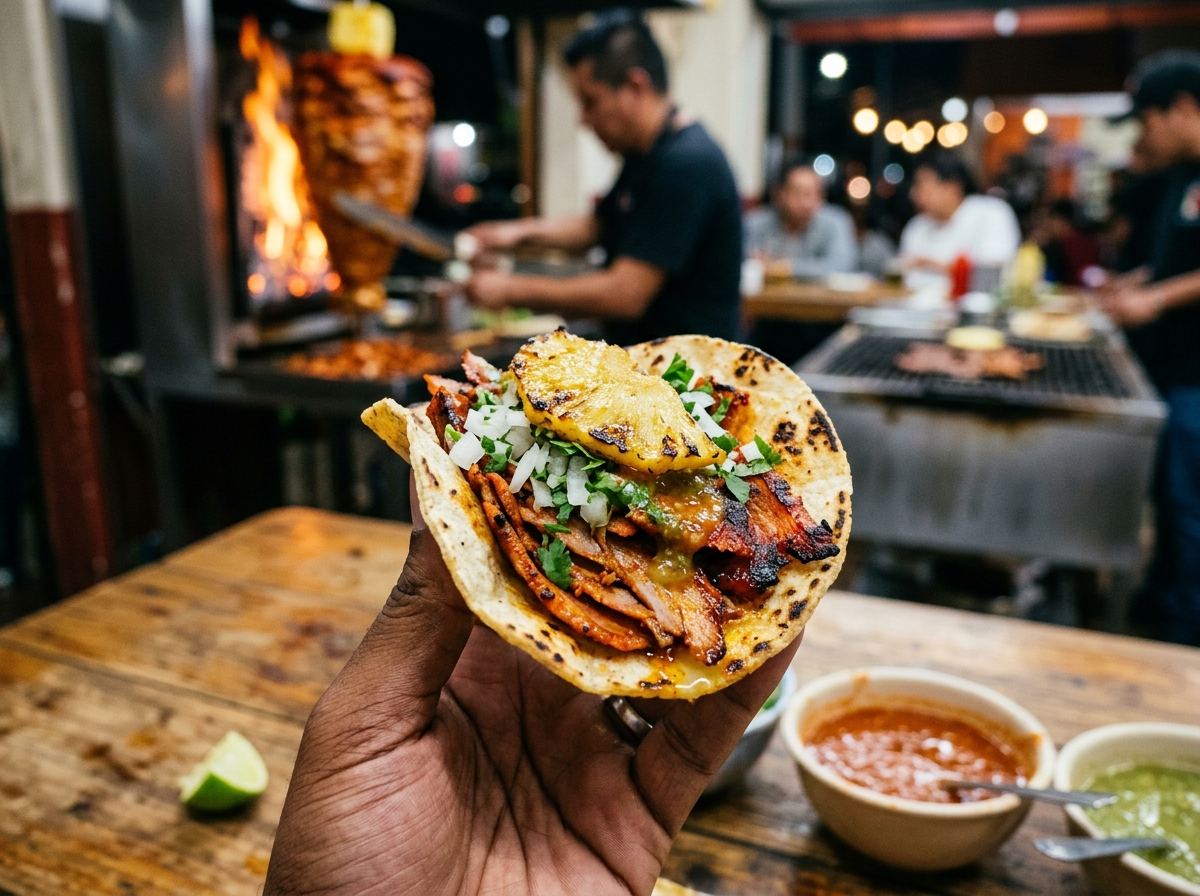
A tall, rotating spit of pork sits next to an open flame. Thin layers of marinated meat slowly crisp on the outside, and a whole pineapple perches right on top, dripping juice down onto the cooking pork below. A taquero — the person running the show — shaves off paper-thin slices directly onto a small corn tortilla, adds a chunk of grilled pineapple, and hands it to you with a nod.
That’s tacos al pastor in its purest form.
If you’ve ever walked through Mexico City at night or stumbled into a taquería in Los Angeles, you’ve probably seen this scene. The aroma alone stops people mid-step. But here’s what most people don’t realize — this iconic Mexican street food actually traces its roots thousands of miles away, to the Middle East. It’s a dish born from immigration, adaptation, and the kind of delicious cultural blending that makes food history genuinely fascinating.
Let’s talk about what tacos al pastor really are, where they came from, what goes into them, and why they’ve earned their place as one of the most beloved types of Mexican tacos on the planet.
The Unexpected Origin Story of Tacos al Pastor
You’d think a taco this deeply Mexican would have ancient Aztec roots. But the truth is way more interesting.
Tacos al pastor owe their existence to Lebanese and Iraqi immigrants who arrived in Mexico — particularly in Puebla and Mexico City — during the early 1900s, around the 1920s through the 1940s. These immigrants brought with them a tradition of cooking meat on a vertical rotisserie, a technique you’d recognize from shawarma. In the Middle East, this typically meant lamb seasoned with warm spices, shaved off a spinning spit, and served in flatbread.
When these families settled in Mexico, they naturally started cooking what they knew. But over time, the dish evolved. Lamb was expensive and not as popular in Mexico, so pork took its place. The warm Middle Eastern spices gradually gave way to dried chilies, achiote paste, and cumin. And instead of flatbread, the meat found its home on soft corn tortillas.
The name “al pastor” itself is a clue. It translates to “shepherd style,” a nod to the shepherds of the Middle East who originally roasted lamb this way. That connection has survived across continents and decades, even as the dish itself transformed into something entirely new.
By the mid-20th century, tacos al pastor had become a fixture of Mexico City street food culture. The vertical spit — called a trompo — became as iconic in Mexican taquerias as the tortilla press itself. What started as a foreign technique became one of the most authentically Mexican foods you can eat.
Did you know? In 2019, tacos al pastor were voted the best dish in the world at the Taste Atlas awards. Not just the best taco — the best dish, period.
This kind of cross-cultural food evolution isn’t unusual if you look at the broader history of tacos, which is full of surprising twists and borrowed ideas that became distinctly Mexican over time.
What Exactly Goes Into Tacos al Pastor?
If you break tacos al pastor down to their core, you’re looking at a few essential components. Each one matters, and each one does a specific job in creating that final flavor.
The Meat and the Marinade
The star is pork — usually boneless pork shoulder (also called pork butt), sliced thin and marinated for hours, sometimes overnight. The marinade is where the magic lives. A traditional al pastor marinade builds on dried chili peppers like guajillo and ancho, which provide deep color and a fruity, mild heat. These get blended with achiote paste (ground annatto seeds), which contributes that signature reddish-orange color and a slightly earthy, peppery flavor.
From there, you’ll find garlic, cumin, oregano, black pepper, vinegar or citrus juice (usually pineapple juice or lime), and sometimes a splash of beer or orange juice. The acid in the marinade tenderizes the meat while the spices soak in.
The result is pork that’s deeply seasoned all the way through — not just on the surface. When it hits the heat of the trompo, those sugars in the marinade caramelize and create crispy, slightly charred edges while the inside stays juicy and tender.
This approach to building flavor through slow marination and high-heat cooking is what separates al pastor from other Mexican taco meat types. It’s a longer process, but the payoff is undeniable.
The Trompo: Why the Vertical Spit Matters
You can’t talk about tacos al pastor without talking about the trompo. Think of it as the Mexican cousin of the shawarma spit or the Greek gyro rotisserie. Thin slices of marinated pork are stacked on a vertical metal spike, layered one on top of another until you’ve got a cone-shaped tower of meat that can weigh anywhere from 20 to over 100 pounds at a busy taquería.
The trompo sits next to an open flame — usually gas burners positioned vertically — and rotates slowly. The outer layer of meat cooks, caramelizes, and gets those slightly crispy edges. The taquero then uses a sharp knife or a long, thin blade to shave off slices directly onto a tortilla held below. It’s fast, theatrical, and incredibly efficient.
Pro Tip: If a restaurant is making “al pastor” but the meat comes off a flat grill or out of a steam pan, that’s not truly al pastor. It might taste good, but the trompo is what gives the meat its specific texture — crispy on the outside, soft and juicy on the inside. That contrast is non-negotiable for the authentic experience.
The Pineapple
Here’s the part that surprises some people: the pineapple isn’t optional. A whole pineapple sits on top of the trompo, slowly roasting alongside the meat. As the taquero shaves pork, they’ll flick off a small piece of that warm, caramelized pineapple right onto your taco.
The pineapple does something really important. Its sweetness cuts through the richness and spice of the pork. The acidity brightens everything up. It’s not there as a garnish — it’s a functional ingredient that balances the entire taco. Remove it, and you lose a whole dimension of the dish.
The Tortilla and Toppings
A proper taco al pastor sits on a small corn tortilla — and usually two of them stacked together. There’s a practical reason for this: the juices from the meat would soak through a single tortilla and tear it apart. The double tortilla holds everything together. If you’ve ever wondered about this specific tradition, there’s a whole story behind why tacos have two tortillas.
Toppings stay simple and purposeful. You’ll typically find finely diced white onion, fresh cilantro, a squeeze of lime, and salsa — often a green salsa verde or a smoky red salsa. Some places add a drizzle of avocado-based sauce, which adds creaminess without overwhelming the pork.
That’s it. No sour cream, no cheese, no lettuce. The simplicity is the point. Every ingredient has a role, and nothing is there just for show.
Tacos al Pastor vs. Other Spit-Roasted Meats
People often ask how tacos al pastor compare to shawarma or gyros. All three share the same basic cooking method — meat on a vertical rotisserie — but they end up in very different places.
Shawarma typically uses lamb, chicken, or beef seasoned with cardamom, turmeric, and cinnamon. It’s served in pita with tahini, pickles, and garlic sauce. Gyros use a mixture of ground lamb and beef, seasoned with Greek herbs, served in pita with tzatziki and tomatoes.
Tacos al pastor use pork marinated in dried chilies and achiote, served on corn tortillas with pineapple, cilantro, and onion. Same cooking technique, completely different flavor profile and cultural context.
The interesting thing is that all three dishes have influenced each other as they’ve traveled around the world. You’ll find shawarma-pastor fusion tacos in some cities now, which kind of brings the whole story full circle. The evolution of taco fillings keeps going, and al pastor is a perfect example of how one dish can inspire countless variations.
How to Spot Great Tacos al Pastor
Not all tacos al pastor are created equal, and once you’ve had a really good one, you can tell the difference immediately. Here are some honest markers of quality.
Look for the trompo. If you can see the vertical spit with meat rotating next to a flame, you’re in the right place. The trompo isn’t just tradition — it creates a specific texture and flavor that you can’t replicate on a flat grill.
Watch the taquero work. A skilled taquero shaves the meat in quick, precise strokes. They’ll often catch the slices directly on a tortilla held in their other hand. Some even flip a piece of pineapple off the top of the spit and catch it on the taco mid-air. If you see that, you’re watching someone who’s been doing this for years.
Check the color. The meat should be a deep reddish-orange from the achiote and chilies. If it looks pale or grayish, the marinade was either weak or skipped altogether.
Taste the balance. A great al pastor taco hits sweet, savory, spicy, and tangy all at once. The pork should be tender with crispy edges. The pineapple should be warm and slightly caramelized, not raw. The salsa should complement, not overpower. If all those elements come together, you’ve found a taquería worth returning to.
If you’re hunting for spots that do it right, especially on the West Coast, check out some of the best tacos in Los Angeles, where competition is fierce and the al pastor game is strong.
Making Tacos al Pastor at Home (Without a Trompo)
Let’s be real — most home kitchens don’t have a vertical rotisserie. But that doesn’t mean you can’t make a version of tacos al pastor that’s genuinely delicious. You just need to adapt the technique while staying true to the flavors.
The Marinade
Start with 4-5 dried guajillo chilies and 2-3 dried ancho chilies. Remove the stems and seeds, then toast them briefly in a dry pan until fragrant — about 30 seconds per side. Soak them in hot water for 15-20 minutes until soft.
Blend the rehydrated chilies with about a tablespoon of achiote paste, 3-4 garlic cloves, half a cup of pineapple juice, a quarter cup of white vinegar, a teaspoon of cumin, a teaspoon of dried oregano, half a teaspoon of black pepper, and salt to taste. Blend until completely smooth.
Slice 2-3 pounds of boneless pork shoulder into thin slabs — about a quarter inch thick. Coat them thoroughly with the marinade and let them sit in the fridge for at least 4 hours. Overnight is better.
Cooking Without the Spit
You’ve got a few options here. The oven-to-broiler method works well. Stack the marinated pork slices in a baking dish, cover with foil, and bake at 350°F for about 45 minutes to an hour until the meat is cooked through and tender. Then remove the foil, switch your oven to broil, and let the top layer get charred and crispy — watch it closely, because this happens fast, usually 3-5 minutes.
Pull the meat out and chop it into small pieces. Those crispy, caramelized bits mixed with the tender interior pieces will give you something close to the texture of trompo-shaved meat.
Another option is a cast iron skillet. Get it screaming hot, add a thin layer of oil, and sear the marinated pork slices in batches. Don’t crowd the pan — you want each piece to make direct contact with the hot surface. Cook about 3 minutes per side until you get that char. Then chop everything into smaller pieces.
Assemble Right
Warm your corn tortillas on an open flame or in a dry pan. Stack two for each taco. Add the chopped pork, a few pieces of pineapple that you’ve grilled or pan-seared until caramelized, diced white onion, fresh cilantro, and a squeeze of lime. Pick a good salsa — something with a smoky or tangy kick works best with al pastor.
Quick Fact: The pineapple you use matters. Fresh pineapple grilled until it has char marks tastes completely different from canned pineapple. The natural sugars caramelize and develop a deeper, more complex sweetness. Don’t skip this step.
For more detailed techniques on getting your home al pastor closer to taquería quality, you might find some useful guidance in our breakdown of perfect al pastor tacos.
Why Tacos al Pastor Matter Beyond the Plate
It’s easy to think of tacos al pastor as just street food — quick, cheap, eaten standing up at a taco stand with a napkin that’s barely holding things together. But this dish represents something bigger.
Tacos al pastor are living proof that the best food often comes from cultural collision. Lebanese immigrants didn’t set out to create a Mexican icon. They were just cooking what they knew, adapting to what was available, and feeding their families and communities. Over decades, Mexican cooks took that foundation and made it unmistakably their own. The shawarma spit became the trompo. Lamb became pork. Flatbread became corn tortillas. Middle Eastern spices became dried chilies and achiote.
Today, tacos al pastor are so deeply Mexican that most people eating them have no idea about the Lebanese connection. And that’s okay — that’s how food evolves. Every cuisine on earth is built on borrowed ideas that got transformed by local ingredients, local tastes, and local creativity.
The taqueros who run the trompo stands — many of them have been doing this for decades, learning from fathers and grandfathers. It’s a skilled trade. Knowing how to stack the meat, how to control the heat, how to shave the pork at the right thickness — these aren’t things you pick up in a weekend. Becoming a truly authentic taquero takes years of practice and a deep understanding of how fire, fat, and seasoning work together.
FAQ
What does “al pastor” mean in English?
“Al pastor” translates to “shepherd style” in English. The name comes from the Middle Eastern shepherds who originally cooked lamb on vertical spits. When the dish made its way to Mexico through Lebanese immigrants, the name stuck even as the meat changed from lamb to pork.
Are tacos al pastor spicy?
They’re flavorful more than they’re spicy. The dried chilies used in the marinade — guajillo and ancho — are mild to medium on the heat scale. They bring more color and fruity depth than actual burn. The real heat, if any, comes from the salsa you add on top. You can control that part yourself.
Can you make tacos al pastor with chicken or beef instead of pork?
Traditionally, al pastor is always pork. That said, some taquerias and home cooks do make chicken al pastor using the same marinade and technique, and it works well. Beef is less common because the marinade flavors pair best with pork’s natural sweetness and fat content. But if you don’t eat pork, chicken is your best substitute — just adjust your cooking time since chicken dries out faster.
What’s the difference between tacos al pastor and tacos de adobada?
Great question, because even in Mexico, people argue about this. In many parts of the country, “al pastor” specifically means the meat was cooked on a trompo (vertical spit). “Adobada” uses a very similar marinade but the meat is typically grilled flat, baked, or cooked on a regular grill. In northern Mexico, you’ll hear “adobada” more often, while “al pastor” dominates in Mexico City and central Mexico. The flavor profile is similar, but the cooking method is the key distinction.
Why is there pineapple on tacos al pastor?
The pineapple serves a real purpose beyond just taste. Its acidity helps tenderize the pork during cooking, and the natural sugars caramelize beautifully on the trompo. Flavor-wise, the sweetness of the pineapple creates a perfect contrast against the savory, slightly spicy pork. It also adds a fresh, bright element that keeps the richness of the meat from feeling heavy.
Final Thoughts
There’s a reason tacos al pastor show up on “best food in the world” lists year after year. They’re the kind of dish that sounds simple — marinated pork on a tortilla — but actually represents decades of cultural exchange, technique refinement, and that stubborn human instinct to take something good and make it even better.
Whether you find them at a late-night taco stand in Mexico City, a taquería in Los Angeles, or your own kitchen on a Saturday afternoon, the experience is worth paying attention to. Watch how the meat cooks. Notice the way the pineapple juice drips down the trompo. Taste how every single element — the char, the spice, the sweetness, the lime — does its job without competing.
Next time you’re standing in front of a trompo, just order one. You’ll understand why this shepherd-style taco, born from a Middle Eastern technique and raised on Mexican soil, became one of the most loved foods on earth.