Mexico has over 60 recognized regional taco varieties. Sixty. That’s not a typo. Most people outside Mexico only know about three or four — and half the time, those aren’t even the real deal.
If you’ve only experienced tacos as a hard shell stuffed with ground beef and shredded cheese, you’ve been missing out on an entire universe of flavor. Real Mexican tacos tell the story of a country’s geography, its history, and its people. A taco from Mexico City tastes nothing like one from Baja California, and a taco from Oaxaca has almost nothing in common with one from Sinaloa.
The truth is, the word “taco” is just a starting point. What goes inside — the meat, the salsa, the preparation method, the tortilla itself — changes dramatically depending on where you are in Mexico and what tradition you’re tapping into. Understanding the different types of Mexican tacos opens up a whole new way of eating, ordering, and even cooking at home.
So let’s walk through the real ones. Not a textbook list, but a genuine breakdown of what makes each type unique, how they taste, and why they matter.
H2: Street Tacos — The Heart and Soul of Mexican Taco Culture
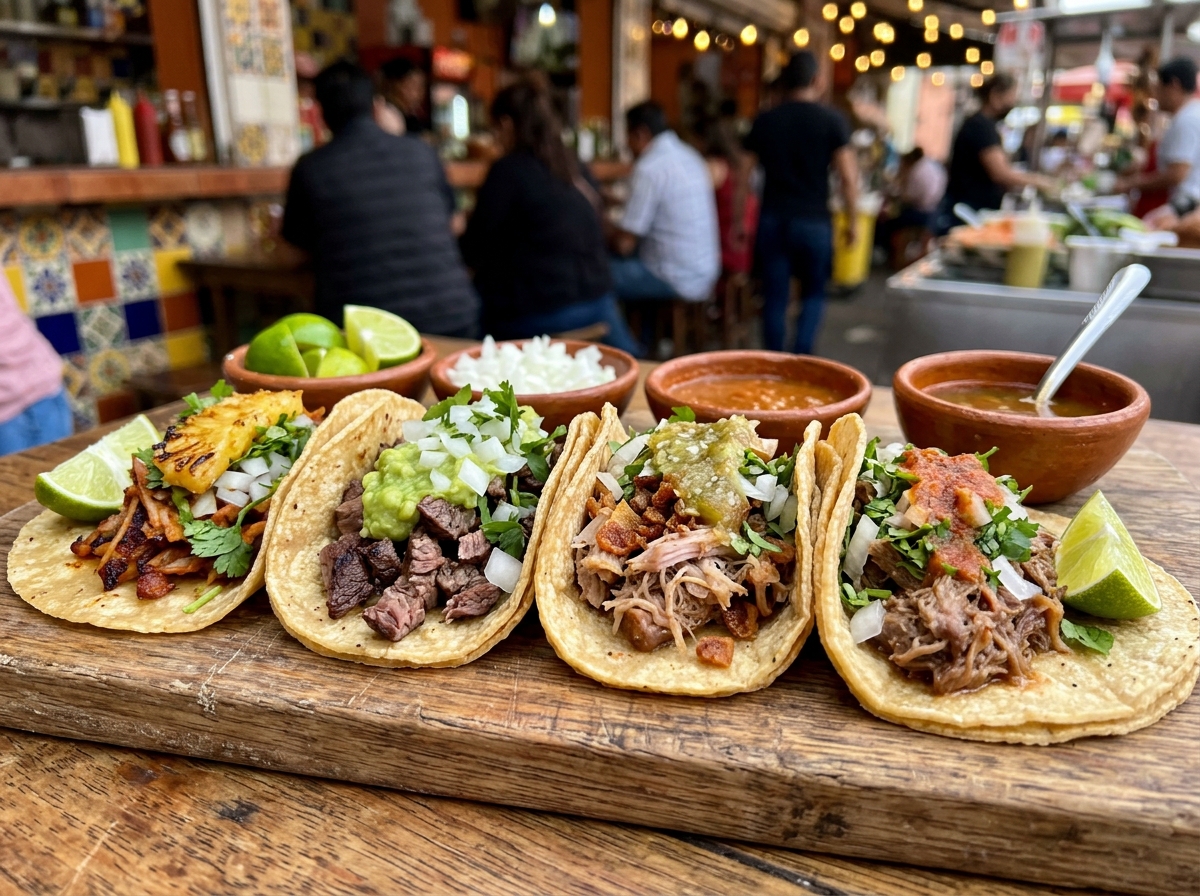
You can’t talk about types of Mexican tacos without starting here. Street tacos — or tacos callejeros — aren’t a specific recipe. They’re a category, a way of eating, and honestly, a way of life in Mexico.
Picture a small cart on a busy corner in Mexico City at 10 PM. There’s a guy with a flat griddle, smoke rising, a stack of small corn tortillas, and a few squeeze bottles of salsa. That’s a taquería on wheels, and it’s where millions of Mexicans eat multiple times a week.
Street tacos are typically small — maybe 4 to 5 inches across. They sit on doubled-up corn tortillas (and yes, there’s a real reason why tacos have two tortillas — it’s not just extra carbs). The fillings are simple but deeply flavorful. Toppings are minimal: raw onion, cilantro, a squeeze of lime, and salsa. That’s it. No sour cream. No shredded cheese. No lettuce.
What makes a great street taco isn’t complicated ingredients. It’s the quality of the tortilla, the seasoning of the meat, and the salsa that ties everything together.
H3: Why Street Tacos Taste Different From Restaurant Tacos
There’s a noticeable gap between a taco you buy off a cart and one you order at a sit-down restaurant. Part of it is the cooking surface — most street vendors use a plancha (flat steel griddle) that’s been seasoned over years of use. The heat is intense and direct. Meats cook fast, fat renders quickly, and there’s a smoky, caramelized edge that’s hard to replicate in a standard kitchen.
The other part? Freshness. Street vendors make tortillas in small batches. The salsa was blended that morning. Nothing sits around. You eat it within seconds of it leaving the grill.
H2: Tacos al Pastor — Mexico’s Most Iconic Taco
If there’s one taco that represents Mexican street food culture to the world, it’s tacos al pastor. And its origin story is genuinely fascinating.
In the early 20th century, Lebanese immigrants settled in central Mexico — particularly in Puebla. They brought with them the tradition of cooking meat on a vertical rotisserie, much like Middle Eastern shawarma. Mexican cooks adopted the technique but swapped lamb for pork, traded out the Middle Eastern spice blends for dried chili marinades, and added something uniquely Mexican: pineapple.
The result? A taco al pastor that’s smoky, slightly sweet, tangy, and spiced — all at once.
The pork is thinly sliced, marinated in a paste made from dried guajillo and ancho chilies, achiote, cumin, garlic, and vinegar. It’s stacked on a vertical spit called a trompo, with a whole pineapple perched on top. As the meat slowly rotates and cooks, the pineapple juices drip down over the pork, caramelizing as they go.
A skilled taquero shaves the meat off the spit with a long knife, catches a small slice of pineapple on the blade, and lands everything perfectly on a waiting tortilla below. It’s part cooking, part performance art.
H3: What Makes a Perfect Al Pastor Taco
Getting al pastor right comes down to a few things. The marinade needs balance — too much achiote and it tastes bitter, too little chili and it’s bland. The meat should have crispy, slightly charred edges but stay juicy inside. And the pineapple should be grilled just enough to bring out its sweetness without turning it mushy.
The tortilla matters too. A proper al pastor taco sits on a soft corn tortilla, not flour. Flour tortillas are wonderful for other things, but they’re too heavy and chewy for al pastor. Corn lets the meat shine.
Quick fact: Mexico City alone has an estimated 10,000+ taco stands serving al pastor on any given night. It’s not just popular — it’s a daily staple for millions of people.
H2: Tacos de Carne Asada — The Grill Master’s Taco
If al pastor is the king of the trompo, carne asada is the king of the grill. And while al pastor dominates in central Mexico, tacos de carne asada own the north — Sonora, Chihuahua, Nuevo León, and the border towns.
Carne asada literally translates to “grilled meat,” and at its core, that’s exactly what it is. Thin cuts of beef — usually arrachera (skirt steak) or diezmillo (chuck) — are seasoned simply, often with just salt, pepper, lime juice, and maybe some garlic. The meat hits a screaming-hot charcoal grill and cooks fast. It comes off smoky, slightly charred, and incredibly beefy.
Northern Mexican carne asada tacos often use flour tortillas instead of corn. The flour tortillas up north are different from the thick, dense ones you might find in American supermarkets — they’re thin, soft, slightly buttery, and meant to be eaten warm. This regional preference tells you something important: in Mexico, there’s no single “right” way to make a taco. The corn vs. flour tortilla debate depends entirely on where you are and what you’re eating.
A great carne asada taco gets topped with guacamole, grilled green onions (cebollitas), and a fiery roasted salsa. That’s it. Simple, smoky, and satisfying.
H3: The Role of the Grill in Carne Asada Culture
In northern Mexico, grilling carne asada is a social event — similar to a barbecue in the American South. Families gather on weekends, fire up a charcoal grill, and spend the afternoon cooking, eating, and talking. The grill isn’t just a cooking tool. It’s a gathering point.
This social tradition has crossed the border, too. In cities like Los Angeles, San Diego, and Houston, carne asada cookouts are a regular part of Mexican-American life. If you’re looking for great tacos in Los Angeles, carne asada is always a reliable order.
H2: Tacos de Birria — The One That Broke the Internet
A few years ago, birria tacos exploded on social media. TikTok, Instagram, YouTube — suddenly everyone was dipping reddish-orange tacos into a rich consommé. But birria has been a beloved dish in Mexico for generations, long before it ever appeared on anyone’s phone screen.
Birria originated in the state of Jalisco. Traditionally, it was made with goat meat (chivo), slow-braised for hours in a complex adobo of dried guajillo, ancho, and morita chilies mixed with cumin, cloves, oregano, black pepper, and sometimes cinnamon. The result is a deeply flavorful, fall-apart-tender stew.
The “birria taco” as most people know it today — the crispy, cheese-covered, dip-able version — is actually called a taco de birria estilo Tijuana or sometimes quesabirria. This style started in Tijuana, where street vendors began dipping corn tortillas in the rich, red birria fat, griddling them until crispy, stuffing them with the braised meat and melted cheese, and serving the consommé on the side for dipping.
It’s messy. It’s rich. And it’s absolutely worth every napkin you’ll go through.
H3: Goat vs. Beef Birria — What’s the Difference?
Traditional Jalisco birria uses goat, which has a gamier, more complex flavor. But beef birria — usually made with chuck roast or short ribs — has become far more common, especially in the U.S. and in the quesabirria style. Beef is easier to source, milder in taste, and shreds beautifully.
Both are legitimate. If you want the old-school experience, go with goat. If you want something more familiar but still packed with flavor, beef works perfectly. What really makes birria special isn’t the protein — it’s the adobo and the long, slow braise that transforms everything.
H2: Tacos de Carnitas — Michoacán’s Pride
Carnitas come from the state of Michoacán, and they represent one of the most impressive cooking techniques in Mexican cuisine. The concept sounds simple — pork, slow-cooked until tender and crispy. The execution is anything but.
Traditional carnitas involve submerging large pieces of pork (shoulder, ribs, belly, even skin) into a massive copper pot filled with rendered lard. Yes, the pork cooks in its own fat. The pot simmers for 3 to 4 hours — sometimes longer — until the meat is meltingly tender on the inside and develops golden, crunchy edges on the outside.
The flavor is pure pork, enhanced by a few aromatics that vary by the cook — some add orange peel, others use Coca-Cola or sweetened condensed milk (seriously), and some stick with just garlic and salt. The copper pot isn’t just for show, either. It conducts heat evenly and some cooks believe it adds a subtle flavor you can’t get from steel or aluminum.
When you order a taco de carnitas, you’ll often get to choose your cut. Maciza is the lean shoulder meat. Cuerito is the skin — soft, gelatinous, and an acquired taste. Buche is stomach. And surtida is a mix of everything. For your first time, maciza is the safe bet. For the adventurous, ask for surtida and experience the full range.
Top your carnitas taco with raw white onion, fresh cilantro, a squeeze of lime, and a bright green salsa verde. The richness of the pork against the sharp, acidic toppings is what makes this combination work so beautifully.
H2: Tacos de Barbacoa — Slow-Cooked Perfection
Barbacoa has roots that go back centuries — long before the Spanish arrived. The word itself likely comes from the Taíno word barbakoa, describing a framework of sticks used to cook meat over fire. In central Mexico, the tradition evolved into something more specific and deeply ritualistic.
Authentic barbacoa, especially in states like Hidalgo and Tlaxcala, involves wrapping beef cheeks or whole lamb in maguey (agave) leaves and burying the bundle in an underground pit lined with hot coals. The meat steam-cooks for 8 to 12 hours overnight. In the morning, it’s unearthed — smoky, impossibly tender, and full of the earthy sweetness from the maguey leaves.
The juices that collect during cooking become the consommé — a flavorful broth usually seasoned with chickpeas, dried chilies, and herbs. Barbacoa is traditionally a weekend food in Mexico. Sunday morning barbacoa tacos are a ritual, especially in and around Mexico City.
Most barbacoa tacos come on corn tortillas, topped with cilantro, onion, and salsa roja or salsa borracha (made with pasilla chilies and pulque or beer). You eat the taco, sip the consommé, and repeat.
H3: Barbacoa vs. Birria — People Confuse These All the Time
It’s easy to mix them up, but they’re distinct dishes. Barbacoa is pit-smoked or steam-cooked and has a smoky, clean meaty flavor. Birria is braised in a complex chili adobo, giving it a spicier, more layered taste. Barbacoa comes from central Mexico; birria comes from Jalisco. Different origins, different techniques, different flavors — both exceptional.
H2: Tacos de Canasta — The Humble Basket Taco
Not all tacos come off a grill or a spit. Tacos de canasta — “basket tacos” — are one of Mexico’s most affordable and widely consumed street foods, and they don’t get nearly enough love outside the country.
Here’s how they work. Soft corn tortillas are filled with simple fillings — refried beans, potato with chorizo, chicharrón prensado (pressed pork cracklings in salsa), or mole verde. The filled tacos are packed tightly into a large basket (canasta) lined with blue plastic bags and cloth, then drizzled with warm oil or melted lard. The basket is sealed and the tacos essentially steam together for hours. By the time the vendor opens the basket, the tortillas have absorbed the oil, turning soft, slightly greasy, and incredibly flavorful.
These are working-class tacos. You’ll find canasta vendors on bicycles riding through neighborhoods, in bus stations, and outside factory gates. A single taco de canasta might cost 8 to 12 Mexican pesos — that’s less than a dollar. They’re not glamorous, but they’re honest food that feeds a huge portion of Mexico’s urban population daily.
Pro tip: If you see a basket taco vendor in Mexico, always ask for the chicharrón prensado filling. The combination of pressed pork cracklings in a tangy guajillo salsa, steamed inside that oily tortilla, is something you won’t forget.
H2: Tacos de Suadero — Mexico City’s Best-Kept Secret
Walk through certain neighborhoods in Mexico City and you’ll see vendors with a large, slightly concave griddle set over a gas flame. The griddle has a moat of oil around its edges where meat slowly renders and crisps. The meat is suadero — a cut from the area between the belly and the leg of the cow. It’s not quite brisket, not quite flank — it’s something in between, with a unique texture that’s silky and slightly gelatinous when cooked properly.
Suadero gets chopped into small pieces and fried slowly on that concave griddle. The fat renders out gradually, and the meat gets tender and crispy at the same time. The flavor is deep, beefy, and rich — different from carne asada’s char-grilled intensity.
Most people outside Mexico City haven’t heard of suadero tacos, which is a shame because they’re absolutely among the best. They’re simple — corn tortilla, the meat, green or red salsa, onion, cilantro — and they represent the kind of authentic Mexican taco experience that doesn’t need dressing up.
H2: Tacos de Pescado — Baja’s Gift to the Taco World
Head to Baja California — specifically Ensenada — and the taco scene shifts entirely. You’re on the coast now. The star ingredient isn’t pork or beef. It’s fish.
Tacos de pescado (fish tacos) in the Baja style use white fish — typically a firm variety like shark, mahi mahi, or cod — that’s battered and fried until golden and crunchy. The fried fish sits on a corn or flour tortilla and gets topped with shredded cabbage, a creamy white sauce (mayo-based, sometimes with chipotle), and a bright pico de gallo or salsa fresca.
The combination of crunchy fried fish, cool creamy sauce, crisp cabbage, and tangy salsa creates a balance of textures and flavors that’s genuinely addictive. This style was born in Ensenada in the 1950s and ’60s, and it’s since become one of the most popular taco styles in the United States, especially across California.
California-style tacos often draw heavy inspiration from this Baja tradition, adding things like avocado crema, pickled red onion, or mango salsa. If you love a good fish taco, know that you’re eating something with real Mexican coastal roots.
H3: Grilled vs. Fried — The Fish Taco Debate
Fried is the classic Baja preparation, but grilled fish tacos have their own following. Grilled fish tacos skip the batter and cook the fish directly on a hot grill with simple seasonings. They’re lighter, let the fish flavor come through more clearly, and pair well with fruit-based salsas.
Both versions are great. Fried if you want that satisfying crunch. Grilled if you want something lighter. You really can’t go wrong either way.
H2: Tacos de Lengua — The Taco That Scares People (But Shouldn’t)
Let’s talk about lengua — beef tongue. The moment you say “tongue taco” to someone who’s never tried it, you can watch the hesitation cross their face. But here’s what those people don’t know: lengua, when properly cooked, is one of the most tender, flavorful, and buttery meats you’ll ever eat.
Beef tongue is typically slow-simmered for 2 to 3 hours with onion, garlic, bay leaves, and peppercorns until completely tender. The outer skin is peeled away (it comes off easily after cooking), and the soft inner meat is chopped into small cubes and crisped briefly on a hot griddle.
The texture is unlike any other taco meat — softer than carne asada, less fatty than carnitas, with a mild, clean beef flavor. Topped with a good salsa verde and some chopped onion, tacos de lengua are genuinely one of the best types of Mexican tacos you can eat.
Did you know? In Mexico City, lengua is often one of the pricier taco options at a street stand — not because it’s exotic, but because the meat is expensive and the preparation takes hours. A good lengua taco is a sign that the taquero takes their craft seriously.
H2: Tacos de Chorizo — Spicy, Crumbly, and Bold
Mexican chorizo is nothing like Spanish chorizo. Spanish chorizo is a cured, dry sausage. Mexican chorizo is raw ground pork mixed with vinegar, chili powder (usually guajillo and ancho), paprika, cumin, garlic, and oregano. It’s soft, crumbly, and deep red.
To make tacos de chorizo, the sausage is removed from its casing and fried until it’s deeply caramelized and slightly crispy. The fat renders into a gorgeous reddish-orange oil that flavors everything it touches. Sometimes it’s mixed with scrambled eggs (chorizo con huevo) for a breakfast taco, and sometimes it’s cooked with potatoes (chorizo con papa) for a hearty, satisfying filling.
The flavor is bold — spicy, tangy from the vinegar, earthy from the dried chilies, and deeply savory. It’s one of those taco meats that punches way above its simplicity.
H2: Tacos Dorados — The Crunchy Ones (But Not What You Think)
If you hear “crunchy taco” and picture a Taco Bell hard shell, let me redirect you. Tacos dorados — “golden tacos” — are the real crunchy tacos of Mexico, and they’re made completely differently.
A corn tortilla is filled with shredded chicken, potato, or beef, rolled tightly like a cigar, and deep-fried until crispy and golden. They come out looking like flautas (and in many regions, the names are interchangeable — the distinction often depends on what part of Mexico you’re in).
Tacos dorados are typically served in groups of three or four, drizzled with crema, topped with shredded lettuce, crumbled queso fresco, and a ladle of red or green salsa. They’re crunchy on the outside, soft and warm on the inside, and they’re one of the most common home-cooked taco styles in Mexico.
You’ll find them at fondas (small family-run restaurants), school cafeterias, and home kitchens across the country. They’re comfort food in the truest sense.
H2: Tacos Árabes — The Lebanese Connection
Remember how we mentioned Lebanese immigrants influencing tacos al pastor? Well, tacos árabes are the original version — the direct precursor to al pastor, and they still exist today, primarily in Puebla.
Tacos árabes use seasoned pork (or sometimes lamb) cooked on a vertical spit, just like al pastor. But here’s where they differ: instead of a corn tortilla, the meat is served in a pan árabe — a thick, pita-like bread that’s softer and chewier than a typical tortilla. And the toppings are simpler — usually just chipotle salsa and lime. No pineapple.
If you ever visit Puebla, tacos árabes are a must-try. They connect you directly to the fascinating history of tacos and how immigration shaped Mexican cuisine in ways most people don’t realize.
H2: Tacos de Guisado — The Home-Style Taco
Not every taco comes from a street cart or a grill. Tacos de guisado — stew tacos — represent the home cooking side of Mexican taco culture, and they might be the most underappreciated type on this list.
Walk into a small comedor (casual eatery) or fonda in Mexico City around lunchtime, and you’ll see large clay pots or metal trays filled with different guisados (stewed dishes). Chicharrón en salsa verde. Mole rojo. Picadillo with potatoes. Rajas con crema (roasted poblano strips in cream). Tinga de pollo (shredded chicken in chipotle-tomato sauce). Nopales with egg.
You point to what you want, and the cook scoops it onto a warm tortilla. That’s your taco de guisado.
These tacos showcase the incredible diversity of everyday Mexican cooking. The evolution of taco fillings over the centuries shows up most clearly here, where regional stews and braises become portable meals wrapped in a tortilla.
H2: Choosing the Right Toppings and Salsas
The taco itself is only half the experience. What you put on top — and how much — makes a real difference.
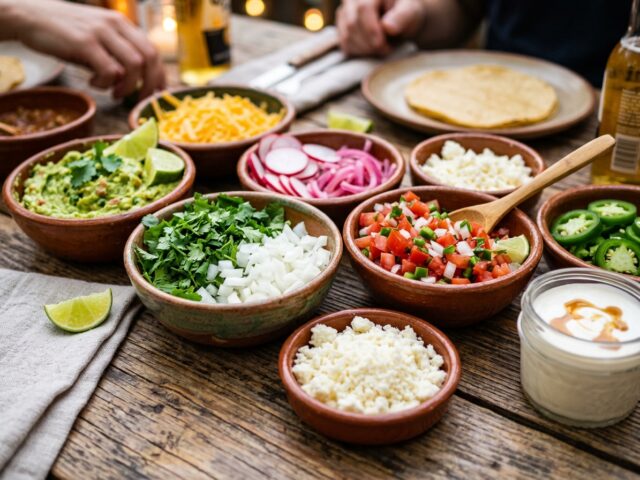
Traditional Mexican taco toppings are minimal compared to Americanized versions. You won’t find sour cream, yellow cheese, or iceberg lettuce at an authentic taquería. Instead, the best taco toppings stay simple: diced white onion, fresh cilantro, a squeeze of lime, and salsa.
The salsa is where things get interesting. Most taco stands offer at least two options — a red salsa (roja) and a green salsa (verde). Some offer three, four, or even more. A good taco sauce isn’t just about heat — it’s about flavor complexity. A smoky chipotle salsa pairs differently with pork than a bright tomatillo salsa does with chicken. Learning which salsas complement which meats is a skill that develops over time.
And don’t forget avocado. Whether as sliced avocado, a simple guacamole, or a creamy avocado salsa, this ingredient adds a richness and cooling effect that balances spicy, smoky, and acidic elements perfectly.
H2: How to Order Tacos Like You Know What You’re Doing
If you walk into an authentic taquería for the first time, it can feel a little intimidating. There’s no pictures on the wall, the menu is handwritten in Spanish, and everyone else seems to know exactly what to order. Here are a few practical pointers.
Start by looking at what other people are eating. If everyone’s ordering the same thing, there’s a reason. Ask the taquero what’s best — they’ll tell you honestly.
Order two or three tacos to start. Mexican tacos are small, and most people eat four to six in a sitting. Try at least two different meats so you can compare. If the stand specializes in something — like a sign that says Especialidad: Al Pastor — order that. Specialists tend to do their signature filling best.
Don’t load up on toppings before tasting the meat by itself. Take a bite of just the meat and tortilla first. Then add salsa gradually. A good taquero has already seasoned the meat properly — your job is just to fine-tune with toppings.
And if you’re in Mexico or at a taco cart catering event, don’t be afraid to try something unfamiliar. Cabeza (head meat), tripa (tripe), buche (stomach) — these are all traditional and beloved for good reason. You might surprise yourself.
FAQ Section
What is the most popular type of Mexican taco?
Tacos al pastor consistently ranks as the most popular, especially in Mexico City and central Mexico. A 2019 survey by the Mexican government’s cultural agency found that al pastor was the most consumed taco variety in the country. Carne asada dominates in northern Mexico and among Mexican communities in the U.S.
What’s the difference between a street taco and a regular taco?
Street tacos are small, served on doubled corn tortillas, and topped simply with onion, cilantro, lime, and salsa. “Regular” tacos as many Americans know them — with hard shells, ground beef, cheese, lettuce, and sour cream — are actually a Tex-Mex creation, not traditional Mexican food. Both are valid, but they’re very different experiences.
Are authentic Mexican tacos always made with corn tortillas?
Not always. In northern Mexico, flour tortillas are the standard for many taco types, especially carne asada. In central and southern Mexico, corn dominates. The choice between corn and flour tortillas is regional and depends on the filling.
What meats are traditionally used in Mexican tacos?
Traditional Mexican taco meats include al pastor (marinated pork), carne asada (grilled beef), carnitas (braised pork), barbacoa (slow-cooked beef or lamb), birria (braised goat or beef), chorizo (spiced pork sausage), suadero (beef), lengua (tongue), cabeza (head meat), and tripa (tripe). Chicken and fish are also popular, depending on the region.
When is National Taco Day?
National Taco Day falls on October 4th each year in the United States. Many restaurants and taco chains offer deals and free tacos on this day. In Mexico, the celebration of tacos is more of a daily affair than a single date.
Final Thoughts
Mexican tacos aren’t a single dish. They’re a family of dishes — dozens of regional traditions, cooking techniques, and flavor profiles that reflect centuries of history, immigration, and creativity. From the Lebanese-influenced al pastor spinning on its spit to the humble basket taco steaming on a bicycle, every type tells a story.
The best way to learn about them isn’t just reading — it’s eating. Next time you’re at a taquería, skip the safe order. Try the suadero. Ask for the lengua. Grab a canasta taco from a street vendor. Each new taco you try gets you one step closer to understanding why this simple food — just meat, tortilla, and salsa — has captured the hearts (and stomachs) of people around the world.
Start with one new type this week. You won’t regret it.