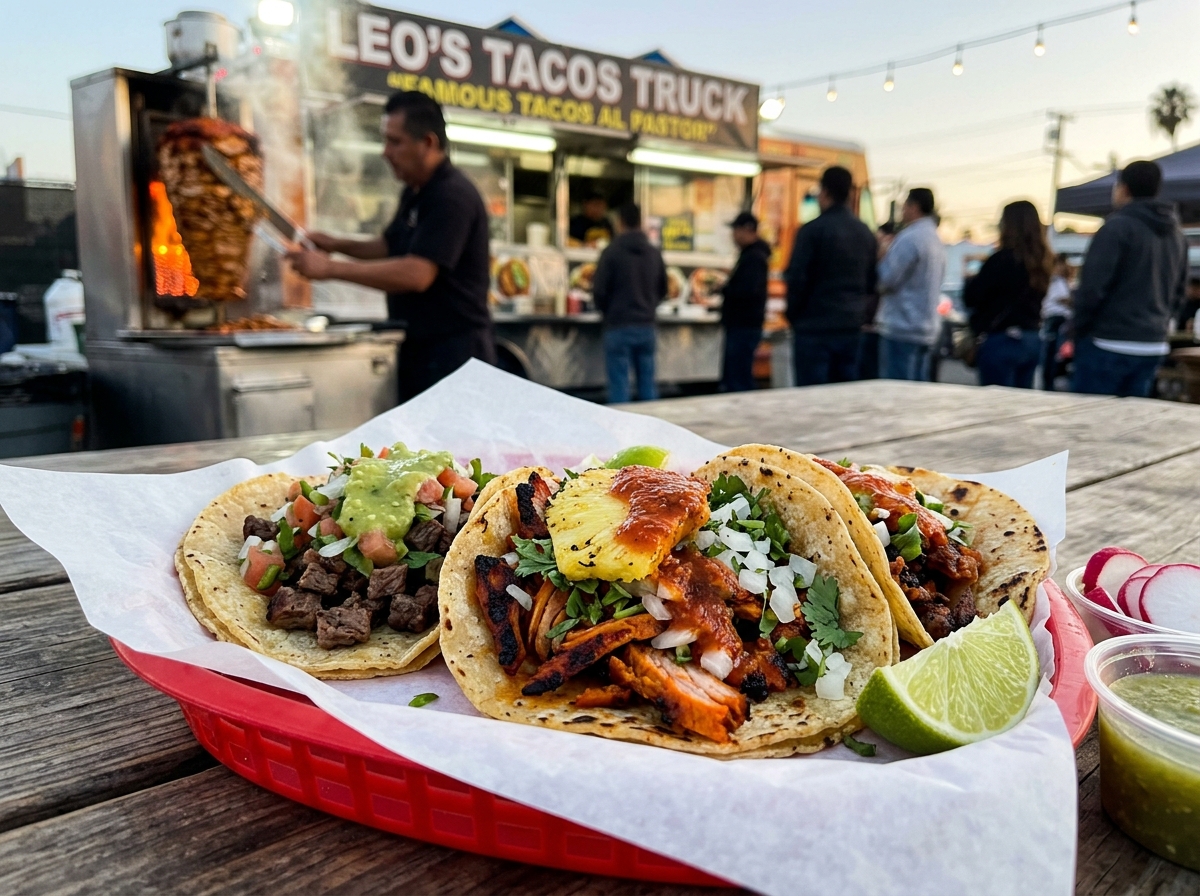
Los Angeles sells more tacos than any other city in the United States. That’s not hype — it’s just math. With over 100,000 street vendors (many of them taco-focused) and thousands of taquerías scattered across every neighborhood, LA runs on tacos the way New York runs on pizza. But here’s the thing most food guides won’t tell you: not all popular tacos are created equal, and knowing what to order — and where — can mean the difference between a forgettable snack and a life-changing bite.
Whether you’re visiting LA for the first time or you’ve lived here for years but keep ordering the same thing, this guide breaks down the tacos that actually define this city. We’re talking about the styles people line up for at midnight, the regional specialties you can’t easily find anywhere else, and the spots that locals argue about at family dinners.
Why LA Became the Taco Capital of America
You can’t really talk about popular tacos in Los Angeles without understanding why this city became ground zero for taco culture. It didn’t happen overnight, and it’s not just because LA sits close to the Mexican border.
The real story goes back decades. Waves of immigration from different Mexican states — Jalisco, Oaxaca, Puebla, Guerrero, Sinaloa, Baja California — each brought their own regional taco traditions. A family from Tijuana makes tacos differently than a family from Mexico City, and both make tacos differently than someone from Oaxaca. LA became the one place where all these regional styles exist side by side, sometimes on the same block.
Add to that the city’s street food culture. LA’s taco truck and street cart scene exploded in the 1990s and 2000s, turning parking lots and sidewalk corners into outdoor dining rooms. The city even changed its laws around street vending in 2017 (SB 946), which made it easier for vendors to operate legally. That decision alone helped thousands of taqueros come out of the shadows.
The result? A taco ecosystem that’s deeper, wider, and more diverse than anywhere else in the country. You’ve got $1.50 street tacos sitting three blocks from $6 gourmet tacos, and honestly, the cheap ones often win.
The Tacos That Define Los Angeles
Let’s get into the specific styles that dominate LA’s taco scene. These aren’t ranked — because honestly, comparing a birria taco to a Baja fish taco is like comparing apples to steak. They’re different experiences entirely.
Tacos al Pastor — The Undisputed King
If there’s one taco that represents LA more than any other, it’s tacos al pastor. Walk through any neighborhood with a heavy Mexican population — Highland Park, Boyle Heights, East Hollywood, South LA — and you’ll spot the signature vertical spit (called a trompo) spinning next to an open flame.
The pork is marinated in a blend of dried chilies, achiote paste, pineapple, and spices, then stacked on the spit and slow-roasted for hours. The taquero shaves thin slices directly off the trompo, often flicking a chunk of caramelized pineapple on top with the same knife in one smooth motion. It’s part cooking, part performance art.
What makes LA’s al pastor special compared to other cities? The competition. With so many vendors making this style, only the best survive. The pork should be slightly crispy on the edges, tender inside, and balanced between sweet, spicy, and savory. If the meat is dry or bland, there’s another trompo spinning two blocks away.
Pro Tip: Look for trompos that are actually spinning and cooking in real-time. Some places pre-cook the meat and just warm it up — you can taste the difference. The edges should have a slight char, and the pineapple on top of the spit should be dark and caramelized, not bright yellow.
Want to understand what goes into perfecting al pastor at home? It’s a deeper process than most people expect.
Birria Tacos — LA’s Modern Obsession
Birria tacos went from a niche regional specialty to an LA-wide phenomenon over the past five or six years. If you were on social media anytime between 2019 and 2023, you probably saw those red-stained, crispy, cheese-filled tortillas getting dipped into dark consommé. That visual started in LA — specifically in spots like Teddy’s Red Tacos in downtown and Birriería González in East LA.
Traditional birria comes from Jalisco, Mexico, and it’s typically made with goat meat stewed in a rich chile-based broth. LA’s version usually uses beef (often a combination of chuck, short rib, and shank), which makes it more accessible to American palates. The tortilla gets dipped in the red-tinted fat from the consommé, then griddled until crispy, stuffed with shredded meat and melted cheese.
Here’s what most articles miss about birria tacos: the consommé matters just as much as the taco itself. A great consommé should be complex — you should taste guajillo and ancho chilies, aromatics like cloves and black pepper, and a deep beefy richness that feels like it simmered for hours (because it did). The taco is the vehicle; the consommé is the soul.
Did You Know? Birria quesatacos — the crispy, cheese-stuffed version that went viral — aren’t traditional at all. They’re an LA innovation. In Jalisco, birria is typically served in a bowl as a stew, sometimes with tortillas on the side. The “quesabirria” concept was born in Tijuana and perfected in Los Angeles.
Carne Asada Tacos — The Timeless Classic
Some tacos ride trends. Carne asada tacos don’t need trends — they’ve been LA’s backbone since before Instagram existed. A proper carne asada taco is deceptively simple: grilled beef, diced onion, cilantro, a squeeze of lime, and salsa on a warm tortilla. That’s it. And when it’s done right, you don’t need anything else.
The cut of meat matters more than most people realize. Serious taquerías use thin-sliced flap steak (called diesmillo or arrachera depending on region), marinated in citrus, garlic, and chili, then grilled over high heat until charred on the outside and juicy inside. The meat should be chopped on the flat-top right before serving — not pre-cut and sitting in a steam tray.
LA neighborhoods like South Gate, Lynwood, and Huntington Park are loaded with carne asada spots that have been perfecting this one taco for 20 or 30 years. These aren’t trendy pop-ups. They’re family operations where the abuela’s recipe hasn’t changed since the 1990s, and nobody’s complaining.
Baja-Style Fish Tacos
You can thank the Baja California peninsula — specifically Ensenada — for this one. Beer-battered white fish (usually cod or pollock), fried until golden, tucked into a corn tortilla with shredded cabbage, a creamy white sauce (crema mixed with mayo and lime), and pico de gallo. It’s coastal Mexico on a tortilla.
Ricky’s Fish Tacos in Silver Lake and Los Feliz has been serving this style from a truck since 2008 and still draws long lines. Best Fish Taco in Ensenada (yes, that’s the actual name) has multiple locations across LA and sticks to the formula without overcomplicating it. Mariscos Jalisco in East LA does a fried shrimp version on a tostada that’s earned legendary status.
What separates a good Baja fish taco from a mediocre one? The batter-to-fish ratio. You should taste the fish — not just a thick shell of fried dough. The cabbage should be fresh and crunchy, providing contrast to the hot, crispy fish. And the crema sauce should be tangy, not sweet.
This style fits perfectly into the broader world of California-style tacos, which tend to lean lighter, fresher, and more seafood-forward than their inland counterparts.
Carnitas Tacos — Slow and Low
Carnitas means “little meats,” and the process behind them is anything but quick. Pork (usually shoulder or butt, sometimes with rib tips and skin mixed in) gets braised in its own fat — sometimes with lard, milk, Coca-Cola, or orange juice added — until it falls apart and the edges turn golden and crispy.
The best carnitas in LA come from spots that cook in massive copper pots called cazos. Carnitas El Momo in North Hollywood and Carnitas Uruapan in multiple locations have been doing this for years, and the lines on weekends prove people take their carnitas seriously.
The magic of a great carnitas taco is the texture contrast. You want some pieces that are melt-in-your-mouth tender right next to pieces that are crispy, almost fried. If every bite is the same mushy texture, something went wrong. Don’t be afraid to ask for “mixta” or “surtida” — that gets you a mix of different cuts and textures.
Suadero Tacos — The Underrated Star
Here’s one that doesn’t get enough love in mainstream food media. Suadero is a cut of beef taken from the area between the belly and the leg — it’s not quite brisket, not quite flank. Cooked low and slow in fat until tender, then crisped up on the griddle, it has a buttery, almost confit-like quality that’s entirely different from carne asada.
Suadero is huge in Mexico City taco culture, and LA — having a massive population from central Mexico — has some of the best suadero outside of the capital. Look for it at spots with a comal (flat griddle) and a taquero who’s been doing this for decades. King Taco, which started in East LA in 1974, serves suadero alongside their other traditional meat options, and it’s consistently solid.
If you’ve only ever had carne asada and chicken tacos, suadero is your gateway into a whole other world of taco meats.
Mariscos Tacos — Seafood Done Right
LA sits next to the Pacific Ocean, and the city’s taco scene reflects that. Beyond Baja fish tacos, you’ll find an entire category of seafood tacos (mariscos) that range from grilled shrimp to octopus to smoked marlin (marlin ahumado).
Mariscos Jalisco, parked on Olympic Boulevard in East LA, serves a fried shrimp taco on a crunchy tostada-style tortilla that’s been called one of the best tacos in America by multiple food critics. The shrimp are butterflied, battered, and fried, then loaded with a tomato-based aguachile-style sauce and sliced avocado.
Ceviche tacos are another LA staple — raw fish or shrimp “cooked” in citrus, served cold on a tostada with avocado, cucumber, and hot sauce. They’re perfect for hot summer days when you want something light but flavorful.
Where the Locals Actually Eat
Most “best tacos in LA” lists recycle the same ten spots. And look, some of those spots deserve the hype. But LA’s taco scene is so massive that limiting yourself to what travel magazines recommend means missing out on about 90% of the good stuff.
Street Vendors and Taco Trucks
The heart of LA’s taco culture lives on the streets. Every night, especially on weekends, parking lots across the city transform into open-air taco markets. A single corner in South LA or East Hollywood might have three or four vendors competing side by side, each with their own trompo, griddle, and salsa setup.
The beautiful thing about street tacos? They’re cheap. You’re looking at $1.50 to $3 per taco in most neighborhoods, which means you can eat like royalty for $12. And the quality is often better than sit-down restaurants because these vendors specialize. A taquero who only makes al pastor — and has been making al pastor for 15 years — is going to nail it every single time.
Quick Fact: According to LA County’s public health department, the city has over 50,000 registered food trucks and carts. A huge percentage of those are taco-focused. The competition keeps quality high and prices low.
If you want a deeper guide on tracking down the best tacos across Los Angeles, it helps to think neighborhood by neighborhood rather than looking for one single “best” spot.
Brick-and-Mortar Taquerías
Not everything happens on the street. Some of LA’s most beloved taco spots are sit-down (or counter-service) restaurants that have been around for decades.
Guisados, which started in Boyle Heights in 2010, brought braised-meat tacos (guisados) into the spotlight. Their menu reads like a greatest-hits of Mexican home cooking — chicharrón in salsa verde, tinga (shredded chicken in chipotle-tomato sauce), cochinita pibil. These aren’t traditional “street taco” flavors, but they represent the kind of home-cooked, stewed preparations that many Mexican families grew up eating.
Sonoratown downtown serves flour-tortilla tacos inspired by northern Mexico’s Sonoran style. Their tortillas are made fresh, pressed thick, and griddled until spotty and puffed. The carne asada here uses mesquite-grilled beef, and the bean-and-cheese taco is so simple and so perfect that it makes you question why anyone overcomplicates things.
Tire Shop Taquería in East LA literally started in a tire shop (the name isn’t a gimmick). They’re known for handmade blue corn tortillas and traditional fillings like nopales (cactus), huitlacoche (corn fungus), and squash blossom.
The Late-Night Taco Scene
LA’s taco culture doesn’t sleep. After midnight on weekends, certain intersections become taco destinations. The corner of Gage and Main in South LA lights up with multiple vendors. Olympic and Soto in East LA is another hotspot. These late-night spots cater to the post-bar crowd, night-shift workers, and anyone who knows that some of the best tacos happen after dark.
Leo’s Tacos, which operates multiple trucks across the city, has become the go-to late-night al pastor stop. Their Hollywood location on La Brea Avenue regularly has lines wrapping around the block at 1 AM. The trompo spins under bright lights, the taquero works fast, and $2 gets you a proper taco with pineapple, onion, cilantro, and salsa.
What Makes an LA Taco Different
People sometimes ask: “Aren’t tacos just tacos? What makes LA’s version special?” Fair question. And the answer comes down to a few specific things that set this city apart.
The Tortilla Factor
A taco is only as good as its tortilla. In LA, most serious taqueros use corn tortillas — small, soft, and doubled up. That double-tortilla technique isn’t random; it’s structural. Street tacos are juicy, and a single thin tortilla would fall apart. The double layer acts as insurance, holding everything together while soaking up the flavors. There’s actually a whole history behind why tacos have two tortillas, and it’s more interesting than you’d expect.
More and more spots are making tortillas fresh — pressing masa on-site and cooking them on a hot comal seconds before filling them. The difference between a fresh-pressed tortilla and a store-bought one is like the difference between fresh bread and a week-old slice from a bag. You can taste the corn, the slight char, the soft chew.
The Salsa Game
Salsa is not an afterthought in LA. It’s a core part of the taco experience. Most taqueros offer at least two salsas — a green (salsa verde, usually tomatillo-based) and a red (salsa roja, usually dried-chile-based). Many offer three or four options, ranging from mild to face-melting.
The best taco sauces can elevate a solid taco into an unforgettable one. A creamy avocado salsa, a smoky chipotle, a fiery habanero — each one changes the flavor profile completely. Don’t be shy about trying all of them. That’s what they’re there for.
The Toppings — Simple is Better
One thing you’ll notice about authentic Mexican-style tacos in LA: they’re not overloaded. You won’t find shredded lettuce, sour cream, and hard shells here. The standard topping lineup is diced white onion, fresh cilantro, a squeeze of lime, and salsa. That’s it. Some spots add sliced radishes on the side or a grilled jalapeño.
This simplicity isn’t laziness — it’s intentional. The toppings are designed to complement the meat, not bury it. The onion adds crunch, the cilantro adds freshness, the lime adds acid to cut through the fat, and the salsa brings heat and depth. Every element has a job.
Neighborhood Guide: Where to Find What
LA is enormous — over 500 square miles — so knowing which neighborhoods specialize in which tacos saves you a lot of driving. Here’s a rough breakdown to help you plan.
East LA and Boyle Heights remain the spiritual home of LA’s taco culture. This is where you find the deepest concentration of traditional taquerías, street vendors, and multi-generational family spots. Birria, al pastor, suadero, carnitas — it’s all here, and it’s all authentic.
South LA (Watts, Compton, Huntington Park, South Gate) has an incredible density of street taco vendors, especially at night. Carne asada and al pastor dominate here, and the prices are among the lowest in the city.
Hollywood and East Hollywood cater to a mixed crowd — late-night partiers, working-class immigrants, and food tourists all collide. Leo’s Tacos on La Brea, Tacos Los Güichos, and dozens of unnamed street vendors keep this area fed around the clock.
The Westside (Venice, Santa Monica, Sawtelle) leans more toward Baja-style fish tacos and upscale interpretations. You’ll pay more, but the seafood quality tends to be high.
The Valley (Van Nuys, North Hollywood, Pacoima) is an underrated taco destination. Carnitas spots, birria trucks, and weekend-only pop-ups thrive in the San Fernando Valley, often with less competition and shorter lines than their LA-proper counterparts.
How to Order Tacos Like an LA Local
If you’re new to the street taco scene, here are a few unwritten rules that’ll help you blend in and eat better.
Don’t ask for a menu. Most taco stands have their offerings written on a board or shouted out by the taquero. Watch what other people are ordering if you’re unsure. If there’s a trompo spinning, order al pastor. If there’s a cazo bubbling, order carnitas. Play to the vendor’s strength.
Start with two or three tacos to test the waters, then go back for more. Three tacos per person is a standard first order. You can always grab more. The variety matters — mixing proteins lets you compare and find your favorite.
Don’t skip the radishes and lime wedges on the side. The radishes are palate cleansers between bites, and the lime juice does more for a taco than most sauces. A little squeeze of lime right before each bite brightens everything.
If a salsa looks dark red, almost black, approach with caution. Those deep, dark salsas are usually chile de árbol or habanero-based, and they pack serious heat. Try a tiny bit first. No shame in asking “¿pica mucho?” (Is it really spicy?) — the taquero will respect the question and give you an honest answer.
The Rise of Fusion and Modern Tacos
LA being LA, the taco scene isn’t frozen in tradition. Korean-Mexican fusion tacos exploded in 2008 when Roy Choi’s Kogi BBQ truck started serving Korean short rib tacos with kimchi and sriracha crema. That single truck changed the food truck industry nationwide and proved that tacos could be a canvas for any cuisine.
Since then, you’ve seen Thai-inspired tacos with lemongrass chicken, Indian-influenced tacos with tikka fillings, Japanese-style tacos with tempura shrimp, and everything in between. Some of these work beautifully. Some feel like they’re trying too hard. The ones that survive in LA’s competitive market tend to respect the taco’s fundamentals — good tortilla, balanced flavors, proper execution — while bringing something genuinely new to the filling.
Guerrilla Tacos, which started as a street cart and now operates a brick-and-mortar in the Arts District, is a good example of fusion done thoughtfully. Chef Wes Avila uses high-quality, sometimes unexpected ingredients — sweet potato with almond chili, braised lamb with feta — but always grounds them in solid taco technique.
That said, the traditional spots aren’t going anywhere. For every fusion pop-up that opens, there are ten traditional taco styles that keep doing exactly what they’ve been doing for decades. And people keep coming back.
Taco Catering — LA’s Party Secret
Here’s something that surprises people who aren’t from LA: taco carts at parties are basically a cultural institution. Birthday party? Taco cart. Wedding? Taco cart. Corporate event? Taco cart. Graduation, baby shower, Super Bowl watch party? Taco cart, taco cart, taco cart.
A standard taco cart catering setup includes a taquero (or two) with a portable griddle, a trompo for al pastor, and all the fixings — tortillas, salsas, onion, cilantro, lime, beans, rice. Guests walk up, order what they want, and the taquero makes each taco fresh. It’s interactive, it feeds large groups easily, and it costs less than most catering options.
For bigger events, some caterers offer expanded menus with chicken taco options alongside beef and pork, which helps cover different dietary preferences. The setup usually takes about 30 minutes, and a good taquero can serve 100+ guests without breaking a sweat.
FAQ
What are the most popular tacos in Los Angeles?
The most popular styles in LA are tacos al pastor (marinated pork from a vertical spit), birria tacos (braised beef dipped in consommé), carne asada (grilled beef), carnitas (slow-braised pork), and Baja-style fish tacos. Al pastor and birria have seen the biggest surge in popularity over the past five years, but carne asada remains the consistent everyday favorite.
Where can I find the cheapest street tacos in LA?
South LA, East LA, and parts of the San Fernando Valley typically have the lowest prices — often $1.50 to $2.50 per taco. Late-night street vendors and parking lot setups tend to be cheaper than brick-and-mortar restaurants. Neighborhoods like Huntington Park, Watts, Compton, and Pacoima are great places to find wallet-friendly tacos without sacrificing quality.
Are LA tacos authentic Mexican tacos?
Many absolutely are. LA has the largest Mexican population of any city outside of Mexico, and families from states like Jalisco, Oaxaca, Puebla, and Sonora brought their regional recipes directly to Los Angeles. Street tacos in East LA or South LA are often identical to what you’d find in Mexico City or Guadalajara. That said, LA also has its own innovations — like the quesabirria craze — that are uniquely Angeleno.
What’s the difference between a street taco and a regular taco?
Street tacos are typically smaller, served on soft corn tortillas (usually doubled), and topped simply with onion, cilantro, lime, and salsa. “Regular” tacos in the American sense often refer to the Tex-Mex style with hard shells, ground beef, lettuce, cheese, and sour cream. In LA, when someone says “tacos,” they almost always mean the street-style version.
Is it safe to eat from taco street vendors in Los Angeles?
Yes, generally. Since California passed SB 946 in 2018, most street vendors operate with permits and are subject to health inspections. As with any food vendor, look for basic signs of cleanliness — gloves, covered ingredients, good turnover of meat (high turnover means fresh food). The busiest stands are almost always the safest because nothing sits around long enough to go bad.
Your Next Move
LA’s taco scene is one of those things that’s too big and too alive to capture in any single article. New vendors pop up weekly. Neighborhood favorites quietly close. A truck that’s parked on one corner tonight might move across town tomorrow. That’s the nature of street food — it’s fluid, unpredictable, and always evolving.
The best way to really experience popular tacos in Los Angeles isn’t through a ranked list or a Yelp search. It’s by exploring. Pick a neighborhood, walk around after dark, follow the smoke and the sound of a busy griddle, and order whatever the person in front of you just ordered. Talk to the taquero. Try the scary-looking salsa. Go back for seconds.
If all you do is celebrate tacos once a year on National Taco Day, you’re missing out on 364 other days of incredible eating. This city earned its reputation as the taco capital for a reason — and the only way to understand that reason is one bite at a time.