The smell of charred beef sizzling over an open flame, a warm tortilla waiting to cradle it, and a squeeze of fresh lime on top — that’s a carne asada taco done right. It’s one of the most popular types of Mexican tacos for good reason. The flavors are bold, the prep isn’t complicated, and the result always brings people back for seconds.
But here’s the thing most recipes won’t tell you: a truly great carne asada taco isn’t just about grilling a piece of steak. It’s about the cut you choose, how you marinate it, how hot you get your grill, and what goes on top. Get those details right, and you’ll wonder why you ever ordered them from a restaurant.
This guide walks you through every step — from picking the right meat to building the final taco. No fancy kitchen tools needed. No chef experience required. Just a love for good food and a willingness to fire up the grill.
What Exactly Is Carne Asada?
Let’s clear this up real quick. “Carne asada” literally translates to “grilled meat” in Spanish. Simple, right? But the term carries a lot more weight in Mexican and Mexican-American food culture than those two words suggest.
Traditionally, carne asada refers to thin cuts of beef — usually skirt steak or flank steak — that are marinated, grilled over high heat, and sliced against the grain. It’s a staple of Northern Mexican cuisine, particularly in states like Sonora and Chihuahua, where cattle ranching has deep roots. The concept has since spread across the U.S., especially in California and Texas, where carne asada tacos are practically a weekend ritual.
What makes carne asada different from just “grilled steak” is the preparation. You’re not looking for a medium-rare center or a thick, steakhouse-style sear. You want thin, well-charred slices with a burst of citrus, garlic, and smoky flavor in every bite. The meat is meant to be chopped or sliced thin enough to fit comfortably inside a small corn tortilla — not served with a knife and fork.
The history of tacos runs deep through Mexican culinary tradition, and carne asada has always been one of the most beloved fillings. It’s the kind of taco you’ll find at family cookouts, street carts in Tijuana, and high-end taco spots in Los Angeles alike.
Choosing the Right Cut of Meat
This decision matters more than your marinade, your grill, or your salsa recipe. Pick the wrong cut, and no amount of seasoning will save you.
Skirt steak is the traditional choice for carne asada. It’s got a loose grain, a strong beefy flavor, and it absorbs marinades like a sponge. The outside skirt is thicker and more tender than the inside skirt, but both work well. If you can find outside skirt steak at your butcher, grab it — that’s the real deal.
Flank steak is the next best option. It’s leaner than skirt steak and has a tighter grain, which means you absolutely need to slice it thin and against the grain after cooking. If you skip that step, you’ll end up chewing for a while. Flank steak tends to be easier to find at regular grocery stores, so it’s a solid pick if skirt steak isn’t available.
Some people use ranchera steak (a thin cut from the bottom sirloin) or even arrachera, which is essentially the Mexican butcher’s term for skirt steak. If you’re shopping at a Mexican carnicería, ask for arrachera — they’ll know exactly what you need, and it’ll often come pre-cut to the right thickness.
Quick tip: Whatever cut you choose, aim for pieces that are roughly ¼ to ½ inch thick. If your steak is thick, butterfly it or pound it down a bit. Thin meat means faster cooking, better char, and more surface area for that marinade to work its magic.
Understanding the different Mexican taco meat types helps you appreciate why the cut of beef matters so much. Each filling style in Mexican cuisine is designed around specific textures and cooking methods, and carne asada is all about high heat and thin cuts.
The Marinade: Where the Flavor Lives
A carne asada marinade does two things — it tenderizes the meat and layers in flavor. You don’t need twenty ingredients. You need the right ones, in the right balance.
Here’s what goes into a solid, traditional marinade:
Citrus forms the backbone. Fresh lime juice is essential — about ¼ cup for every pound of steak. Some cooks add orange juice too, which brings a subtle sweetness that balances the acidity. The acid in citrus starts breaking down the meat’s protein fibers, making each bite more tender.
Garlic should be fresh, not powdered. Four to five cloves, minced or crushed, for every pound of meat. Garlic’s sharpness mellows during grilling and turns almost sweet against the char.
Oil — use a neutral oil like avocado oil or vegetable oil. About 2 tablespoons per pound. Oil helps the marinade coat the meat evenly and prevents sticking on the grill.
Seasonings are where you can make the recipe yours. At minimum, you want cumin, salt, black pepper, and a pinch of chili powder or ancho chile powder. Some cooks add a splash of soy sauce (sounds odd, but it adds umami depth without tasting “Asian” at all). A small handful of chopped fresh cilantro stirred into the marinade adds an herbal brightness that hits differently once the meat is grilled.
A touch of jalapeño — one small pepper, seeded and minced — gives a gentle warmth without turning the meat spicy. If you want more heat, leave the seeds in.
Mix everything in a bowl, add your steak, and let it sit in the fridge. Now, here’s where people argue. Some say 30 minutes is enough. Others swear by overnight marinades. Here’s the truth: 2 to 4 hours is the sweet spot. Any less and the flavors won’t fully penetrate. Any more than 8 hours and the citrus acid can start “cooking” the outside of the meat, turning the texture mushy — almost like ceviche. Nobody wants mushy carne asada.
If you’re truly short on time, 45 minutes at room temperature will get you decent results. Just make sure you score the surface of the steak with a sharp knife in a crosshatch pattern before marinating. That helps the flavors get deeper, faster.
Grilling the Meat: High Heat, Quick Cook
Carne asada isn’t a low-and-slow affair. You want your grill screaming hot.
If you’re using a gas grill, preheat all burners to high for at least 10 minutes. You’re aiming for grate temperatures around 450°F to 500°F. If you’ve ever grilled burgers on a gas grill, you know how a good preheat changes everything — same principle applies here, but with even higher heat.
For charcoal grills, build a hot pile of coals on one side so you have a direct-heat zone and an indirect zone. Lump charcoal works best because it burns hotter than briquettes and adds a subtle smokiness.
Before the meat hits the grates, oil them lightly with a paper towel dipped in high-smoke-point oil (like avocado oil). This prevents sticking and helps you get those gorgeous grill marks.
Pull the steak out of the marinade, shake off the excess (extra liquid creates steam instead of char), and lay it on the hottest part of the grill. Now — and this is crucial — leave it alone. Don’t move it, don’t poke it, don’t flip it every 30 seconds. Let it sear.
For skirt steak that’s about ½ inch thick, you’re looking at 3 to 4 minutes per side for medium doneness. Flank steak might need 4 to 5 minutes per side depending on thickness. You want a deep, dark crust on the outside with just a bit of pink in the center.
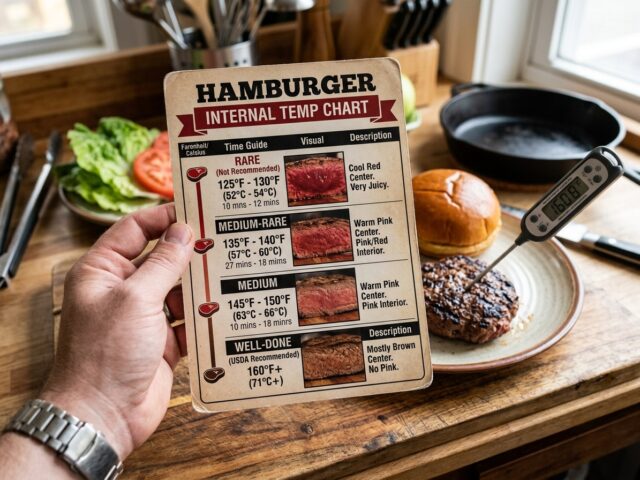
Use an instant-read thermometer if you’re unsure. Pull the meat off at 130°F to 135°F internal temperature for medium — it’ll carry over a few degrees while resting. This is the same approach to monitoring temperatures that applies to any grilled protein. Accuracy saves you from overcooking.
Rest the meat for 5 minutes on a cutting board after grilling. This step is non-negotiable. If you slice into it immediately, all those flavorful juices run out onto the board instead of staying in the meat. Five minutes. Set a timer. Walk away.
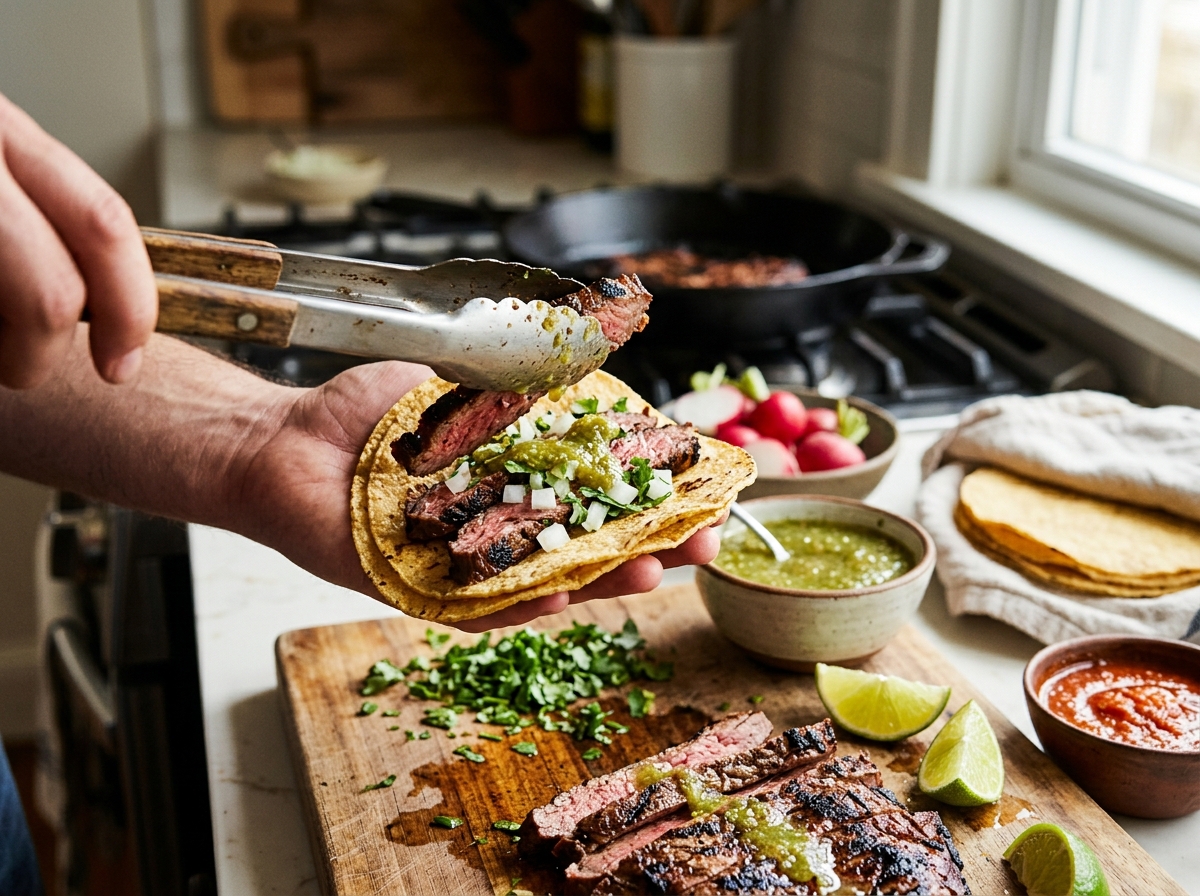
After resting, slice the steak against the grain into thin strips, then chop those strips into bite-sized pieces. Look at the lines running through the meat — those are the muscle fibers. Cut perpendicular to them. This is what turns a potentially chewy piece of beef into something melt-in-your-mouth tender.
Warming the Tortillas (Don’t Skip This)
A cold tortilla straight from the package will ruin everything. It cracks when you fold it, tastes stale, and doesn’t hug the meat the way a taco should. You need warm, slightly charred tortillas — and it takes less than a minute per tortilla.
Corn tortillas are the traditional choice for carne asada tacos. They’ve got that earthy, toasty flavor that complements grilled beef perfectly. If you’re debating between corn vs. flour tortillas, know that flour works too — it’s softer and more pliable — but corn is what you’ll find on any authentic taquería plate.
The best method: heat each tortilla directly on a dry, hot comal (flat griddle) or cast-iron skillet over medium-high heat. Give it about 30 seconds per side, or until you see light brown spots and the tortilla puffs up slightly. If you have a gas stove, you can char them directly over the open flame using tongs — this gives them those blistered edges and a subtle smokiness.
If you’re cooking for a group, wrap the warmed tortillas in a clean kitchen towel or place them inside a tortilla warmer to keep them soft while you work through the stack.
Have you ever wondered why tacos have two tortillas? It’s not just tradition. Street-style tacos use a double layer because corn tortillas are thinner and can tear under the weight of the filling and salsa. Two tortillas act as insurance — your taco stays intact from the first bite to the last.
Building the Taco: Toppings That Actually Matter
Here’s where a lot of people go overboard. They pile on sour cream, shredded cheese, lettuce, and tomato — turning a carne asada taco into a Tex-Mex burrito situation. There’s nothing wrong with that if it’s your preference, but authentic carne asada tacos keep things simple. The meat is the star. Everything else plays a supporting role.
Fresh white onion, diced fine, gives you a sharp crunch that cuts through the richness of the beef. Raw is the way to go here — you don’t want it cooked down.
Chopped cilantro — a generous pinch per taco. If you’re one of those people who thinks cilantro tastes like soap (it’s a genetic thing, genuinely), you can substitute with flat-leaf parsley or just skip it.
A squeeze of fresh lime right before you take a bite. The acidity wakes up all the other flavors and keeps the taco tasting bright instead of heavy.
Salsa is where you can really customize. A basic salsa verde (tomatillo-based) or a roasted tomato salsa roja are both classic choices. If you want heat, a habanero or chile de árbol salsa will do the job. Explore the best taco sauces to find your go-to — you’ll likely end up rotating between a few favorites depending on your mood.
Sliced radishes on the side might seem random if you’ve never had them with tacos, but they serve a purpose. They add a peppery bite and a cool, crisp contrast to the hot, smoky meat.
Guacamole or sliced avocado brings a creamy element that rounds everything out. There’s a reason avocado shows up in tacos so often — the fat content coats your palate and makes the whole experience feel more satisfying. A thin slice or a small spoonful is plenty per taco.
If you’re curious about what else pairs well, check out these best taco toppings — some combinations might surprise you.
Common Mistakes That Ruin Carne Asada Tacos
Even experienced cooks trip up on carne asada sometimes. Here are the pitfalls worth knowing about.
Using a thick steak and not adjusting. A 1-inch-thick cut cooked the same way as a ¼-inch skirt steak will either be raw in the middle or burnt on the outside. If your steak is thick, butterfly it or pound it thinner before marinating.
Marinating too long in citrus. As mentioned earlier, citrus juice is acidic enough to change the meat’s texture if left for too long. That mushy, mealy exterior? That’s over-marinated beef. Keep it under 8 hours, ideally in the 2-to-4-hour range.
Not getting the grill hot enough. If the grill isn’t blazing, the meat steams instead of sears. You want that instant sizzle the moment the steak hits the grates. If there’s no sizzle, the grill isn’t ready.
Slicing with the grain. This is the most common mistake and the easiest to fix. Look at the direction the muscle fibers run, and cut perpendicular. With the grain = chewy. Against the grain = tender. It makes that much of a difference.
Cold tortillas. We covered this already, but it bears repeating. A cold, unwarmed tortilla is a disservice to everything you just worked on. Take the extra 30 seconds per tortilla.
Serving Ideas Beyond the Basic Taco
Carne asada tacos are perfect on their own, but if you’re hosting friends or throwing a weekend cookout, a few side dishes and extras can turn tacos into a full spread.
Mexican street corn (elote) — grilled corn slathered in mayo, cotija cheese, chili powder, and lime — is maybe the single best side dish for carne asada. The sweet corn and tangy coating pair beautifully with smoky beef.
Refried beans or charro beans add substance and work great as a side or even as a layer inside the taco itself.
Rice — Mexican red rice or cilantro-lime rice — fills out the plate and soaks up any extra salsa.
Agua frescas — horchata, Jamaica (hibiscus), or tamarind — are the traditional drinks to serve alongside. They’re refreshing, slightly sweet, and balance the richness of grilled meat better than beer does (though a cold Mexican lager works too, no judgment).
If you’re making tacos for a larger group — say, a party or a family gathering — a taco cart setup works incredibly well. You can explore taco cart catering options for meat to see how professionals organize a build-your-own-taco station that keeps everything hot and fresh.
Can You Make Carne Asada Without a Grill?
Yes, and it’s still really good — just slightly different.
A cast-iron skillet is your best indoor alternative. Get it ripping hot on your stove (high heat, let it preheat for 3 to 4 minutes), add a thin layer of oil, and sear the steak in batches. Don’t crowd the pan — if you put too much meat in at once, the temperature drops and you get gray, steamed beef instead of charred carne asada.
A broiler is another solid option. Place the marinated steak on a foil-lined baking sheet, set it on the top rack about 3 to 4 inches from the heating element, and broil for 4 to 5 minutes per side. Watch it closely — broilers go from perfect char to burnt in seconds.
A grill pan (the kind with raised ridges) gives you those visual grill marks and a bit of that char flavor. It doesn’t replicate actual fire, but it gets you close enough for a weeknight taco.
The one thing you won’t fully replicate indoors is the smoky flavor from real charcoal or wood fire. A little trick: add ½ teaspoon of smoked paprika to your marinade when cooking indoors. It’s not the same as actual smoke, but it fills in that flavor gap surprisingly well.
How to Store and Reheat Leftovers
If you somehow have leftover carne asada (unlikely, but it happens), store the sliced meat in an airtight container in the fridge for up to 3 days.
To reheat, your best bet is a hot skillet with a tiny bit of oil — just enough to warm the meat through and re-crisp the edges slightly. Avoid the microwave if you can. It works in a pinch, but it tends to make the meat rubbery and steams out that beautiful char you worked so hard to build.
Leftover carne asada is also great in quesadillas, burritos, nachos, or chopped into a breakfast scramble with eggs and peppers the next morning. Versatility is one of carne asada’s biggest strengths.
FAQ
What’s the best cut of meat for carne asada tacos?
Skirt steak (especially outside skirt) is the top choice. It’s got the right flavor, texture, and fat content for high-heat grilling. Flank steak is a close second and easier to find in most grocery stores. Both should be sliced thin and against the grain after cooking.
How long should you marinate carne asada?
Aim for 2 to 4 hours in the fridge. This gives the citrus, garlic, and spices enough time to penetrate the meat without breaking down the texture. If you’re short on time, 45 minutes at room temperature with scored meat will get you decent results. Don’t go past 8 hours — the citrus acid can make the surface mushy.
Can you make carne asada tacos with flour tortillas?
Absolutely. While corn tortillas are the traditional choice and give you that authentic street taco experience, flour tortillas work just fine — especially if you prefer a softer, more pliable wrap. It’s really a matter of personal taste. Just make sure to warm them before serving, regardless of which type you use.
What temperature should the grill be for carne asada?
You want high heat — around 450°F to 500°F at the grate level. The goal is a fast sear that creates a dark, caramelized crust while keeping the inside juicy. If the grill isn’t hot enough, the meat will steam instead of char, and you’ll miss out on that signature smoky flavor.
What toppings go on authentic carne asada tacos?
Traditional toppings are simple: diced white onion, chopped cilantro, a squeeze of lime, and salsa (verde or roja). Some people add sliced avocado or guacamole. Radishes on the side are common too. The focus stays on the meat — you don’t want to bury it under a mountain of toppings.
Your Next Taco Night Starts Here
Making carne asada tacos at home isn’t hard. It just takes a little attention to the details — the right cut, a balanced marinade, a screaming hot grill, and warm tortillas. Once you nail those fundamentals, you’ll find yourself making these on repeat.
Start with the basics outlined here, and then start experimenting. Try different salsas. Test a new chili in your marinade. Char your tortillas a little longer. Every batch teaches you something, and that’s half the fun.
If you want to explore this even deeper, check out the full carne asada tacos recipe for exact measurements and step-by-step photos. And if carne asada gets you excited about taco culture, take a look at how different regions put their own spin on things with authentic Mexican tacos — there’s a whole world beyond what most of us grew up eating.
Fire up the grill this weekend. You’ve got everything you need.