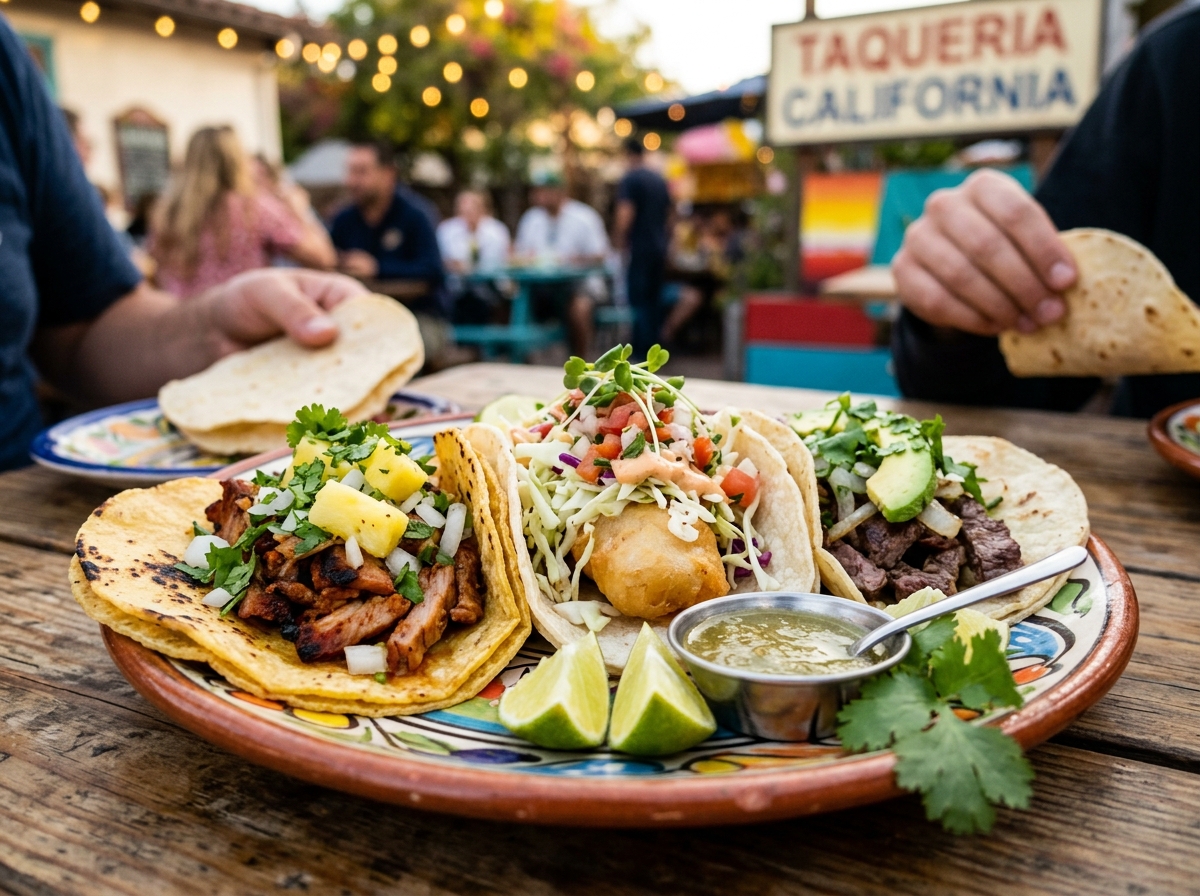
California sells more tacos than any other state in America. That’s not a random flex — it’s a direct result of geography, immigration, and a food culture that treats the taco like an everyday essential, not a weekend novelty. Whether you’re visiting LA for the first time, road-tripping down the Pacific Coast Highway, or just moved to San Diego, the taco scene here will hit you differently than anything you’ve had in Texas, New York, or even parts of Mexico.
But here’s the thing — California doesn’t serve just one type of taco. You’ll find street vendors flipping al pastor on a trompo at 11 PM, beachside fish taco stands using beer-battered catches of the day, and high-end restaurants putting Korean BBQ inside a handmade tortilla. The variety can feel overwhelming if you don’t know what you’re walking into.
So let’s break it all down. What styles will you actually encounter? What makes a California taco different from what you’re used to? And how do you find the good stuff without falling for tourist traps?
The California Taco Identity: More Than Just Mexican Food
A lot of people assume California tacos are just Mexican tacos. That’s partially true — and partially missing the bigger picture.
California sits right on the Mexican border. Cities like San Diego, Los Angeles, and Fresno have had deep ties to Mexican food traditions for over a century. The history of tacos in this region goes back to immigrant workers and migrant communities who brought their regional recipes across the border. Over time, those recipes didn’t just survive — they evolved.
What happened is something you’ll notice the moment you start eating your way through the state. The base is authentically Mexican. The ingredients, techniques, and spirit of the food stay rooted in tradition. But California’s own agricultural bounty, its Asian and Central American immigrant communities, and its obsession with fresh, local ingredients all left their fingerprints on the taco.
You’ll see avocado on almost everything — not because it’s trendy, but because California grows about 90% of the nation’s avocados. You’ll find fresh toppings and garnishes that lean heavily toward raw vegetables, pickled onions, and citrus-forward salsas. The meat is often grilled over open flame rather than simmered in sauce.
That’s the California taco identity in a nutshell: Mexican roots, local ingredients, and a willingness to experiment without losing respect for tradition.
Street Tacos Are the Backbone
If there’s one thing you should absolutely expect in California, it’s street tacos. They’re everywhere. And they’re the real deal.
A street taco here typically comes on a small, doubled-up corn tortilla — about four to five inches across. You might wonder why tacos have two tortillas, and the answer is practical. The double layer keeps the taco from falling apart as juices from the meat soak through. It’s structural engineering disguised as tradition.
The meat is usually chopped or sliced thin, not ground. You’ll see options like carne asada (grilled steak), al pastor (marinated pork), carnitas (slow-cooked pork), cabeza (beef head meat), lengua (tongue), and birria (braised, often spiced beef or goat). These aren’t fancy options — they’re standard. A good taqueria will have at least five or six types of Mexican taco meat available at any given time.
What makes the California street taco experience stand out is the setup. Most street vendors and taquerias lay out a salsa bar with multiple options — a roasted green tomatillo salsa, a fiery red chile de árbol salsa, pico de gallo, and sometimes a creamy avocado-based sauce. You’ll usually find radish slices, lime wedges, grilled onions, and fresh cilantro right there for you to pile on.
Pro Tip: Don’t judge a taco stand by how it looks. Some of the best tacos in California come from weathered trucks parked on side streets. If you see a long line of locals at 9 PM, get in that line.
Al Pastor: The King of California Taco Menus
You can’t talk about tacos in California without giving al pastor its own spotlight. This style of taco has practically become the signature meat across Southern California taco stands.
Tacos al pastor trace their roots to Lebanese immigrants who brought shawarma-style cooking to Mexico in the early 20th century. The concept — marinated meat stacked on a vertical spit and shaved off as it cooks — got a Mexican makeover with dried chiles, achiote paste, pineapple, and spices. The result is sweet, smoky, slightly spicy pork that tastes like nothing else.
In California, you’ll spot the trompo (the vertical spit) spinning behind the counter at serious taco spots. The cook shaves off thin slices of caramelized pork directly onto your tortilla, often catching a chunk of roasted pineapple from the top of the spit along the way. That little piece of pineapple isn’t decoration — it balances the smokiness of the meat with a hit of natural sweetness.
If you want to know what separates a decent al pastor from an extraordinary one, it comes down to the marinade and the cook time. The best versions have spent hours on the spit, developing a charred, crispy exterior while staying juicy inside. Check out this guide on making the perfect al pastor tacos if you want to understand the craft behind it.
Not every place does al pastor well, though. If the pork looks pale, soft, and steamed rather than charred and caramelized, keep walking. You want color. You want crispy edges. That’s where the flavor lives.
Carne Asada: The Grill Master’s Taco
Right alongside al pastor, carne asada holds sacred status in California’s taco culture. It’s especially dominant in San Diego and the border towns, where weekend carne asada cookouts are as common as backyard barbecues in the Midwest.
The concept is straightforward — marinated beef, grilled hot and fast, chopped into bite-sized pieces, and served on warm tortillas. But “straightforward” doesn’t mean “simple.” The quality of a carne asada taco depends almost entirely on the cut of beef, the marinade, and the grill work.
Most California taquerias use flap meat (also called sirloin tip) or skirt steak. The meat gets marinated in a mix of lime juice, garlic, cilantro, jalapeño, and sometimes a splash of beer or soy sauce. That marinade needs time — at least a few hours — to tenderize and flavor the meat properly.
You’ll know you’ve found a great carne asada taco when the beef has visible grill marks, a slightly smoky aroma, and enough tenderness that you don’t have to fight with each bite. The chop should be rough, not minced — you want chunks, not crumbles.
In San Diego specifically, carne asada fries are also a thing. That’s basically seasoned French fries topped with chopped carne asada, guacamole, sour cream, and cheese. It’s not a taco, but it’s part of the same food ecosystem, and you should try it at least once.
Fish Tacos: Baja Meets California
Here’s where California truly put its own stamp on taco culture. The fish taco — particularly the Baja-style fish taco — has become synonymous with the California coast.
The original version comes from Ensenada and other Baja California coastal towns just across the Mexican border. A piece of white fish (usually cod, mahi-mahi, or pollock) gets dipped in a light beer batter, fried until golden, and tucked into a corn or flour tortilla with shredded cabbage, a creamy white sauce, and a squeeze of lime.
California adopted this style and ran with it. You’ll find fish tacos at beachside shacks in San Diego, food trucks in Santa Barbara, and sit-down restaurants in San Francisco. Some places stick to the fried version. Others go grilled, especially the health-conscious spots around LA’s Westside.
The best fish tacos share a few things in common: the fish is fresh (not frozen and rubbery), the batter is light and crispy (not thick and doughy), and the slaw provides crunch and tang to balance out the richness. A good sauce — usually a chipotle mayo or lime crema — ties everything together.
Did You Know? The city of San Diego has been called the “Fish Taco Capital” of the United States. Rubio’s Coastal Grill, which helped popularize fish tacos in America, started as a single stand in San Diego’s Mission Bay back in 1983.
If you’re visiting anywhere along the California coast, a fish taco isn’t optional. It’s required eating.
The Corn vs. Flour Tortilla Debate
This one comes up constantly, and California is where the debate gets especially heated.
In most of Southern California, corn tortillas are the default. You’ll get your street tacos on corn unless you specifically ask otherwise. Corn tortillas have a more earthy, slightly nutty flavor, and they’re the traditional choice for authentic Mexican tacos.
Move up to Northern California, or walk into certain Tex-Mex influenced spots, and flour tortillas start showing up more often. Flour tortillas are softer, more pliable, and have a mild, slightly buttery taste. They work particularly well with grilled meats and heavier fillings.
The honest answer to corn vs. flour tortilla is that neither is “better.” They’re different tools for different jobs. A delicate fish taco might benefit from a soft flour tortilla that won’t crack. A saucy birria taco needs the sturdiness and flavor of a good corn tortilla.
What you should pay attention to is whether the tortillas are fresh. A fresh-pressed corn tortilla — warm, pliable, with a toasted aroma — is in a completely different league from the stiff, cold ones you get in a grocery store pack. In California, especially at serious taquerias and taco carts, fresh tortillas are more common than you might expect. Some places press them right in front of you.
When you see that happen, you’re in the right place.
California-Style Tacos: The Fusion Factor
Beyond the traditional Mexican taco styles, California has developed its own breed of tacos that blend multiple culinary traditions. This isn’t gimmicky fusion for Instagram — it’s the natural result of diverse communities living side by side and sharing food ideas.
California-style tacos often include ingredients you won’t find in a traditional Mexican taqueria. Think Korean short rib tacos with kimchi and gochujang sauce. Or ahi tuna tacos with mango salsa and sriracha aioli. Or smoked brisket tacos with pickled jalapeños and a tangy barbecue drizzle.
The Korean taco, in particular, became a nationwide phenomenon after Roy Choi launched the Kogi BBQ truck in Los Angeles around 2008. Choi, a Korean-American chef, started stuffing Korean BBQ meats into corn tortillas and selling them from a truck. The lines stretched around blocks. The idea spread everywhere.
You’ll also find tacos influenced by Japanese, Filipino, Indian, and Ethiopian flavors — especially in the Bay Area and LA. A lot of these come from food trucks and pop-up vendors who experiment freely without the constraints of a traditional restaurant menu.
Does this mean every fusion taco is worth your time? No. Some are gimmicky. Some try too hard. But the best ones — the ones created by cooks who genuinely understand both food traditions they’re blending — can be genuinely memorable.
The key is to stay open-minded. You came to California. Part of the experience is tasting things you didn’t know could work inside a tortilla.
Regional Differences Across the State
California stretches about 900 miles from north to south. The taco you get in San Diego won’t be the same taco you get in San Francisco or Sacramento. Knowing the regional differences helps you set the right expectations.
Southern California (Los Angeles & San Diego): This is ground zero for traditional Mexican street tacos. LA alone has thousands of taco vendors, trucks, and taquerias. You’ll find the widest variety of taco fillings here — everything from common options like asada and pollo to more adventurous choices like tripe, cheek, and brain. The birria taco, with its consommé for dipping, exploded in popularity in LA and remains a staple. San Diego leans heavier on Baja-style fish tacos and border-town carne asada.
If you’re looking for the best tacos in Los Angeles, you’ll want to explore neighborhoods like Boyle Heights, East LA, and South Central, where generational taqueros have been perfecting their craft for decades.
Central California (Fresno, Bakersfield): The taco scene here is quieter but deeply rooted. You’ll find a lot of family-run spots serving Michoacán and Jalisco-style tacos. Birria is huge. Carnitas tend to be particularly good in this region. Don’t expect a lot of flashy fusion — Central Valley tacos are about tradition and honest execution.
Northern California (San Francisco, Oakland, Sacramento): The Bay Area brings more diversity to the taco game. You’ll find traditional Mexican alongside inventive fusion options. Taquerias in the Mission District of San Francisco are legendary. Oakland has a strong street food scene with Mexican, Salvadoran, and other Central American influences. Sacramento’s taco scene has grown significantly in the past few years.
No matter where you are in the state, good tacos are never more than a short drive away. That’s just how California works.
What Makes the Salsas Different Here
You might not realize it until your first bite, but salsa is where California tacos really separate themselves. The salsa bar isn’t an afterthought here — it’s part of the main event.
Most taquerias will offer at least two salsas: a red (roja) and a green (verde). The red is often made from dried chiles like chile de árbol or guajillo, giving it a smoky, building heat. The green usually comes from tomatillos, serrano or jalapeño peppers, and cilantro — bright, tangy, and fresh.
But a lot of places go beyond the basics. You might find a creamy avocado-based salsa that adds richness without overwhelming heat. Or a habanero salsa that’ll make you rethink your spice tolerance. Or a morita salsa with a deep, almost chocolate-like smokiness.
The salsas are almost always made in-house, daily. This matters because fresh salsa tastes completely different from the jarred stuff. The flavors are sharper, brighter, and more complex.
Quick Tip: If you’re not sure how hot a salsa is, ask. Most taqueros are happy to point you toward the milder options or warn you about the one that’ll make your eyes water. There’s no shame in starting mild and working your way up.
Also, don’t skip the lime. A fresh squeeze of lime over your taco right before you eat it — that little hit of acid — pulls all the flavors together. It’s a small detail that makes a big difference.
Price, Portions, and What to Actually Order
If you’re coming from a state where tacos cost $5 to $7 each, California might surprise you. Street tacos here typically run between $2 and $4 per taco, depending on the filling and the location. Tourist-heavy areas and sit-down restaurants will charge more, but the everyday taqueria keeps prices accessible.
The tacos are small on purpose. You’re not supposed to order one and call it a meal. Most people order three to five tacos per sitting. This lets you mix and match fillings — get two asada, one al pastor, one carnitas, and maybe throw in a lengua if you’re feeling adventurous.
If it’s your first time and you’re not sure where to start, here’s a solid approach. Order one carne asada taco and one al pastor taco. These are the two most representative styles, and they’ll give you a clear sense of the taqueria’s quality. If those are good, branch out from there.
For larger appetites or group settings, many California taco spots also offer catering-style options where you can get a full spread with multiple meats, tortillas, and all the fixings served family-style. Taco cart catering has become especially popular for events — a cook shows up with a cart, grills everything fresh on-site, and serves guests directly.
Don’t fill up on chips and extras before your tacos arrive. The main event deserves your full appetite.
Timing Matters: When to Eat Tacos in California
This might sound odd, but the time of day you eat tacos in California can affect what you get.
Morning tacos are a real thing, especially in neighborhoods with large Mexican communities. Breakfast tacos here lean toward fillings like chorizo and eggs, chicharrón (fried pork skin) with salsa verde, or barbacoa that’s been slow-cooking since the night before. Some spots serve beef head tacos (cabeza) early in the morning because the meat has been steaming overnight and it’s at its most tender first thing.
Lunchtime is when taquerias are in full swing. All the usual fillings are available, the salsas are freshly made, and the tortillas are warm. This is probably the safest window for your first taco experience.
Late-night tacos, though — that’s where the magic often happens. In LA especially, taco trucks and stands fire up after 9 PM and serve until 2 or 3 in the morning. The late-night crowd knows what’s good. You’ll find yourself standing on a sidewalk in East LA at midnight, eating al pastor under a string of lights, surrounded by people who take this very seriously. It’s one of those experiences that sticks with you.
On weekends, look for birria stands and barbacoa vendors who only operate Saturday and Sunday mornings. These weekend-only spots are often the best-kept secrets in any neighborhood.
How to Spot a Great Taco Spot (and Avoid Bad Ones)
Not every taco in California is great. There are plenty of mediocre spots, especially in tourist areas. A few things can help you separate the good from the forgettable.
Look at the tortillas. If they’re fresh — soft, slightly moist, with visible charring from the grill — you’re in good hands. If they’re dry, cracking, or taste like they came straight from a plastic bag, lower your expectations.
Watch the meat. At a good taqueria, the meat is being actively cooked and chopped. You should see activity on the grill or the trompo. If the meat looks like it’s been sitting in a steam tray for hours, it probably has.
Check the salsa situation. A place that takes its salsa seriously — offering multiple house-made options with distinct flavors — cares about the whole taco experience, not just the filling.
Follow the locals. This advice gets repeated because it’s true. If a taco stand has a steady stream of neighborhood regulars, the food is almost certainly solid. If it’s mostly tourists taking photos, proceed with caution.
And one more thing — don’t overlook taquerias that look modest from the outside. Some of the best tacos in the state come from places with faded signs, plastic chairs, and no social media presence whatsoever. Appearance and quality don’t always match up, and in California’s taco world, they often go in opposite directions.
FAQ Section
How much do street tacos cost in California?
Street tacos generally cost between $2 and $4 each, depending on the city and the type of filling. Premium proteins like shrimp or specialty cuts may cost a bit more. You’ll usually want to order at least three tacos for a satisfying meal, so budget around $8 to $15 per person at most street vendors.
Are California tacos spicy?
The tacos themselves usually aren’t spicy. The heat comes from the salsas you add, and you control how much goes on. Most places offer a range from mild to very hot, so you can customize based on your preference. If you’re sensitive to spice, stick to the green tomatillo salsa — it’s typically the mildest option.
What’s the most popular type of taco in California?
Carne asada and al pastor consistently rank as the two most popular fillings across the state. In coastal areas, fish tacos rival them in popularity. Birria tacos have also surged in recent years, especially in Los Angeles, where the different types of Mexican tacos are all well-represented.
Is it okay to eat tacos from food trucks in California?
Absolutely. Food trucks in California are licensed and inspected by county health departments. Many of the state’s most celebrated taco makers operate exclusively from trucks or carts. Some have won awards and been featured in national publications. Don’t skip them — you’d be missing out on some of the best food in the state.
What’s the best city in California for tacos?
Los Angeles is widely considered the taco capital of California — and possibly the entire United States. The sheer density of taquerias, trucks, and street vendors is unmatched. San Diego is a close second, especially for fish tacos and border-style carne asada. San Francisco’s Mission District also deserves recognition for its long-standing taqueria culture.
Your Next Bite Is Waiting
California doesn’t just serve tacos — it lives and breathes them. From the pre-dawn barbacoa vendors to the midnight al pastor trucks, from a $2 street taco in Boyle Heights to a gourmet fusion creation in the Bay Area, there’s a range and depth here that you won’t find anywhere else in the country.
The best way to experience it? Stop overthinking and start eating. Pick a neighborhood, find the taqueria with the longest line, order a few different tacos, load up on salsa, and squeeze that lime. You’ll figure out your favorites fast. And once you do, you’ll probably find yourself going back for more before you’ve even left the state.
That’s just what tacos in California do to people.